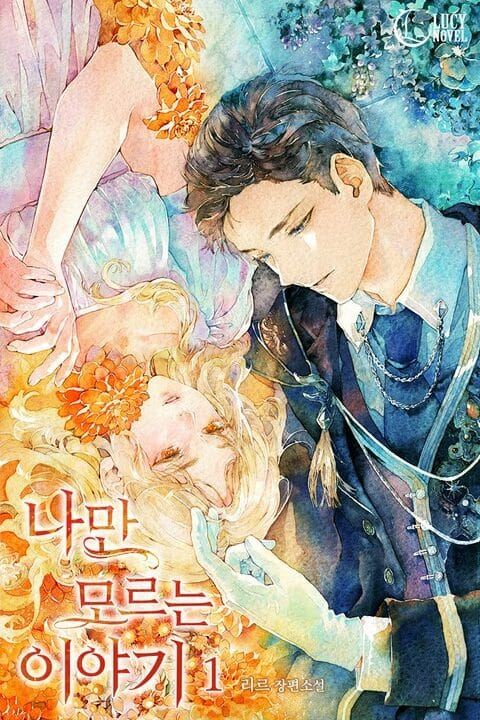
The Couple Who Hide Their Preferences
Novel Info
  • Author:
  • Status:Ongoing

Summary

... Read More

Celiana Dalton, the Marchioness of a prestigious noble family, maintains a public image of an ideal wife and mother-to-be, but privately struggles with severe masochistic desires that she believes would destroy her reputation if revealed. Her husband, Robert Dalton, is the Head of the Imperial Treasury, a man celebrated for his perfection, kindness, and unwavering devotion to Celiana. Their marriage, arranged since childhood after a ten-year separation during which Robert studied abroad, appears flawless to the outside world. However, the couple has not consummated their union, as Celiana avoids intimacy out of fear that her secret tastes will be discovered. She suffers in silence, secretly punishing herself with whips and ropes in her hidden study, dreaming of Robert treating her roughly, scolding her, and binding her, yet finding only cold kindness and gentle consideration from her husband in reality.

The narrative establishes the profound disconnect between Celiana’s internal desires and her external life. During social gatherings, she feels immense anxiety when other noblewomen discuss their intimate lives, fearing exposure of her own virginity within marriage. Her discomfort peaks when Robert attempts to tie a loose ribbon on her sleeve, triggering a violent reflexive rejection born from her secret yearning for physical restraint and pain. This incident highlights the tragic irony of their situation: Robert’s natural gentleness, which society admires, is precisely what frustrates Celiana, while his potential for the dominance she craves remains completely suppressed by his moral nature. Despite her longing, Celiana considers herself cursed, believing that her preferences make her unworthy of Robert and that exposure would lead to his disgust and the collapse of her social standing.

A pivotal shift occurs when Celiana encounters a mysterious old woman who offers her a cryptic blessing, predicting that her heart’s desire will be fulfilled that night. Coincidentally, Robert also harbors a secret, equally dark desire for dominance and control, which he has suppressed to maintain his image as the perfect nobleman. He maintains a hidden collection of bondage tools and fantasizes about restraining Celiana, keeping these impulses locked away due to his deep respect for her. The convergence of these two hidden realities sets the stage for a dramatic transformation in their relationship, driven by unseen forces that bridge the gap between their solitary suffering.

The climax of this segment unfolds on their bedroom floor, where Robert’s behavior shifts abruptly from gentle to aggressive. Under the influence of the mysterious blessing, he physically overpowers Celiana, binding her wrists with torn fabric, gagging her, and administering spanks while hurling degrading words. For Celiana, this is the realization of her deepest fantasies; she experiences intense pleasure and emotional fulfillment, tears streaming down her face not from pain but from the satisfaction of her long-suppressed desires finally being met. Robert, meanwhile, acts on impulses he later cannot fully recall, interpreting the events as a vivid dream upon waking. He finds no evidence of the encounter—her clothes are mended, the bed is clean—and is left with a sense of guilt and confusion, unaware that his wife is radiant with joy.

In the aftermath, the story explores the divergent psychological states of the couple. Celiana wakes up euphoric, perceiving the world with renewed brightness and appetite, convinced that the night was real and divinely orchestrated. She prepares for the upcoming visit of Robert’s parents, masking her exhilaration with normalcy. Robert, however, is tormented by guilt, wondering if he harmed his delicate wife in a nightmare or if his subconscious acted out violently. He resolves to be even more careful, misinterpreting her happiness as a reaction to good food rather than intimate fulfillment. The narrative ends with the couple drifting further apart in misunderstanding: Celiana hopeful that this marks the beginning of a new dynamic, and Robert desperate to suppress his darker urges, setting the stage for future conflicts as both must navigate the revelation that their secrets may not remain hidden forever.

Latest Release
DateGroupRelease
2026-10-03dusk blossoms c32
2026-10-03dusk blossoms c31
2026-10-03dusk blossoms c30
2026-10-03dusk blossoms c29
2026-10-03dusk blossoms c28
2026-10-03dusk blossoms c27
2026-10-03dusk blossoms c26
2026-10-03dusk blossoms c25
2026-10-03dusk blossoms c24
2026-10-03dusk blossoms c23
2026-10-03dusk blossoms c22
2026-10-03dusk blossoms c21

Community Reviews

Rating(0 / 5.0, 50votes)
5 stars
0(0%)
4 stars
0(0%)
3 stars
0(0%)
2 stars
0(0%)
1 stars
0(0%)

Popular reviews

... Read More
So the old woman. The mysterious advisor who's been dropping cryptic hints like she's playing 4D chess while everyone else is stuck on checkers. "This time will be different. You'll be the reality, and the other will seem like a dream." What does that even mean?! I keep coming back to this line and my brain is short-circuiting. Because on the surface, the plot here is doing something really clever. We have two parallel storylines that feel completely separate — Erta and Celiana's intimate friendship building in one thread, and Robert's internal struggle in another — and then they COLLIDE in the most satisfying way possible. Celiana goes to Erta seeking connection, learns about magical touch items, realizes she wishes she could share this with Robert, and somehow that whole chain of events leads to her finally breaking down the wall between them. The necklace subplot is genius setup. Erta got it wanting to use it as a couple's item, the ring went to someone else (who?! I need to know!), and now Celiana has half of something that could transform her marriage. The author is clearly laying groundwork for future scenes where they might actually USE these items — and I am HERE FOR IT. But what really impressed me is how the awkwardness period works as a plot device. Those days of cold distance between Celiana and Robert weren't just filler — they were NECESSARY. Without that buildup of tension and misunderstanding, Celiana's decision to initiate would just be convenient. Instead, it feels earned. She's been hurting, she's been trying to be considerate, she's been miserable — and she chooses to fight for what she wants. That's character growth AND plot progression happening simultaneously.
... Read More
The pacing in these opening chapters is masterful and I want to unpack why it works so well. The author opens WITH the public scene — the tea party — which is brilliant because it immediately externalizes Celiana's internal conflict. We see her perform normalcy while her mind races. Then the transition home slows everything down. The walk back, the quiet dining room, the meal in near-silence — all of this creates a pressure cooker atmosphere where every small gesture feels loaded. Chapter 2 shifts to the reveal. This is where the structure does something clever: it doesn't dump everything at once. First we learn Celiana isn't good at social connections despite having political access. Then Robert gives her information and she uses it successfully, but feels hollow about it. Then — slowly, carefully — we get the marks on her wrist. The reveal is staggered and it makes the impact land harder. The author could have explained her desires outright in Chapter 1, but choosing to show it through physical evidence (the red marks, the thin whip, the rope) is far more effective storytelling. And the structure of the ending? Chapter 3 closes with an INCOMPLETE thought — "and his..." — right as Celiana's imagination peaks. This is a cliffhanger that doesn't rely on external drama but on internal explosion. The pacing controls reader engagement by making us WANT to know more, not because of plot twists but because of emotional escalation. Each chapter builds on the last like stacking blocks, and by Chapter 3 we're completely invested in this woman's private agony.
... Read More
I need to talk about how the dialogue in this book is basically weaponized kindness and I am NOT okay with it. Robert's lines are so simple, so caring, and they completely miss what Celiana is actually trying to communicate. Every time she drops these breadcrumbs — the scratches, the burns, the moans — he responds with THE MOST GENTLE THING POSSIBLE. 'Celiana, are you all right?' 'Here's a cold towel.' It's like she's screaming in code and he's answering in white noise. And the child dialogue?! Oh my god. The five-year gap between them but Robert already treating her with such tenderness: 'Let's always cherish each other.' 'Yes, let's be a couple who treasures each other forever.' PINKY PROMISE. A literal pinky promise between children that becomes this devastating fulcrum for the entire marriage. When adult Celiana looks at him and can't tell him anything, that pinky promise haunts every interaction between them. But here's what really gets me — the narrator's voice. It's so intimate, so locked into Celiana's head that you FEEL her panic. When Robert touches her sleeve and she imagines rope marks on her pale skin — 'It's done. It looks pretty.' — the narrative just SNAPS back to reality. 'Ah? Yes. Thank you.' Three words. That's all she can manage. The contrast between the violence in her head and the polite, proper noblewoman on the outside? Chef's kiss. And Celiana's internal monologue during her secret rituals — 'Choosing the paddle was the right call' — so clinical, so matter-of-fact about something that should be shameful. Except it isn't shameful to her. It's necessary. 'If I don't do this, it's hard to bear.' The narrative voice understands Celiana in a way Robert never will, and that's what makes reading this so painful.
... Read More
I have to talk about how this author builds the world through social customs, because it's BRILLIANT and quietly devastating. The detail about weddings only happening in spring and autumn—not because of any moral code, but because outdoor garden ceremonies would be miserable in winter—this is the kind of worldbuilding that feels REAL. It's practical, it's arbitrary, and it creates immediate pressure on Celiana. She wants to delay, to breathe, to prepare—but autumn is ending and now she's rushing into a marriage she's already panicked about. The world itself is conspiring against her comfort. Then there's the visual contrast between Robert and Celiana at the breakfast table. He's in a dark green outfit, buttoned to the neck, looking like a soldier. She's in a light home dress, trying to hide her expression behind a water glass. The author uses clothing and posture to communicate everything: his discipline versus her performance, his natural authority versus her anxious adaptation. When Celiana imagines him in deep blue—"the color she most often imagined him wearing"—it's a small detail that paints an entire portrait of longing. But the most vivid scene is Robert's in his study. The sound descriptions are almost visceral: "friction, tap-tap," his lips parting, the low sigh, the clenched jaw. It's written with such restraint that it's more disturbing than anything explicit. The contrast between his public persona—the impeccable Marchioness, the devoted husband—and this private ritual creates a character who feels dangerously three-dimensional. And the Ephelmar Duchy banquet looms over everything like a promise. The fact that it's connected to an "adult play" that Celiana once attended—and that the Duke, like Robert, has spent years abroad—sets up a social world where secret desires might have their own underground language. The author is building toward something, and the atmosphere is thick with anticipation.
... Read More
Let's talk about how Robert's voice completely collapses across these chapters and what that tells us about him. Early on, his dialogue is clipped, commanding, almost mechanical: 'Lie down.' 'Who gave you permission to call my name?' 'Turn around, raise your hips.' These aren't conversations — they're commands. The man who spent weeks being polite, being careful, being the 'upright Marquis' has finally stopped performing. And the dialogue reflects that. No flourishes. No hesitation. Just raw imperative. But here's what's fascinating — even in his dominant moments, Robert's voice cracks. 'What should I do? Tell me.' That's not a dominance display. That's a man who's lost control of the narrative and is desperately hoping his partner will give him an answer that lets him keep going. He's performing dominance while secretly needing permission. Then switch to Celiana's dialogue and it's a whole different story. In the dream sequence, her voice is supplicant — 'Master, please forgive me,' 'Please, take me like a dog, Master...' But notice how her INNER VOICE is completely different. 'I love it.' 'Even if it was just a dream, she wanted to enjoy it.' The gap between what she says aloud and what she thinks is where the real character lives. And Robert's internal monologue in Chapter 20? That's where the author's voice really shines. Short, fragmented thoughts. 'Why? Why didn't she know? Who was the Celiana who suddenly clung to him?' The prose itself becomes breathless, obsessive — matching his mental state perfectly. He's not thinking in full sentences anymore. He's thinking in jagged pieces. The old woman's dialogue is sparse but loaded — 'This time will be different. You'll be the reality, and the other will seem like a dream.' Six words that reframe everything. Her voice is oracle-calibrated, every syllable carrying double meaning. She never explains. She never reassures. She just drops truths and walks away.
... Read More
Okay, let me just say this first — the plot setup here is BRUTAL in the best way. Celiana Dalton, Marchioness of Dalton, second year of marriage, never consummated. Her husband is Robert Dalton — flawless, kind, considerate, gorgeous, powerful. And she CANNOT be with him in the way she needs to be, not because he's inadequate, but because he's TOO adequate. The narrative hook hits you immediately: tea party scene, noble ladies gossiping about their husbands, Celiana sweating through her corset wondering if they'll discover she's never had sex with her husband. Classic social anxiety setup that turns into something much darker and more interesting. Then Chapter 2 drops the bomb — she has masochistic tendencies. Whip marks on her thighs. Rope marks on her wrists. And Robert? Sweet, gentle Robert who notices a loose ribbon and wants to tie it for her? The irony is SO thick you could cut it with a knife. That final moment in Chapter 3 — she's imagining him tying her up, not with lace but with rough rope — and the author literally cuts off mid-sentence like "and his..." leaving us HANGING. This is plot craftsmanship at its finest. The central question isn't "will they end up together" — they're already married. The question is "how does a woman who craves pain and submission navigate a marriage with a man who only knows how to be gentle and considerate?" And what happens when her secret almost gets exposed?
See all reviews

Custom lists

See all custom Lists