Summary

... Read More

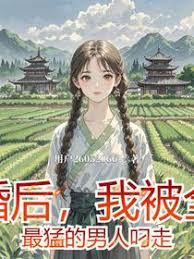
Bai Li, a modern woman with no cultivation background, is transmigrated into the world of the xianxia novel The Long Road to Immortality. Upon waking in a dark carriage bound for an auction, she realizes she has occupied the body of a minor, unnamed disciple of the Medicine Sect. A system informs her that her mission is not to survive passively but to locate the story’s primary antagonist and win his heart. Before she can process this absurd directive, she is rescued from her captors by Xue Yu, a mysterious and lethally skilled young man who claims to be from the declining Xue Clan of Bozhou. He kills their guards with ease, revealing a brutality that contrasts sharply with his gentle demeanor, and offers Bai Li a sword and brief, cryptic survival advice before disappearing into the night.

Bai Li attempts to navigate the chaotic aftermath of the Wen Clan’s downfall alone, but her lack of strength makes her an easy target. She is nearly killed by disciples of the Shouyang Sect, who mistake her for a remnant of the enemy, but is saved again by Xue Yu. He reveals that he allowed himself to be captured earlier to lure his pursuers away, using Bai Li as bait. Despite his cold calculations, he ensures her safety, though his motives remain ambiguous. Shortly after, Bai Li encounters Ling Yanyan, the novel’s female lead, and her junior brother Xia Xuan, who are also fugitives. The group is soon captured by Wen Hua, a high-ranking Wen Clan elder, who targets Bai Li due to her rare Jade Phoenix Marrow constitution, intending to use her for dual cultivation.

During the raid on the Moonveil Pavilion, the male lead Jiang Biehan arrives to rescue Ling Yanyan. Bai Li uses the confusion to escape, only to stumble into the Ancestral Hall where Xue Qionglou, the villain she is supposed to win over, is waiting. He is dressed in the pristine white robes of the Golden Scale Xue Clan and exudes an aura of refined elegance. Bai Li hides, but Xue Qionglou discovers her immediately. Instead of killing her, he tests her wits through riddles and subtle threats, sensing that she is different from the typical cultivators around her. When Jiang Biehan arrives, Bai Li pretends to be a grateful acquaintance of Xue Qionglou to avoid execution, successfully hiding her true identity and her knowledge of the plot.

Xue Qionglou, realizing that Bai Li possesses hidden depths, decides to keep her close rather than eliminate her. He joins the protagonists’ group under the guise of an ally, while secretly maintaining his malicious agenda. Bai Li is forced to travel with Jiang Biehan, Ling Yanyan, and Xue Qionglou, navigating a dangerous political landscape where trust is nonexistent. She tends to the wounds of the group’s members, including Xia Xuan, while carefully avoiding any actions that might disrupt the novel’s established timeline. The system’s warnings grow louder as she interacts with the villain, forcing her to walk a fine line between fulfilling her mission and preserving her own life.

As the group continues their journey, the underlying tension between Bai Li and Xue Qionglou intensifies. He probes her identity repeatedly, suspecting she is not who she claims to be, while she struggles to understand his true nature beyond the villainous reputation described in the book. The narrative shifts from a simple survival story to a complex psychological game. Bai Li must rely on her modern perspective and quick thinking to survive encounters with demonic cultivators and rival sects, all while trying to soften the heart of a man who views human life as expendable. The story establishes a fragile alliance between the transmigration subject and the antagonist, setting the stage for a conflict where affection and betrayal are indistinguishable.

The arrival of the sect grandmasters, Master Duanyue and Ling Yanyan’s master, signals a shift in the power dynamics. They gather the disciples to issue stern instructions, drawing attention to Bai Li as an outsider within their ranks. Xue Qionglou’s presence beside Jiang Biehan raises suspicions among some, but his impeccable manners and proven combat ability silence most doubts. Bai Li finds herself increasingly isolated, with no true allies except perhaps the naive Ling Yanyan, who trusts her implicitly. The novel concludes this arc with Bai Li fully immersed in the center of the conspiracy, her mission complicated by Xue Qionglou’s growing interest in her secrets and her own unexpected dependence on the very villain she was sent to corrupt.

Latest Release
DateGroupRelease
2026-09-26akknovel c8
2026-09-26akknovel c7
2026-09-26akknovel c6
2026-09-26akknovel c5
2026-09-26akknovel c4
2026-09-26akknovel c3
2026-09-26akknovel c2
2026-09-26akknovel c1

Community Reviews

Rating(0 / 5.0, 41votes)
5 stars
0(0%)
4 stars
0(0%)
3 stars
0(0%)
2 stars
0(0%)
1 stars
0(0%)

Popular reviews

... Read More
Let me just... let me just drop this in the middle of a paragraph with no setup: 'Save me, fellow cultivator!' And he's doing it from behind Bai Li, hiding from his own senior sister who just broke a stool on his head. He's not calling her 'sister' or 'senior sister' or any cultivation-rank honorific. He's calling her FELLOW CULTIVATOR. Like they're in a support group. Like he's at a AA meeting and the guy in the next chair is about to get hit and he's reaching up to grab the nearest stranger's sleeve going 'buddy, please shield me from the wrath of the woman in the green robe.' And Ling Yanyan's 'When Jiang Biehan got hurt, you weren't like this. I'm telling Master—favoritism and betrayal!' has that specific energy of someone who is absolutely right but is going to get punished for saying it anyway. The threat is so empty. She's not actually going to tell Master. She's just... performing the threat. Rolling up sleeves is the physical punctuation mark. 'I am ready to escalate but I will not actually escalate. You can back down or I will hit you with the flat of my palm.' It's such a specific little power dynamic that I found myself doing the hand gesture while reading and then looking around the room like an idiot. Bai Li's internal voice is the real star though. The way she narrates herself in real-time—'So the delicate, soft-spoken female lead could split iron stools with her bare hands when the male lead wasn't looking. Since when did the fragile beauty trope get so deceptive?'—that's not just character humor, that's the text winking at the reader. And 'What is this blockhead imagining?!' about Jiang Biehan's bow. The affection in the insult. She'd say 'blockhead' to a guy she's genuinely annoyed at, but the cadence is fond. Like a friend who's late to dinner for the fourth time. 'What is this blockhead doing, is he lost again?' One quote that made me actually pause mid-scroll: 'I may not be human, but you're truly something else.' The 'I may not be human' is doing so much work. Is he a cultivator? A spirit? Non-canonical? The text just drops it in as casual as 'I may not be a morning person, but you're really something.' And I am STILL not sure what species Xia Xuan actually is and the author has made me genuinely anxious about finding out.
... Read More
Okay so this whole carriage scene is wild because Bai Li literally thinks "since when did side characters get such convoluted plotlines" and honestly same girl. She's clearly a transmigrator who knows the original novel's plot, and the second she gets dragged into this situation she's like "wow I'm actually in the story now." That meta awareness is such a fun layer. The tension buildup here is excellent though—the Wen disciples are suspicious, one already has his sword drawn, they're about to find the hidden dagger and everything falls apart, and then suddenly Xue Yu just *moves.* Like actually moves. One moment he's standing there looking cute with his long lashes and everything, next moment two grown cultivators are dead before their swords even leave their scabbards. The pacing in these chapters is honestly chef's kiss. Chapter 4 starts with near-immediate danger, chapter 5 gives us that breathtaking reveal of Xue Yu's face and the moonlight imagery, and then chapter 6 pivots into worldbuilding and character history without losing momentum. The fact that Bai Li is lying about her name right after this life-or-death situation is both hilarious and kind of heartbreaking—she can't trust anyone in this world, not even the person who just saved her. And then the biggest twist: she realizes this guy is probably Xue Qionglou, the novel's main villain. She's traveling with the actual bad guy and doesn't fully know it yet. The dramatic irony here is *delicious.* The plot is setting up this whole tension between her knowing who he really is and him acting like some gentle, reliable companion. When does she figure it out? Does she confront him? Or does she play along? I need to keep reading immediately.
... Read More
The tension in this chapter is absolutely suffocating in the best way. On the surface it's hilarious banter, but underneath EVERYTHING is a threat. Let me break down the layers. First layer: Xue Qionglou is actively investigating Bai Li. He's not just curious—he's testing her. The drunkard story is a probe. The riddle about the gorilla is another. He's throwing out scenarios and watching how she reacts. And here's the thing—that's not harmless curiosity. In this world, being investigated by someone like Xue Qionglou could mean life or death. He literally thinks about snapping her 'delicate stem.' The stakes of their conversation are invisible but enormous. Second layer: Bai Li's companion went missing and might be dead. Xue Qionglou mentions wolf packs and man-eating snakes in that area. She shows a 'flicker of hope' and asks him to go look for her. He says he's forgotten what she looks like. Her hope dies. How much danger is her companion actually in? We don't know yet and that uncertainty is killing me. Third layer: those grandmasters. Master Duanyue—one of the most formidable swordsmen alive, someone who can 'topple mountains and reverse rivers' with a single strike. He has a chronic leg injury that nobody can cure. And they walk straight toward Bai Li after arriving. After everything that's happened, after all the mystery surrounding her, the actual power players in this world are now focusing on her. The stakes just went from interpersonal tension to world-shaking danger. The author builds this so well—each joke raises the temperature, each laugh is undercut by threat, and then the final scene flips the board entirely. I was not prepared for that ending. My heart is still racing.
... Read More
White. That's the first word we see applied to Xue Yu. White hair, white sword, white as untouched snow atop carved jade railings. It's the colour of purity, of elegance, of something pristine and untouchable. And yet beneath all that whiteness is death—pitch-black eyes harbouring an ancient frigid night, a sword that moves like moonlight through cherry blossoms but leaves only corpses behind. The colour symbolism here is doing heavy lifting. Xue Yu *is* the novel's villain described earlier: "like untouched snow atop carved jade railings—flawless, erudite, and exuding grace." But that flawlessness is a mask. The whiteness hides the darkness, just as his gentle smile hides his intent to drive a blade into someone's back. Bai Li understands this intellectually—she's read the original novel, she knows Xue Qionglou's crimes—but understanding and *feeling* it are two very different things when you're walking beside him in the dark. Then there's the concealment spell on Bai Li's face. She literally wears a mask to survive. Everyone in this story is hiding something—Xue Yu with his true identity and murderous nature, Bai Li with her real name and knowledge of the plot, the Wen clan pretending to be respectable cultivators while operating as a demonic sect. The theme of disguise isn't just a plot device here; it's baked into the world itself. In a cultivation society where strength determines survival, trust is the most dangerous vulnerability. "If you don't uproot the weeds, they'll grow back." Xue Yu says this casually, almost gently, after slaughtering two men. It's a philosophy that runs through the entire novel—ruthlessness as pragmatism, murder as gardening. The world doesn't punish cruelty; it rewards efficiency. And Bai Li, who came from a world of "prosperity, democracy, civility, harmony," has to learn to survive in a place where those values are liabilities. The question haunting me is whether she'll keep her humanity or whether this world will grind it out of her. She's already lying about her name. What else will she become?
... Read More
Okay so I need to talk about Xue Qionglou because I was physically uncomfortable for like three whole paragraphs and I cannot recover. This man is sitting in a dim candlelit corner reading a book, dressed in snow-white silk with a mutton-fat jade pendant, and the narration goes 'He never missed an opportunity to put on an act.' AND THEN Bai Li thinks he looks like 'a sticky sesame-filled glutinous rice ball clinging to the bottom of a pitch-black pot.' I was cackling. Not a polite little smile. Cackling into my pillow at 2am. And I love that she immediately wants to punch him just to see if she can squeeze the sesame filling out. It's the most honest internal reaction I've seen in a female lead this year. No flustered blushing, no 'oh his arm is so pretty.' Just: hit him, check the filling, move on. But here's the thing that actually got me. The wind. She rolls up his sleeve, sees the mangled forearm soaked crimson, and he looks up and says, 'Fellow Daoist, are you feeling hot?' And then a chilly night wind sweeps through. And when she sneezes, he flicks his hand and the warmth rushes back. 'Ah, so Fellow Daoist is cold.' And Bai Li's inner voice is just... 'So you're blind, huh?' Like she's talking to a roommate who forgot to set the thermostat. The intimacy of that moment is so jarring against his flawless public mask that my brain just short-circuited. He's doing this little performance even in a one-on-one where nobody's watching. Is it seduction? Is it control? Is he genuinely just weird? I keep going back and forth. And then the surname thing. He mentions 'a passing acquaintance' named Bai and she goes full righteous mode, 'If she's injured, I might as well treat her too.' And he just... looks at her. That single 'glanced at her' does more characterization than pages of exposition. I don't know what he's reading in her face but I needed him to say something. I didn't want him to just glance. Jiang Biehan on the other hand is doing this really painful 'corporate hospitality' bit. The 'If anything, I should be the one thanking you' bow. The 'If we've been lacking in hospitality, please forgive us.' And Bai Li's 'Can I refuse?' joke that he absolutely does not get, leading to the whole 'I was joking' spiral. He's so earnestly clumsy in social cues that it's almost endearing, like watching a golden retriever try to understand why the postman is upset. 'If you weren't a woman, I'd swear brotherhood with you.' AND HER RESPONSE: 'No, you'd be better off swearing brotherhood with a certain flower monk named Lu Zhishen.' I don't even know who Lu Zhishen is and I wanted to throw my phone. What IS this reference. Who dropped this into the plot and just walked away. That guy's gonna be the funniest scene in the entire book and I will be waiting three months for his callback.
... Read More
'Ow, ow, ow! Before she could even sit, Xia Xuan leaped up as if scalded, clutching his arm with a pale face.' I read that line and immediately felt like I was the third wheel in a couple fight. Because that's the structure here. You come in calm, you come in gentle, and the scene just... detonates around you. The pacing in these chapters is doing this thing where it sets up a quiet, formal moment—Jiang Biehan's bow, the medicinal replenishment, the polite 'thank you Fellow Cultivator Bai'—and then the scene BEHIND you is already chaos. Xia Xuan is screaming. Ling Yanyan is about to commit furniture-based violence. Bai Li is stretching her arms out like a confused traffic cop saying 'you can't kill each other like this!' And I think that's actually the point. The narration is always one beat behind the action, always arriving to find the room already in crisis. You get that formal 'Senior brother, you're too late—A'Li already treated everyone,' and suddenly the protagonist's agency has been quietly stripped. She didn't choose to be the healer. The timing chose for her. The pacing makes her reactive in a way that's usually a problem in web novels, but here it works because the emotional logic tracks. Of course she'd patch everyone up. Of course she'd run out of pills. Of course Jiang Biehan would show up twenty minutes late and be bewildered. What I want more of: the Xue Qionglou scene at the end. The pacing suddenly SLOWS. Candles. A book. A flick of the hand to stop the wind. A page turn. The contrast is so sharp after the 'Save me, fellow cultivator!' energy that it feels like the author took a deep breath and said 'okay, quiet room, let the tension live in what's NOT said.' But then the text just... cuts. 'How ben—' and I'm sitting here in the library section of the JSON like WHAT. You left me in the middle of a sentence. The pacing of this batch ends on a micro-cliffhanger that's less 'what will happen' and more 'I need to know if she follows the surname bait.' I will be pacing my apartment in circles.
See all reviews

Custom lists

See all custom Lists