Summary

... Read More

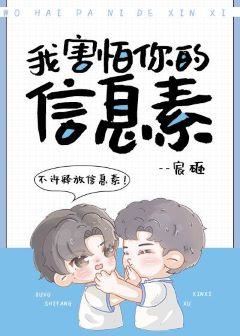
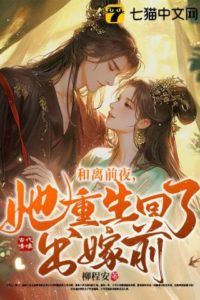
Ye Cheng is a successful executive in the Lu Group, married to Lu Xiao, the rebellious heir of a powerful family. Their relationship is complex; Lu Xiao is a former playboy who has become devoted to Ye Cheng, while Ye Cheng manages the family business with calm efficiency. The story opens after the 70th birthday celebration of Ye Cheng's father-in-law, where drunken conversations reveal lingering regrets about Lu Xiao's academic failures and past behavior. The night ends with an intimate encounter between the two husbands, highlighting their deep bond despite Lu Xiao's stubborn nature. However, Ye Cheng wakes up not in their marital home, but in his childhood bedroom, surrounded by high school uniforms and textbooks. He realizes he has traveled back in time to his sophomore year of high school, on August 22, 20X1.

Acclimating to his teenage body, Ye Cheng attends Nandu High School, an prestigious institution known for its rigorous academic environment. He learns that Lu Xiao is currently a student at the neighboring No. 13 High School, a school with a notorious reputation for delinquency. Ye Cheng discovers that in this timeline, Lu Xiao is about to drop out due to involvement with unsavory characters and a scandal involving a girl. Determined to alter this tragic path and prevent the regrets that plagued his father-in-law, Ye Cheng makes the shocking decision to transfer from the elite affiliated high school to No. 13 High School, specifically choosing Class 20, the lowest-performing class. This move confounds his former teachers and peers but is driven by his need to be close to Lu Xiao during this critical period.

Upon arriving at No. 13 High School, Ye Cheng encounters the chaotic atmosphere that is entirely foreign to him. The students are unruly, the facilities are dilapidated, and social hierarchies are enforced through intimidation. He quickly becomes the center of attention due to his handsome appearance and academic excellence. His first interaction with Lu Xiao occurs in the classroom, where Ye Cheng sits diagonally behind him. Lu Xiao, known as the "School Grass" and a local boss, is wary of the new transfer student. The tension escalates when Ye Cheng gets into a confrontation with Zhou Kai, a subordinate of Lu Xiao's rival, Zhang Qi. Lu Xiao intervenes, defending Ye Cheng and asserting his dominance, which marks the beginning of a complicated dynamic between them.

Ye Cheng navigates his new environment with the composure of a seasoned executive, earning the respect and curiosity of his classmates. He excels academically, topping the monthly exams and surprising everyone, including Lu Xiao. As they are assigned to sit next to each other, Ye Cheng attempts to rebuild his relationship with Lu Xiao from scratch. He observes Lu Xiao's vulnerabilities and frustrations, recognizing the boy who will eventually become his devoted husband. Despite Lu Xiao's initial hostility and defensive exterior, Ye Cheng persists, using his future knowledge to guide and protect him from the negative influences of their peers, particularly the conflict with Zhang Qi.

The story explores Ye Cheng's efforts to change Lu Xiao's fate while navigating the challenges of high school life. He balances his studies with the need to keep Lu Xiao on a better path, intervening in schoolyard politics and bullying incidents. Lu Xiao, though confused by Ye Cheng's familiarity and protectiveness, begins to reciprocate these gestures, leading to moments of unexpected intimacy and understanding. The narrative sets the stage for a romance that transcends time, with Ye Cheng determined to ensure that Lu Xiao finds success and happiness, avoiding the pitfalls of their past.

As the months pass, the bond between Ye Cheng and Lu Xiao strengthens. Ye Cheng's presence brings stability and inspiration to Class 20, challenging the status quo and earning him a protective circle of friends among his new classmates. Lu Xiao, in turn, starts to show signs of change, becoming more attentive to his studies and less involved in violent conflicts. The story culminates in a pivotal moment where Lu Xiao acknowledges Ye Cheng's importance, hinting at a future where their paths will remain intertwined. Through determination and love, Ye Cheng seeks to rewrite their destiny, transforming a troubled youth into a promising future for both of them.

Latest Release
DateGroupRelease
2026-09-26knoxt c146
2026-09-26knoxt c145
2026-09-26knoxt c144
2026-09-26knoxt c143
2026-09-26knoxt c142
2026-09-26knoxt c141
2026-09-26knoxt c140
2026-09-26knoxt c139
2026-09-26knoxt c138
2026-09-26knoxt c137
2026-09-26knoxt c136
2026-09-26knoxt c135

Community Reviews

Rating(4 / 5.0, 373votes)
5 stars
123(33%)
4 stars
120(32%)
3 stars
130(35%)
2 stars
0(0%)
1 stars
0(0%)

Popular reviews

... Read More
I keep coming back to the imagery in this chapter and the symbolic weight behind it. Let's start with the cold. Everything is cold—the air, the bed, Ye Cheng's body which is described as "as cold as a piece of ice." But then Lu Xiao provides warmth, both physically by pulling him close and through the electric blanket. The heat is an act of care disguised as necessity. Then Ye Cheng kicks the blanket off in the night because it's too hot—symbolically rejecting the warmth even as he's surrounded by it. But then Lu Xiao covers him again. This push-and-pull with physical temperature mirrors their emotional dance perfectly. And the cut surface they discover at the very beginning—"very neat, artificial at first glance, no wonder it wasn't hot"—this could represent the artificial distance they've been maintaining. Something that looks clean and controlled on the outside but is fundamentally cold and lifeless. The tent itself is another powerful symbol: a temporary, fragile shelter where two people are forced into intimacy by circumstances beyond their control. It's small, claustrophobic, and utterly inadequate for the emotional magnitude of what's happening inside it. And that letter on the empty bed? Paper and words replacing the conversation they couldn't have. The ultimate symbol of miscommunication—everything Lu Xiao wanted to say had to be written down because saying it aloud felt impossible.
... Read More
Can we just talk about how Lu Xiao handles this entire situation? Like, first you see him being petty about not getting to sleep with Ye Cheng—poking his steak angrily, refusing to eat soup—and then the scene shifts and suddenly this kid who was throwing a tantrum five minutes ago is walking into a crisis with absolute composure. He tells Ye Cheng to wait at the door, goes in alone, and comes out ten minutes later having already called a doctor. That's not just maturity, that's someone who has dealt with this before. A lot before. But what killed me was the moment right after. Ye Cheng's foot is bleeding from glass, and both Lu Xiao and Mrs. Wang say "Are you hurt?" at the exact same time. That's the universe telling you something about priorities. And then Lu Xiao crouches down, grabs Ye Cheng's instep with his hands—his hands that literally just calmed down a full-blown psychiatric episode—and says something about infection being troublesome. He doesn't say "I was worried." He doesn't say anything sweet. But the fact that he noticed the blood spots immediately while everyone else was cleaning up shattered porcelain? That says everything.
... Read More
"They are an arranged marriage, and they each have their own way after giving birth to me. They don't have any family values." Lu Xiao says this so bluntly, so casually, and Ye Cheng immediately spots the contradiction: if they're both living separate lives, why did Jiang Yirong accuse Lu Yaoshan of using violence against Meng Li? Why would she threaten to make a scene at the ancestral hall if the marriage was already essentially dead? This is the kind of detail that makes me sit up straight. Either Lu Xiao doesn't know the full picture about his parents, or he's been shielding himself from it by framing it as 'they don't care about each other' when the reality might be messier and more dangerous. And Jiang Yirong's involvement — she felt confident enough to threaten Meng Li publicly, which means she believed she had ammunition. What does she know that Lu Xiao doesn't? Meanwhile, the Hong Kong exam is happening, Class 20 is somehow the only class with teacher escort, and Jiang Jin accidentally touches Ye Cheng's waist and Lu Xiao immediately threatens to chop his hand off. The stakes are rising on every front — academic, familial, and interpersonal. I am NOT ready for what's coming.
... Read More
The pacing here is deceptively slow. On the surface it's just a series of hangout scenes — dinner, KTV, walking home — the kind of episode that could easily drag if the author wasn't careful. But every single scene has a purpose and none of them repeat the same emotional beat. Dinner = visual tension, no words needed. KTV = forced introspection through comedy. Walk home = the accident that cracks him open. Each scene escalates the internal conflict by a different degree. The dinner is quiet agony. The KTV is loud confusion. The walk is a genuine emotional break. By the time Lu Xiao blurts 'I'm jealous' to a tipsy Jiang Jin, we've spent three scenes building toward that moment and it still lands like a punch because we've been watching him dig his own hole this whole time. The chapter also knows when to cut away. The Mrs. Wang ending — her hurried explanation about cleaning, the detail that his mother isn't home — feels like the author deliberately refusing to give us a neat bow. Something is happening at home. Something matters. And we're left hanging, which is exactly the right note to end on after a chapter about a guy who can't even hang on to his own emotions.
... Read More
The pacing in this chapter is absolutely masterful, and I need to break down why. It starts small — a phone call about homework scores, a winter camp decision, a silly WeChat exchange — and escalates organically to a full confrontation with a teacher, then lands on an emotionally significant moment against the wall. There's no wasted breath. The author moves from Ye Yang's parental pressure to Ye Cheng's internal conflict about tutoring, then pivots to the morning self-study scene where Lu Xiao's chaotic energy immediately takes over. The soybean milk incident happens, Ye Cheng tries to explain about the winter camp, Lu Xiao gets mad, Jiang Jin suffers as a bystander, and then suddenly it's homework collection time and both of them are standing against the wall. Every beat serves at least two purposes: advancing plot AND developing character. The transition from internal monologue to external action is seamless. Zhu Yufen's entrance feels earned because we've been primed to expect consequences. And that cliffhanger ending — Ye Cheng starting to say what drink he wants to buy Lu Xiao and then the text cuts off — is the kind of structural choice that makes readers immediately open the next chapter. The author trusts the reader to fill in gaps and doesn't over-explain anything.
... Read More
The pacing in these chapters is really tight. You start with the online rumor mill - 600+ replies, banhammer activated, two clueless guys just trying to eat lunch. Then it pivots to the Haikou trip setup, then the dancing decision, then the wedding anniversary JK flashback, then the note, then the dance class. Each beat earns the next one. That flashback sequence is where the pacing gets risky though. We go from 'I can't dance in women's clothes' to a cruise ship with fireworks and a five-carat diamond ring wrapped in ice cream, then into something violent. The author could have lost readers there, but it lands because it explains EVERYTHING about Ye Cheng's resistance. The bone-marrow fear of jk isn't just about clothing - it's about what happened that night. Then the transition back to present day with the paper ball is so sharp it almost hurts. One moment he's traumatized, the next he's looking at a doodle written like a teenager and his heart melts anyway. The author knows exactly when to speed up and when to slow down. My hands were sweating during the mirror practice scenes especially.
See all reviews

Custom lists

See all custom Lists