Summary

... Read More
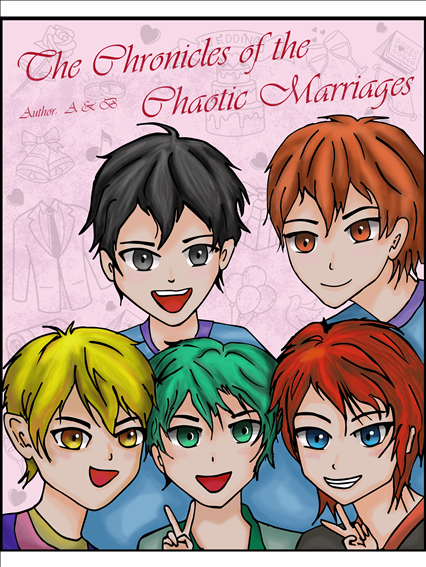
Pei Ziran and Ai Jing are both well-known playboys in their social circle. Pei Ziran is described as narcissistic and confident, while Ai Jing is characterized as passionate and cheerful. The two men enter into a flash marriage with little prior knowledge of each other, guided only by their reputations. Their wedding is not preceded by romantic dates or traditional courtship, but rather by a mutual decision to wed immediately.

Shortly after their marriage, both men attend a housewarming party hosted by a common friend named Si Qibei. During the event, Pei Ziran displays lingering affection for Si Qibei, who is straight. Ai Jing observes this interaction and feels uneasy about his husband's loyalty. Later at the same party, Ai Jing encounters Fu Xueren, a man from his past whom he no longer loves but who still harbors feelings for him. Ai Jing confronts Fu Xueren aggressively in a washroom, demanding to know why he is there. Fu Xueren accuses Ai Jing of not loving him and flees the scene. Ai Jing returns to Pei Ziran, attempting to suppress his discomfort and reaffirming his commitment to their marital agreement.

The couple travels to Zurich for their honeymoon. During their stay, they engage in intimate activities and visit local attractions. One evening, while at a bar, Ai Jing leaves to use the restroom. Upon returning, he discovers Pei Ziran kissing another man. Ai Jing reacts with anger, throwing a drink on the stranger and confronting Pei Ziran. He accuses his husband of trickery and leaves the establishment. Pei Ziran follows him to the hotel room but is locked out. He spends the night waiting by the door while Ai Jing remains inside, distressed by the betrayal he perceived.

Upon returning home, the atmosphere between them is tense. Pei Ziran attempts to apologize by preparing a candlelit dinner, but Ai Jing remains cold and suspicious. He demands assurance of Pei Ziran's loyalty. Pei Ziran promises to change and asks for a chance to prove himself. Ai Jing agrees to give him one final opportunity, warning that there will be no further chances if Pei Ziran makes another mistake.

A few days later, Ai Jing visits Pei Ziran at his office at KT Entertainment. He intends to deliver lunch but overhears intimate sounds coming from an office. Peeking inside, Ai Jing sees Pei Ziran with his secretary, Lu Niming. Pei Ziran claims he was trying to make someone jealous, specifically Rong Wen, rather than hurting Ai Jing. Ai Jing leaves the office without confrontation but decides immediately that he wants a divorce. He believes Pei Ziran is incapable of fidelity and does not wish to waste his time on a playboy.

Ai Jing informs Pei Ziran's mother, Bing Mi, of his decision to divorce. Bing Mi listens sympathetically and advises Pei Ziran to respect Ai Jing's choice while acknowledging his son's faults. When Pei Ziran proposes a divorce settlement involving a five percent share of Ai Jing's company, Ai Jing refuses, citing the insult to his pride. Pei Ziran counters by offering a lucrative business project instead. Bing Mi intervenes, urging Ai Jing to accept the project as a gesture of goodwill. Ai Jing accepts the terms to avoid further conflict and secure a clean break. He bids farewell to Bing Mi, expressing regret that their marriage failed, and leaves without looking back. Pei Ziran watches him depart, and the couple's marriage officially ends.

Parallel to the main plot, the narrative introduces the backstory of Rong Wen and his younger stepbrother, Bai Qing. As children, Bai Qing moved into Rong Wen's home after their parents remarried. Rong Wen initially resented the intrusion but gradually grew fond of Bai Qing. The story highlights their close bond, with Rong Wen often teasing Bai Qing while Bai Qing maintains a calm, disciplined demeanor. This subplot establishes the familial dynamics that influence the broader social circle surrounding the two protagonists.

Latest Release
DateGroupRelease
2026-09-26knoxt c9
2026-09-26knoxt c8
2026-09-26knoxt c7
2026-09-26knoxt c6
2026-09-26knoxt c5
2026-09-26knoxt c4
2026-09-26knoxt c3
2026-09-26knoxt c2
2026-09-26knoxt c1

Community Reviews

Rating(4.1 / 5.0, 26votes)
5 stars
11(42%)
4 stars
6(23%)
3 stars
9(35%)
2 stars
0(0%)
1 stars
0(0%)

Popular reviews

... Read More
There's a symbolism running through these chapters that I can't stop thinking about, and it's the HOUSE itself. Remember how Bai Qing first enters: 'stood outside the big house, clutching his mother's clothes in nervousness and expectation.' He's literally clinging to the only tether he has. Inside, the living room is huge, the parents are absorbed in their own world, and the one person who notices him immediately rejects him. The house is a space of absence — everyone is physically present but emotionally nowhere near each other. Then jump to Chapter 7, and that same house has become a stage for a completely different dynamic. The dining table separates them. The sofa has a table between them still. But the power has inverted — Bai Qing now occupies the position of authority, and the house no longer feels empty, it feels CHARGED. I also can't ignore the EAR motif. Bai Qing touches his ears at the end — they're hot, probably red. Ears are where you hear things you weren't meant to hear, where shame shows visibly, where intimacy happens (whispering, breathing). Rong Wen whispers 'dear baobei' and Bai Qing's entire body betrays him at the point of reception. And the games — video games as metaphor for control. Rong Wen loses himself in digital worlds where he has power, where he can fight demon lords and win. Bai Qing controls the real world by threatening to take away that escape. The games represent everything Rong Wen uses to avoid facing reality, and Bai Qing is the one holding the controller in the real world. The title itself — 'The Hamster and his Innocent Caretaker' — is doing so much work. Hamster: small, cornered, running on a wheel, seemingly harmless but desperately trying to survive. Caretaker: authority figure, but also someone trapped in a role they didn't choose. And the word 'innocent' in quotes? That's the author winking at us, telling us to question everything we think we know about who's really innocent here.
... Read More
I have to be honest — this section hit me differently than I expected. Every romance novel trains you to expect the dramatic breakdown, the rain-soaked confrontation, the slow realization that breaks your heart into a million pieces. But what the author did with Ai Jing's emotional arc here was refreshingly different. There's no sobbing. There's no inner monologue about how much this hurts. Instead, there's something far more mature and far more painful: acceptance. The line “His face was filled with a mixture of frustration and anger but there was no sadness whatsoever” is the emotional core of this entire passage. Think about that for a second. After everything — the candles, the apology, the food, the attempts at reconciliation — Ai Jing still feels nothing but anger. Not sadness. Not longing. Just pure, clean rage at being disrespected. That's a powerful emotional statement about a relationship that was built on uneven ground from the start. I also found the detail about Ai Jing's expression collapsing the moment he leaves the office really poignant. The calm, cool exterior he maintained in front of Pei Ziran completely crumbles when no one is watching. It shows how much energy it takes to hold yourself together when your world is ending, and how exhausting it is to pretend you're fine when you're not. The unspoken tension between Ai Jing and Rong Wen also adds an interesting emotional undercurrent. Someone who supposedly wanted to make Ai Jing jealous apparently hoped Pei Ziran would have a “happy married life” with him instead. That complexity of feelings — unrequited love, accidental matchmaking, complicated triangles — it all adds layers to the emotional landscape that make this story feel far more nuanced than a simple betrayal narrative.
... Read More
Okay so let's talk about how this story sets up its central tension in the first few paragraphs, because honestly it's kind of brilliant how understated it is. You start with this internal monologue — 'Why do I hate it when that person smiles at someone else?' — and then immediately pivot to the narrator kissing someone and wondering if they'll be kicked out. That's not exposition, that's EMOTIONAL STAKES laid bare. You don't even know who this person is yet but you already feel the weight of it. Then Chapter 7 drops you into this world where Bai Qing is a kid whose dad died, mom remarried, and now there's this gloomy older boy Rong Wen who barely hides his resentment. The scene-by-scene construction is so deliberate — first the wide shot of the house, the cold parents lost in their own drama, the kid trying to get attention and failing. Then BAM, Rong Wen's first line is hostile. 'I don't want a brother!' The rejection is immediate and raw. But what I love about the plot structure here is how it INVERTS power over time. In that first scene, Bai Qing has zero agency — he's small, stuttering, ignored. By Chapter 7, he's the one holding all the cards, dictating schedules, threatening game confiscation, and Rong Wen is the one cowering. The narrative arc from victim to authority figure runs silently through every interaction. And that ending — Bai Qing touching his hot ears after Rong Wen flees? That's not resolution, that's a hook so thin it's practically transparent.
... Read More
I need to talk about the Little Theatre bits because the author literally inserts a Q&A between reporters and themselves mid-chapter and I was NOT prepared for that level of fourth-wall-breaking chaos. The responsible authors section literally says 'Authors don't take responsibility for this roller coaster' and I laughed out loud because yes, absolutely, you did this to us and now you're hiding behind a fake news anchor. Then Baobao and Ana are discussing the 'amusement novel threshold for roller coasters' like they're theme park inspectors? The humor here is so specific and so unhinged. And PZ picking up a sword while threatening to 'kill' them? The character voices are actually distinct—Ai Jing's internal monologue has this quiet desperation while Pei Ziran's dialogue is all deflection and panic. Even the mother's lines feel totally different, warm and teasing and completely unaware of the emotional landmine she's stepping over when she says 'young people these days.' The contrast between the meta comedy and the actual heartbreak is wild.
... Read More
The pacing in these chapters is actually really clever. You've got the party scene where everything explodes—Ai Jing spots Fu Xueren, drags him to the bathroom, there's shouting and tears and then Fu Xueren bolts—and then you cut to Pei Ziran walking in like nothing happened and asking what went wrong. The contrast between that high-tension moment and Ai Jing's immediate shift to "sorry A'Ran" is brutal. It's like the author is showing us how quick it is to go from passion to performance. Then you've got the Switzerland chapter which is basically pure setup—they travel, see sites, visit gardens, come back tired, sleep. The chapter breaks right when things get intimate. The next morning dream sequence with the octopus is... wild choice honestly—but it works because it gives you something to process before the next act kicks in. The breakfast scene with the Pei family feels like a breather, but it's also where all the unspoken tension piles up. Bing Mi handing over those tickets isn't just a plot device—it's the author saying "look how much everyone thinks they know about this relationship." The structure keeps pulling you forward with quick emotional hits followed by longer stretches where the dread builds. It's exhausting in the best way.
... Read More
Let's talk about pacing because this author absolutely understands how to control tension like a tightrope walker. The first section starts relatively slow — an apology scene, candlelight, food, awkward conversations. It's almost mundane in its setup, like you're settling into a typical reconciliation moment. But the author is quietly building something underneath, and the payoff comes so fast and so hard that you barely have time to process it. The transition from the apology to the office scene is masterful. You go from Pei Ziran nervously saying “If I were a cat, I would've liked to spend all nine of my lives making you happy” — which is genuinely sweet in a clumsy way — to Ai Jing walking into an office and witnessing the exact opposite of what that line promises. The juxtaposition is almost cruel, and it works because the pacing gives you just enough time to hope before yanking the rug out from under you. I also appreciated how the author used the elevator ride as a structural device. Ai Jing climbing up floor by floor, mentally preparing for another conversation with Pei Ziran, only to find the reality he dreads waiting for him on the other side of a wooden door. The “Ding” sound, the closed door, the sounds before the sight — all of these elements create anticipation that the author then completely subverts. The chapter endings are also well-timed. The first section ends with Pei Ziran shuddering at the thought of his mother's lectures, which is almost comedic relief after the heavy confrontation. Then the second chapter opens with Ai Jing arriving at the company, and the narrative drops you straight into the betrayal without any buffer. That structural choice — cutting from comedy to tragedy so abruptly — is exactly what makes this passage so emotionally effective.
See all reviews

Custom lists

See all custom Lists