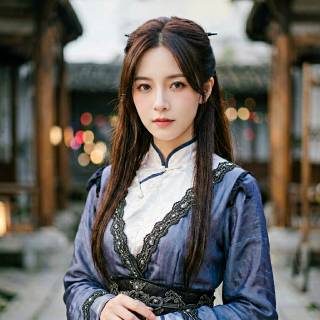
Lu Jinhuan is an eighteen-year-old woman living in Suzhou City during March 1976. Her biological mother died from severe hemorrhaging shortly after giving birth to her. Her father, Lu Zhao, raised her alone until he remarried Li Haili, who brought her own daughter, He Xiaoyun, into the family. Xiaoyun changed her name to Lu Jinyun and posed as a loving older sister, but in reality, she subjected Jinhuan to years of secret abuse, treating her like a servant and framing her when Jinhuan complained. For the first few years, Lu Zhao believed Jinhuan, but after Li Haili gave birth to a son thirteen years ago, his attitude shifted. He began to favor his wife and the new son, gradually accepting Lu Jinyun’s false narratives. Jinhuan grew up isolated, lacking parental protection, and aware that her stepmother viewed her as a thorn in her side.
The central conflict emerges when Lu Jinyun, now married into the prestigious He family in Beijing, proposes a marriage arrangement for Jinhuan. Lu Jinyun married He Xiangbei, the youngest son of the influential He family, through calculated means. However, after a complicated premature birth that left her unable to conceive for several years, the He family pressured her to secure the lineage. To maintain her status and please her in-laws, Lu Jinyun suggested that Jinhuan marry He Congnan, the eldest son of the family. He Congnan is a military officer who was diagnosed with low sperm count years ago, rendering him infertile. Lu Zhao and Li Haili see this as an opportunity to elevate their family’s social standing and secure connections in Beijing. They pressure Jinhuan to accept, emphasizing the dangers of being sent to the countryside for labor, a common fate for unemployed youth at the time.
Jinhuan faces a precarious future. With no job prospects and the threat of rural assignment looming, marriage is her only viable escape. She recognizes that her father intends to use her to build ties with the He family, just as he used Lu Jinyun. Despite her fears, she agrees to the marriage on two conditions: she demands five hundred yuan as her dowry and the return of her late mother’s belongings, which Li Haili has kept. Lu Zhao agrees readily, viewing these requests as minor concessions for a significant social advancement. Jinhuan’s acceptance is not born of hope but of resignation. She understands that marrying an infertile man might spare her the immediate danger of childbirth complications, yet it leaves her vulnerable to widowhood and lack of standing within the He family.
As Jinhuan prepares to leave Suzhou for Beijing, she reflects on her eighteen years of life. She remembers her father’s efforts to raise her alone before his remarriage, nursing her on the kindness of neighbors. She recalls the betrayal by Lu Jinyun, who exploited familial bonds to secure her own position. The journey to Beijing marks a transition from one form of oppression to another. In the He household, she will be surrounded by people who see her primarily as a tool for reproduction and social climbing. Lu Jinyun’s motives are self-serving, aiming to strengthen her own precarious position by introducing a compliant sister-in-law. Li Haili’s hostility remains a constant threat, and Lu Zhao’s indifference ensures that Jinhuan has no ally in her new home.
The story direction follows Jinhuan’s navigation of this hostile environment. She enters the He family as a young, beautiful, and seemingly innocent bride, contrasting sharply with the political and familial intrigues she will face. Her physical resemblance to her late mother and her pure yet alluring demeanor attract attention, but also danger. The narrative explores her struggle to maintain her identity and dignity while surviving in a family that values lineage and status above human connection. Her relationship with He Congnan develops amidst the shadow of his infertility and the manipulative influence of his wife, Lu Jinyun. Jinhuan must rely on her own resilience and intelligence to carve out a space for herself, avoiding the pitfalls that trapped her previous life. The setting of 1970s China adds a layer of historical tension, where personal destinies are often shaped by broader political and social forces. Her journey is one of survival, adaptation, and the quiet assertion of self in a world that seeks to define her by her utility to others.