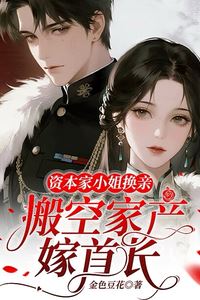
“The Capitalist Heiress Marries Off, Empties Her Fortune to Wed the Commander”
+Add to Custom List
Genres:
Novel Info

Summary

... Read More
Lin Shuyun, a veteran commander from the apocalypse, wakes up in the body of a young woman in 1960s Yun City after sacrificing herself to defeat a zombie king. She finds herself in the home of the wealthy Lin family, where she has been falsely accused of pushing her step-sister, Su Xiaonian, into a freezing rice field. The original host was a timid, weak-willed girl who was manipulated by her father, Lin Youwen, and his mistress, Su Xiuhong, into accepting abuse and eventually meeting a tragic end. Upon absorbing the original memories, Lin Shuyun realizes she has transmigrated into a novel where she was destined to be a villainous supporting character, slandered and sent to labor reform. Lin Shuyun immediately shifts the dynamic, refusing to apologize and instead exposing the truth: Su Xiaonian secretly met with her fiancé, He Junze, and framed Lin Shuyun to cover her tracks. She demands repayment for five years of board and lodging, calculating a debt of one hundred thousand yuan. When Lin Youwen attempts to strike her, Lin Shuyun effortlessly repels him with combat skills honed in the apocalypse. She further asserts her dominance by demanding his gold watch and jade pendant as compensation, threatening to expose his affair and illegitimate daughter if he refuses. The household staff, previously alienated by the original host, begin to shift their loyalty back to her. A system named 007 binds to Lin Shuyun, revealing that her soul was recruited by the Time-Space Bureau to inhabit this body. Her tasks are to exact revenge on those who wronged the original host and to repay a debt of gratitude to Gu Yichuan, a disabled military officer who saved the original Lin Shuyun in her past life. In return, the system promises to unlock her spatial ability, which contains a vast storage area and spiritual fields capable of healing. Lin Shuyun agrees, motivated by the desire to live a peaceful life and protect her new assets. The conflict escalates when Su Xiuhong and Su Xiaonian attempt to steal back their jewelry, but Lin Shuyun has already replaced it with boxes laced with itching powder. Meanwhile, He Junze, who has been secretly involved with Su Xiaonian for two years, attempts to break off his engagement with Lin Shuyun to marry her. However, when the Lin family arrives at the He estate, Lin Shuyun’s transformed appearance and sharp demeanor stun everyone. He Junze, realizing he still desires her, tries to backtrack, but Lin Shuyun demands compensation for his infidelity. Her younger cousin, He Junshan, provides photographic evidence of He Junze and Su Xiaonian’s affair, forcing He Junze to publicly apologize and agree to pay one hundred thousand yuan to avoid scandal. Lin Shuyun secures the money and the cancellation of the engagement, setting the stage for her next move: seeking out Gu Yichuan to fulfill her gratitude task while dismantling the Lin family’s corrupt structure.

Latest Release
DateGroupRelease
2026-08-11shanghai fantasy c36
2026-08-11shanghai fantasy c35
2026-08-11shanghai fantasy c34
2026-08-11shanghai fantasy c33
2026-08-11shanghai fantasy c32
2026-08-11shanghai fantasy c31
2026-08-11shanghai fantasy c30
2026-08-11shanghai fantasy c29
2026-08-11shanghai fantasy c28
2026-08-11shanghai fantasy c27
2026-08-11shanghai fantasy c26
2026-08-11shanghai fantasy c25

Community Reviews

Rating(4.4 / 5.0, 10votes)
5 stars
6(60%)
4 stars
2(20%)
3 stars
2(20%)
2 stars
0(0%)
1 stars
0(0%)

Popular reviews

... Read More
Can we just talk about He Junze for a second because this man is a masterpiece of entitlement? He shows up to the He estate ready to break off the engagement because Su Xiaonian fed him lies, and then the SECOND he sees the transformed Lin Shuyun, his entire personality flips. One moment he's calling her "vulgar" and "two-faced," the next he's grabbing her hand promising to make amends. The man has no consistency, no backbone, just pure opportunistic panic. But what's really interesting is Old Master He. He's the only adult in the room who actually sees through the BS. He immediately catches He Junze lying about Xiaonian, he remembers what Lin Shuyun actually looks like, and he's clearly disgusted by his grandson's behavior. I hope he becomes a recurring ally for Lin Shuyun because he's the only sane He family member. Then there's Su Xiuhong—oh man, she's fascinating in a terrible way. She's not just a cartoon villain; she's calculating and strategic. She remembers that silver bracelet and jade pendant that belonged to her own family, not the Lin family, and she's planning to pawn things and flee to Hong Kong. She's thinking three steps ahead while her daughter is over there screaming about fairness. That contrast between mother and daughter is really well done. And Lin Shuyun's relationship with Aunt Chen! The fact that Aunt Chen feels "relieved and gratified" that her young lady has changed—this little detail tells us everything about how isolated and manipulated the original Lin Shuyun was. The household staff was on her side, but she couldn't fight back. Now she can, and the dynamic has shifted. I'm also really curious about the system 007. Their banter feels almost like a comedy duo at times, which is an unexpected tonal choice for what's otherwise a revenge drama.
... Read More
What I love about this story is how the conflicts keep escalating and intersecting. On the surface, it's a family dispute—a stepmother and her daughter trying to take over the Lin family fortune. But beneath that, there are SO many layers of stakes at play. The political danger of being a capitalist in 1960s China means that any scandal could literally send the whole family to labor reform. The secret about Su Xiaonian being Lin Youwen's biological daughter adds an even bigger layer—if this gets out, it's not just social ruin, it's potentially criminal. And then there's the romantic conflict with He Junze, the fiancé who supposedly fell for Su Xiaonian first. The protagonist understands all of this and uses it strategically. When she threatens to expose the affair, she's not just being petty—she's leveraging the most dangerous information she has. The scene where Lin Youwen threatens Su Xiaonian about the 'pig cage' (a reference to public shaming and harassment) shows how the political climate amplifies every personal conflict. The tension between what the characters want (money, legitimacy, love) and what they could lose (freedom, life, reputation) creates a pressure cooker environment. I'm genuinely invested in whether Lin Shuyun can outmaneuver everyone while protecting herself. The stakes feel real and immediate, and the author does a great job of making every conversation feel like a high-wire act.
... Read More
The worldbuilding here is surprisingly rich for a transmigration story set in 1960s China. The details about ration coupons, the price of japonica rice at 0.16 yuan per pound, the premium pork hind leg at 0.9 yuan—these small touches ground the story in a very specific time and place. What I found really effective is how the setting itself becomes a weapon. Lin Shuyun uses her knowledge of the economic reality to calculate exactly how much the Su mother and daughter have been spending, turning everyday details into ammunition. The rice field scene where Su Xiaonian supposedly 'jumped in' is described with enough sensory detail that you can almost feel the cold water and mud. And the Lin family home—this massive wealthy household with imported coffee, western dresses, Su embroidery qipaos—paints a vivid picture of the old capitalist class in this era. The contrast between the humble countryside setting and the luxurious Lin household really emphasizes the power dynamics at play. The atmosphere during the confrontation scenes is thick with tension, and the author does a good job of making the political danger feel real and immediate. The threat of labor reform hanging over everything adds a layer of dread that makes every conversation feel like it could be the last.
... Read More
The two jewelry boxes are the most loaded object in this entire section, and I don't think the author even needs to say it out loud. On the surface, they're just containers for gold and silver—but symbolically, they represent everything the Su mother and daughter stole from Lin Shuyun. Her birthright, her security, her identity as the legitimate daughter. When Lin Shuyun takes them back, she's not just reclaiming objects; she's reclaiming her place in the family hierarchy. But then she empties them, puts in trash, and coats them in itching powder. This is the real genius move. The boxes become a metaphor for the Su family's entire existence—they look valuable on the outside but are hollow and poisonous within. And anyone who reaches for them will get burned. It's almost poetic justice dressed up as a practical trap. The transformation scene is also deeply symbolic. Lin Shuyun walks into the He residence looking completely different—not just physically, but in temperament and confidence. The old Lin Shuyun was described as "timid and shy," and her beauty was reduced by her own insecurity. Now she radiates. This isn't just a makeover; it's the visual manifestation of her rebirth. She's literally become unrecognizable to the people who wronged her. And the itching powder itself—derived from a mutated plant in the apocalypse—connects to the larger theme of how the protagonist's future knowledge gives her an edge in the past. The scum family is fighting with 1970s-era scheming, while she's bringing post-apocalyptic survival tactics to a family drama. That anachronism is almost thematic: she's from a world where weakness gets you killed, and she's applying those lessons to a world where weakness just gets you exploited. The system's dual progress bar is also symbolic in a way I didn't expect. It's not enough to take back what was stolen; she has to actively watch her enemies fall. Revenge isn't restoration—it's destruction. The system understands that the original host didn't just want her things back; she wanted justice, and justice in this world looks like suffering.
... Read More
Okay so this opening is such a fun twist on the transmigration genre. The protagonist literally wakes up in the middle of a confrontation—no slow buildup, no 'where am I' confusion for long—and immediately starts dismantling the whole situation. I love that she doesn't waste time being the victim. In the original novel she was supposed to be the villainous supporting character who gets sent to labor reform and dies tragically, but our girl? She's like 'nope, not today.' The plot structure here is really tight: transmigration → immediate crisis → protagonist asserts dominance → reveals the truth about the Su mother and daughter → drops the bomb about the fifty thousand yuan debt and the ten-day deadline. That last part is such a good hook because now we're left wondering: what happens when the deadline hits? Will they pay? Will she actually expose them? The stakes are set up in a way that makes you genuinely want to keep reading. And the subplot about Lin Youwen being Su Xiaonian's real biological father? That's a classic reveal that adds so much complexity. It's not just about romantic rivalry anymore—it's about inheritance, legitimacy, and the whole family structure collapsing. The pacing is solid, no filler, and the author knows exactly how to end a chapter on a cliffhanger.
... Read More
I have to talk about the dialogue in this because it's genuinely impressive. Each character has such a distinct voice that you can tell who's speaking even without the tags. Su Xiaonian's lines are dripping with that performative innocence—'Sister Shuyun, I know you don't like me, but you can't slander me!'—she's crafting herself as the victim in real time, and it's both annoying and believable. Su Xiuhong's voice is even more layered; she's constantly shifting between tears and calculations, and her dialogue reveals her true nature even when she's trying to hide it. Lin Youwen's anger feels authentic too—his 'Ungrateful girl! I raised you all these years!' line is exactly the kind of manipulated father response you'd expect. But the real star here is Lin Shuyun's dialogue. She's sharp, direct, and unapologetic. Lines like 'If you want to leave, then leave. You've got legs, no one can stop you!' and 'I'll give you ten days. If you don't bring me fifty thousand in ten days...' have this incredible punch to them. The banter between her and the Su mother-daughter duo crackles with tension. The narrative voice is also really engaging—it's got this wry, almost amused tone that matches the protagonist's internal attitude perfectly. There's a scene where Su Xiaonian calls Lin Youwen 'real father' and the dialogue carries so much subtext that I actually had to reread it.
See all reviews

Characters

See all characters

Custom lists

See all custom Lists