Summary

... Read More

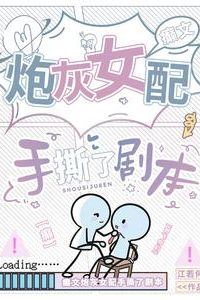
Yin Shuwei, a hardened civil engineering worker accustomed to brutal labor and overtime, transmigrates into the body of Wei Yi Rou Zhi, a cannon fodder female supporting character in a toxic romance novel titled A Lifetime of Wrong Love. She arrives moments before her original fate: being drugged, photographed, and assaulted by men hired by Shen Jin, the novel’s deranged male lead. Shen Jin, a CEO with a twisted psyche stemming from childhood trauma, obsessively pursues Yu Xingzhi, a celebrated actor, through a campaign of psychological abuse, financial ruin, and violence against Yu’s family. Yin Shuwei, occupying the role of Yu Xingzhi’s arranged wife, uses her combat experience to brutally defeat her attackers, escape the warehouse, and return home to confront her husband.

Upon her return, Yin Shuwei finds Yu Xingzhi waiting with an axe, revealing his own capacity for violence and his awareness of Shen Jin’s threats. Rather than fearing her, Yu Xingzhi is intrigued by her resilience. Yin Shuwei, fully aware of the plot, decides to dismantle Shen Jin’s schemes proactively. When Shen Jin leaks doctored videos to ruin her reputation and force a divorce, Yin Shuwei counters by livestreaming evidence of the assault and exposing Shen Jin’s harassment logs. She turns the narrative around, branding herself the Blood-Soaked Female Ghost and driving Shen Jin into a public relations crisis while gaining massive online popularity.

The conflict escalates when both couples are invited to appear on a divorce reality show, Lovers, But Beyond, intended to expose Yin Shuwei’s infidelity. Dressed in frog mascot costumes to hide their identities, Yin Shuwei and Yu Xingzhi dominate the competition. Yin Shuwei displays superhuman strength, effortlessly carrying heavy luggage and throwing Shen Jin during a physical challenge, while Yu Xingzhi performs acrobatic feats. Their synergy shocks the audience and the other guests, Lu Jinming and Lin Rongrong, whose own marriage is crumbling under Lu’s emotional neglect and Lin’s desperate attempts to maintain a perfect facade.

As the show progresses, Yin Shuwei’s blunt honesty and physical prowess contrast sharply with the performative fragility expected of female influencers. She openly mocks Shen Jin’s weakness and Lu Jinming’s misogyny, earning both hatred and admiration. Meanwhile, her relationship with Yu Xingzhi shifts from a cold alliance to genuine partnership. Yu Xingzhi begins to care for her, peeling nuts and expressing a desire to know her better, while Yin Shuwei recognizes the humanity beneath his cold exterior. The other couples’ marital failures further highlight the dysfunction created by Shen Jin’s manipulative influence on the social circle.

Shen Jin, unable to tolerate his loss of control, continues to plot against Yin Shuwei, but she remains one step ahead, using her knowledge of the plot and her combat skills to neutralize his threats. The story moves toward a confrontation where Yin Shuwei aims to not only survive but dismantle the toxic dynamics that destroyed the original characters. With Yu Xingzhi by her side, she challenges the novel’s predetermined tragedy, turning the tables on her abusers and redefining her fate from victim to victor.

Latest Release
DateGroupRelease
2026-08-11shanghai fantasy c76
2026-08-11shanghai fantasy c75
2026-08-11shanghai fantasy c74
2026-08-11shanghai fantasy c73
2026-08-11shanghai fantasy c72
2026-08-11shanghai fantasy c71
2026-08-11shanghai fantasy c70
2026-08-11shanghai fantasy c69
2026-08-11shanghai fantasy c68
2026-08-11shanghai fantasy c67
2026-08-11shanghai fantasy c66
2026-08-11shanghai fantasy c65

Community Reviews

Rating(3.8 / 5.0, 6votes)
5 stars
2(33%)
4 stars
1(17%)
3 stars
3(50%)
2 stars
0(0%)
1 stars
0(0%)

Popular reviews

... Read More
The worldbuilding in this chapter is subtle but effective. We're on a marriage counseling show, but it's not just a generic TV set—it's a carefully constructed environment where these couples are being pushed into roles they didn't ask for. Director Zhen's presence is constant but barely described. He's the puppeteer, announcing activities, leading people to different rooms, but we never get his perspective. The show exists as a system, not as individual people making choices. This institutional quality adds to the absurdity—these couples are being treated like experiments. The rooms themselves become important. Three different spaces for three different couples, each acting as a confessional or a stage. The physical separation allows for different dynamics—Yin Shuwei and Yu Xingzhi in their room, chaotic and loud; Lin Rongrong and Lu Jinming in theirs, tense and quiet. But what really makes the world feel alive is the audience presence—the bullet comments that float through the narrative. They're like a Greek chorus, commenting on the action, judging the counselors, reacting to the clients. This meta-layer transforms the scene from a simple counseling session into a performance, a spectacle, something being consumed and evaluated. The setting also includes these domestic details—the house size, the mortgage length, the nursing home references. These mundane realities ground the absurd situations in actual lived experience. The world isn't just a TV set; it's a reflection of actual Chinese urban life, with its housing pressures and family dynamics. The atmosphere shifts from comedic to claustrophobic as the chapter progresses, mirroring how these couples are increasingly trapped not just by the show's format, but by their own relationship patterns.
... Read More
I need to talk about Lin Rongrong because this chapter had me absolutely shattered. When Lu Jinming starts defending this controlling husband—saying things like 'isn't this great? He doesn't let you lift a finger'—Lin Rongrong doesn't say a word. Her palms are red from gripping them. She's remembering being trapped in a castle-like manor, trying to escape over and over, getting dragged back each time. The author doesn't even need to spell it out. One moment of her internal回忆 and suddenly you understand everything about her relationship with Lu Jinming. She's not just listening to this client's story—she's living it. The parallels are devastating. And Lu Jinming? He's sitting there completely oblivious, asking her point-blank "do you think a life like that is bad?" Like he genuinely doesn't see the connection. Like he's not the very embodiment of everything this woman is terrified of. But here's what gets me—the fact that she stayed. That she's still there, still married to him, still trying to maintain some version of normalcy. The weight of that choice, the complexity of why someone stays in a situation that frightens them, it's all there in her silence. Meanwhile, Yin Shuwei and Yu Xingzhi are having the time of their lives, completely detached from the real pain in the room. They're treating marriage counseling like a game while actual people are sitting across from them with real trauma. The contrast between their casual cruelty and Lin Rongrong's quiet suffering is absolutely gutting. I keep waiting for Lin Rongrong to snap, to say something, to finally break. But she just sits there, remembering, enduring. That's the most emotional thing about this entire chapter.
... Read More
The metaphor here is absolutely layered and I'm obsessed. On one level, you have this woman worrying about legitimate versus illegitimate children, inheritance, family hierarchy—all these ancient concepts of power and status. But then Yin Shuwei cuts through it all with the most mundane reality check: your house is small and your mortgage is long. By the time you're worrying about your children's inheritance, you'll be old and possibly getting slapped by nursing home staff. It's this brilliant commentary on how we project these grand, dramatic narratives onto our lives when the actual reality is so much smaller and more temporary. The woman wants to play palace intrigue, but she's actually just dealing with a three-bedroom apartment and debt. The stakes she's imagining are enormous, but the actual material reality is modest. And then there's Lu Jinming's entire philosophy about love and control. He frames restriction as protection, isolation as devotion. But the novel keeps showing us the actual cost of this thinking through Lin Rongrong's perspective. The theme isn't just 'control is bad'—it's about how people rationalize their own behavior and how others suffer under those rationalizations. The 'legitimate heir' concept becomes this perfect symbol for the entire show. Everyone's trying to establish their position, their status, their right to something. But the novel keeps asking: what are you actually fighting for? A house you'll outlive? A child you'll barely know? A status that means nothing when you're old and alone? The deeper meaning here is about the absurdity of taking these dramatic scenarios seriously when viewed against the backdrop of actual human mortality and limitation.
... Read More
Okay so this chapter had me absolutely losing it. The whole setup of these couples being put in as fake marriage counselors is already ridiculous, but then they actually get a client and their response? Chef's kiss. Completely unhinged. The woman comes in with this genuinely tragic situation—ex-girlfriend pregnant with his child, three months married, mortgage together—and Yin Shuwei's first instinct is to suggest she adopt the kid and make the ex pay her living expenses. I'm not even joking. This woman looked like she'd never considered that option in her entire life. But then Yu Xingzhi goes full palace drama mode, talking about legitimate versus illegitimate heirs like they're in some ancient Chinese harem. The client was just sitting there like what the actual f***. And the funniest part? They high-fived at the end like they'd just solved world peace. Meanwhile, Lin Rongrong and Lu Jinming's group gets this other client whose husband locked her in her house for three months, and Lu Jinming's like 'that's just love, you don't understand.' Lin Rongrong's face though—she clearly has her own reasons for knowing exactly how suffocating that kind of control feels. The parallel writing here is absolutely brilliant. The plot keeps escalating this absurdity while simultaneously digging into real relationship trauma. I love how the show format lets them explore different angles of toxic relationships while the main couple's own dysfunction simmers underneath everything.
... Read More
"Let her give birth normally. Put the child under your name. The child will call you 'Mother' and call her 'Auntie.'" I need to sit down. Yin Shuwei just dropped that like it was the most normal advice in the world. And Yu Xingzhi's response? "Actually, you don't need to raise it by your side. That child is nothing but an illegitimate heir, and she is at best an outside mistress." These two are absolutely deranged together. The way they bounce off each other, building on each other's insanity like it's some kind of collaborative art form. One suggests adoption-as-weaponry, the other suggests emotional suppression through hierarchy. Both equally terrible. Both somehow complementary. And then the client's actual reaction—she just keeps firing back with real financial concerns. "If she gives birth to a son, wouldn't that be my husband's family's eldest grandson?" And Yin Shuwei's response is just... checking her mortgage situation. "100 square meters, thirty years. Playing palace intrigue over a three-bedroom?" The dialogue here is so sharp. The client is the only sane person in the room, and she's getting absolutely dismantled by two people who clearly treat marriage like some kind of power game. Lu Jinming's voice is equally distinct—his justification for controlling behavior is so casually toxic it's almost impressive. "He restricts your freedom because he loves you. It's because he can't bear to lose you. I completely understand." Bro. You don't understand anything. But the fact that he says this while his own wife is sitting right there, remembering being locked in a manor... the dramatic irony is *chef's kiss*.
... Read More
This chapter is a masterclass in tonal shifting. It starts as pure comedy—Yin Shuwei and Yu Xingzhi giving increasingly ridiculous advice, the client's face getting more and more horrified. The pacing is snappy, the dialogue snaps back and forth, and you're laughing at the sheer audacity of their suggestions. The scene with the high-five at the end is perfect comedic timing. But then—bam. The scene shifts to Lin Rongrong and Lu Jinming, and the tone changes completely. The client's story about being locked in a house for three months should be horrifying, but Lu Jinming's response makes it even worse. He's not just missing the danger—he's endorsing it. And then the author does something brilliant. Instead of having Lin Rongrong speak, instead of having some dramatic confrontation, she just... remembers. The pacing slows down. We get these fragmented glimpses of her past—trying to escape, getting lost, being dragged back. The tension doesn't come from action, it comes from silence. The structure here mirrors the emotional journey. We start in the light, comedic world of absurd counseling, and slowly descend into something darker, more real. The chapter doesn't resolve either thread—it leaves us with Yin Shuwei and Yu Xingzhi still playing their game, and Lin Rongrong still trapped in her memories. What I love most is how the pacing controls our empathy. We laugh with the first couple, then we're forced to sit with the second couple's pain. The chapter structure itself becomes a commentary on how we consume trauma as entertainment.
See all reviews

Characters

See all characters

Custom lists

See all custom Lists