The Breakfast Shop Downstairs [Apocalypse]
Novel Info

Summary

... Read More

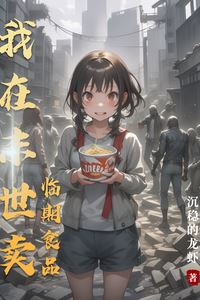
Lin You is a former office worker in Ancheng City who quit her job to open a small breakfast shop called Hope Breakfast Shop. Her dream of a simple, self-sufficient life is immediately threatened by an inexplicable global climate shift that plunges the region into perpetual darkness and severe cold. Business dwindles as the population becomes reclusive and fearful. The situation deteriorates rapidly when news reports reveal that melting Antarctic glaciers have released ancient viruses, causing widespread mutations in animals and humans. Mutated creatures, including a massive black bear, attack areas near the city, and zombie-like humans begin to appear. The infrastructure of Ancheng City starts to collapse as neighboring cities fall to the outbreak, and supply chains are severed, leading to panic buying and severe shortages of food and daily necessities.

Amidst the chaos, Lin You discovers a supernatural anomaly in her shop. After moving her personal food supplies home, she returns to find her empty freezers mysteriously restocked with high-quality ingredients, including premium mushrooms and fresh vegetables. When she removes items, they are instantly replaced, indicating an infinite source of food. Additionally, the purified water faucet begins dispensing fresh milk despite being shut off. Initially terrified and uncertain about the safety of these resources, Lin You decides to have samples tested at a food safety center. The test results reveal that the food contains no harmful substances but is rich in Fuliqing, a rare and expensive healing factor that accelerates wound recovery. The researcher, Fu Qingze, warns her that while the food cannot reverse zombification, its healing properties are invaluable for soldiers and civilians.

Lin You tests the food on her friend Tong Lan, who had recently suffered a severe leg injury. The wound heals remarkably fast, confirming the miraculous nature of the ingredients. Faced with the impending zombie siege and the critical need for resources, Lin You resolves to keep her shop open. She realizes that her infinite food supply could be a lifeline for the starving and injured population of Ancheng. She begins preparing meals, such as roujiamo and vegetable pancakes, and sells them to locals. The aroma of the food draws customers out of their homes, providing not just nutrition but also a sense of normalcy and hope in a dying world.

As the zombie threat closes in, Lin You’s shop becomes a beacon of survival. She navigates the moral and logistical challenges of distributing food, deciding to prioritize those in need while maintaining her own sustainability. The story follows her transition from a struggling business owner to a key figure in the community’s resistance against starvation and despair. With the city on the brink of collapse and the government unable to provide adequate support, Lin You’s mysterious supply becomes a critical asset. She collaborates with Fu Qingze, who offers his scientific expertise, and continues to serve her neighbors, including the man who received the tragic phone call from his infected wife. The narrative establishes a tense atmosphere where the apocalypse is not just a backdrop but an immediate, daily struggle for survival, with Lin You’s breakfast shop serving as the central hub of resilience and unexpected magic.

Latest Release
DateGroupRelease
2026-08-11shanghai fantasy c61
2026-08-11shanghai fantasy c60
2026-08-11shanghai fantasy c59
2026-08-11shanghai fantasy c58
2026-08-11shanghai fantasy c57
2026-08-11shanghai fantasy c56
2026-08-11shanghai fantasy c55
2026-08-11shanghai fantasy c54
2026-08-11shanghai fantasy c53
2026-08-11shanghai fantasy c52
2026-08-11shanghai fantasy c51
2026-08-11shanghai fantasy c50

Community Reviews

Rating(3.7 / 5.0, 12votes)
5 stars
3(25%)
4 stars
2(17%)
3 stars
7(58%)
2 stars
0(0%)
1 stars
0(0%)

Popular reviews

... Read More
Let me just say this: the man whose wife turned into a zombie is haunting me. I keep thinking about him. 'Thinking that in the last second of her clear mind, his wife had made the effort to call him.' That sentence has replayed in my head like a broken record. She chose HIM in her final moment. And he spent those last seconds running toward her, not away. The text says 'The street had never felt so long.' Not 'he ran for a long time' but the STREET ITSELF felt elongated, as if the universe itself was stretching out his agony. That's not writing—that's surgery on the heart. And Lin You watching him go, understanding everything, withdrawing her gaze like she's giving him privacy in his private hell. She doesn't call out. She doesn't offer comfort. She just... lets him be broken. And then she turns on the TV and the whole world keeps moving. But the moment that really got me was the convenience store scene. The chubby owner sitting on his stool at the entrance, waiting for nothing. Lin You sees him through the window and feels 'a surge of complicated emotions.' She goes in, makes up this excuse about notebooks, and he immediately offers her a discount. They both know she doesn't need notebooks. They both know the store will probably close forever soon. And they both pretend otherwise because sometimes the only kindness left is a small lie. Lin You pays full price and walks out. No explanation needed.
... Read More
Let me walk you through how this author builds tension because it is absolutely ruthless and I love it. We start with Lin You's smallest possible problem: her breakfast shop isn't making money. Two days, barely any customers. She's worried about next year's rent. This is relatable, this is everyday anxiety, this is the kind of stress that keeps people up at night even before the apocalypse arrives. And then — and this is key — the author NEVER takes the rent worry away. Even as soldiers are fighting mutated bears two hundred kilometers away, Lin You is still thinking about whether she can afford to keep the shop open. That's how you write escalating stakes. The personal doesn't get replaced by the epic — it gets crushed underneath it. The moment that made me literally grip my phone tighter was when the meat vendor tells her that several cities near Ancheng have already fallen. "Once a zombie gets in, there will be a second and a third." The vendor is wiping his counter like this is just another Tuesday. Like he's not describing the end of civilization. And Lin You — still holding her keys, still standing in a nearly empty wholesale market — has to process that the world she knew is already gone. The external conflict is clear: mutated creatures, zombies, collapsing infrastructure. But the internal conflict is what keeps me hooked. Lin You resigned from her job. She bet everything on this shop. What does she do now when the foundation she built is crumbling? The author hasn't given her superpowers or a secret past or a magic system. She's given her something far more terrifying: a normal person with nowhere to run and nothing to lose except the dream she already can't afford.
... Read More
I want to talk about how the author uses dialogue — or rather, how she almost doesn't use it at all. And it's genius. Lin You barely speaks in these seven chapters. When she does talk, it's to a stranger at a wholesale market, and the exchange is about as mundane as it gets: "Boss, will there still be stock tomorrow?" "I cannot say for sure when we will be able to sell again." That's it. Two lines. But they carry the weight of an entire collapsing world. The meat vendor's casual resignation — wiping his counter while describing the end of civilization — is one of the most effective pieces of dialogue writing I've read in a while. He's not giving a speech. He's not panicking. He's just... done. And that's somehow more terrifying than any dramatic monologue could be. The news broadcasts and radio reports serve as the author's tool for exposition, and they work because they're written in that cold, clinical tone that real news uses when reporting on things too horrible to process. "The climate in various parts of the world is undergoing drastic changes" — said like it's no big deal. Like mutated bears and human zombies are just another item on the weather report. Lin You's internal voice, narrated by the author, is where the real personality lives. She's observant, practical, quietly anxious. She notices the quality of rapeseed greens at the market. She knows which bean sprouts are best for stir-frying. Her thoughts are grounded in the physical world even as the world around her unravels. That contrast between her meticulous attention to detail and the chaos outside is what gives her voice its power. She doesn't need to shout to be heard.
... Read More
What strikes me most about the dialogue in these chapters is how much is communicated through what people DON'T say. Take the convenience store scene: 'I came to buy a few things. I'm worried that if the power goes out, electronic devices will be unusable. I can only use some notebooks for bookkeeping.' This is such a flimsy excuse, and the shop owner sees right through it. But he plays along anyway: 'There are only a few notebooks left. If you want them, take them all together. I'll give you a discount.' Two people, one lie, maximum tenderness. Lin You's dialogue with Fu Qingze is similarly layered. When he asks how she grew the food, she says 'A relative from far away mailed it to me.' Simple, deflective. And he doesn't push. 'I'm only responsible for testing. I'm not supposed to ask about the source.' But then he does ask anyway, just not directly: 'judging by your reaction just now, I suspect you're not sure about where these things came from either.' This man observes everything and says exactly what he means. The narration itself has this dry, almost detached voice that makes the emotional moments hit harder. 'She felt a surge of complicated emotions in her heart'—that's Lin You's internal voice, and it's almost understated for something so heavy. The author trusts the reader to feel the weight without announcing it. Even Tong Lan's WeChat message has this perfect casualness: 'sigh, why is my luck always this bad...' Like she's complaining about a sprained ankle and not the end of the world. That normalcy is the voice of someone trying to hold onto a life that's already slipping away.
... Read More
Okay so let me just say this upfront — Lin You is my kind of person. She's not some chosen one, she's not special in any way, she's just a girl who quit her corporate job to open a breakfast shop and now the world is ending and she's still worried about whether she can pay next year's rent. That's it. That's the character arc. She's already carrying so much weight and then the news comes on and suddenly there are zombies two hundred kilometers away and she still has to drive to the wholesale market and buy all the remaining meat because what else is she supposed to do. The thing that hit me hardest about her characterization in these opening chapters is how normal she stays. When she's watching that footage of the mutated black bear being taken down by fifty soldiers, when the radio is blaring about human mutations and cities falling — she doesn't spiral. She finishes her noodles. She washes her bowl. She goes to the market. There's something incredibly brave about that kind of quiet endurance, even if she's probably terrified inside. I also want to talk about how the author handles her backstory. We learn she worked in Ancheng City for five years, saved every penny, and poured it all into Hope Breakfast Shop. That name alone — Hope — it's not accidental. She named her shop Hope. And now the world is literally losing its light. The irony is so thick you could cut it with a knife. I kept thinking about how her entire identity is wrapped up in this tiny shop, and now the shop might not even survive the week. What happens to a person when their dream becomes impossible? The author hasn't answered that yet but god I need to know.
... Read More
Okay I need to talk about the symbolism in this opening and honestly it's so good it hurts. The shop is called Hope. Hope Breakfast Shop. And what does hope look like when the sun won't rise? That's the question the author is asking from page one, and it's devastating. Lin You named her shop Hope — she put her entire savings, her entire dream, her identity into something called Hope — and now the world is plunging into permanent darkness. The irony isn't subtle but it's not heavy-handed either. It just sits there, breathing. Then there's the light itself. The apartment goes dark when she opens the door. She turns on the kitchen light. She turns on the TV to make the space feel "livelier." Light has become something you have to create artificially because the natural world has abandoned you. And the news mentions something about polar night conditions causing psychological illness — the darkness isn't just physical, it's eating into people's minds too. But the most powerful symbol, I think, is the food. The oil-splashed noodles, the sour plum juice, the rapeseed greens she personally selected at the market. In a world that's falling apart, food becomes the last bastion of normalcy, of civilization, of hope. When the meat vendor says transportation routes are cut off and cities are falling, Lin You is still thinking about whether she'll have enough ingredients tomorrow. That's the theme right there — the human need to maintain routine and meaning even when everything around you is collapsing. "Hope Breakfast Shop." What a devastating name for what comes next.
See all reviews

Characters

See all characters

Custom lists

See all custom Lists