The Boundaries of Possession - Reviews

The Boundaries of Possession
+Add to Custom List
Sort
Add review
... Read More
Let's talk about what this book is actually about underneath all the pheromones and power dynamics. Control is the central motif and it manifests everywhere. Andreas controls through fear and status — his rank, his coldness, his refusal to release pheromones even in rut. But the text keeps showing us where control fails: his thumb on her jaw, his gaze on her trembling shoulders, the way he 'barely managed to suppress himself.' The body remembers what the mind tries to forget. Elysia's perfume is a symbol I can't stop thinking about. She masks her natural pheromones with something artificial — a cheap one at that, according to him. But the irony is she doesn't need the perfume to be powerful. Her confidence IS her pheromone. His insult reveals his own insecurity: a dominant alpha who can't recognize genuine strength and misreads it as 'cheap.' The rut itself is symbolic — instinct over reason, biology overriding will. Andreas has spent five years building walls against trusting anyone (post-betrayal trauma, remember?) and the rut strips all of that away. What's left is just hunger and the woman who walked into his den anyway. And that final image — Elysia laughing in morning light while he's still trapped in some internal war — it's the whole theme in a single frame. She's free because she chose this. He's imprisoned because he didn't.
... Read More
Let me talk about how this story uses spaces to tell its story, because it's genuinely impressive. That greenhouse scene? Iconic. The author describes it like something out of scripture—light cascading down from above, this radiant glow that makes everything feel sacred. But then Elysia is there touching her teacup and thinking about her mother's hand and her father's cultivated fruits, and suddenly this almost holy space becomes deeply personal, intimate. The contrast between that celestial light and the quiet melancholy on her face is chef's kiss. And the ballroom itself! You can literally hear the whispers, see the nobles covering their mouths with fans and clasped hands. The entire scene plays out like a stage production where every guest is both audience and participant. When Andreas drops that news about the Brillen minerals being redirected for public use, the room transforms from polite society gathering into something much more dangerous—a room full of people realizing their economic survival depends on a family they probably despise. Then there's the Eperthier estate, and this is where the worldbuilding gets really sharp. Nine years ago, the manor burned down. The late Duke died. The previous owner—Roxen—was gone. But now there's this reconstructed space with towering columns, gold-plated railings, and this one old painting with slightly charred edges hanging in the corner. That painting is everything. It's a landscape of the imperial palace at night, and it survived the fire. It's like the house itself is a character—scarred, rebuilt, beautiful in a way that acknowledges its destruction. The carriage scene outside the ballroom is also worth noting. Cold, dark night, champagne on his breath, that moment where time seems to slow down and even the breeze feels like it's mocking her. The sensory details here are so precise you can feel the temperature drop.
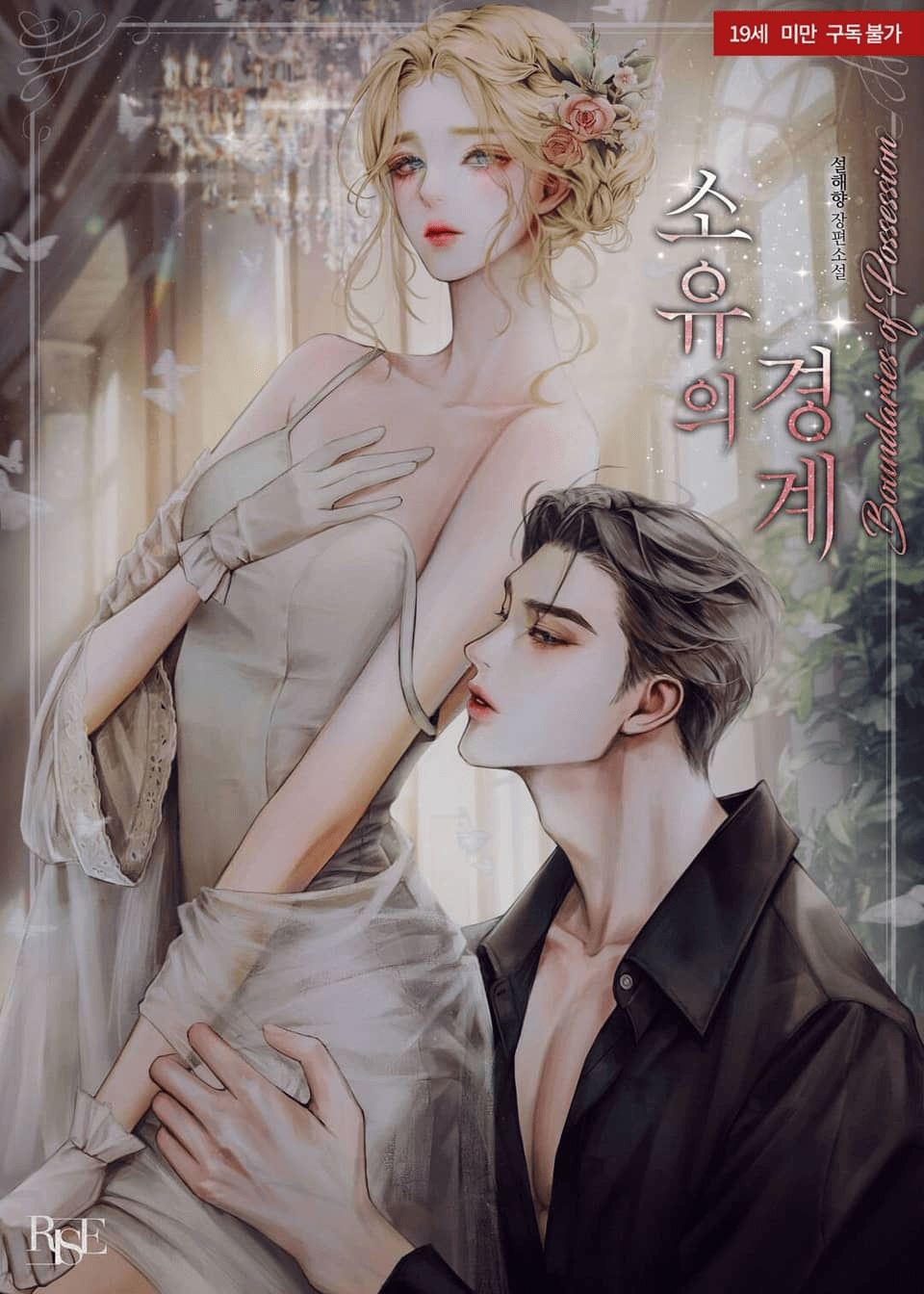
... Read More
I NEED to talk about Gréa because THIS WOMAN is terrifying. "Lady Celliez, congratulations on your engagement." — said with a smile that felt like a dagger hidden behind her back. The previous ball, she DRUGGED Elysia. A drugged drink. And now she's back, grasping Elysia's wrists, putting on this performance of distress while everyone watches. The power dynamic here is insane because Gréa has the Marquis's household backing her, and Elysia knows she can't afford to escalate. "Maintaining a good relationship with the imperialist noble faction—especially with the Marquis of Celliez—was crucial." That single line raised the stakes SO much. But the REAL tension comes from Andreas. He sees through everyone. He watches those who greet Elysia and thinks about "the kind of men who treated omegas poorly behind closed doors." He knows this is a game. And when he pulls Elysia away, linking their arms publicly, it's protective but also possessive—and neither of them are sure which. Meanwhile, Elysia is carrying her own secret war. She leads Karmaut, the economic heart of the empire, and Andreas just ordered someone to tail her. He suspects she's connected to Karmaut but doesn't know SHE IS Karmaut. The dramatic irony here is SO thick I can barely breathe. What happens when he finds out? What happens when Gréa figures out who Elysia really is? These stakes are climbing and I am NOT ready for what's coming.
... Read More
"Her golden hair shimmered under the daylight, reminiscent of a sunlit desert." — what a line. I had to stop and reread that three times. The imagery throughout these chapters is SO vivid, like the author really paints every scene with care. The park setting itself is perfect for what's happening—sunlight filtering through trees, warm glow on the path, people strolling. It feels almost idyllic until Gréa shows up and ruins it. That contrast between the peaceful garden setting and the venomous social combat underneath? Chef's kiss. And then Karmaut! When Elysia walks into the guild through the main entrance, the description of the place gives me serious empire vibes. "With her keen judgment, she had turned the Asterite trade into a booming success." She basically built an economic powerhouse from the ground up, and the author does this beautiful thing of showing us the wealth through architectural details—museums, cathedrals, the sheer scale of it all. Even Alisen's description with his wine-red hair and exposed tattoos against that opulent setting creates this really textured world. It feels lived-in, you know? Like this empire has real history and depth behind it.
... Read More
There's this tiny detail that absolutely destroyed me and I need to talk about it. Elysia pulling out that perfume bottle at the ball. An unconscious ritual. She's been conditioned—no, FORCED—to constantly manage her pheromones, to make sure she never slips, never gives anyone an excuse to use against her. And the author has us see this small bottle as this pathetic, almost sad accessory. A dominant omega carrying perfume like armor. Andreas notices it. Of course he notices it. And instead of mocking her for it, he says: "Why in the world would a dominant omega need perfume?" But here's the thing—he's not just asking a question. He's revealing something. He assumed she was a dominant omega because she could control herself. But the perfume betrays her. She's not naturally dominant—she's been SUPPRESSING herself this whole time. The tool she carries to appear composed is proof of how much effort it costs her. Every single day, every social interaction is a performance of control. The dance itself is symbolic too. He circles her waist, and the author keeps emphasizing how she keeps being pulled CLOSER, how her body betrays her feelings even as her mind fights it. "You can no longer deny our connection"—he says this almost clinically, but it's also the truest thing in the chapter. Their bodies already know what their minds refuse to admit. And the wine glass that gets shattered—that's symbolic on another level too. The poison she would have unknowingly accepted from another person's hand, and Andreas destroying it. He's literally shattering the trap meant for her. The crystal breaking is the moment she realizes: this man sees what's happening to her and he CHOOSES to intervene, even when it's inconvenient for his own political games.
... Read More
Let me just start by saying: the author does NOT waste time. The entire chapter dump hits you like a freight train and I was gasping for air the whole way through. It starts mid-dialogue with Marcus basically telling someone to check on a weak person because "the weak are always the first to fall" and then BAM - fire, screams, Andreas carrying his unconscious mother, servants looting, Marcus burning alive. In approximately three paragraphs, we've gone from a political intrigue setup to a full-blown catastrophe. Then the chapter just... jumps. We skip ahead to Andreas's mental deterioration. Years pass. The mansion is rebuilt. He's forgetting things. This time skip is handled so casually, almost dismissively, which makes it hit even harder. The author doesn't dwell on the grief process - they just show us the aftermath and let us fill in the blanks. That's actually more powerful than a hundred pages of sad monologue would have been. And then we cut to Elysia at the museum, completely unrelated on the surface, before cutting BACK to Andreas visiting the Brillen estate. The non-linear feel of these scenes - jumping between different characters, different timeframes - keeps you constantly reorienting yourself. You're never comfortable. Just like Andreas. The chapter ends on this note where Andreas is checking his pocket watch and thinking about Elysia as the second hand of a clock, and he wants to manipulate the rhythm. It's a perfect cliffhanger because you immediately want to know: will he succeed? Can he even succeed when he can't remember his own face in the mirror?
... Read More
Okay I need to process what just happened because my hands are literally shaking. Before this chapter, the conflict between Elysia and Andreas felt like... like a tense negotiation. Two smart people testing each other, keeping distance, using words as weapons. Fine. I understood that dynamic. But then Gréa offers her that drink and the WHOLE STAKES SHIFT. This isn't about political maneuvering anymore. This is about someone literally trying to hurt her. And Andreas's reaction—grabbing her wrist, pulling her into the garden, his voice rising for the first time in a way that isn't performative—that's REAL anger. Not the calculated fury he uses in negotiations. This is personal. "Even if you're dominant, you need to be more cautious"—he's frustrated but also scared. Because for a second there, he almost lost her. And that fear leaks through his irritation in a way that changes everything. But here's what keeps me up at night: Elysia's response. She doesn't pull away. She doesn't shut him out. She stands there, trembling, heart pounding like a trapped bird, and whispers back: "The same goes for you, doesn't it?" She turns it around. SHE calls HIM out. After everything—the garden, the pheromones, the vulnerability—he expected her to be soft, but instead she hits him with the truth: he felt it too. Their connection isn't one-sided. And that matters because now the conflict isn't just external anymore. It's not just about who's using whom or who holds the power. It's internal. Both of them are fighting something they can't control, and neither of them knows how to stop.
... Read More
The stakes in this section are layered in the best possible way—there's the political surface and then there's this undercurrent of personal devastation happening beneath it. On the surface, you've got Andreas using the engagement announcement as political maneuvering. He's reframing the Brillen family's mineral rights as a 'cooperation' when they never actually agreed to anything. This isn't just about rewriting history—it's about trapping Elysia in a narrative where she has to perform loyalty to a family that will now be expected to fund imperial military operations along maritime trade routes. The Emperor wanted to consolidate power, and instead of giving Brillen real authority, he's handing them responsibility without the reward. That's a brilliant bit of political chess, and Elysia knows it immediately. But the personal stakes are what keep me hooked. Elysia is trapped between what she owes her family—her father who would sacrifice the title for her, her brother Kian who needs the inheritance to survive—and what Andreas is demanding of her. She promised to uphold his conditions no matter how unreasonable, but every promise feels like another thread pulling her tighter. And then there's Helen's conflict, which operates on a completely different frequency. She's not just interrogating Elysia about the past—she's asking whether Elysia can truly understand her son, who lost his memories during those nine dark years. What if he doesn't remember her the way she remembers him? What if their connection existed only in her mind? The stakes here aren't about power or money—they're about whether love can survive amnesia, whether trust can be rebuilt after silence. The internal conflict within Elysia is almost unbearable in its realism. She's afraid that if she clings to Andreas, she won't be able to let go. She knows there's no fairytale ending coming. But she also knows she's already compromised—used, manipulated, whatever word fits best—and yet she's still choosing to stay. That's the real tension here: not will she or won't she, but can she survive herself?
... Read More
I need to talk about the Apelari Museum because the author just absolutely nailed the atmosphere here. The building is described as "reminiscent of a medieval castle" with stained-glass windows, high ceilings, a grand hall covered in renowned paintings. It's supposed to be this impressive, intimidating space that reflects the power of the nobility and the merchant guild. But then Elysia walks in and the whole thing changes. She places her palm against a wall and produces a heavy thud. Everyone turns to look at her, confused. And this detail about the hollow walls - the museum skimped on building materials - it's such a perfect metaphor for the whole world this story is set in. Everything looks grand and solid from the outside, but underneath it's all emptiness and compromise. The scene with the director is fantastic too. He's this commoner artist who bought his title, and he's visibly sweating, wiping his balding head with a handkerchief, stammering excuses. Meanwhile Elysia is just... still. Cold. Her "icy blue eyes gleamed like a finely honed blade." And Yosef, the artist she's sponsoring, has paint stains on his clothes and cracked lips from biting them while he paints. These are sensory details that make the world feel inhabited. And then there's the garden at the Brillen estate. "A transparent greenhouse standing at its center." The Viscount talking about how the garden is "everything to him" while simultaneously playing dumb about trade negotiations. The amber light from the setting sun painting the mansion windows. Each location has its own texture and mood, and they all feel connected to the emotional state of the characters within them.
... Read More
Okay so the ball scene starts off almost... almost like a lighter chapter? Like, finally Elysia gets to actually enjoy herself without feeling suffocated. The author deliberately makes the chandelier glow feel warm, the wine colors match her mood, everything is soft. But then—BAM. Gréa offers the drink. One sentence and the whole atmosphere freezes. I swear my heart literally stopped when Andreas snatched that glass away. And then the garden scene. The pacing here is so deliberately slow. Like, the author makes us feel every second of that moment—the whisper against her ear, the pheromones hitting, her trembling, the way time seems to stretch. It goes from zero to a hundred in the span of three paragraphs and I was NOT prepared. "You owe me now" hit like a truck. Then the next chapter, morning after, and suddenly it's Hern being loud about eggs and Andreas is just sitting there glaring at a soft-boiled egg like it personally wronged him. The tonal whiplash is intentional though—it shows us Andreas on the outside is still composed, but inside he's completely thrown. That transition from the heavy, charged garden moment back to a seemingly mundane breakfast table tells you everything about how much this affected him. And the date setup at the end? Perfect hook. "Shall I make sure you can't think of anything else?" Then the chin tilt. Then the park walk where he's being all confident and she's trying to keep her guard up. The chapter just... trails off mid-thought essentially. I immediately wanted the next one. Just perfect cliffhanger structure.
... Read More
Okay, let me just say—Andreas walking out of that ballroom like THAT is either the most arrogant move of his life or the smartest. Maybe both. He literally ignored everyone congratulating him and just bailed. Elysia saw it as running away, but honestly? I think he was already three steps ahead, recalculating his entire situation after her confession hit him like a truck. What I love about this chapter sequence is how the plot refuses to sit still. You've got Elysia's backstory—the mother's death, the recessive omega curse, the desperate gamble with the merchant guild—all woven into her present-moment decision to marry Andreas. It's not exposition dumped on us; it's organic. She needed power to protect her family, and Andreas is the strongest alpha around. Logical. Desperate. Beautifully messy. Then there's the trade conference scene, which is where things get genuinely interesting. A masked guildmaster who happens to be female, dropping lines like 'Power does not belong to the nobles. It belongs to those who create them.' That's a plot twist waiting to explode. And Andreas? He's onto something—he just doesn't know WHAT yet. The engagement letter at the end? Chef's kiss. Elysia tosses it aside like it's nothing, but clearly it's everything. The author is playing 4D chess with the romantic tension here, and I am HERE for it.
... Read More
Oh my god, the way Andreas inhaled Elysia's scent and then experienced this flash of déjà vu—"I never want to leave this place"—gave me actual chills. Like, this is the kind of detail that tells you there's a whole hidden backstory here. The author isn't just dropping this for drama, right? There's definitely something linking Andreas and Elysia from a past life or a forgotten time. And the fact that he immediately regrets saying anything and tries to walk it back? Classic. He catches himself almost too late. "It's nothing. I misspoke." The lie was terrible and we all know it. But Elysia? She sees right through it. She has that moment where she opens her mouth like she wants to press him, then closes it. You can almost see her calculating. She chose not to pursue it because... why? Is she protecting him? Or protecting herself? Either way, it's brilliant plot construction because now we're ALL wondering what he forgot. Then we cut to Andreas literally losing sleep, pacing around, refusing alcohol because he doesn't want to lose the memory of her scent. He orders his man Hern to tail her, and casually drops the bomb that he suspects she's connected to Karmaut. She's the leader. THE leader. And he has no idea. This plot is stacking revelations on top of each other and I am HERE for it.

Leave a comment

You must be logged in to leave comments. or
