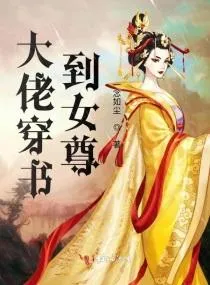
The Boss Transmigrated into A Matriarchy Novel (Quick Transmigration)
+Add to Custom List
Novel Info

Summary

... Read More

Feng Xi is a modern business executive whose romantic life has been shattered by betrayal. Seeking solace, she reads a fictional matriarchal novel where women hold power and men bear children, sympathizing deeply with the tragic male protagonist who endures abandonment for his entire life. After falling asleep while reading, she transmigrates into the body of Nan Jun, the spoiled and cruel daughter of Prince Pingnan. The system Mengxian informs her that her mission is to complete tasks within the book to earn a reward, specifically to provide the pitiful male lead with a happy life. Upon waking, Nan Jun discovers that she has become the woman who drove Qiao Yun, a kind and beautiful man, out of her home with their newborn son after falsely blaming him for her coma. The original Nan Jun’s selfish actions led to Qiao Yun’s destitution and eventual death, a fate Feng Xi is now determined to prevent.

Qiao Yun, now going by the name Mu Lian, lives in poverty in the Western District of Fengdu with his infant son, Nan Nianyun. He survives by doing laundry and embroidery, constantly worrying about his child’s welfare while harboring unresolved pain from Nan Jun’s betrayal. His neighbor, Zhang Jiafu, occasionally helps him secure work and brings gifts, unaware of the deep sorrow beneath Mu Lian’s polite exterior. When news spreads that Nan Jun has recovered and is being arranged to marry a noble young master, Mu Lian is devastated, believing he has lost any chance of reconciliation or protection for his son. However, his life changes dramatically when Nan Jun appears at his dilapidated courtyard, having faked an injury during an assassination attempt to investigate those who poisoned her.

Nan Jun is struck by Mu Lian’s resilience and beauty, feeling an immediate and intense attraction that contrasts sharply with the original Nan Jun’s cruelty. She witnesses his selfless care for their son and his willingness to forgive despite his suffering. Recognizing that she cannot simply take them back to thePingnan Palace without addressing her father’s superstitions and prejudices, she devises a plan to win Mu Lian’s heart genuinely. She pretends to be recovering from her injuries and stays at Mu Lian’s home, allowing him to care for her. During this time, she learns of his hardships and is moved by his dedication, vowing to make amends for the original owner’s sins.

The core conflict revolves around Nan Jun’s struggle to repair the broken relationship with Mu Lian while navigating the political intrigue of the imperial court and her father’s overprotective nature. Emperor Changping, Nan Jun’s father, believes Qiao Yun is a disaster star due to a cinnabar mole on his forehead and strongly opposes their reunion, favoring a marriage with the Lin family instead. Nan Jun must expose the true conspirators behind the poisoning and the slander against Qiao Yun while proving his innocence to her father. She also faces internal challenges as she adapts to the matriarchal society’s norms and her own growing feelings for Mu Lian, who remains cautious and hesitant to trust her again.

As the story progresses, Nan Jun takes Mu Lian and their son to a private residence under her name, shielding them from public scrutiny while she works to clear Qiao Yun’s name. She uses her authority and resources to investigate the past, uncovering that the rumors were orchestrated by enemies seeking to destabilize the Pingnan family. Her efforts gradually soften Mu Lian’s heart, and he begins to see the sincerity in her actions. The narrative follows their tentative reconnection, with Nan Jun navigating cultural differences and personal insecurities to build a genuine partnership. The plot hints at future political threats and the eventual resolution of the marriage arrangement, setting the stage for Nan Jun to secure a future where she, Mu Lian, and their son can live without fear or prejudice.

Latest Release
DateGroupRelease
2026-10-01universal novel c137
2026-10-01universal novel c136
2026-10-01universal novel c135
2026-10-01universal novel c134
2026-10-01universal novel c133
2026-10-01universal novel c132
2026-10-01universal novel c131
2026-10-01universal novel c130
2026-10-01universal novel c129
2026-10-01universal novel c128
2026-10-01universal novel c127
2026-10-01universal novel c126

Community Reviews

Rating(4.2 / 5.0, 36votes)
5 stars
16(44%)
4 stars
9(25%)
3 stars
10(28%)
2 stars
0(0%)
1 stars
0(0%)

Popular reviews

... Read More
I keep coming back to the lotus purse detail and I think it's one of the most potent symbols in these chapters. The original Nan Jun used to tell Qiao Yun she would 'hang the lotus purse he embroidered on her body for the rest of her life, just like he was always by her side.' A lotus is such a loaded symbol—in Chinese literature it represents purity, beauty rising from mud, devotion. She was basically promising eternal attachment, eternal loyalty. But then later, the narrative tells us through Qiao Yun's memories that Nan Jun started saying things like: 'The new oiran in Yihong Building is really good-looking, with watery eyes that are seductive and soft, and her waist is much softer than yours.' And then: 'She seemed to like Mr. Lin who could embroider mandarin ducks on her purse.' Mandarin ducks = eternal couple in Chinese culture. She was giving her affections—and her symbolic devotion—to someone else. The lotus purse becomes this ghost throughout the text, this reminder of a promise that was made and then systematically destroyed. Qiao Yun remembers 'all the things she said—her tenderness, her indifference.' The same person who promised him forever also became the one who cast him out. That duality is the core tragedy here. There's also the cinnabar mole—initially described as a 'pearl hidden in the eyebrows' that brings good luck to his wife-lord, but then twisted into a superstition that he's a 'disaster star.' The same physical feature becomes a symbol of blessing and then a symbol of ruin, depending on who's telling the story. It's about how easily narrative can be weaponized against someone. And the transmigrated Nan Jun's realization that 'it starts with appearance and ends with character'—that's pretty much the thesis statement of the whole novel. She's seeing that the original owner judged Qiao Yun by superstition and rumor, and the cost was catastrophic. The deeper theme here seems to be about second chances, about whether someone who inherited another person's terrible choices can actually make things right.
... Read More
I'm not gonna lie, this passage about Qiao Yun absolutely wrecked me. There's this one detail — the pair of scissors under his pillow and his determination that he'd rather break jade than smash it — that just hits different when you consider everything he's been through. This man went through family destruction, public humiliation, exile, and raising a child alone while his wife was in a coma, and yet here he is still terrified not for himself but for his son. The interaction where Nan Jun visits him at night is everything. She brings candied fruit, sits with him, calls him Yun' er, and asks him to call her Sister Jun or even Wife Master. And Qiao Yun can't bring himself to say it because he knows he's no longer her husband. That moment where he's calculating the time in his heart, not expecting her to show up again — that's a man who's been hurt so deeply that even kindness feels dangerous. His eyes light up when he sees her but he's actively fighting against getting too attached. Then there's Shangguan Xi, who I think is actually the most underrated character here. He drove Qiao Yun away to protect him from the gossip and from Nan Jun's potential enemies, but he also gave Qiao Yun custody of the child and arranged for the Gao sisters to help him. Even if Nan Jun ends up marrying someone else, Qiao Yun won't blame him because he understands the reasoning. That's a level of maturity and selflessness that isn't given enough credit. The father-son dynamic between Qiao Yun and Nianyun is also beautifully handled. The child resembles that person so much that it's hard for Qiao Yun to forget, but he channels all his emotions into protecting this bond. When Nan Jun sees Nianyun sleeping and whispers "take good care of him," you can feel the weight of three months of separation in those words.
... Read More
I need to be honest about the dialogue here. Some of it hits and some of it... doesn't. But there are moments that really stand out. The conversation between Mu Lian and Uncle Zhang is maybe the most natural thing in the entire text. The way Zhang Bo deflects — "It's my good fortune to help you survive the day!" — that's exactly how a kind elderly neighbor would talk. And Mu Lian's refusal to accept charity, his polite deflection, his inability to stop thinking about the wedding news even while trying to be courteous — it all feels real. When he says "Uncle Zhang, you have helped me a lot, and we father and son will definitely not accept any more of your things," you can HEAR the genuine gratitude mixed with pride. That line does a lot of character work in one sentence. Feng Xi's dialogue with her father-figure Emperor Changping is where it gets more stylized. There's a theatrical quality to it that suits the matriarchal palace setting. "Do not cry..." when she says that — it's short, it's awkward because she's not used to this voice, this body, this emotional context. But it's also genuine. She's trying. The narration even notes: "her hoarse voice was surprisingly pleasant." The author is smart about giving her a physical limitation (her body is weak from months of coma) that justifies any awkwardness in her speech. My main gripe is that the narrator sometimes tells us too much. We get told Mulian is beautiful, we get told he's from a rich family originally, we get narratorial commentary that undercuts the immediacy. But when the characters are left alone with their thoughts — especially Mu Lian's monologue about her habits, "She likes light dishes not too sweet. I don't know if her new husband would like to get up early and make her some sugar-free pastries?" — that's when the prose actually sings. It's raw and aching and completely unrehearsed. That's the voice this book needs more of.
... Read More
Let me just appreciate the structural masterclass happening here because the pacing in these chapters is absolutely ridiculous in the best way. We open with domestic warmth - porridge, fatherly nagging, golden sunlight. Everything feels cozy and safe. You're settling in, right? Thinking this might be a gentle chapter. Then BAM - 'Father, this child will not marry Lin Yan'er.' The tonal whiplash is intentional and delicious. The author doesn't give you a single breathing room before dropping that bombshell. What I love about the structure is how the conflict escalates in waves. First it's the verbal disagreement about marriage. Then it's Nan Jun's internal calculation about timing - she realizes her father cares more about the engagement than her health, and decides to wait before revealing Qiao Yun. Then she fakes illness to escape. Then the father guilt-trips himself and leaves. And THEN - right when you think the chapter is winding down - she summons her guards and starts executing her secret plan. The transition from bedroom drama to nighttime wall-jumping is seamless. One moment she's lying in bed looking sick, the next she's leaping over walls with martial arts precision. The chapter refuses to sit in one emotional register for too long, which keeps you locked in. And the information drip? *Chef's kiss.* We learn about Qiao Yun in fragments - he's thin, he eats well, he has a son, he's somehow connected to the Nan family's past properties. We don't get a full backstory dump. We get enough to be fascinated and nothing more. The author knows exactly when to reveal and when to withhold. The chapter ends on such a perfect note too - Nan Jun sitting in the garden,宣布ing that Qiao Yun and his son will live there, and the guards kneeling in confusion. It's a power move wrapped in mystery, and it leaves you absolutely desperate for the next chapter. No cliffhanger gimmicks needed - just pure narrative momentum.
... Read More
I need to process what the balm represents and I can't quite do it yet. Nan Jun sends a servant back with a small porcelain bottle of cream for Qiao Yun's cracked hands — the same cream he used to use years ago. She noticed. After ALL this time, after everything that happened, she noticed that his hands were cracked from doing laundry and embroidery to survive. And then there's the mandarin duck purse — mandarin ducks are a centuries-old Chinese symbol of devoted partnership, lifelong love, two birds swimming together. She gave him something embroidered with that symbol while carrying all her money and silver. The imagery is so deliberate it aches. The white cotton cloth he uses to change the baby's diaper versus the gorgeous cloak he deliberately leaves behind — he cares for his son with practical devotion and discards status symbols because they don't matter. Meanwhile Nan Jun carries both the child and the heavy bag, refusing to let go. The matriarchy setting itself is a massive thematic statement: a woman who was discarded, labeled a catastrophe, abandoned — and now SHE is the one holding all the power, ALL the agency, choosing who deserves her protection. The Qiao family being destroyed for standing on the wrong political team while Qiao Yun takes the blame? That's the recurring theme of innocent people paying for the sins of the powerful. And Nan Jun's entire scheme — faking injuries, hiring pursuers, pretending she's healthy — is her weaponizing the system's expectations against itself. The story isn't just a romance. It's about who gets to define destiny.
... Read More
The stakes in this section are deceptively low on the surface—there's no battle, no assassination, no political intrigue. But internally? The conflicts are DEVASTATING and I'm not okay. On the external level, Mu Lian's stake is survival. He has no money, no status, no family support. He's a man in a world where men are secondary, raising a child alone after being abandoned by his wife. His entire existence is precarious. But what makes this conflict so visceral is that he has a CHOICE—he could leave, he could demand better treatment, he could assert himself. Instead, he chooses to STAY and suffer. That's what raises the stakes from 'hard life' to 'heroic sacrifice.' Nan Jun's conflict is equally intense but plays out differently. She knows he's suffered, she knows he's being unfair to himself, and she's determined to fix it—but she's also navigating her own complicated feelings about a marriage she never wanted and a child she's only just met. When she picks him up and feels how light he is, the text says her heart aches. That's the moment the stakes become personal, not just moral. But the REAL tension—the thing that keeps me turning pages—is the secret. Mu Lian is hiding something enormous. The author drops hints everywhere: his noble bearing, his knowledge of poetry and books, the red cinnabar mark, the fact that he was raised as a male monarch. What is he? And what happens when Nan Jun finds out?
See all reviews

Custom lists

See all custom Lists