The Blind Cannot See
+Add to Custom List
Novel Info
  • Author:
  • Status:Ongoing

Summary

... Read More
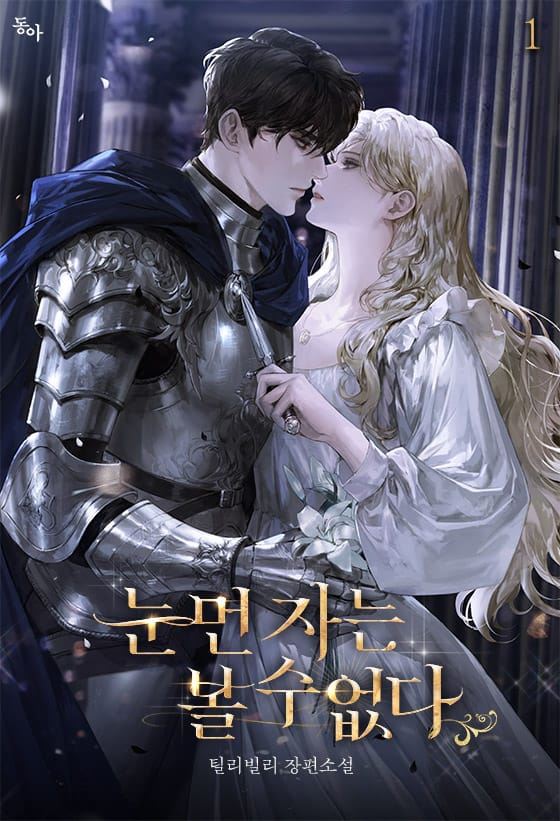
The Vistius Empire, the dominant power on the continent, launches a sudden and brutal invasion of the Sedas Kingdom. In just half a year, the seemingly impregnable kingdom falls. Commander-in-Chief Roshan Vistius, the emperor’s brother, leads the assault and personally beheads King Adora on his golden throne. The queen attempts a futile assassination before being spear’d by Roshan’s knight, Frederick. Their two sons, Crown Prince Allen and Prince Antonio, had already died on the battlefield months prior. In the chaos, the royal family’s only remaining member, the twenty-year-old Princess Yerena, emerges from hiding behind the throne. Struck by her melancholic beauty, Roshan halts his knights from harming her. However, the extreme shock of witnessing her entire family slaughtered causes Yerena to go blind. She is imprisoned in a guest room, chained to her bed, and subjected to the indifference and cruelty of the occupying imperial forces.

Yerena陷入绝望, oscillating between catatonic despair and violent outbursts. She learns through imperial knights that her illegitimate half-brother Brick has been installed as the puppet king of Sedas by the Vistius Empire. Brick, a timid and weak man manipulated by his ambitious mother Bianca, is told that Yerena will be taken to the Empire as a prisoner. The true cause of the war is revealed: the Vistius Emperor demanded Yerena as a concubine, and when King Adora refused to sacrifice his daughter, the Emperor ordered the conquest. Yerena’s family had shielded her from this truth, leading to her profound guilt. Despite her blindness, Yerena demonstrates an uncanny ability to navigate her surroundings, a skill stemming from a lifelong, tradition-based education where she was trained to function with her eyes covered since childhood.

Roshan exhibits unusual fixation on Yerena. He is repeatedly drawn to her, recalling the moment their eyes met before she collapsed. He crushes a white lily in the palace garden, a flower that reminds him of her scent, and orders Frederick to serve as her escort during the journey back to the Empire, despite Frederick’s open contempt for the princess. During a walk in the palace garden, Roshan follows Yerena at a distance, commanding Frederick not to touch her or reveal his presence. When Yerena visits the underground crypt to mourn her parents, she senses Roshan’s hidden presence but finds no one when she confronts the emptiness. She covers her parents’ coffins with her veil, weeping for them, unaware that the man who killed them is watching from the shadows.

The narrative also introduces a prologue from a future timeline, referencing a "blind mage" who curses the line of Sedas princesses, foretelling that they will all go blind and die by their own hands. This curse appears to be fulfilled through Yerena’s trauma. As the departure date approaches, tensions rise among Roshan’s knights. Knox warns Hayden against developing feelings for Yerena, noting that she is destined for the Emperor and that Roshan himself is fixated on her. The story sets the stage for Yerena’s transport to the Vistius Empire, where she will face the Emperor’s desires, while Roshan struggles with emotions he does not understand, caught between his duty as a conqueror and his inexplicable obsession with the blind princess who represents the ruin of her nation.

Latest Release
DateGroupRelease
2026-10-03dusk blossoms c104
2026-10-03dusk blossoms c103
2026-10-03dusk blossoms c102
2026-10-03dusk blossoms c101
2026-10-03dusk blossoms c100
2026-10-03dusk blossoms c99
2026-10-03dusk blossoms c98
2026-10-03dusk blossoms c97
2026-10-03dusk blossoms c96
2026-10-03dusk blossoms c95
2026-10-03dusk blossoms c94
2026-10-03dusk blossoms c93

Community Reviews

Rating(0 / 5.0, 35votes)
5 stars
0(0%)
4 stars
0(0%)
3 stars
0(0%)
2 stars
0(0%)
1 stars
0(0%)

Popular reviews

... Read More
The pacing in these chapters is a masterclass in controlled escalation and abrupt shifts. Let's break it down. It starts slow and heavy at the banquet. Roshan is quietly seething, observing, then makes a sudden decision to leave. The pacing here is deliberate, almost suffocating. We're stuck in his head with his boredom and irritation. Then he walks alone. The narrative follows him into the garden, and the pace slows further into a reflective, memory-laden stroll. This is the calm before the storm. The storm arrives with Yerena's scream. It's a jarring cut from the quiet garden to the chaotic, painful scene in the small room. The pacing spikes. Short sentences, onomatopoeia ('Clank', 'Aack!', 'Thud'), urgent actions. It's disorienting, which is exactly how trauma feels. Roshan is pulled toward the sound almost against his will. 'He turned his feet in that direction before abruptly stopping.' That's great pacing—it shows his agency warring with compulsion. Then, after he examines Yerena and leaves, the scene shifts again. Not to a quiet resolution, but to a loud, public proclamation. The pacing jumps from intimate, dark trauma to formal, public politics. It's a brutal tonal whiplash that mirrors the world of the story: private suffering is crushed under public power. There's no breathing room for the reader, and I think that's intentional. The author doesn't let us settle into any one emotional register. Just when we're mourning with Yerena, we're thrust back into the cold reality of empire. It keeps you on edge, constantly recalibrating. The chapter ends with the introduction of Brick and Bianca, another pivot, setting up the next conflict. The structure is like a heartbeat—slow, then fast, then steady and cold, then fast again.
... Read More
This entire passage keeps circling back to one fundamental question: what makes someone family? What makes someone legitimate? And the answer the novel seems to be working toward is—that none of it matters when power shifts beneath your feet. Brick's entire identity crisis revolves around blood. 'A-Although only half, I share the same blood as you, Sister. So I am your family too.' He keeps using biological connection as his only shield against moral responsibility, as if sharing DNA absolves him of being the instrument of genocide. But Yerena cuts through that instantly: blood doesn't lie, and neither does betrayal. Then there's the whole question of titles and what they're worth. Bianca can be the king's mother but never the queen. She can wear the crown's shadow but never its light. The 'white mother' title—a specific cultural marker in this world that denotes legitimate queenship—remains forever out of reach. Yerena weaponizes this, and it works because the novel has been building this entire system of legitimacy as a kind of haunted currency. The rain imagery ties into this too. Water as cleansing, water as mourning, water as the great equalizer that falls on everyone regardless of legitimacy. 'The rain falling quietly without wind somehow felt melancholic.' Nature doesn't care about your bloodline or your title. It just falls. Yerena's blindness is perhaps the richest symbol here. She literally cannot see Brick's face when she's rejecting him, yet she sees his true nature more clearly than anyone. Meanwhile, Brick—the one who can see everything, who has eyes to judge and measure—can't see that he's already lost everything that mattered. The inversion of sight and blindness runs through this scene like a spine. And Brick's final desperation—'I still have things to say…I can't leave you like this!'—is almost tragic in its own way. He genuinely believes the conversation is unfinished, that there's still a path to reconciliation. He hasn't understood that some bridges, once burned, don't just ash—they cease to have ever existed at all.
... Read More
Can we talk about Jane for a second because SHE IS EVERYTHING. This woman went from serving some noble lady to now caring for a fallen princess who has literally nothing left—and she does it without a single condescending moment. The scene where she notices Yerena's smile is barely holding together and just... stays. Doesn't pity her openly. Just opens the window and describes the red leaves. "Though she had only seen her briefly, the princess seemed to have a kinder heart compared to the noble lady she had served before." This line hit me because it's so simple but it says everything about their dynamic. Jane isn't blind to suffering—she's seen wars, she's served nobles—but she chooses kindness here. And Yerena, for once, doesn't have the power dynamics twisted. She can't "pinch" Jane or throw around authority. She just has to be... a person. Then there's Hayden. Oh god, Hayden. The silver-haired knight who's clearly nervous around her, probably because he physically restrained her during that earlier outburst. And Yerena remembers his name. That's huge. A princess who was just humiliated into captivity still has the dignity to acknowledge someone awkwardly. Her cold politeness toward him—"I'm honored"—is either genuine shame or armor. Probably both. And Roshan. She saw him and her body reacted before her mind could catch up. But instead of collapsing again, she asks Jane to TELL her about him. That is growth. That is a protagonist who refused to stay broken. "I need to find a way to harm him without causing damage to Sedas." CHILLS.
... Read More
There are some really vivid sensory moments in this batch that stuck with me. One thing I keep coming back to is the food scene — appetizing food described in full detail (steaming soup, finely chopped meat, fresh vegetables, fruit) and Yerena can't even look at it. She throws the spoon away. The contrast between all this abundance and her complete inability or unwillingness to consume it just... sits there in the text like a physical weight. You can feel the room. You can smell the food. And you can feel her nausea. Then there's Roshan. When he enters, the text says the room seemed full and stuffy even though it wasn't crowded. "A strange, indescribable atmosphere heightened the tension." That's such a good line because it tells you everything about him without describing his face or his clothes. He's not just a person in a room — he changes the physics of the space. And then later, when he leans over unconscious Yerena, the scent of layered lilies he crushed under his boot days ago brushes his nose. This man walks through destruction and carries the memory of crushed flowers in his clothes. Who is this person? And Yerena's blindness — the way the author describes her navigating the bowl and spoon with perfect precision, like she'd been blind her whole life. That detail alone made the world feel so real and lived-in.
... Read More
Can we talk about the non-verbal communication in these chapters? Because the relationship between Roshan and Yerena is being built entirely through looks, movements, and silence. It's incredibly effective. When Roshan is at the banquet, he doesn't just sit there; he stares at Frederick's bright blonde hair, says it's noisy, and leaves. But why? The narrative links it to his memory of Yerena's eyes. Then he walks alone into the garden, picks a lily, crushes it. That's not just mood; that's a character acting out an internal conflict he won't admit to. And Yerena? She's completely stripped of agency, chained to a bed, but she's not passive. Her trauma is violent, physical. She screams, thrashes, bites back medicine. And then she smiles that dreamlike smile right before collapsing. What does that mean? For Roshan, witnessing that smile is described as lightning striking him, sharp pain in his chest. That's a physical reaction to an emotional trigger. He grabs her chin, inspects her sightless eyes like he's searching for something, and then walks out abruptly. Their dynamic is built on trauma mirroring. He caused the destruction of her world; she is the living reminder of that act. Yet, he can't look away. And Frederick! Notice how he's always observing, always coldly sweating, trying to read his lord? He represents the loyal soldier who sees everything but understands nothing. Hayden is the opposite—cold, efficient, proclaiming the new order. But the real relationship drama is between Roshan and the ghost of his past self. The man who beheaded the king is being haunted by the man who hesitated for a princess. That contradiction is the core of this whole section.
... Read More
The stakes in this section escalate so fast I barely had time to breathe. One moment Yerena is processing shock, the next she's being physically grabbed by her brother's worst nightmare, and then her aunt is outside screaming curses. It's like the novel decided to drop every conflict on Yerena simultaneously and just watch her deal with it. Let's talk about what's actually at stake here. Yerena has lost her entire family—parents, brothers, home, country. She's blind. She's being taken as a prisoner to the Empire. And now she learns that one of the people she considered family helped engineer all of it. The emotional devastation is compounded by the physical reality: she's sitting in a room with a man who has just been crowned king of the nation that invaded hers, and he's trying to use that authority to control her. 'As the king of Sedas… I command you. Sister. Quietly…' This moment is chilling because Brick genuinely believes his new title gives him power over Yerena. He doesn't understand that his kingship is built on the bodies of her dead family, or that in this room, with Frederick holding him down, his crown is worth exactly nothing. The physical violence escalates quickly—Brick grabs Yerena, Frederick throws him across a table, Brick ends up rolling on the floor calling for his mother. It's brutal and messy and human. This isn't a clean heroic rescue; it's a knight stepping in because no one else will, and even that intervention is complicated by Frederick's own conflicted position. And then Bianca arrives, raising the stakes again by representing the personal vendetta aspect of the conflict. This isn't just nations at war—this is family members betraying family members, mothers poisoning their children's futures, sisters hating sisters. The intimate scale of the betrayal makes the geopolitical conflict feel infinitely more personal. The cliffhanger with Roshan appearing silently in the doorway, having heard Yerena's dangerously ambitious reply about potentially becoming empress, is perfect tension building. The reader is left hanging on whether this threat will have consequences, whether Yerena's words have already marked her.
See all reviews

Custom lists

See all custom Lists