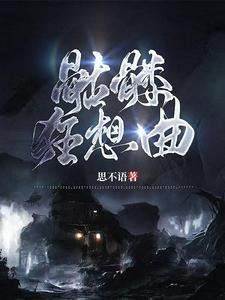
The Birds Keep Ringing
+Add to Custom List
Genres:
Tags:
Novel Info
  • Author:
  • Status:Ongoing

Summary

... Read More

Yun Zhen, the sole heir of the wealthy Yun Family in Jiangnan, joins the impoverished Flowing Cloud Sect after paying tuition with his father's silver notes. The sect is in disrepair, consisting of only four disciples: the eccentric Master, the romantic Senior Disciple Xiao Fengzhi, the compassionate but mischievous Senior Disciple Wen Wan, and the cold, silent Second Disciple Jiang Zhi. Yun Zhen harbors a deep suspicion that he was admitted primarily for his family's money rather than his martial aptitude. His relationship with Jiang Zhi is immediately strained; while Yun Zhen admires Jiang Zhi's skill and appearance, he resents the constant indifference and rejection he receives. Conversely, Jiang Zhi treats Yun Zhen as an annoyance, ignoring him completely or responding with curt dismissals. A local incident where Xiao Fengzhi provokes the fiery Young Master Xie of a prominent martial clan escalates tensions, leading Jiang Zhi to violently disperse the attackers. This event solidifies Yun Zhen's belief that Jiang Zhi is his destined nemesis, a theory reinforced by Senior Disciple Sister Wen Wan based on the semantic meanings of their names.

Driven by a desire to escape the sect and establish himself as a famous hero in the martial world, Yun Zhen attempts to flee. However, Jiang Zhi unexpectedly accompanies him on errands, effectively supervising and preventing any solo departure. Frustrated by this surveillance, Yun Zhen devises a plan to appear humble and eager to learn martial arts under Jiang Zhi's tutelage. After a month of brutal training, Yun Zhen feels confident enough to attempt escape again but procrastinates, delaying his departure nightly. The following morning, however, he wakes up transformed into a plump little finch. Shocked and unable to speak human language, Yun Zhen concludes that Jiang Zhi must have cursed him, viewing the transformation as a malicious act by his nemesis.

Master, who is about to embark on a long wandering journey, discovers Yun Zhen's condition and casually entrusts the bird to Jiang Zhi's care, claiming a solution will come eventually, though he offers no timeline. Jiang Zhi reluctantly accepts the task, treating the bird as a burdensome chore. During this period, Yun Zhen struggles to adapt to his new form, facing threats from wild cats and realizing the harsh realities of survival without his human status. Despite his resentment, he becomes dependent on Jiang Zhi for food and shelter, leading to a complex dynamic where he simultaneously plots revenge and accepts the care provided. Yun Zhen also uncovers secrets within the sect, including Xiao Fengzhi's mysterious blood-stained encounters and Wen Wan's secret sanctuary for injured animals in the mountains.

The narrative takes a critical turn when Yun Zhen, while observing a fight between Xiao Fengzhi and Young Master Xie, accidentally intervenes and nearly kills himself. Jiang Zhi rescues him at the last moment, silently tucking the bird inside his robe to protect him from view. This intimate act unsettles Yun Zhen, who finds himself confused by the proximity and the steady heartbeat of his enemy. Meanwhile, Yun Zhen learns more about Jiang Zhi's tragic past, revealed to be a survivor found in a mass grave, which explains his aloof and guarded nature. The story follows Yun Zhen's internal struggle between his original desire for freedom and his growing, albeit reluctant, attachment to the sect and its peculiar inhabitants, particularly Jiang Zhi.

As Yun Zhen navigates life as a bird, he observes the underlying kindness and hidden depths of his fellow disciples. He witnesses Jiang Zhi's gentleness toward injured animals and his protective instincts, which contrast sharply with his cold exterior. This gradual revelation of Jiang Zhi's true character challenges Yun Zhen's perception of him as a mere nemesis. The central conflict evolves from Yun Zhen's simple desire to leave the sect into a deeper exploration of destiny, friendship, and the supernatural circumstances binding him to Jiang Zhi. With Master absent and the path to restoration unclear, Yun Zhen must confront his feelings and the mysteries surrounding his transformation while remaining entangled in the volatile affairs of the Flowing Cloud Sect and the broader martial world.

Latest Release
DateGroupRelease
2026-10-01volare reads c4
2026-10-01volare reads c3
2026-10-01volare reads c2
2026-10-01volare reads c1

Community Reviews

Rating(0 / 5.0, 43votes)
5 stars
0(0%)
4 stars
0(0%)
3 stars
0(0%)
2 stars
0(0%)
1 stars
0(0%)

Popular reviews

... Read More
I keep coming back to that scene with the red cloth, because I think it's the most symbolically loaded moment in these chapters. Yun Zhen the bird sees bright red silk and has a full-body rejection response. "No red!" he screams internally, hopping frantically onto black fabric. His reasoning is surface-level funny — he wants to be the dashing hero in black with a sword under moonlight — but something about his aversion feels deeper, almost instinctual. Here's what haunts me: Jiang Zhi is the one choosing the clothes FOR him. He already knows Yun Zhen's measurements, somehow. He went to the tailor specifically to get him outfitted. And he reaches for red without hesitation, while Yun Zhen revolts. Who is this clothing for, really? Yun Zhen the bird or Yun Zhen the human? Is Jiang Zhi dressing the persona he wants Yun Zhen to become? And then there's Wen Wan's fish — described as "round as glutinous rice balls, mouths agape waiting to be fed, so fat they couldn't even jump. They likely wouldn't leap over the dragon gate in this lifetime." This image keeps echoing in my head alongside everything else. The dragon gate leap is a classic Chinese motif about transformation and transcendence, and these fish are so comfortably stuffed with food that they've lost the very ability to attempt it. Meanwhile Yun Zhen is being forcibly transformed into a bird and sent into danger, and Jiang Zhi is picking out his colors. Who's the fish here??
... Read More
There's a recurring motif I can't stop thinking about: things being broken and imperfectly repaired. Yun Zhen tears the Dao De Jing. Jiang Zhi tries to paste it back together. They fail. The book is now more damaged than before their intervention. This is such a loaded symbol for their entire relationship. Every attempt to fix things only makes them more tangled. TheDao that can be spoken is not the eternal Dao — but the Dao that can be pasted is not the eternal Dao either. Lao Zi would die again. Then there's Yun Zhen himself — a broken human, imperfectly restored to bird form. He's covered in paste, scrubbed raw, wrapped in cloth like a sticky rice dumpling. His feathers are plastered to his body, making him look "two sizes smaller and incredibly ugly." All his "plump prosperity" is gone. He's been reduced to something vulnerable and exposed. The dream sequence adds another layer. Yun Zhen gets lost on the mountain — a metaphor for his current state, isn't it? Lost, directionless, unable to tell north from south. The darkness, the cold, the fear of dying alone... and then Jiang Zhi appears. Not as a savior, exactly, but as the only thing between him and oblivion. "Get on" — those two words carry the weight of every time Jiang Zhi has shown up when Yun Zhen needed him most, and every time Yun Zhen has interpreted it wrong. Xiao Fengzhi's "Secret Techniques of the Spring Night" is the comic relief version of the same theme: desire expressed through explicit illustration rather than genuine connection. It's knowledge without practice, looking without touching. Yun Zhen fleeing from it is the author winking at us — even a bird knows when something is too much. The transformation itself is the ultimate symbol. Yun Zhen lost his human voice. He can only chirp. But Jiang Zhi understands him anyway. Communication without words. Understanding without explanation. That's the heart of the novel beneath all the comedy and revenge plots.
... Read More
Okay so after days of being a bird forced to chirp, Yun Zhen gets one hour to talk and the author just LETS HIM GO. This is the single funniest monologue I've read in a while. The way he tumbles from topic to topic — Master's insanity, the pill furnace horror, his own confusion about Jiang Zhi blocking that sword — it feels genuinely unhinged in the best way. You can hear the desperation underneath the manic energy. This guy hasn't spoken in DAYS. Jiang Zhi's responses are a masterclass in minimalism. "Mm." "Yun Zhen." "You talk too much." That's it. That's his entire dialogue budget for this chapter and it works SO well because it creates this perfect comic rhythm. Yun Zhen is a firework and Jiang Zhi is the night sky that absorbs every explosion without flinching. The narrator's voice is also doing incredible work throughout, especially during the tailor shop scene. Lines like "It was hard to earn money from the living, who were picky. The dead were different; they never complained, resulting in one hundred percent satisfaction" — that's the kind of darkly comedic observation that makes the narration itself a pleasure to read. The shopkeeper's enthusiasm about the burial robe he made is perfectly pitched between funny and deeply unsettling.
... Read More
OK so can we just talk about the absolute CHAOS that is Xiao Fengzhi's backstory here? I literally gasped out loud when I read that line: "You didn't say that when you tricked me into bed!" and the senior disciple's response was basically... nothing? He just stood there waving his fan like a chaotic gremlin, saying things like "I merely didn't explicitly state that I was a man" and "your eyes went wide, what could I do?" BRO. THE AUDACITY. The woman-hating ice queen who pretends to be gentle? Turns out she's out here running honeypot operations on innocent cultivators? I spent three whole chapters admiring her composure and she's literally the most manipulative person in the entire sect. And the best part? Yun Zhen, the bird, is sitting in a tree eavesdropping on this entire conversation like it's the most important intel mission of his life. Meanwhile the Xie Young Master is out here trying to SEVER ARMS over a bad fling. The stakes escalation is unhinged. First it's a romantic betrayal and suddenly we're talking about amputation. And then the bird swoops in to save the Senior Disciple? Who then tells Jiang Zhi to "handle your own mess"? The plot doesn't stop for a single breath and I cannot handle it.
... Read More
The dialogue in this batch is a masterclass in comedic timing through frustration. Xiao Fengzhi's scene is pure gold. Yun Zhen tries to communicate: "He pointed at himself, then at Xiao Fengzhi, and then flopped onto the blanket in a sleeping posture." And Xiao Fengzhi's immediate response is: "What? You want me to take action against Second Junior Brother… while he's sleeping?" THE MAN HAS A SPACIOUS IMAGINATION AND IT IS NEVER RESTRAINED. Yun Zhen's internal monologue as commentary on Xiao Fengzhi's dialogue is where the voice really shines. When Xiao Fengzhi says "we are kindred spirits," Yun Zhen internally nearly faints. When he offers the bird an explicit booklet, Yun Zhen's chirp translates to "Get lost!" These untranslated chirps are genius — they maintain Yun Zhen's bird form while letting us hear his actual thoughts. Jiang Zhi's dialogue is almost nonexistent, which makes every word count. "Sleep." "Come here." "Help." "Go down the mountain." "To buy books." Four words. That's it. He communicates in imperatives and Yun Zhen has to interpret them like a foreign language. The asymmetry is the whole joke. But the most striking use of dialogue is the dream sequence. Jiang Zhi says two lines: "Can you walk?" and "Get on." No warmth, no warmth-needed, just efficiency. And yet Yun Zhen remembers it as the most significant moment of his childhood because someone finally showed up when he was alone in the dark. The narrative voice itself is a character — omniscient but firmly anchored in Yun Zhen's increasingly chaotic perspective. We get his frantic inner monologue, his misinterpretations, his defensive sarcasm. The author never corrects us when Yun Zhen gets things wrong, which means we're constantly reading between the lines.
... Read More
There's so much going on beneath the surface of this chapter and I want to dig into it because the symbolism is doing heavy lifting here. The bird transformation itself is the central metaphor and it operates on at least three levels simultaneously. On the surface, it's a plot device — Yun Zhen can't fight, can't speak human language, can't escape. But thematically, it represents the ultimate humbling. The young master who once commanded respect and wealth is now literally small, voiceless, and dependent on his enemy's charity. The feathered body is a cage he didn't choose, and the most powerful expression of agency he has left is his INTERNAL MONOLOGUE — his thoughts are the one thing no one can cover with a cloth. The door crack is another gorgeous symbol. Years of wind and rain have rotted a gap beneath the door panel — this is basically the novel's thesis statement about fate. Yun Zhen didn't choose to end up here, but he squeezes through anyway. The gap is narrow, unfriendly to a 'plump, well-fed pearl bird' — he was never meant for this life, yet here he is, squeezed through on hope and desperation. Then there's the book. Yun Zhen, the former luxury dweller, sleeps on an OPEN BOOK. This is almost too on-the-nose to be accidental — knowledge as a resting place, wisdom as a mattress for the fallen. The paper isn't thick, but it's better than nothing. A man reduced to reading material for his own comfort. Thirty years east of the river, thirty years west — the river itself is a symbol of the irreversible flow of fate, the current that carries you from privilege to humiliation and back again. And the most haunting symbol in the entire passage: the blood at Senior Disciple Brother's mouth. Fresh blood. Not rouge, not food — BLOOD. What is being consumed? What is being given? The novel is planting this image and refusing to explain it, letting it fester in Yun Zhen's mind (and ours) like a splinter. The body as a site of hidden violence, of secrets kept in plain sight. These layers make the story far richer than its comedic surface suggests.
See all reviews

Custom lists

See all custom Lists