Summary

... Read More
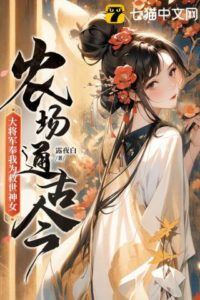
Ah Heng is a gaunt, amnesiac beggar who resides in a dilapidated temple on the outskirts of Xiaoyan Town alongside two other outcasts: the elderly Old Wen and the young, freckled Er Gouzi. Although he appears weak and sluggish, Ah Heng possesses an innate, inexplicable physical strength that sets him apart from ordinary mortals. He feels a profound sense of alienation from his companions, sensing that he is fundamentally different, though he cannot articulate what that difference entails. His existence is marked by a hollow emptiness, haunted by fragmented memories and a growing hunger that food cannot satisfy. Instead, he discovers an instinctual ability to absorb spiritual energy, a force unknown to him despite its power reshaping his very being.The central conflict arises when Yu Tong, a rival businessman from neighboring Shima Town, attempts to forcibly acquire the Apricot Blossom Pavilion, a prestigious establishment owned by Mr. Mu. Yu Tong brings with him two cultivators from the Extreme Bliss Immortal Sect, Qin Shiwei and Huang Dingfeng, both Qi Cultivation Stage experts. These cultivators view mortals as insignificant and intend to seize the pavilion through intimidation and violence. When they confront Mr. Mu inside the pavilion, Ah Heng intervenes, driven by a vague sense of obligation and a sudden, protective instinct toward the establishment. The cultivators are immediately stunned to find that their spiritual attacks vanish upon contact with Ah Heng, as if absorbed by an invisible void. Their spiritual senses reveal that Ah Heng lacks a heartbeat and pulse, resembling a living corpse rather than a human.Ah Heng’s defense of the pavilion escalates into a direct confrontation with the cultivators. He effortlessly disperses their spiritual energy and, through sheer will, redirects it to shield Mr. Mu from harm. His innate mastery of spiritual energy allows him to neutralize the threat without formal training. The cultivators, humiliated and fearful of this anomaly, retreat rather than risk further exposure of their vulnerability. Meanwhile, Er Gouzi rushes to Ah Heng’s aid, only to find the battle already resolved, leaving him bewildered by the swift and inexplicable outcome. The incident establishes Ah Heng as a formidable, albeit enigmatic, protector for the townsfolk.Prior to this, Ah Heng had already demonstrated his latent power by destroying a sacred apricot tree with a single strike from his beggar’s staff and killing a massive tiger in the forest. These events draw the attention of the local cultivation world, which recognizes him as a potential threat or a valuable asset. Mr. Mu, grateful for Ah Heng’s intervention, offers him wealth and a position as a bodyguard, but Ah Heng refuses, preferring to maintain his independence. He accepts only a promise of future assistance, which binds him to the pavilion without subjugating him.As the story progresses, Ah Heng continues to struggle with his identity and his deteriorating relationship with his mortal companions. He witnesses spectral visions of death surrounding those near him, including Old Wen and Mr. Mu, marked by a gray mist that signals their impending demise. Despite his desire to alter fate, he finds himself unable to intervene in the predetermined deaths of others, a limitation that deepens his isolation. His hunger for spiritual energy grows more acute, leading him to seek out opportunities to absorb more power, whether from spirit stones or enemies. The narrative unfolds as Ah Heng navigates a world where cultivators hold absolute power, using his unique abilities to protect his fragile community while uncovering the truth behind his forgotten past. The balance of power in Xiaoyan Town shifts as Ah Heng’s existence challenges the established hierarchy, drawing the interest of larger sects and setting the stage for greater conflicts involving immortal cultivation and ancient secrets.

Latest Release
DateGroupRelease
2026-09-25knoxt c44
2026-09-25knoxt c43
2026-09-25knoxt c42
2026-09-25knoxt c41
2026-09-25knoxt c40
2026-09-25knoxt c39
2026-09-25knoxt c38
2026-09-25knoxt c37
2026-09-25knoxt c36
2026-09-25knoxt c35
2026-09-25knoxt c34
2026-09-25knoxt c33

Community Reviews

Rating(0 / 5.0, 23votes)
5 stars
0(0%)
4 stars
0(0%)
3 stars
0(0%)
2 stars
0(0%)
1 stars
0(0%)

Popular reviews

... Read More
Okay so the spirit stone moment had me absolutely losing it. Ah Heng opens the box, glances at the stone, and Boom—absorbs the entire thing in one touch, turns it to dust before anyone can even react. The author just writes "Everyone: …" and I was SCREAMING. How do you top that level of effortless power display? But the real plot maneuver here is Ah Heng turning down the guard position. Mr. Mu offers him a solid deal—stable food, shelter, status—and he refuses. Makes up some excuse about not wanting to drag the pavilion into his unknown-enemies situation, which honestly seems like genuine wisdom for someone with amnesia. Smart move, honestly. If he had enemies powerful enough to bury him in the ground, joining a local sect's security detail was probably the worst possible idea. Then he trades the tiger he just killed for a meal and a spirit stone. Not bad negotiations for a guy who apparently has nothing. And that ending with Er Gouzi catching a fever? Perfect cliffhanger. Now Ah Heng has to go into the woods alone at night to find herbs, presumably while dealing with his own insatiable hunger for spiritual energy. The plot keeps stacking problems on top of each other and I am HERE for it.
... Read More
The pacing in these chapters is really well calibrated. You've got this huge action beat—the spirit stone absorption, the negotiation with Mr. Mu, the tiger payment—then the author immediately cuts to Old Wen and Er Gouzi nagging Ah Heng on the walk back. That tonal shift from serious cultivator business to goofy beggar banter is exactly the right breath after tension. Keeps you from getting fatigued. Then it settles into this quiet nighttime scene at the temple. Ah Heng poking the fire, watching stars through the roof, contemplating his condition. This is where the chapter earns its emotional weight. The fever discovery comes like a tiny earthquake in what had become a peaceful moment, and suddenly we're back into urgency. Go find herbs. Now. Night. Alone. What I appreciate most is how the author uses scene length to control rhythm. The negotiation scene is relatively tight and brisk—quick exchanges, calculations, a deal struck. The temple scene lingers. We stay with Ah Heng's thoughts longer, notice the rat, feel the warmth of the fire. The author knows when to sprint and when to slow down, and honestly it's impressive control. The only minor complaint: the transition between the pavilion scene and the walking-back scene felt slightly abrupt, but that's honestly a very small issue in an otherwise well-paced sequence.
... Read More
Okay so the atmosphere in these chapters is INSANE and I need to talk about it. First off, the forest at night. The author doesn't just say "it was dark and scary"—we get moonlight filtering through treetops, the sudden absolute silence when even insects stop chirping, the bird call that sounds like "Not in a hurry—! Not yet—!" which is honestly one of the creepiest things I've ever read and also kind of funny in a cursed way. Then the complete stillness before the beastly roar. My heart was pounding. And the leopard!! A golden-furred leopard with coin-like patterns larger than a tiger, blood on its fur, resting on a bloodstained stone because it was poisoned. This is worldbuilding through atmosphere, not exposition dumps. You can feel the danger in every sentence without the narrator ever stopping to explain the ecosystem. But the temple—god, the temple. The cracked clay pot, the battered deity statue Old Wen fishes a candle from, the half-open door, the smell of simmering herbs in the faint morning light. This place feels lived-in and fragile at the same time. It's not a grand monastery, it's a crumbling shelter holding onto its last breath, much like the people inside it. The contrast between the vast hostile forest and the tiny warm temple is everything. One scene has blood-red eyes in darkness three meters from your face and the next has Old Wen carefully blowing on a bowl of medicine. That's the tone of this whole book right there.
... Read More
"Is there no medicine in this world that tastes good?" — I came back to this line in my head for a while. It's such a perfectly rendered fragment of an internal thought. It's not polished, it's not witty, it's just a kid asking a question that doesn't have an answer, and it tells us everything about Ah Heng's relationship with his own situation. The dialogue in these chapters earns its keep because every character has a distinct rhythm. Er Gouzi chatters — he's the one who fills silences, who nudges people, who talks about begging techniques to distract from the actual problem. Old Wen is sparse and resigned; he sighs more than he speaks, and when he does talk, it's usually a truth no one wants to hear. The waiter is frantic and formal, bouncing between respect and desperation depending on who he's talking to. And Ah Heng — Ah Heng barely says anything at all. His silence IS his voice. When he does speak, it's usually blunt and literal, and that's what makes it hit: "Sorry, this is as fast as I can go." Three words. He's being deliberately slow. Everyone is panicking and he's stating a fact. The contrast between his flat delivery and the waiter's escalating anxiety is comedy gold, but it's also characterization — Ah Heng operates on a completely different wavelength from everyone around him. The narration itself is worth noting too. It shifts registers fluidly between intimate third-person close (we're inside Ah Heng's head, feeling his shame about begging) and observational distance (the narrator describing the layout of Xinghua Pavilion like a stage set). This isn't inconsistent — it's purposeful. When we're with Ah Heng emotionally, we're close. When the story needs us to orient ourselves spatially or situationally, it pulls back. Most authors stick to one mode. The fact that this author switches and it never feels jarring is a sign of real craft.
... Read More
I can't stop thinking about that omen bird. "Not in a hurry—! Not yet—!" An ordinary person would be terrified by that call. It's described as a harbinger of ill fortune, sensitive to the scent of blood, appearing before bad things happen. But Ah Heng hears it and murmurs, "This bird offers comfort, urging us to take our time." And then immediately after, he wanders too far and nearly gets himself killed by a demon leopard. I think this is the book telling us something about Ah Heng's entire existence. He reframes danger as comfort. He transforms threats into reassurance. This is a survival mechanism—when you live the way he lives, you can't afford to be paralyzed by fear, so you tell yourself the scary bird is just telling you to slow down, the venomous snake didn't bite you because you're tough enough, the leopard spared you because you're clever. But the bird is also ironic, right? Because the whole time it's actually warning them. "Not in a hurry" is what you tell yourself when you're about to walk into a predator's territory. It's false calm dressed as wisdom. There's also the candle. Old Wen treasures that stub of white candle—turned blackish-gray from age—and gives it to Ah Heng without being asked. A light in the darkness. But Ah Heng puts it out as soon as he's away from the temple because he doesn't need it. The light was never for him. It was for Old Wen, who needed to believe someone was being watched over. So many layers of what things mean versus what they actually do. This author plays with perception vs reality constantly.
... Read More
I need to talk about Old Wen and Er Gouzi because they are absolutely hilarious and I love them so much. Right after Ah Heng makes this incredibly strategic decision to decline Mr. Mu's offer, these two immediately start nattering at him like angry parents. Old Wen is all about the practical angle—do you realize what you just threw away?! Er Gouzi is just mad about the leftovers. Classic comedic foil energy and it works so well. But then Ah Heng hits them with the line: "I admire how you remember the food but forget the beating." And immediately both of them start faking injuries. "My chest hurts!" "My arm hurts!" BRO. They literally just got beat up and they're immediately rolling on the ground acting dramatic. This is the kind of friendship where you roast each other relentlessly but would absolutely die for each other. And it's not just comic relief—there's something really touching about how these three stick together. Ah Heng feels guilty about Er Gouzi's fever because he forgot to get herbs after the fight. He's carrying responsibility for two other people despite being a beggar himself with amnesia and no memory of who he used to be. The dynamic between them feels so earned and genuine. I'm already emotionally invested in this trio and we've barely even started.
See all reviews

Custom lists

See all custom Lists