The Beauty from the 1970s State-Owned Factory Reforms the Villainous Cub and Strikes It Rich - Reviews

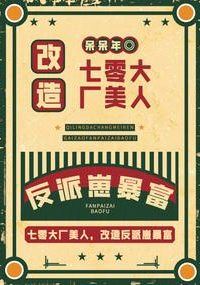
The Beauty from the 1970s State-Owned Factory Reforms the Villainous Cub and Strikes It Rich
+Add to Custom List
Sort
Add review
... Read More
Okay so let me just say — the dream sequence in this chapter is EVERYTHING. Chen Qing literally dreams about kissing He Yuan, slaps him twice in the dream because he's being a pervert, then when she sees his face she's like "AHAHAHA I'M DOWN FOR THIS" and then WOKE UP right before the kiss happened. I literally screamed. This is the most relatable dream logic I've ever read in a novel. And then she wakes up and tries to CONTINUE the dream by closing her eyes again?? Girl, we've all been there. But here's what really got me — the way the author uses the dream as a PLOT DEVICE to confirm Chen Qing's feelings. Yang Xiujin literally concludes "since Chen Qing likes He Yuan, then He Yuan shouldn't stay at the machinery factory" and immediately starts writing a list of He Yuan's "alleged crimes." This is peak scheming behavior and I am HERE for it. The author is weaving so many threads together: the romantic subplot, the workplace politics, the survival struggle — it all connects. And then there's the braised pork scene. Chen Qing gets her first real money, immediately buys meat, and then just devours it without even sharing properly with the kids. "She was so captivated that she didn't even glance at the children's portion." I laughed out loud. This is such a human moment — she's been starving and working so hard, and when she finally gets good food, she can't even stop herself. It's not malicious, it's just... she's human. And the kids don't even mind because "having meat to eat at all was already a luxury!" That hit me right in the feels. The plot is moving at such a satisfying pace — survival, romance, workplace drama, all happening simultaneously. I can't stop reading.
... Read More
Okay, Director Liu needs to be talked about because THIS MAN is a comedy goldmine. He literally gives a speech about how "A girl's focus shouldn't be solely on appearance" and then immediately pivots to praising Director Lin as an "Iron Lady" and a "national model worker" who "commands such respect that everyone stops to greet her." And the narration just says: "Other directors would prefer their subordinates to be competitive and content with staying in their current positions, but Director Liu desperately wished his team would show more initiative. Otherwise, managing them was truly challenging." The author's narration here is SO dry and perfect. Director Liu is trying so hard to motivate people and achieving the exact opposite. "He made a habit of motivating everyone daily, yet somehow always achieved the opposite effect — a rather remarkable feat." I was wheezing. And Chen Qing's dialogue as a salesperson is *chef's kiss*. When she's pitching to Tian Mengya: "I guarantee fair prices for all, young and old alike" and then scooting her stool closer and closer until Tian Mengya is like "WHERE DO YOU THINK YOU ARE RIGHT NOW??" The physical comedy of Chen Qing moving her stool closer while being polite and obsequious is hilarious. The line "Such was the shamelessness of a debtor" when Chen Qing is willing to sketch for free first? That's the narrator winking at us. And Chen Qing's internal monologue about her sales experience: "By making herself seem disadvantaged, the other party would soften. Once their guard was down, closing the deal became easy." This woman is a BUSINESSWOMAN and I respect it. The dialogue throughout these chapters feels so natural — each character has a distinct voice. He Yuting's childish logic, He Yuxiang's serious business brain, Chen Qing's mix of modern sensibility and period-appropriate speech, and Director Liu's unintentional comedy. The author's voice is sharp, witty, and never talks down to the reader.
... Read More
Let me just say this: the author's description of the black market warehouse is genuinely cinematic. I'm not exaggerating. The slogan 'Serve the People' on the brick wall, swollen from rainwater, with patches of lime peeling off to reveal moss-covered scars underneath. That single image tells you everything about this world—official ideology decaying on the surface while something older and wilder grows in the cracks. And the burly men standing outside, cold-eyed, scanning everyone who enters. Organized. Disciplined. This isn't some chaotic underground—it's a structured economy that exists precisely because the official one can't provide. Chen Qing smudging her face with dust, messing up her hair to look like a beggar, is such a vivid detail. She's a young woman alone in a dangerous place, and the only armor she has is dirt and disguise. But then she steps inside and it's a completely different world. Hushed tones. Wary eyes. Food, fabric, medicine, luxury items of dubious origin. Every corner filled with goods that the state can't or won't provide. The contrast between the eerie, sinister exterior and the bustling interior is masterful. It's like walking into a different country. I also love the state-run restaurant scene. Chen Qing rushing in, heart set on meat, only to be turned away because she used up her coupons. The server leaning lazily against the counter—that casual power of someone with an ironclad job in a rationed economy. And the chef being proficient in both Cantonese and Hunan cuisine, which is such a specific, grounded detail. This isn't a generic historical setting. This is a real place with real food and real people who have real preferences. The whole world feels alive because every scene is anchored in sensory detail. You can smell the food, feel the dread, see the peeling paint.
... Read More
There's this one moment at the end of the chapter that I keep coming back to and it's purely VISUAL. Chen Qing walking toward the water vat after turning off the light — electricity is expensive, obviously — and the text describes it like this: 'The ordinary workers at the machinery factory worked in three shifts, which meant the residential area had streetlights. At six in the evening, the lights turned on. A warm yellow glow emanated from the glass covers overhead. Chen Qing's eyes reflected the flickering, low-quality light, her gaze calm and detached.' I literally stopped reading and just stared at my screen. This is SO specific. The three-shift system creating this artificial daylight in the residential area — it tells you everything about the factory town without any exposition dump. The warm yellow glow against Chen Qing's pale, striking features, that flickering light catching her eyes — it's a whole cinematic moment. And earlier, when the siblings walk out in their new clothes and the elderly folks at the alley entrance are sorting vegetables and rubbing their eyes in disbelief, you can SEE this. The alley, the vegetable sorting, the aunties gossiping, the calculating look in Auntie Yu's eyes — it's all so lived-in. This isn't a generic backdrop. It's a world where nine people rely on two sons, where fabric is a precious commodity, where two yuan for an outfit is both affordable and a luxury. The world feels TANGIBLE.
... Read More
I need to talk about what the clothes REPRESENT in this chapter because this is clearly a recurring motif. The original owner dressed these kids in ragged, ill-fitting clothes and they were 'kinda cute' at best. Chen Qing makes them new outfits and suddenly they're TRANSFORMED — not just physically but spiritually. He Yuting's dull eyes now 'sparkled brilliantly.' He Yuxiang goes from 'disliked by people and dogs alike' to 'the coolest kids on the block.' The clothes are literal armor. They're visibility. They're dignity. And the price — two yuan — is significant because it's affordable yet meaningful. This isn't charity; it's commerce with care. The fabric Li Meihua brings is 'bright and colorful' because a mother dotes on her daughter — another layer of what clothes mean in this world. But the deepest symbolism is probably the egg scene. He Yuxiang collecting eggs from the chicken — it's this small, humiliating task that he guards fiercely. When Chen Qing threatens to take it over, his reaction is visceral. It's not about the eggs. It's about having ONE thing that's his, one small domain of control in a life where he's been powerless. Chen Qing realizing this and backing off immediately — that's her growth as a character too. She's learning to read what these kids actually need, not just what they look like they need. And Yang Xiujin's gifts — the skincare set, the biscuits, the fabric favor — these are also symbolic transactions. He's not giving; he's investing. The whole chapter is about what things MEAN and who gets to assign that meaning.
... Read More
Okay, let me just say this: the recycling station scene is the single funniest and most pivotal moment in this entire chapter. Chen Qing goes out at night, pays fifty cents, searches for two hours, finds literally nothing of value, and then gets followed by a man in a hat. She immediately assumes he's an enemy spy—because, you know, 1970s China, paranoia is basically a survival skill—and she attacks him. What happens next? She ends up on the ground, pulling his pants down, seeing... things, and then yanking off his mask to discover it's HE YUAN. The man whose manuscripts she accidentally grabbed. The man she's been weirdly obsessed with since they first met. The man who is now absolutely mortified. This is such a brilliant plot device because it does three things at once: it creates genuine comedic gold, it forces these two characters into an awkward entanglement that will definitely come back to haunt them, and it sets up the evening party conflict where Chen Qing is genuinely worried he'll expose her. She literally tosses and turns all night, clutching those tower crane manuscripts like a lifeline. The plot is feeding her a problem and then handing her the only possible solution on a silver platter. I love it.
... Read More
Can we just take a moment to appreciate how DISTINCTLY each character sounds in this chapter? He Yuxiang's dialogue is immediately recognizable — short, sharp, loaded with attitude. 'No need! The chicken's rear is dirty!' That's not just dialogue, that's a WHOLE PERSONALITY in six words. And his line about the firewood knife? 'My aunt said that if anyone asks her to work for free, she'll take a firewood knife and make a scene at their house.' He's delivering this threat with such deadpan indifference, and the narration literally says 'His specialty was infuriating people without consequence.' This kid is a menace and I love him. Chen Qing's voice is equally distinct — she's witty, cutting, and knows exactly when to deploy humor as a weapon. 'Illiterate.' Two words. That's it. That's all it takes. And then her monologue about men being the most scheming species, remembering every gift like it's a debt ledger — that's not just dialogue, that's a philosophical stance delivered with maximum sass. Auntie Yu's voice is the worst kind of neighbor — fake sweet, deeply calculating, with that 'we're all family here' energy that's actually 'we're all resources here.' 'Your aunt doesn't even have a sewing machine, so why is she charging money?' The audacity. And Li Meihua — her dialogue is simpler, more grounded, which makes sense because she's a working mother just trying to get her daughter a dress. The contrast between her practical 'Do you think this fabric will work?' and Auntie Yu's scheming 'You could make sixty yuan a month' is brilliant writing.
... Read More
Let me just say this: the dialogue in this novel is surprisingly sharp. Like, I've read so many transmigration stories where everyone talks like they're reciting poetry, but these characters actually sound like people who work in a factory committee office in 1970s Guangdong. Director Liu's voice is particularly distinct. He's this authoritarian figure who "snorted coldly" and "rapped the table loudly with his enamel cup." His dialogue is all commands and threats wrapped in bureaucratic language. When he says, "Comrade Chen Qing," with that formal address, you can hear the disappointment in his voice. He's not just assigning work—he's performing authority. But Chen Qing's dialogue is where it gets interesting. She doesn't match his energy. When he roars "Chen Qing!" she responds with this calm, almost bored, "Director, please go ahead." She's not afraid of him. She's not impressed by his title. She's just... done. The exchange about the welcome party is pure gold: "I won't do it." "Chen Qing! The factory leadership thinks so highly of you. Don't you know how to be grateful?" "But I don't know how to organize a party." She's weaponizing incompetence. She's saying, "You want me to do this? Fine. But I'm going to make it clear that I'm the wrong person for the job." It's passive resistance disguised as honesty. And Tian Mengya? Her dialogue is all sharp edges and defensive posturing. "Chen Qing, don't go too far!" she snaps when she realizes Chen Qing is using her. But then Chen Qing just spreads her hands and says, "You see, the comrades in our organization aren't enthusiastic and aren't willing to cooperate. There's nothing I can do." The narrative voice is also doing a lot of work. It's witty without being pretentious. When Chen Qing thinks about how "bosses are all the same, no matter where you go," and then reflects on how "when they say 'by the way,' they're actually sending you on a winding, mountainous path with eighteen bends"—that's not just dialogue, that's a whole philosophy of workplace management compressed into one sentence. The humor comes from the contrast between the formal, bureaucratic language of the factory committee and the internal monologues of characters who are clearly exhausted by it all.

Leave a comment

You must be logged in to leave comments. or