Summary

... Read More

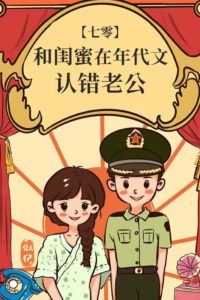
Meng Yinyin is an eighteen-year-old educated youth sent to the Nanjiao Brigade during the Cultural Revolution. Her life changes abruptly when her parents, both university professors, are labeled as class enemies and sent to labor camps. To protect her, they use their remaining connections to send her to the countryside overnight. Arriving at the rural brigade, Meng Yinyin struggles to adapt to the harsh physical labor. Having spent her entire life in comfort, she lacks the strength and skill for farming, earning only five work points a day, half of the standard rate. Her inability to contribute adequately threatens her food rations and places her in danger of being expelled from the brigade, a fate she cannot face as she has no home to return to.

The brigade leader assigns Lu Chen, a tall, silent, and intimidating young man, to guide Meng Yinyin. Lu Chen is an orphan raised by his uncle, Lu Dashan, and is viewed with suspicion by the villagers due to rumors that he is a jinx who caused his parents' deaths. Initially, Lu Chen avoids Meng Yinyin, maintaining a cold distance. However, after Meng Yinyin falls asleep during work and nearly loses her points, Lu Chen secretly helps her by preparing bamboo strips and claiming the work as his own, allowing her to earn three points. This act reveals a hidden kindness beneath his stoic exterior, though he refuses to explain his actions.

Meng Yinyin, desperate to survive without working, proposes a transaction: she will pay Lu Chen to do her farm work in exchange for work points. Lu Chen refuses the dishonest arrangement but agrees to teach her the skills she needs. During their time in the bamboo forest, their relationship begins to shift. Meng Yinyin witnesses Lu Chen’s exceptional skill and hard work, while Lu Chen finds himself unsettled by her presence and her unusual directness. He is intrigued by her beauty and her lack of fear, despite his reputation for being dangerous.

Back at the educated youth dormitory, Meng Yinyin faces social hostility from Lin Xiaoxia, a fellow educated youth who is jealous of the attention Song Yue, the male educated youth leader, pays to Meng Yinyin. Lin Xiaoxia spreads rumors and attempts to undermine Meng Yinyin, but Meng Yinyin stands her ground, earning the respect of her peers through her sharp wit. Meanwhile, Meng Yinyin learns that the Lu family, specifically her uncle Lu Dashan, is one of the wealthiest in the brigade, owning a rare red-brick house. She begins to see Lu Chen as a potential husband who could provide the security she lacks, although she is unaware of the complex dynamics within his family.

Lu Chen’s uncle and aunt, Lu Dashan and Jiang Guihua, exploit him, treating him as a servant rather than family. They force him to do household chores and manual labor while providing him with minimal care. Lu Chen endures their treatment silently, maintaining his independence and dignity. The narrative highlights the contrast between Meng Yinyin’s privileged past and her current vulnerability, and Lu Chen’s isolation and resilience in the face of familial neglect and village prejudice.

As the story progresses, Meng Yinyin attends a wedding banquet at the Lu family home, where she observes the wealth and status that Lu Chen lacks. She continues to navigate the social hierarchies of the brigade, balancing her desire for comfort with her growing respect for Lu Chen. The central conflict revolves around Meng Yinyin’s struggle to survive in a hostile environment and her evolving relationship with Lu Chen, who becomes her unlikely protector and teacher. Their interactions reveal mutual curiosity and a budding connection that challenges their preconceived notions of each other.

The story sets the stage for a romance that transcends social and economic boundaries. Meng Yinyin must learn to value hard work and integrity, while Lu Chen begins to open up to someone who sees him as a person rather than a jinx or a servant. The narrative explores themes of class, survival, and the impact of political turmoil on personal lives, all while focusing on the gradual development of trust and affection between the two protagonists.

Latest Release
DateGroupRelease
2026-08-11shanghai fantasy c101
2026-08-11shanghai fantasy c100
2026-08-11shanghai fantasy c99
2026-08-11shanghai fantasy c98
2026-08-11shanghai fantasy c97
2026-08-11shanghai fantasy c96
2026-08-11shanghai fantasy c95
2026-08-11shanghai fantasy c94
2026-08-11shanghai fantasy c93
2026-08-11shanghai fantasy c92
2026-08-11shanghai fantasy c91
2026-08-11shanghai fantasy c90

Community Reviews

Rating(3.7 / 5.0, 24votes)
5 stars
5(21%)
4 stars
10(42%)
3 stars
5(21%)
2 stars
4(17%)
1 stars
0(0%)

Popular reviews

... Read More
There's so much happening beneath the surface here and I need to unpack it. The voice thing—Lu Chen's insecurity about his voice isn't just a quirky character detail, it's symbolic of his entire existence. He's been silenced his whole life. His aunt speaks over him, commands him, dismisses him. His relatives treat him like he doesn't exist. Even his own grief is something he can't express. And Meng Yinyin is the FIRST person who tells him his voice is nice. That's not just a compliment, that's validation of his right to be heard. Then there's the meat. In this setting, dried meat is wealth, it's survival, it's something precious. Lu Chen has been hoarding it—"I have more. A lot."—and yet he gives it all away to someone who barely knows him. It's the first time someone has given him something without expecting anything in return, and the first time he's given something without being forced. The jerky becomes this symbol of mutual care, of two people who've both been starving in different ways finding something to feed each other. The door in the wall is another layer—separating two yards but also connecting them. Lu Chen lives in between worlds, not fully belonging to his aunt's house or his own. Meng Yinyin discovering it means she's seeing the real him, the hidden parts he shows no one. And the wedding next door represents everything he's been denied—family, celebration, belonging. But maybe the deepest symbol is silence itself. The summer cicadas, the quiet between them, the things unsaid. Lu Chen can't speak freely, Meng Yinyin can't admit her true intentions, and yet in that silence something real grows.
... Read More
Okay, so this section is absolutely loaded with plot reveals and I need to talk about it. The door between the yards? That is such a small, seemingly throwaway detail but it tells you EVERYTHING about Lu Chen's life. He has a secret passage to his aunt's yard where he works like a servant, and Meng Yinyin just stumbles onto it. That moment when she watches him lift that table with one hand and push open the door—her reaction of pure confusion ("?!" honestly I laughed out loud) shows how invisible his suffering has been. No one else knows about this. No one else sees him like this. And then the backstory drops. His grandmother dies, they kick him out to the old house, pretend his parents' belongings are lost while clearly keeping them. The line about his grandmother's dying words asking them to pass on his parents' things hit me so hard. He's been playing the long game this whole time—pretending not to notice, doing their work, waiting. He's fifteen and already this calculated about survival. That's not naive, that's strategic. Meanwhile, the wedding subplot is unfolding next door and Jiang Guihua's already sizing up Meng Yinyin as a threat. The Wang family has an unmarried son and suddenly this beautiful city girl appears. Jiang Guihua's little sabotage attempt—dropping hints that Meng Yinyin is trouble—shows how desperate she is to control everything. But here's the thing: the plot is setting up this whole marriage market dynamic, and Lu Chen is right in the middle of it, invisible to everyone except Meng Yinyin. That's dramatic irony at its finest.
... Read More
Let me just say this line out loud because it deserves to be heard: "She was bullying you just now, didn't you notice?!" Meng Yinyin stomping her foot and pointing at Lu Chen like he's the most oblivious person on earth. This girl has ZERO filter and I am here for it. The dialogue in these chapters is so distinctive per character. Jiang Guihua's voice is immediately recognizable—loud, performative, laced with fake sweetness. "Oh, my dear relatives, why are you here so early?" This woman cannot do anything at normal volume. And then the immediate switch to barking orders at Lu Chen like he's furniture. Her little forced apology—"don't take it the wrong way, Lu Chen"—is so transparently manipulative you want to throw something at her. Lu Chen's dialogue is sparse but devastating. "Don't go." "It's dirty work." Three words that carry so much care. He notices her expensive dress and immediately worries she'll get it stained. His sentences are short because he's careful with words, but every one lands. And Meng Yinyin! Her internal monologue is comedy gold. The way she lies about coming to help when she really came to scout for a husband—"I didn't feel like working today, so I took the day off"—while Lu Chen just nods along, not doubting her for a second. The contrast between her frantic internal scheming and her outward polite persona is hilarious. The narrative voice itself has this wonderful warmth, especially during the quieter moments. It's like a friend telling you a story and leaning in for the good parts.
... Read More
The atmosphere in these chapters is so vivid I could smell the summer heat. The birds and cicadas forming this constant chorus while Lu Chen and Meng Yinyin stand in this charged silence between them—what a contrast. The noisy vibrance of summer against the quiet of two people who barely know how to talk to each other. And the physical spaces! The wall between the yards with that secret door, the neat row of brick houses next door with glass windows that cost nearly a thousand yuan, the single-barred bicycle with red cloth at the gate. Every detail places you right there in this brigade. You can feel the class difference just from the descriptions—Meng Yinyin's expensive dress against the dust and dirt of rural labor, the Lu family's hidden wealth visible through the courtyard walls. The scene where Meng Yinyin circles around to peek through the front gate and sees the relative-in-laws arriving is so cinematic. She's literally sneaking to observe, trying to find a husband while pretending to help, and the camera follows her around the corner to this whole world opening up. Jiang Guihua's loud exaggerated laughter announcing guests like she's running a marketplace, the contrast with Lu Chen's quiet suffering in the next yard—it's all so layered. I also love how the small gate becomes this threshold between two worlds. Lu Chen passing through it like he's entering someone else's life every day, while Meng Yinyin discovers it and everything changes.
... Read More
The pacing here is honestly masterful. It starts so intimate—just two people in a yard, awkward compliments about voices, the kind of scene that could fill an entire chapter in lesser hands. Meng Yinyin blushing and insisting Lu Chen's voice is nice, his internal warmth, the aunt's voice cutting through like a knife. That transition from tender to harsh is jarring in the best way. Then it pivots. The aunt's demand pulls Lu Chen away, and suddenly we're following Meng Yinyin's curiosity about the door, which opens up this whole exploration of his living situation. The pacing accelerates naturally—her anger at his treatment, her scolding, his silence, the jerky scene, the sudden bellies rumbling, the awkward food question. It flows like a real conversation, meandering but always moving forward. And just when you think the scene is about to settle into a quiet moment between them, Jiang Guihua's voice explodes from next door and everything shifts again. The wedding subplot crashes in, new characters appear, and Meng Yinyin's true mission (finding a husband) is almost revealed. The chapter ends with her sneaking around the gate and the Wang family already sizing her up. Cliffhanger energy without being cheesy. What I love most is how the author never lets the reader get comfortable. One moment it's romantic, the next it's social commentary, then it becomes a coming-of-age survival story, then a matchmaking comedy. The tonal shifts are so smooth you don't notice them happening until you're already three scenes deep.
... Read More
"Do you want to eat something?" — I cannot deal with this scene. I literally cannot. Lu Chen, a boy who can barely speak his own thoughts because of his voice insecurity, who has spent his whole life being told he's bad luck and unwanted, asks Meng Yinyin if she wants to eat. And then he offers her jerky. ALL of it. "I have more. A lot." The way the narration describes her hesitation—eyes blinking at the meat, wanting it but not wanting to take too much—and then him just shoving the whole handful into her hands. He noticed she was holding back. He noticed everything. And he couldn't let her go hungry. But what broke me was the silence after she stopped scolding him about his aunt. The birds and cicadas, summer noise, and then just... nothing. Lu Chen feeling anxious that she stopped talking. Wanting to ask her to continue but not knowing how. That moment of him blurting out the food question was him reaching for something, anything, to keep this connection going. He's so used to being alone that her anger—her caring—felt like something precious he didn't want to lose. And her reaction! She thought she'd overstepped, that she was being nosy, and immediately tried to take it back. "Just pretend you didn't hear anything." But he didn't pretend. He listened. He absorbed every word. For the first time, someone was mad ON his behalf, not AT him. The warmth spreading inside him—that's not just gratitude, that's something much more dangerous and beautiful.
See all reviews

Characters

See all characters

Custom lists

See all custom Lists