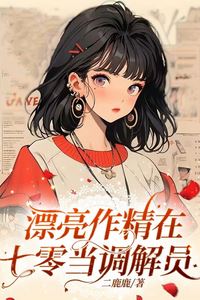
The Beautiful Diva as a Mediator in the 70s
Novel Info

Summary

... Read More

Jiang An'an, a skilled marriage mediator from the twenty-first century, finds herself transported back to 1972 in rural China. She inhabits the body of a seventeen-year-old girl with the same name, who is known for her beauty but also for her spoiled and arrogant temperament. The original owner was involved in a violent dispute with her relatives over a proposed "marriage exchange," a feudal practice where she would be traded to marry a man from another family to secure a wife for her cousin. During the altercation, the girl suffered a head injury, which allowed Jiang An'an to take over her identity.

Upon waking, Jiang An'an discovers she has been adopted by the Jiang family, who treat her with extraordinary devotion despite their modest means and poor reputation in the Hongqi Brigade. Her mother, Lin Meiru, is a fierce and formidable woman who dominates the village through her sharp tongue and willingness to fight. Her father, Jiang Degui, is a gentle man who dotes on his daughter. Jiang An'an quickly realizes that her new family is under threat from her paternal grandmother and uncle, who are plotting to force the marriage exchange to benefit their own son.

The central conflict arises when Jiang An'an learns of the uncle's plan to trade her for a wife for her cousin, Jiang Dezhuzhu. Refusing to accept this fate, she confronts her relatives and threatens to report them to the authorities for violating marriage laws. Her boldness shocks her family, who are accustomed to her previous docile behavior. Jiang An'an leverages her knowledge of the legal system and the political climate of the era to outmaneuver her opponents. She successfully negotiates with the brigade leader, Captain Luo, to secure a leave of absence and protect herself from further coercion.

A significant turning point occurs when Jiang An'an intervenes in her eldest sister's marital crisis. Her sister, Jiang Shulan, is being abandoned by her husband, Zhou Kang, a sent-down educated youth from the capital who seeks to divorce her to return to city life. Zhou Kang attempts to frame the Jiang family for illegal imprisonment, but Jiang An'an skillfully deconstructs his accusations and exposes the bribery he offered to her uncle. Through her mediation, she ensures that her sister receives a fair settlement and protects the family from further exploitation.

As the story progresses, Jiang An'an navigates the complexities of rural life in the 1970s. She encounters new educated youth, including Zhou Yinghuai, a handsome and disciplined young man who becomes a potential romantic interest. Jiang An'an also begins to use her professional skills as a mediator to resolve disputes within the brigade, gaining respect and influence. She works to improve her family's standing while preparing for a future that includes education and personal independence.

The narrative explores themes of family loyalty, gender equality, and social justice. Jiang An'an challenges traditional patriarchal norms and supports the women in her family to assert their rights. She faces opposition from conservative relatives and villagers but remains steadfast in her convictions. The story highlights the struggles of rural communities during a turbulent historical period and the resilience of individuals who refuse to be oppressed.

Jiang An'an's journey is one of self-discovery and empowerment. She transforms from a seemingly spoiled girl into a confident and capable woman who uses her wits to protect her loved ones. Her actions inspire those around her to question unjust traditions and strive for a better life. The novel concludes with Jiang An'an looking toward the future, hopeful that she can achieve her dreams and contribute positively to her community.

Latest Release
DateGroupRelease
2026-08-11shanghai fantasy c96
2026-08-11shanghai fantasy c95
2026-08-11shanghai fantasy c94
2026-08-11shanghai fantasy c93
2026-08-11shanghai fantasy c92
2026-08-11shanghai fantasy c91
2026-08-11shanghai fantasy c90
2026-08-11shanghai fantasy c89
2026-08-11shanghai fantasy c88
2026-08-11shanghai fantasy c87
2026-08-11shanghai fantasy c86
2026-08-11shanghai fantasy c85

Community Reviews

Rating(4 / 5.0, 30votes)
5 stars
12(40%)
4 stars
8(27%)
3 stars
7(23%)
2 stars
3(10%)
1 stars
0(0%)

Popular reviews

... Read More
There's this one line that keeps echoing in my head: 'Divorce is not a disgraceful thing, but a reflection of the progressive thoughts of many women comrades.' Jiang An'an says it to Director Gao at the Public Security Bureau, and she means it. But it's not just dialogue—it's the thematic backbone of everything. The whole story is built on this tension between what women ARE allowed to do and what they actually DO. Her sister is fighting for her children's rights in a divorce. Jiang An'an is navigating a male-dominated system (the bureau, the cooperative, the countryside) with intelligence and poise. Even the female educated youth vying for Zhou Yinghuai's attention—flawed as they are—represent women claiming space in a world that wants them quiet. And then there's the spy case. Shen Weiming and his wife disappeared in 1956. Sixteen years of silence. The equipment from 'M country' still unaccounted for. This feels like more than a plot device—it's a metaphor for all the stories that were buried, all the people who were erased, all the truths that were hidden beneath the surface of 'progress.' The osmanthus cake, overly sweet because sugar was precious. The chocolate traded like gold. The pickup truck that's the only one in the county. These are symbols of scarcity and value, of what people hold onto in a world that gives them so little. Jiang An'an carries mountain goods to her sister like offerings—family as the one thing that can't be taken away.
... Read More
Let me just say this author understands how to control tension like a master. Chapter 13 starts with the divorce announcement and you're immediately in the middle of conflict. Zhou Kang's face turning 'green and pale' - we're in it. The scene at the police station with all the educated youth arguing, Yang Qing getting shut down, Wu Jianguo getting all sentimental about the 'advanced brigade' award - it's busy, it's noisy, it's perfect. Then Chapter 14 shifts gears completely. You go from the public confrontation to an intimate family dinner. The pacing slows down, you get the emotional backstory about An'an's parents, you see the family dynamics breathe. This is crucial because if the author had kept the intensity at maximum for three chapters straight, I would've burned out. The quiet scene where Jiang Degui stuffs that one yuan into An'an's pocket and says 'keep the rest as pocket money' - that's the breath between sprints. And then Chapter 15? The ox cart scene starts almost peaceful - she's grateful for her family, feeling warm about the buns, looking at the frost-covered grass - and then the cart falls into a pit. A landslide. Right when you're relaxed, BOOM. The author literally drops a cliffhanger on the reader. 'Unless there were large excavators working on the mountain' and then the text CUTS OFF mid-sentence. I was not prepared for this level of pacing manipulation.
... Read More
I need to talk about Jiang Shulan's realization because it hit me so hard. The line where she thinks about how everyone mocked her parents for being 'greedy' but then remembers everything they actually did - working hard to educate four daughters, emptying savings for dowries, always fighting for their daughters no matter what - and she just... stands taller. She doesn't need brothers. She has sisters. And Lin Meiru! Oh my god, Lin Meiru is the best mother figure. When she's talking to Duobao and says 'he'll work in a factory and eat good grain, and he'll take good care of his little aunt' - I literally got chills. This child is already planning to protect his aunt. The intergenerational love in this family is everything. But the scene that absolutely wrecked me was the nighttime conversation between Lin Meiru and Jiang Degui about An'an's real parents. The way Degui describes finding his benefactor during the famine, only to lose him to 'bad people' - you can feel the grief still raw after sixteen years. And Lin Meiru's pride when she says 'she'll definitely become a little hero like her parents' followed by Degui's terrified 'pah pah pah!' because he just wants her SAFE. That contradiction - wanting her to be proud but also wanting her to be ordinary and safe - that's parental love in its purest form. The author didn't even need dialogue for some of this. Just the image of them quietly preparing incense and paper money for the anniversary, trading on the black market because it's 'feudal superstition' but they do it anyway because love doesn't care about ideology.
... Read More
Let me just say this—Chapter 16 is a masterclass in pacing. You've got this whole section of lighter moments: the stone moving, the snack trading, Yang Qing getting emotionally destroyed by Wen Hao's roasting. It's almost comedic. Then Jiang An'an disappears into the Public Security Bureau and the tone SHIFTS. Completely. No warning. The old guard's gaze turning sharp when Zhou Yinghuai approaches—'dangerous aura,' 'killing intent,' 'must have come from the military.' That's the moment you realize this isn't a romance novel. This is a thriller wearing a romance costume. And the transition is so smooth you don't notice it happening until it's already hit you. Then Chapter 17 pivots again—Jiang An'an in the pickup truck, heading to see her sister, the Women's Federation being understaffed and scattered, the mundane reality of bureaucratic life. It's a breath of fresh air after the tension of the bureau scene, but it doesn't feel like a letdown. It feels like the author letting you exhale before the next inhalation. The structure here is deliberate: tension → release → tension → release, but each cycle raises the stakes. The spy case subplot is barely a whisper right now, but it's there, ticking in the background like a bomb. And I cannot wait to see when it detonates.
... Read More
I need to talk about the egg sandwich moment because the author absolutely nailed it. Jiang An'an cracks an egg on the cart, peels it, tears open a steamed bun, puts the egg inside, and takes a bite. Two dimples showing. Just... this incredibly vivid, simple moment. And the reaction? Stomachs growling. People singing louder to cover their hunger. Wen Hao offering imported chocolate like it's a king's ransom. This is 1972 rural China and you can FEEL the scarcity. The imported chocolate isn't just candy—it's dozens of yuan PLUS a foreign exchange ticket. That single detail tells you everything about the era without a single exposition dump. The osmanthus cake at her sister's shop, eight mao per jin, overly sweet because sugar was a luxury they could afford at the cooperative. The pickup truck being the ONLY one in the entire county. These details aren't decorative—they're the texture of the world. The Public Security Bureau scene is also incredible. The old guard with his battlefield veteran eyes, the way he instinctively goes to salute Zhou Yinghuai before catching himself. Director Gao in his black Zhongshan suit with a Hero pen in his pocket and actual LEATHER SHOES. You can see the hierarchy, the politics, the unspoken respect between old revolutionaries. The Women's Federation office being 'inconspicuous, at the corner of a street'—that's such a specific, authentic detail about how these institutions actually operated. And the seafood line at the cooperative, five or six meters long for hairtail fish and yellow flower fish in an INLAND county. That alone tells you about geography, scarcity, and desire.
... Read More
Okay so here's the thing—on the surface this reads like a light romance with some daily life fluff, right? Girls fawning over a strong guy, trading snacks, visiting family. But then BAM. Chapter 16 ends with Zhou Yinghuai pulling out a document and saying he was secretly dispatched to investigate a spy case from sixteen years ago. A SPY CASE. In 1972 China. And it's tied to equipment from 'M country' that went missing with a couple named Shen Weiming. The author is playing 4D chess here. The stone-moving scene isn't just a 'look how strong and humble the male lead is' moment—it's establishing Zhou Yinghuai as someone who operates below the radar, someone who doesn't seek attention but gets things done. Then he 'happens' to head in the same direction as Jiang An'an after separating from his friends. That's not coincidence. That's a man on a covert mission who notices her and decides to keep her close. Meanwhile Jiang An'an is running her own parallel plot—helping her sister fight a divorce case, navigating the Public Security Bureau, charming her way into a pickup truck ride. She's not a side character in her own story. The two narratives are about to collide and I am HERE for it. The subplot of the female educated youth trying to one-up each other over Zhou Yinghuai is basically comic relief, but it's well-written comic relief. Yang Qing's jealousy is almost funny until you realize she's the type of person who will cause actual problems later. Classic setup.
See all reviews

Characters

See all characters

Custom lists

See all custom Lists