The Ascetic Regent Prince's Doting Little Poisonous Consort - Reviews

The Ascetic Regent Prince's Doting Little Poisonous Consort
+Add to Custom List
Sort
Add review
... Read More
Okay, I need to talk about this birthday banquet scene because WOW. The Empress Dowager literally walks in and announces she's swapping Yan Wuxin for Yan Qingcheng as the Crown Princess candidate. And you know what? Yan Wuxin's father KNEELS and says his daughter prefers freedom. Not even a fight, just straight-up refuses. I was literally sitting there like "yes sir, yes sir." But then the Emperor sides with the Empress Dowager and forces Yan Qingcheng to marry the Crown Prince instead. Meanwhile Yan Qingcheng is over there staring at Helian Yuchen like "marry me please" and he doesn't even look at her. Classic. And the assassination attempt right after? Yan Wuxin just casually walks through the whole thing, buys herbs, orders clothes for her brother, then lures the assassins into an alley and dissolves them with some new pill she invented. She even comments "it seems there's still room for improvement" like she's tasting bad food, not watching people melt into blood pools. This woman is absolutely unhinged in the best way possible. The plot is moving FAST. From palace drama to assassination to a mysterious immortal guy appearing out of nowhere to offer her a trial in one month. I can't stop reading.
... Read More
There's a lot happening beneath the surface of these chapters, and I think the author is building a thematic framework around transformation and hidden worth. The spider lily on Yan Wuxin's arm is the most obvious symbol. This flower represents separation, death, and things that can never meet. But Yan Wuxin herself is a creature of separation—she's between two lives, two identities, two worlds. The original Yan Wuxin died (or was supposed to), and this new version is something else entirely. The flower marks her as someone who doesn't belong to the living world anymore, but also isn't dead. She's in between, and that in-between space is where her power comes from. The black water during the transformation is another loaded image. It's not just her impurities being purged—it's the old Yan Wuxin, the "waste," the burned, disabled girl being washed away. The pool consumes her old self so the new one can emerge. And the fact that the water turns pitch black and smells foul? That's the ugliness of her past being physically expelled. The shattered crystal pillar is perhaps the richest symbol. All eight attributes lighting up at once, then the pillar breaking under the pressure—it's a visual metaphor for her potential being too vast for the world's existing frameworks to contain. She doesn't fit into any single category. The system itself can't handle her. And then there's the Kongjian—a world within a world, a pocket dimension full of life and possibility that exists inside her. She carries her own universe. That's not just a power-up; that's a statement about self-sufficiency and inner richness that the outer world refuses to acknowledge.
... Read More
The assassination scene in the alley is one of the most visually striking moments in this entire novel. Let me paint it for you: Yan Wuxin walks into an alley, the assassins appear behind her, she throws pastries as a distraction, channels ice-attribute Huanli to freeze them, then feeds them a newly refined pill that dissolves them into pools of blood. One assassin's face is PEELING AWAY as he retreats in terror and she casually turns and cuts him down like it's nothing. "A newly refined product." As for its name, she hadn't thought of one yet. This is the kind of scene that reads like a movie. The ice-attribute Huanli draining their energy, the pills shooting into their mouths, the foul-smelling blood pools. It's dark, it's visceral, and Yan Wuxin treats it with the casual boredom of someone doing grocery shopping. The worldbuilding details are also really interesting - the cultivation system with Huanli and Linggen, the Xisui Dan for cleansing essence, the Wannian Shilian (ten-thousand-year snow lotus) that's basically a mythical ingredient. The trial in Changle Guo requires stone lotuses and family participation. There's this whole layered world of cultivation, political intrigue, and immortal beings that feels genuinely alive. The contrast between the peacock-filled peony garden banquet and the dark alley assassination is also a nice touch. The author really knows how to shift tones.
... Read More
The way this world unfolds as they enter Duanhun Shan is genuinely cinematic. The sky gradually darkening, campfires flickering everywhere, teams huddled in small groups — it paints this picture of a place that's both beautiful and predatory. You can FEEL the danger in the atmosphere. And the Moshou classification system! Ordinary, Huanshou, Shengshou, Shenshou, Chaoshenshou — each with five ranks. This isn't just worldbuilding for show; it immediately raises the stakes when they encounter a Fourth-Rank Phantom Beast and we see the gruesome remains of the Mei family disciples. The author doesn't need to describe the gore in detail — the fact that six Spirit Master Intermediate Grade cultivators were utterly defenseless tells us everything we need to know about the danger level. The scene where Yan Wuxin pushes Shangguan Ruoyu aside and lures the tiger away alone — the imagery of her moving like a white figure, the beast roaring, the onlookers scattering — it reads like a film sequence. Every detail serves the atmosphere. Even the Teleportation Array mechanic adds tension: one use per team, and using it arbitrarily means failure. It's a brilliant constraint that forces every character to make real choices about when to fight and when to flee. This world feels ALIVE. Not a backdrop, but a character itself.
... Read More
The chapter title itself gives it away: "Life and Death Are Fated, Wealth and Honor Are in Heaven." But the whole narrative seems to be dismantling this idea. Yan Wuxin REFUSES to accept fate. She came back to Yan Jia not because she was destined to, but because she CHOSE to. She refined poison pills herself instead of begging for help. She walked into Duanhun Shan without a Teleportation Array because she doesn't need one — her will is her armor. The Wannian Shilian operates as this powerful symbol throughout. It's not just a plot MacGuffin; it represents everything Yan Wuxin is willing to risk for. Power? Revenge? Redemption? The text never fully reveals what it does, and that ambiguity is intentional — it's the void that pulls her forward, the question mark at the end of every sentence in her life. Even the Phantom Beast scene is symbolic. The Fourth Prince tries to use her as a pawn, to let fate decide her fate. But she SEIZES agency — throwing needles, drawing the beast away, protecting Shangguan Ruoyu when no one else would. The beast represents the chaos of the world, and Yan Wuxin doesn't run from it. She faces it. The recurring motif of legs and standing is also significant. Yan Wuhan can't walk. Yan Wuxin promises to restore him. But metaphorically, everyone in this story is trying to stand — the concubine-born daughter, the crippled brother, the discarded disciple. They're all fighting for the right to be seen as worthy.
... Read More
The dialogue in this section is so sharp it cuts. Yan Qingyu's line 'If you care about your parents, then stand with us. Otherwise, don't blame your sister for being ruthless' is the kind of manipulative garbage that makes you want to throw something at the book. But that's good writing—that's making you feel exactly what the characters should feel. And Yan Wuxin's response? Just 'Don't touch her' from Helian Yuchen when Yan Qixuan tries to reach out. Minimal dialogue, maximum impact. The author doesn't over-explain; they let the characters' words do the work. Yan Qixuan's 'She is still your sister. How can you be so heartless?' hits differently because it comes from someone who genuinely doesn't understand the family dysfunction. His confusion is the reader's confusion. And that line from the gaudily dressed woman—'If it weren't for Sister Mei and the others weakening the tiger to the brink of death, how could a mere Spirit Master Junior Grade like you obtain the Shoujing so easily?'—the audacity! The sheer entitlement! You can practically hear the sneer in her voice. Even the Fourth Prince's disciple saying 'Yan Wuxin is a madwoman' before passing out is perfect. Three words and you get the entire aftermath through someone else's terrified perspective. The narrative voice itself has this punchy, direct quality that matches the action. No flowery prose when a sword is coming at your face.
... Read More
I need to talk about how good Yan Wuxin's dialogue is because this girl has ZERO filter and I love her for it. When Xuanyuan Mei asks "Do I look good?" and she's like "Hmm?" and then just blurts out "You're handsome." Her own narration: "Her mind couldn't keep up with her mouth—the words slipped out in an instant." This is such a natural, human moment. She's not some cool detached protagonist, she's a girl who sees an incredibly hot immortal guy holding her and her brain just short-circuits. And then there's her exchange with Yan Qingyu at Yan Jia: "And what about my brother? Who will take responsibility for his Linggen?" She turns the tables so cleanly. Yan Qingyu was all "you destroyed Xun'er, you're not human" and Yan Wuxin just hits her with the truth about her own brother's destroyed Linggen and her father's damaged one. The silence that follows is SO satisfying. Yan Nantian's line "Let's go back" instead of "let's go home" is the kind of subtle dialogue choice that elevates the whole scene. It implies that wherever she and her brother are together IS home, not the Yan family mansion. That's masterful writing. The dialogue throughout these chapters feels natural, each character has a distinct voice, and there's this perfect balance of humor, tension, and emotional weight. The author clearly understands how people actually talk.
... Read More
I don't know how the author does it but the pacing in chapters 34-40 is absolutely perfect. Let me break it down: Chapter 34 opens with the birthday banquet - political maneuvering, the engagement swap, the Emperor's decree. That's a huge plot beat right out of the gate. Then Yan Wuxin and her father leave, and immediately we get the Xuanyuan Mei interlude where he fights off the eunuch spy. Bam, new character introduced with maximum impact. Then Chapter 35 starts with "flies behind" - we learn about the assassination attempt, Yan Wuxin's ice powers, her poison pills, and then BOOM, Xuanyuan Mei appears in person. The chapter ends with him telling her about the trial and the Wannian Shilian. Chapter 36 has the return to Yan Jia, the family confrontation, and ends on "let's go back" from her father. The word choice matters - not "go home" but "go back." That single detail hit me so hard. The chapter transitions are smooth, the cliffhangers are well-placed, and there's zero filler. Every scene advances either the plot, character development, or worldbuilding. I read this in one sitting and I have no regrets. The author knows exactly when to speed up and when to slow down for emotional beats.
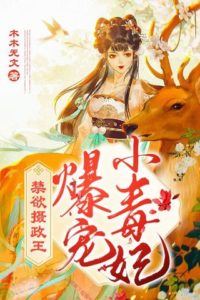
... Read More
Can we talk about how Yan Wuxin speaks? Every line from her mouth hits like a slap. "Only the weak allow themselves to be bullied." "Whether you're a concubine's daughter or a legitimate one, in this world, the most terrifying thing is not others looking down on you, but you looking down on yourself." This woman doesn't just talk — she transforms people with words. And the contrast with Shangguan Ruoyu is delicious. This girl barely speaks above a whisper, constantly apologizing with her body language. But watch how Yan Wuxin's dialogue changes her — by the end of their first night together, Shangguan Ruoyu is up at dawn, reflecting on every word. That's the power of good dialogue writing: it doesn't just reveal character, it CHANGE character. The mocking voices in the crowd are also well-crafted — they sound exactly like what you'd hear from entitled young cultivators who've never faced real danger. "A Waste/Useless Talent and a lowly concubine-born daughter forming a team" — yes, they absolutely would say that, and the author nails that tone perfectly. Even Yan Heng's dialogue is telling. He barely says anything but every glance, every suppressed emotion speaks volumes. The man wants to strike her but can't — and that restraint is communicated through what he DOESN'T say almost as much as what he does.
... Read More
There's something deeply symbolic about the veil tearing away during the tiger fight. Yan Wuxin has been hidden—both literally behind that veil and metaphorically behind the reputation of being a waste and ugly. The tiger doesn't just attack her body; it attacks her concealment. And what's revealed? Not just beauty, but capability. The veil was a metaphor for how everyone perceived her, and its destruction forces everyone to confront the truth they've been ignoring. Then there's the blood. Yan Wuxin emerges covered in it, looking like she came from purgatory. Blood in these novels is never just blood—it's transformation, it's proof of power, it's the price of survival. She's literally stained by what she's done, marked by her strength. The Fourth Prince calling her a 'madwoman' is interesting too. Society labels powerful women as mad because they don't fit the expected mold. Yan Wuxin doesn't care about being called mad—she cares about surviving. And that final image of her kneeling, tears falling, Shenshi sealed—this is the theme right here. Power comes at a cost. Strength has a price. The thing that makes her formidable is also what's breaking her. The recurring motif of concealment and revelation runs through everything: the veil, the sealed Shenshi, the hidden beauty, the hidden power. What's underneath is always more dangerous than what's on the surface.

Leave a comment

You must be logged in to leave comments. or
