Summary

... Read More

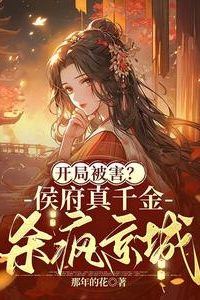
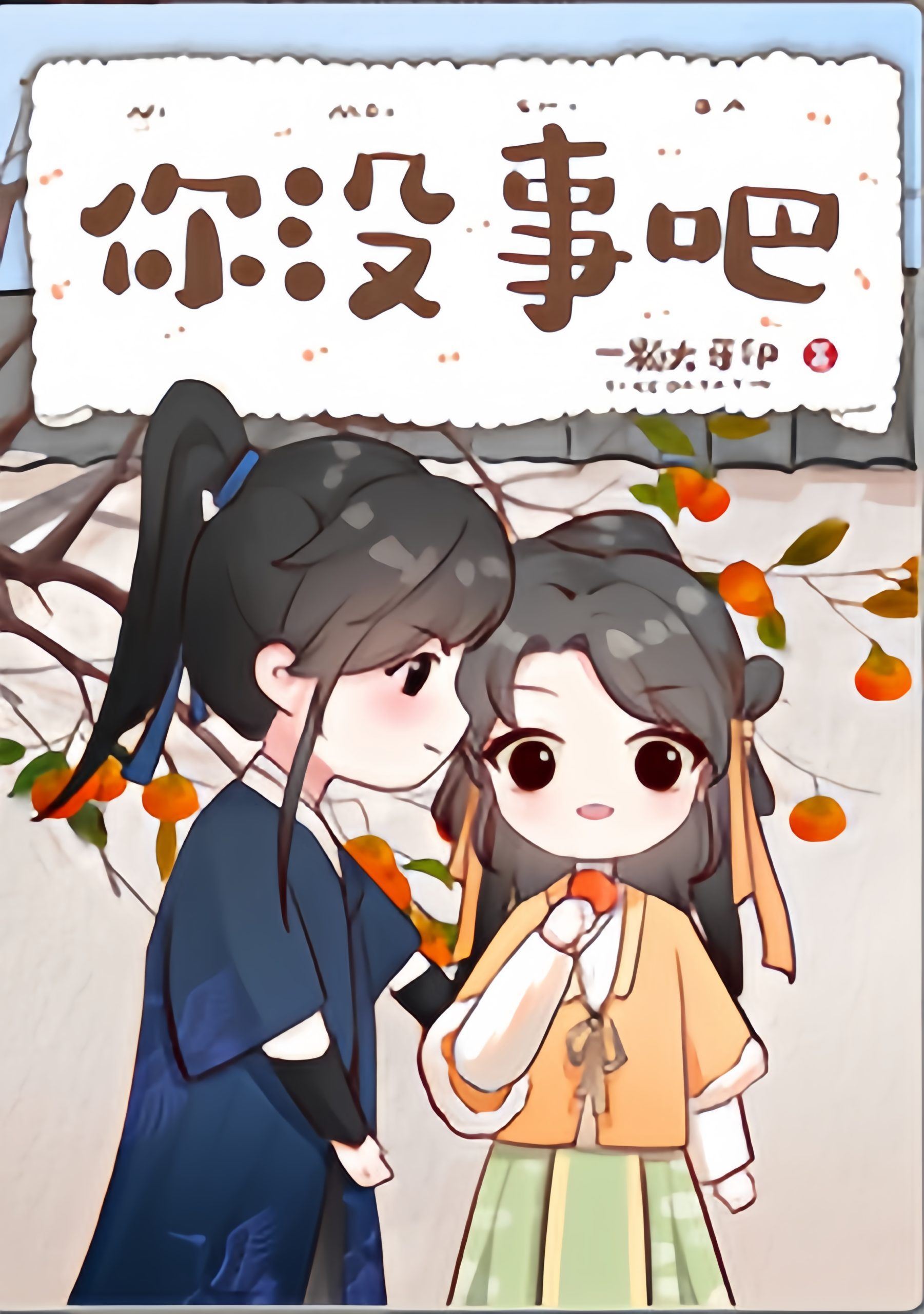
In the drought-stricken Qingfang Village of the Ye Dynasty, Gu Chang'an awakens eight years old in the body of a deceased child. She is the daughter of Old Gu Six, a solitary hunter abandoned by his wealthy clan and widowed early in life. Upon waking, she discovers a mysterious system binding her to this world with a specific mission: survive a catastrophic natural disaster cycle lasting three and a half years and await Old Gu Six's natural death to earn a lifetime of merit. The impending calamity begins with an extreme drought followed by a lethal cold wave plunging temperatures to negative fifty degrees. To ensure their survival, Gu Chang'an accesses a spatial dimension—a fully stocked modern villa containing refrigerators filled with meat and produce, vast stores of rice and flour, and endless water supplies. She possesses latent superpowers, specifically lightning manipulation, though significantly weakened from her previous life in a post-apocalyptic world.

The core conflict arises from the desperate scarcity of resources and the hostile social environment of the village. While the general population faces starvation and declining water levels, Old Gu Six and Gu Chang'an secretly amass wealth and supplies. Gu Chang'an pawns family heirlooms for silver and purchases grain, mules, carriages, and winter clothing, using her spatial abilities to smuggle massive quantities of food without drawing attention. Their preparation contrasts sharply with the villagers, who are dwindling in hope as court relief never arrives. The narrative tension escalates when members of the Eldest Gu family, jealous of Old Gu Six's apparent resilience, attempt to extort money from him. When they confront the father and daughter on the road, Gu Chang'an uses her lightning powers to strike and cripple the aggressors, a display that terrifies witnesses but is accepted by Old Gu Six due to his unwavering trust in his daughter.

As the last wells dry up and refugees flood the nearby cities causing chaos, the village head organizes a mass exodus. Gu Chang'an and Old Gu Six join the caravan of over six hundred villagers, traveling north toward the relatively stable Lingnan region. Despite hiding their superior food and water, they must navigate the dangers of the road, including potential banditry and the moral decay of starving desperate people. Old Gu Six utilizes his blacksmithing skills to forge weapons from agricultural tools, preparing for the violence that inevitably accompanies such a large migration. Gu Chang'an continues to manage their hidden resources, ensuring they have cooked meals and clean water while maintaining the facade of ordinary refugees.

The story follows their arduous journey as they face not only the environmental extremes but also the internal dynamics of the fleeing crowd. The father-daughter bond deepens, with Old Gu Six fiercely protective of his daughter's secret identity as a fairy-like being. As they traverse the broken landscape, the pair remains isolated from the broader suffering of the refugees, yet vulnerable to the escalating harshness of the climate. The narrative sets the stage for prolonged survival challenges, with the cold wave approaching and the uncertainty of finding a safe settlement before the worst of the weather hits.

Latest Release
DateGroupRelease
2026-09-26akknovel c8
2026-09-26akknovel c7
2026-09-26akknovel c6
2026-09-26akknovel c5
2026-09-26akknovel c4
2026-09-26akknovel c3
2026-09-26akknovel c2
2026-09-26akknovel c1

Community Reviews

Rating(3.8 / 5.0, 52votes)
5 stars
16(31%)
4 stars
13(25%)
3 stars
19(37%)
2 stars
4(8%)
1 stars
0(0%)

Popular reviews

... Read More
Can we just take a moment to appreciate Old Gu Six as a father? This man is absolutely WILD. He beat his own father. He burned down houses. And yet when it comes to his daughter, he's got this whole routine down—leaving before dawn, buying supplies strategically, lashing out with his whip at anyone who threatens them. The moment that cracked me up was when the five Gu brothers came to their door and no one was home, and a random passerby just casually told them "Old Six and his daughter left for the city at first light." Like bro, your neighbor is so used to Old Gu Six's chaos that he just volunteers information without being asked. But the real character gold is Gu Chang'an. This girl is sitting in the cart, eating a tomato she got from her refrigerator (which REGENErates food apparently), watching her father beat up nine grown men, and she's not even phased. She's literally munching on a snack while her dad handles business. And then SHE steps in and unleashes divine lightning. The contrast between her "tender hand" and the apocalyptic power she wields is everything. There's also this weird dynamic where Old Gu Six clearly thinks HE'S protecting them, and Gu Chang'an is just letting him have that moment while she secretly holds all the cards. I'm also obsessed with how she just casually mentions she wishes she had endless shrimp and hairy crabs and even THAT wish is denied. Girl has godlike powers and her only regret is lack of luxury food.
... Read More
So I keep picturing this in my head and I can't stop. This eight-year-old girl walks into her room, closes the door, steps into a spatial dimension, and there's a washing machine. A WASHING MACHINE. In ancient China. She checks on it like "oh good, it still works, thank god, otherwise hand-washing these ancient-style clothes would be truly troublesome." And then she bATHES. In the space. No one knows. No one sees. She just... exists in this pocket of modern hygiene and warm water while the entire village is out foraging for mushrooms in the mountains because the famine has stripped everything clean. Then she goes to the kitchen section of the space and pulls mushrooms and pork out of a REFRIGERATOR. Makes mushroom meat sauce. Makes chopped chili sauce. Five bottles of Lao Gan Ma. SEVEN bottles of mushroom sauce. She's got chilies from... I don't even want to trace the supply chain, it doesn't matter, the point is she's standing there making condiments while her dad is outside cutting mule grass and the village is in full survival panic. The contrast is almost comical. Everyone else is eating boiled bark or whatever they can dig up off a mountain, and she's batch-cooking lunch sauces. And the sewing scene is its own little vignette. Two bolts of cloth, four bedding covers, 1.5 by 2.0 meters, leftover fabric becomes down jacket outer shells. Her grandfather's clothes are in there, too. Winter clothes from a "dashing old man, tall and lean" who died. Same build as Old Gu Six, so they fit. Shoes are two sizes too small. She can't bring herself to throw them away. That detail. The grandfather's shoes, two sizes too small, kept in a hidden dimension just because they were his. I got genuinely weird about that. The spatial dimension isn't just a storage unit, it's a mausoleum. It holds the washing machine and the fridge and the chili sauce AND his dead wife's... wait, no, it's the grandfather's clothes. Her late grandfather. The man she maybe barely remembered. But the shoes stayed. The whole section has this split-screen quality. One side: ancient, dust, mule carts, blacksmith's shop, people foraging in bare mountains. Other side: a girl in a temperature-controlled void, running a laundry cycle, prepping seven bottles of sauce, eating dinner in a sealed room. The world outside is grey and hungry and people are being abandoned on roadsides. The world inside her door is white cotton batting and plump snow-like quilts and the smell of chilies. I want to live in that kitchen. I want to be the one making the sauce while the apocalypse happens outside.
... Read More
'The entire city looked grayish, and people walking on the road kicked up dust.' Four words and I'm already coughing. The author doesn't over-describe — just hits you with the right sensory details and trusts you to fill in the rest. The village reaction scene is Cinematic AF. Timid people running home, legs shaking, people convinced they saw a ghost in broad daylight. Then cutting to the village head's courtyard — packed, noisy, headache-inducing chaos. It's so visually specific you can picture every face. And the worldbuilding peeks through in tiny ways: horses are restricted because they're for the battlefield, commoners can't trade them. Six coins per person to enter the city. Reed mattresses instead of cotton for the poor. Cotton being a luxury item. None of this is info-dumped. It just... lives in the world. The grain store scene with the shopkeeper's attitude pivot is small but it tells you everything about scarcity and desperation. I can smell the dust, hear the ox cart wheels, feel the anxiety in the air. This isn't a backdrop. It's breathing.
... Read More
What's weird about this stretch is that the pacing is almost... administrative. Like, there's this really methodical quality to it. Dry the beans. Marinate the radishes. Cut grass. Work the forge. Pack the boxes. Nail the wooden boards on the cart. Feed the donkey. Steam the buns. It goes checklist by checklist and you think, oh great, a chore scene. But then you realize the 'checklist' IS the tension. Every item checked is one more thing they won't have when they're on the road. The sun being 'strong enough to fry eggs' isn't weather description, it's a countdown - it means there's only a few more good days, after which you can't dry anything, you can't work outside, the season turns. The ticking clock is buried in the logistics. I did get slightly lost in the middle section where the refugees are at the gate and everyone's standing guard until 3AM. It's a little static, you're watching torches burn down, you're waiting, and the chapter basically says 'the refugees left grumbling unwillingly' and moves on. I wanted more of that scene, the faces, the desperation of the people looking in. But maybe that's just me. The 3AM wake-up-and-pack sequence flows well though, it's got a 'mission impossible' assembly-line rhythm where everyone's moving fast, hands busy, sleep still in their eyes. And then the procession starts and the pace just... slows to a crawl again, which mirrors the actual physical speed of 600 people with carts and babies and old people. The author is matching narrative tempo to physical tempo, which is a choice, not laziness. I was willing to follow because the quiet parts earn the loud parts later, presumably.
... Read More
I keep coming back to the framing device here: "liberation; letting them live is the real punishment, worse than death." The narrator (or the story's logic) is explicitly telling us that surviving with sloughing flesh, with useless limbs, with a body that will never heal properly, is designed to be WORSE than death. And I think that's the whole thesis of this section. Famine makes people do monstrous triage. Nine sons, one doctor, two taels of silver, pick two. Everyone else gets a "walk if you can" deal. The lightning isn't really about lightning. It's about removing the option of comfortable suffering. Before the strike, those nine men could have been cruel, could have schemed, could have taken advantage. After the strike, they're just... meat. Walking meat. Flesh that will peel away. And the village's response is not horror, not mourning. It's relief. "Not a single person came forward to help." They ran past them. They were afraid of catching the punishment. Even the fellow villagers. Even people who owed them debts, who drank with them, who called them brother. The moment the lightning touched them, they became something else. Contagious. Unclean. A boundary shifted and everyone stepped back. And I think that maps onto the entire famine narrative in a way that's uncomfortable. Survival is the only moral that matters. Old Gu Six is "good" not because he's kind, but because his daughter feeds him and he lets her. He's not good because he resists the famine logic; he's good because he's insulated from it by a hidden refrigerator and a spatial dimension. He can afford to sew bedding covers and eat ten rice balls because he has infinite rice. The village can't. The village is out in the mountains stripping bark off trees. And the people who had the most to lose in the social order (Oldest Gu, the patriarch, the man who controlled nine sons and their labor) get stripped of that power overnight. His sons can't work. Can't carry. Can't fight. They're just mouths. And the system immediately says: mouths that can't work get left behind. That's not cruelty. That's arithmetic. What bothers me is that Chang'an doesn't even understand her own lightning. "Chang'an herself didn't understand why she had developed such a strange lightning ability. But she enjoyed using it, as long as it was effective, she didn't care what it was." She's eight. She's not theorizing. She's not moralizing. She just... did a thing and it worked and now people are dead or dying and the practical question is what does she eat tomorrow and what does her dad wear in winter. The lightning is a symbol of power without accountability, and she has no framework for guilt because she's a child and the world handed her a weapon and said "here, you're the strongest, figure it out." I think the real question the book is asking isn't "is she a villain" but "what happens when the powerless get one tool and the only power they have is the power to let you suffer instead of die?" Because that's what she gave them. Not death. Worse than death. And nobody in the village can process that because their entire moral vocabulary is built around "alive or dead" and she just introduced a third option that none of them have a word for.
... Read More
The Mysterious Species banter section is the best dialogue in the entire batch and I will not take questions. "Stop thinking about it, go flee, come on, I'll plan an escape route for you, stop hiding all the time, go out and see the world." And Gu Chang'an going "No, aren't droughts in novels usually in the north? How is this the east?" and the Mysterious Species just listing out the disaster map like a weatherman: "Droughts in the east and west regions, locust plagues in the southwest, water disasters in the south, currently only Lingnan and the north are normal." And then "The new world is unstable, and for reasons that are not convenient to disclose." And Gu Chang'an: "Get lost!!!" And the Mysterious Species: "Alright!" Just... ALRIGHT. Two words. Period. Like a cat that's been explaining something to its human for the forty-seventh time and just gives up. The whole exchange reads like two people texting where one of them is exasperated but ultimately helpful. And I love that Gu Chang'an BREAKS GENRE CONVENTIONS IN THE MIDDLE OF A CONVERSATION ABOUT IMMINENT DOOM. She's like, wait, hold on, in the books I read the drought was always in the north, you got your geography wrong, this is the EAST. And the Mysterious Species just... corrects her. Without mockery. Without "I am not a novel, child." Just: no, it's the east here. Deal with it. Then the Old Gu Six dialogue is a completely different register. Short. Stumbling. "A day." Just two words when she asks how long she was out. "Pupils slightly contracted, somewhat disbelieving." He's not eloquent. He's not dramatic. He's a farmer who is TERRIFIED and trying not to show it and so the narration has to do the work for him. "Is my darling a little fairy?" and then immediately, when things get practical: "Daughter, you must not reveal your powers to anyone else, and do not use them outside, if you must use them, I must be by your side." Boom. The softness switches to logistics. You don't get to be a little fairy AND be seen doing it. Here's the rule. Here's the container. And she goes "Okay." One syllable. Because she's eight and he's her dad and the rule is the rule. I think the author's voice here is doing something really specific: the comedy comes from the MISMATCH. A cosmic entity giving survival advice gets "get lost." A father's whispered terror gets reduced to "a day." A little fairy's miracle gets reduced to "don't get too excited yet, Master said this world will experience a severe drought for three and a half years." The magic is always immediately flattened by practicality. And that's the voice I keep re-reading for. Is the author going to keep that balance? Because if the Mysterious Species starts being serious or Old Gu Six starts being more than "little fairy" in his head, I think the tone tips and I'll lose it. The joke is the tension. "Alright!" is where I'll keep the quote tape on.
See all reviews

Custom lists

See all custom Lists