Summary

... Read More

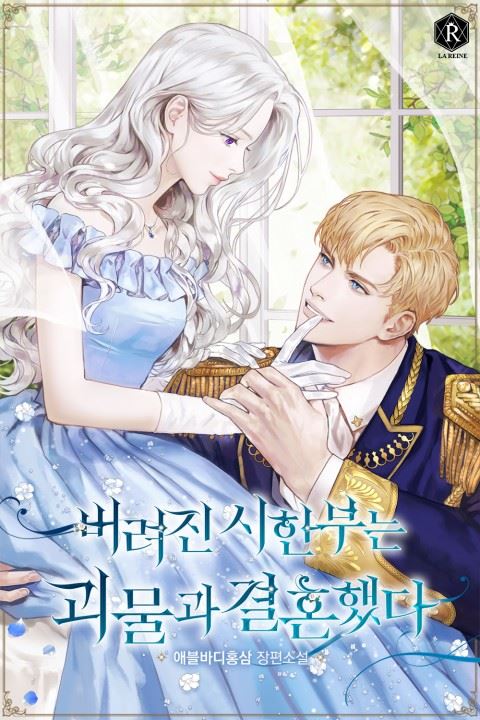
Ailee Lizziana is the fifteen-year-old eldest daughter of the Count of Lizziana, born two years before her twin siblings, Lizzy and Lane. While her siblings possess exceptional magical abilities and are celebrated for their acceptance into the prestigious Academy, Ailee has never manifested any power. Treated as a disgrace and a source of shame by her family, she is banished to live in a secluded gardener’s cottage on the estate grounds. Her parents and grandmother view her existence as a blemish on the family’s honor, subjecting her to neglect, ridicule, and occasional physical punishment. Despite her isolation, Ailee clings to the hope of gaining her mother’s affection, particularly through a secret medicine she has been taking since age eight, which her mother claims is essential for a "good child."

On the day of her fifteenth birthday, Ailee is humiliated during the family celebration and sent away once again. Later, while in her cottage, she encounters Daykin, a boy who has fled his home in distress. Daykin is the heir to the Grand Ducal Blashur family, suffering from a hereditary condition where his explosive magical power threatens to overload his body, leading to catastrophic surges. Upon meeting Ailee, he experiences an unprecedented sensation: the violent chaos within him settles instantly, and his impending surge vanishes without pain. Unaware of the source of this relief, Daykin believes Ailee possesses a rare, soothing ability and secretly requests her friendship.

As their friendship develops, Daykin begins visiting Ailee regularly, bringing gifts and offering her a sense of belonging she has never known. However, Ailee’s twin siblings, determined to maintain their status as the favored heirs, conspire against her. Lane and Lizzy frame Ailee for stealing a valuable artifact pendant, planting it in her cottage and accusing her of theft. Their father, already resentful of Ailee’s failures, sentences her to solitary confinement in the cottage for a month as punishment. During this isolation, Ailee confronts her deep-seated self-loathing but resolves to stay strong for Daykin, her newfound friend.

Daykin, meanwhile, grapples with his father’s deteriorating health and the looming threat of his own fatal surge. He learns that Ailee’s unique power not only calms his internal chaos but also stabilizes his magic, making her indispensable to his survival. He decides to protect her, even as he hides his true identity as a noble heir. The twins’ jealousy intensifies, leading to further harassment, including an incident where they drench Ailee with water using their magical artifacts. Through these trials, Ailee begins to question whether her worth is defined by her lack of power or by her capacity for kindness and connection.

The story reaches a critical juncture when Daykin reveals the truth about his lineage and his dependence on Ailee’s ability. He confesses that he is not a commoner but the Duke’s son, fleeing because his condition is worsening. Ailee, initially shocked, accepts him for who he is, valuing his honesty over his status. In turn, Daykin encourages Ailee to recognize her own value, asserting that her power is not a缺陷 but a gift. Their bond deepens as they navigate the dangers posed by their respective families—the Lizzianas’ cruelty and the Blashurs’ political intrigue.

As the narrative progresses, Ailee’s role shifts from a passive victim to an active participant in her destiny. She discovers that her ability to soothe and regulate magical surges is not merely a trait but a crucial element in preventing catastrophic events for those around her, including her father and the broader magical community. Daykin’s presence in her life provides her with the emotional support needed to challenge the abusive dynamics of her family. Meanwhile, the twins’ schemes escalate, threatening to expose Ailee’s secret and jeopardize her relationship with Daykin.

The central conflict revolves around Ailee’s struggle for identity and acceptance in a world that values magical prowess above all else. Her journey is one of self-discovery, as she learns to harness her latent abilities and assert her right to exist within her family. Daykin’s journey mirrors hers, as he seeks to control his overwhelming power with her help, aiming to prevent his own demise and protect his family. Together, they face external threats from rival nobles and internal strife within their households, setting the stage for a confrontation that will redefine their futures.

The story sets the stage for further developments as Ailee and Daykin prepare to confront their families and the societal structures that have marginalized them. Their alliance represents a challenge to the status quo, offering hope for redemption and change. As secrets unravel and loyalties are tested, Ailee must decide whether to remain in the shadows or step into the light, embracing her unique gifts and forging a path that honors her true self.

Latest Release
DateGroupRelease
2026-09-27citrus aurora c16
2026-09-27citrus aurora c15
2026-09-27citrus aurora c14
2026-09-27citrus aurora c13
2026-09-27citrus aurora c12
2026-09-27citrus aurora c11
2026-09-27citrus aurora c10
2026-09-27citrus aurora c9
2026-09-27citrus aurora c8
2026-09-27citrus aurora c7
2026-09-27citrus aurora c6
2026-09-27citrus aurora c5

Community Reviews

Rating(3.9 / 5.0, 71votes)
5 stars
23(32%)
4 stars
21(30%)
3 stars
25(35%)
2 stars
2(3%)
1 stars
0(0%)

Popular reviews

... Read More
Let's talk about Kin and Ailee, because this is THE friendship dynamic I didn't know I needed. So Ailee is this completely isolated girl living alone in a cottage, basically exiled from her own family, and she meets this strange boy who tumbled through her dog hole crying. And instead of being weird about it, she just... offers him tea. With a dusty cup. The fact that she hasn't used that teacup since she made it once before, because the loneliness hit her so hard she couldn't bother, tells you everything about her situation. And Kin! He's this arrogant kid—"As if they could compare to me in my youth"—but the moment he sees her getting tortured by her twins, he literally scrambles out from under the bed like "ARE YOU OKAY?!" That switch from casual superiority to genuine panic is *chef's kiss*. He's a Duke's heir hiding from his own family while she's a count's daughter exiled by hers. They're both running from somewhere, and they both know what it's like to be alone. The handshake moment is everything. He goes to shake her hand like a proper gentleman, then notices his own filthy hands and hesitates. She grabs it anyway. That's Ailee—she doesn't care about appearances, she just wants connection. And then she says his name over and over again like a maniac. "Kin! Kin! Kin!" and he's all flustered. I literally squealed reading this. "I think I really like you," she says. And his response? "You shouldn't say things like that so easily... Never mind." He's totally into it but pretending he isn't. Classic. What I love is that Kin doesn't know she's powerless. Ailee knows this—"He doesn't know I'm powerless. I can hide that." There's this whole layer of potential betrayal in their friendship that makes it bittersweet. Will he still be her friend if he finds out? Meanwhile, Lane and Lizzy are the absolute worst. Lane especially—he's fifteen but already has his father's cruel streak. When he tricks Lizzy into thinking they'll find "amusement elsewhere" while he sets something up for Ailee... chills. Actual chills. That scene where he winks and tugs her arm? Villain energy in the best way. Also: the twins calling her sister while Kin overhears them calling her a power-less failure. The dramatic irony here is RICH.
... Read More
I need to process what Lane and Lizzy did to Ailee. WHAT THEY DID. "Sister, do you feel hot?" That line. That absolutely diabolical, calculated line. They pretend to be concerned, they lure her into thinking they're being nice, and then—SPLASH. Full on drenching her with water like she's nothing. Like she's a toy they're breaking. And the dialogue afterward is just *cruelty wrapped in sweetness*: "There, sister. All cooled off." "Doesn't being drenched like that make you feel like a water mage? Lucky you. Having magic was your dream, wasn't it?" They KNOW her deepest insecurity and they weaponize it. They KNOW she wanted to be a mage. They KNOW this hurts more than any physical pain could. But what destroyed me was Ailee's reaction. She doesn't fight back. She doesn't scream. She just stands there, soaked, and murmurs "This isn't funny." Quietly. Through gritted teeth. And when they call her out on it, Lane literally stops Lizzy from retaliating because he has something WORSE planned. He's enjoying this. He's planning something worse. And hidden under the bed, Kin hears ALL of it. He's powerless to intervene because if he reveals himself, his identity as a Blusher escapes and his father's condition gets out. So he just... watches. The helplessness in his perspective is gut-wrenching. "Daykin almost bolted, but regained his composure just in time. Leaving now would ruin everything. He remained hidden, frustrated by his own helplessness." Then when Ailee emerges from changing and Kin offers to dry her hair—"You're dripping like a drowned rat and you say that? You look exhausted. I'm doing it because you need help." This moment of tenderness after such violence? It hit me right in the chest. Here's someone who saw her at her worst—soaked, humiliated, crying—and instead of judging her, he takes care of her. And the scene where he washes his hands before touching her hair because he noticed they were dirty? The fact that he CARED enough to clean up for her after everything... I'm not okay. "More beautiful than the impeccably dressed twins, my mother, father, or grandmother." Ailee literally thinks the dirt-covered runaway boy is the most beautiful person she's ever seen. That's not just attraction—that's gratitude, trust, and the beginning of something real. The twins got their fancy sapphire pendants with three powers each. Ailee got nothing. And yet—she has a friend now. Who's actually richer in that moment?
... Read More
Ailee's internal voice is genuinely one of my favorite narrators I've encountered. It's dry, self-deprecating, and absolutely ruthless toward her own delusions. Take this exchange with her mother: "Two weeks is too soon—" "Too soon? He's taking you, a useless burden, and you dare complain? You have no sense of propriety. Who do you take after?" And Ailee's response? She just bites her lip. Nothing. No defense, no tears, just the quiet acknowledgment that arguing with someone who views you as property is pointless. But internally? 'So, she's finally selling me off.' The gap between her silence and her narration is where the entire emotional weight lives. Then there's the designer scene with Ms. Aida Gigier, which is pure comedic gold disguised as courtesy. Aida bows so deeply apologizing for having 'gathered every designer in the salon' that Ailee is left feeling GUILTY for sighing. 'Given the limited time, I gathered every designer...' 'There are more than enough.' 'You're truly a gracious lady.' This is peak absurdity and I love it. The fact that Ailee is too exhausted and resigned to assert herself even when being smothered by kindness is both funny and heartbreaking. But the dialogue that wrecked me was the maids'. Right after years of being treated like furniture, these women look at her and say 'The master, His Grace the Duke, isn't a bad man. Don't be so scared, my lady.' And then—'If anything happens, we'll stand up for you. Just tell us.' Who TALKS like that to a stranger on her wedding day? The casual intimacy of it, the genuine warmth—it's so far outside Ailee's experience that her only response is to sink deeper into the bathwater and wonder if the entire household has lost its collective mind. And Ailee's internal monologue during the ceremony: 'Which of us was more unfortunate?' She's conducting a cost-benefit analysis of doom while standing at the altar. That's not just dark humor—that's a specific, distinctive voice that refuses to perform grief in any conventional way.
... Read More
Let me just say this: the tonal whiplash in these chapters is NOT fair and I am still recovering. We go from the most wholesome, fluffy, laugh-out-loud romantic comedy energy — the dancing, the accidental kiss, the marriage joke, the EROTIC NOVEL BOOK REVEAL that has Kin sprinting out of the house like his life depends on it — and then BOOM. Chapter 31 hits you with conscription, war, and the Blashur family being treated like walking weapons by the imperial family. One moment he's a blushing mess running home with a forbidden book. The next he's explaining why he has to go fight in a war despite being underage. His mother apologizes. He says he'll go. And then back to Ailee's POV and she's already grieving a farewell she knew was coming but wasn't ready for. The author is a menace. Absolutely a menace. They let you breathe during the comedy bits — the pie-eating, the teaching-to-dance, the mortifying book incident — and then yank the rug out so fast you don't even have time to process before you're in the garden making a one-handed bouquet. And that ending. THE ENDING. He says he'll come back. She holds his gaze. He goes to tell her his real name and she DROPS HIS HAND. The chapter cuts there. Right there. I have questions. So many questions. Why did she drop his hand? What does his real name mean to her? Why is she afraid to hear it? The pacing from high romance to political tension to personal dread in span of four chapters is either genius or cruel. Possibly both.
... Read More
"The ripples in a small cup are different from the waves in a large bowl." This line opened the whole section and it's honestly the key to everything. Calming ripples barely registers. Calming waves? That's noticeable. That's meaningful. On the surface it's Kin explaining healing abilities. But read it again—it's about Ailee's entire existence. She's spent her whole life being a ripple in a small cup, invisible, unremarkable, her suffering dismissed because the container is small. Kin is basically telling her that her ability matters precisely because it's hard to prove. The uncertainty IS the point. And then there's the bracelet—the violet light shimmering beneath her sleeve. It's this tiny talisman of possibility, this thing that might mean she has worth. But she can't prove it. She's afraid to tell her mother because what if she's still just a blemish even with an ability? The bracelet becomes this symbol of hope that simultaneously gives her something to hold onto and terrifies her with its fragility. The blue pie is another layer I couldn't stop thinking about. It represents everything Ailee doesn't have—family traditions, someone wanting to cook for you, generational warmth. Kin's father taught him this recipe specifically to share with someone he loves. The act of baking becomes an act of devotion, and Ailee eating shared bread with Kin in that same chapter is almost like a dark mirror of the same impulse—small, desperate, but real. But the most devastating symbol is the necklace in the tree. Lizzy's pendant trapped above her head—literally out of reach, requiring Ailee's height and thinness to retrieve. It's this perfect metaphor for her entire life: she exists to retrieve things other people can't be bothered to get themselves. Her body is a tool. And the siblings know it, use it, but won't let her be fully discarded. She's not family. She's not a servant. She's something in between—a toy that must be maintained but never truly owned. These symbols all tie together into one massive question: What does it mean to be seen? Ailee's ability, the bracelet, the shared meal, the pie, the necklace—all of them orbit around this central anxiety of whether she matters to anyone.
... Read More
I genuinely cannot stop thinking about chapter 24's ending and the sheer predatory energy radiating from Lizzy and Lane. Let me just say this upfront: the sibling dynamics in this book are some of the most chilling I've read, and this passage elevated them to a whole new level of nightmare fuel. Here's what makes it so effective: the author never lets you forget what Ailee stands to lose. She's already grounded. Already isolated. Already eating cold soup at 3 PM because maids forget she exists. And yet Lizzy and Lane find a way to weaponize even her punishment. "If you get Lizzy's necklace, we'll tell Mother that we've made up with you"—this line is absolutely monstrous because it's True. They know she'd do anything for a reprieve, even risk further punishment by going outside while grounded. But the real horror isn't just that they're cruel. It's that they're bored. "Hey, it's no fun now that she's grounded. What's so entertaining about this?" Lizzy says this like she's discussing a video game. They needed Ailee's suffering to be entertaining, and now that she's properly punished, they're losing interest. So they engineer a new game—one where she voluntarily participates, where she thinks she's gaining something when she's actually just feeding their amusement. The stakes here are absolutely terrifying because they're so mundane. This isn't a life-or-death quest or a war. It's a fifteen-year-old girl being psychologically manipulated by her siblings who control every aspect of her existence. If she refuses, they'll report her. If she complies, they'll torment her further. If she runs, they'll prevent it. There is no winning. And Lane, the "mastermind," feigns innocence while orchestrating everything. That contrast between his gentle posture and his cold calculation is what makes him genuinely frightening. What's worse is Ailee's internal response. She HATES them. She's sick and tired of them. But a part of her still yearns for them to treat her like a human being, just once. That contradiction is the entire conflict of her existence externalized. She knows they're monsters, but she also knows that their approval is the only currency she has. And the blistered hands? That physical detail—that she literally cannot even clench her fists in resistance—is the author's way of showing you exactly how trapped she is. Not metaphorically trapped. Literally, physically prevented from even the gesture of defiance.
See all reviews

Custom lists

See all custom Lists