Summary

... Read More
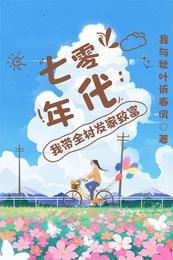
Chen Manman, a recent graduate who won a lottery and died in an accident, is reborn by King Yama into the body of Chen Manman in 1970s rural China. She retains her parents' portable courtyard warehouse, stocked with modern supplies and nearly twenty million yuan worth of goods. Upon waking, she discovers she is married to Lin Shuhe, the male lead of a novel she read, and is the mother of twin boys, Dahu and Erhu. In the original story, the original Chen Manman was a tragic supporting character who died after being abducted, while her sons became villains. Determined to change their fate, Chen Manman resolves to raise her children well and distance herself from Lin Shuhe. Chen Manman immediately asserts her authority, confronting Li Yan, a female educated youth who had previously harassed her and spread rumors about the twins. She threatens Li Yan with exposure of her schemes, effectively neutralizing the threat. She then focuses on nurturing Dahu and Erhu, providing them with better nutrition and care than they received in the original timeline. Using her spatial warehouse, she prepares elaborate meals like braised pork and mung bean soup, drawing the attention and suspicion of her family and husband. Lin Shuhe, initially cold and indifferent, begins to notice the drastic change in his wife's behavior and the quality of her cooking. Chen Manman visits the county town, where she encounters her old deskmate Li Jiangyuan and his aggressive suitor, Zhao Qiaoxiang. She handles the confrontation with composure, earning the respect of bystanders. During her trip, she discovers a lost medical text, The Qing Nang Book, at a scrap station, along with valuable jade artifacts. She also acquires a bicycle, which she modifies to blend in with the era, enhancing her mobility. Returning home, Chen Manman learns that her paternal grandparents are being mistreated by her uncle's wife, who forces them to eat only one meal a day. Chen Manman intervenes, bringing her grandparents to live with her and providing them with adequate food and care. She also strengthens her relationship with her sister-in-law, Yao Chunzhi, giving her gifts and ensuring her well-being, thereby preventing the tragic fate Yao Chunzhi suffered in the original novel. As the story progresses, Chen Manman continues to use her future knowledge and spatial resources to improve her family's living standards. She navigates the complex dynamics of rural life, dealing with jealous relatives and suspicious neighbors. Lin Shuhe's attitude toward her begins to shift from indifference to curiosity and intrigue, though Chen Manman remains focused on her children and her own independence. The narrative sets the stage for Chen Manman to build a new life, protected by her spatial advantage and determined to avoid the pitfalls of the original story.

Latest Release
DateGroupRelease
2026-08-11shanghai fantasy c52
2026-08-11shanghai fantasy c51
2026-08-11shanghai fantasy c50
2026-08-11shanghai fantasy c49
2026-08-11shanghai fantasy c48
2026-08-11shanghai fantasy c47
2026-08-11shanghai fantasy c46
2026-08-11shanghai fantasy c45
2026-08-11shanghai fantasy c44
2026-08-11shanghai fantasy c43
2026-08-11shanghai fantasy c42
2026-08-11shanghai fantasy c41

Community Reviews

Rating(4 / 5.0, 12votes)
5 stars
5(42%)
4 stars
2(17%)
3 stars
5(42%)
2 stars
0(0%)
1 stars
0(0%)

Popular reviews

... Read More
I literally gasped out loud during the hospital confrontation. Old Madam Xu demanding 500 yuan after Manman already paid medical fees and gave ten yuan for nutrition — the audacity is off the charts. And the crowd? They immediately side with Manman because 500 yuan in this era is like 15 years of saving. The stakes are crystal clear: this isn't just about money, it's about survival. But what made me lean forward in my seat wasn't just the conflict itself — it was how Manman played it. She pinches herself to bring on real tears. She times her sobbing perfectly. When Old Madam Xu tries to drag her inside, she SCREAMS for the police. This is a woman who has been to the police station the night before, knows the system, and uses it like a weapon. Officer Han Dalei showing up is a stroke of genius by the author. He's already informed about the situation from the night before, so there's no 'tell me what happened' delay. He drops the legal consequences like a hammer — 'intentional harm, up to three years in prison.' And Old Madam Xu, who was so fierce seconds ago, immediately crumbles. The crowd turning on her in real time, calling her an 'old hag,' is so satisfying. The stakes escalate perfectly: from a petty extortion attempt to a potential criminal charge, and Manman wins without throwing a single real punch. She just lets the system do her dirty work. I love her so much right now.
... Read More
There's so much going on beneath the surface of these chapters and I want to unpack it. The mung bean soup is clearly a symbol—of care, of resourcefulness, of everything Manman is determined to do differently from the original host. The original host would've made soup for Lin Shuhe and neglected the kids. Manman makes soup for her parents and her children, adding milk and ice as small acts of defiance against the era's scarcity. The soup is warmth and protection in a bowl. When Tie Dan and his brother spill it, they're not just stealing food—they're threatening the fragile safety Manman has built for these children. The bicycle ticket is another loaded symbol. It represents the original host's devotion—saved up, requested, intended as a gift for a man who would never truly see her. Manman finding it in the cabinet is like finding a relic from someone else's life, a artifact of love that was misplaced. What she does with it (or doesn't) will say everything about how she views the marriage. And then there's the storage dimension itself—worth 20 million. In a world where everyone is counting ration tickets and measuring life in labor points, Manman carries an entire economy in her pocket. It's a symbol of her otherness, her advantage, but also her isolation. She can't share it. She can't explain it. She has to navigate this world with a secret that could change everything. The recurring image of the window—Manman lying near it with the kids, the breeze coming through, the light changing as time passes—feels symbolic too. Windows are thresholds, boundaries between inside and outside, safety and danger. Manman is constantly positioned at these thresholds, deciding what to let in and what to keep out.
... Read More
I need to talk about how this author controls tension because it's genuinely impressive. Chapter 4 starts SO gentle. Waking up, making mung bean soup, singing to the kids. It's almost ASMR-level cozy. And then—BAM—the aunt appears. "Manman, give your aunt a bowl too!" The warmth shatters in one line. Manman's response is immediate and sharp: she snatches the ladle back and turns to her mother. The shift from domestic sweetness to social confrontation happens in the span of a paragraph, and it keeps you on your toes. Then the walk to the fields. Peaceful again. Father and brother enjoying the soup. Lin Shuhe's silent observation. And just when you think we're cruising along, we cut to: "Waaah... waaah..." The kids crying. Tie Dan's fist raised. Manman grabbing him by the collar. The pace accelerates from a stroll to a sprint in the space of a scene transition. What's brilliant is that the author doesn't resolve the bullying scene quickly. She lets Manman interrogate Tie Dan, makes him admit he was wrong, makes him promise never to do it again, THEN sends them running. The confrontation has weight. It's not a slap-and-move-on moment. And then—immediately after the emotional peak of the bullying—she cuts to Manman tidying up, finding money, reflecting on the bicycle ticket. The pacing gives you space to breathe after the tension, which is exactly what good structure demands. The chapter ends on Dahu shoving fruit candy into his mouth, asking if he can have more tomorrow. A perfect, light button to close a heavy chapter. The chapter breaks themselves are well-timed too. Each one ends with a small emotional beat that makes you want to keep going. No cliffhangers, but no let-downs either. This is controlled, confident pacing.
... Read More
Okay so I need to talk about Lin Shuhe because this guy has been doing the whole brooding male lead thing for chapters and I was starting to think he was just gonna stare at Manman from a distance forever. But NO. He loses it. He literally kisses her while she's half-asleep on a recliner like some kind of romance novel cliché and then blurts out 'I like you' like it's the most natural thing in the world. What I find really interesting about their relationship is the power dynamic shift. Up until now, Manman has been the one in control — she's the one making decisions, protecting her family, handling conflicts. But Lin Shuhe? He's been this quiet, steady presence. And now when he kisses her, he doesn't ask. He just takes it. And Manman, who fought back at first, actually starts responding. That moment where 'she forgot to fight back and reflexively responded' — that's huge. It's not just physical attraction, it's her letting someone in. But then Dabaobao bursts in and everything falls apart. Classic interruption, sure, but it also feels like the universe saying 'not yet, not like this.' Manman is left flustered and confused, and I can't tell if she's mad at him or mad at herself for almost not pulling away. The most revealing part for me though is Lin Shuhe's internal monologue — 'he wasn't sure when it started. Maybe it was that night when he held her in his arms.' He's been carrying this feeling around, observing her, wanting her, and he finally cracks. That's not a cold male lead anymore. That's a guy who's been starving and just found food.
... Read More
Okay so let me just say—this whole transmigration premise is doing a LOT of heavy lifting and I am here for it. The author doesn't just drop Chen Manman into this world and call it a day. No, she immediately establishes that this woman has a storage dimension worth 20 million, which is basically a nuclear weapon in a scarcity-era setting. But what I love is how she's NOT flexing that power openly. She's playing the long game. The mung bean soup plotline is a perfect microcosm of everything going on. On the surface, it's just a sweet scene—mom brings cool soup to her family in the fields. But layer by layer, it's actually a power play. She brings milk (from her space, obviously) to elevate a peasant dish. She adds ICE CUBES. In the middle of summer fields. This woman is operating on a completely different level than everyone around her and she KNOWS it. Then the conflict hits—Tie Dan and the boys stealing the soup from Dahu and Erhu. This isn't random bullying; it's the era's scarcity making kids desperate, and the author uses it to show Manman's transformation. The original host would've cried and done nothing. New Manman grabs Tie Dan by the collar like it's nothing. "Who were you trying to hit?" Cold. Efficient. And the kids? They immediately run to her instead of being scared. That's worldbuilding through action, not exposition. The subplot with the bicycle ticket is also quietly brilliant. The original owner saved it for Lin Shuhe—a gesture of love that went completely unreciprocated. Now Manman finds it and... what does she do with it? The author hasn't revealed yet, but the tension is already there. She's sitting on 176.3 yuan, a storage dimension, and a marriage that's basically a political arrangement waiting to dissolve. The plot is setting up this beautiful slow burn where every small decision Manman makes is quietly rewriting the original story's trajectory.
... Read More
I want to talk about something the author barely gives screen time to but I think is incredibly significant — the ginseng and the Immortal Longevity Wine. Manman takes out a century-old ginseng from her secret space and decides not to sell it. Instead, she spends hours processing it with dozens of traditional herbs — Cistanche, rehmannia, goji berries, angelica — making this elaborate tonic wine that she buries underground for five days. 'The whole family could enjoy it.' Think about what that means. She has access to modern knowledge, a secret space with valuable items, and the power to sell this ginseng for a fortune. But she chooses to make something that nourishes her family instead. It's a quiet rebellion against the transactional world she's in — where everything is about work points, money, survival, and compensation demands. The wine itself is symbolic too. It needs to be buried and left to ferment. It can't be rushed. In a world where Manman is constantly managing crises, dealing with bullies, and planning her next move, this is something that just... grows. Something that requires patience and trust in the process. And the herbs — all traditional, all connected to Chinese medicine and heritage — represent her connection to a lineage she carries from another time. She's not just surviving in this era; she's bringing something of herself into it. The wine is her signature on this world, subtle but lasting.
See all reviews

Characters

See all characters

Custom lists

See all custom Lists