Summary

... Read More
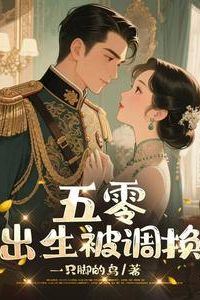
Gu Yihan, a twenty-three-year-old orphan working in modern society, possesses a mysterious Jade Pendant that grants her access to a small storage dimension. After experiencing recurring dreams of a famine-stricken era, she prepares for a potential time travel by liquidating her savings to purchase vast quantities of grain, meat, oil, and supplies, storing them in her dimension. Her premonitions prove correct when she falls asleep and awakens as an unborn fetus in the body of Liu Zhaodi, a pregnant woman in rural China during the early 1950s. Gu Yihan is born on the same day as the son of Zhang Cuihua, the wife of her second uncle, Gu Aidang. In a desperate bid to secure her status in a patriarchal family that demands a male heir, Liu Zhaodi swaps Gu Yihan with Zhang Cuihua’s newborn son during the chaotic delivery. The biological son is raised by Gu Yihan’s grandparents, Grandma Gu and Grandpa Gu, while Gu Yihan is raised by Zhang Cuihua and Gu Aidang, who treat her with open hostility and neglect. Despite this, Gu Yihan survives infancy by secretly consuming food from her dimension while her adoptive mother refuses to breastfeed her. Grandma Gu, who initially takes in the baby girl because she smiled at her, becomes Gu Yihan’s primary protector and ally. As Gu Yihan grows, she navigates the harsh realities of the commune era, marked by severe food shortages and political upheaval. She strategically cultivates a close relationship with Grandma Gu, recognizing that her affection is her only shield against the abusive environment created by Zhang Cuihua and her biological mother, Liu Zhaodi. While her adoptive parents blame her for their misfortunes and attempt to harm her, including a near-fatal choking incident by Zhang Cuihua, Gu Yihan remains focused on her education and survival. She excels in school, outperforming her cousins, and uses her intelligence to secure better living conditions for herself and her grandmother. The family’s fortunes shift when Gu Yihan, using her dimension to hide a wild boar she caught, leads her cousin Gu Hao to discover it. This event triggers a series of successful hunts and fish catches that significantly bolster the family’s food supply, earning Gu Yihan the status of a lucky charm in Grandma Gu’s eyes. Meanwhile, the moral decay of her adoptive father becomes apparent as Gu Aidang maintains an affair with a widow, promising marriage only if she produces a son. The story highlights the stark contrast between Gu Yihan’s resilience and the greed and cruelty of her biological family, who view her solely as a burden. As the drought worsens and the threat of starvation looms over the village, Gu Yihan and Grandma Gu prepare for the coming crisis, relying on their hidden reserves and strategic planning to endure the hardships ahead.

Latest Release
DateGroupRelease
2026-08-11shanghai fantasy c200
2026-08-11shanghai fantasy c199
2026-08-11shanghai fantasy c198
2026-08-11shanghai fantasy c197
2026-08-11shanghai fantasy c196
2026-08-11shanghai fantasy c195
2026-08-11shanghai fantasy c194
2026-08-11shanghai fantasy c193
2026-08-11shanghai fantasy c192
2026-08-11shanghai fantasy c191
2026-08-11shanghai fantasy c190
2026-08-11shanghai fantasy c189

Community Reviews

Rating(3.9 / 5.0, 9votes)
5 stars
1(11%)
4 stars
6(67%)
3 stars
2(22%)
2 stars
0(0%)
1 stars
0(0%)

Popular reviews

... Read More
I have to admit, the birth scene gave me actual goosebumps. The way the author writes it from Gu Yihan's POV inside the womb — feeling her bottom bump against something hard, the air getting thin, struggling uncontrollably — it's such a weird and effective narrative choice. You're literally experiencing the birth from the baby's perspective and it's horrifying. And then the sensory details outside: the cries, the chaos, Grandma Gu's bound feet clicking as she rushes in, Wang Ni boiling water in the kitchen. The whole house becomes this pressure cooker of labor and panic. But what really sold me was the contrast between the two births happening at once. Zhang Cuihua's quiet, painful delivery versus Liu Zhaodi's performative wailing. The author never says Liu Zhaodi is faking it outright, but you KNOW. Every line of dialogue from her is calculated — "Grandma, I'll cut the umbilical cord myself" is the most suspicious thing ever said in literary history. And then the era itself feels so real. The 10 eggs as payment for a midwife, the cotton quilts, the rice grains and wheat being bought in bulk like it's a normal Tuesday, the Northeastern accent in the grain shop owner's dialogue. You can smell the coal smoke and feel the cold. The author doesn't over-explain the time period — they just drop you into it and let the details do the work. That's skilled writing.
... Read More
Let me be honest — the first few chapters took a minute to get going. Gu Yihan preparing supplies, buying rice and corn and eggs, storing it all in her pendant space... it's necessary worldbuilding but I'll admit my attention wandered a bit. The author takes their time here, which I think is actually the right call because once she's transported, EVERYTHING accelerates. The transition from modern woman to unborn fetus is handled so smoothly — one moment she's falling asleep in her apartment, the next she's conscious in complete darkness, gradually becoming aware of the heartbeat around her. And then BOOM, two women going into labor simultaneously and a baby swap that would make Shakespeare proud. The pacing shift is deliberate and it works. Chapter 1 is methodical and almost clinical, like a survival guide. Chapter 2 is chaos and blood and tears. Chapter 3 starts quieter again with the naming scene, but that's because the tension has shifted — it's no longer physical danger, it's the slow-burn horror of a child being raised by her kidnapper while her real mother recovers in the next room. The author knows when to speed up and when to let you breathe. My only complaint? I wish we'd gotten a bit more of Gu Yihan's internal monologue during the storage/prep phase. A few more lines of her thinking through the era she's about to enter would've made the transition even sharper.
... Read More
What strikes me most about this text is how the author makes survival feel genuinely precarious without ever resorting to melodrama. The stakes are established almost immediately and they never let up. The drought has been building for months. The harvest is poor. The party secretary literally warns villagers: "Don't eat your fill. Eat sparingly. You should all remember the natural disasters from the early years." He references 1943 and 1934 — real historical famines in China — and asks how many people starved to death. This isn't hypothetical. This is lived trauma. And yet the conflict isn't just man vs. nature. It's also man vs. family. Zhang Cuihua's resentment toward Gu Yihan isn't abstract — it's personal and daily. She can't get pregnant, her husband dismisses her, and she takes it out on a CHILD. Meanwhile, Gu Aidang's emotional absence is its own kind of violence. He feels "nothing" when Grandma Gu calls Gu Yihan a lucky star. To him, she's just his mother's superstition. But the external conflict — the grain shortage, the drought, the villagers fighting over distributions — raises the stakes constantly. Every fish they catch, every piece of wild boar meat, matters because the alternative is starvation. When Grandma Gu threatens her sons to keep quiet about the provisions, it's not just about secrecy — it's about survival in a community where everyone is watching and waiting for an excuse to take. The tension never drops. Even the happy moments — catching fish, finding a boar — are shadowed by the knowledge that this could all be taken away. That's skilled storytelling.
... Read More
I have to give credit where it's due — the dialogue in this book is genuinely sharp, especially when Liu Zhaodi opens her mouth. This woman is a force of nature and her lines are unforgettable. When she sees the family rushing to get Gu Yihan from the mountain, she spits: "Pah. Does she really think she's some young lady from a rich family? She's still just money-losing goods who'll be married off." And then when another aunty calls her out on treating her own daughters badly, Liu Zhaodi fires back: "Your parents' family treated you so well, but I don't see you being very filial to your own mother. They raised an ungrateful wretch for nothing. If I were your mother, I'd die of anger." This leads to a full-on physical fight. Hair-pulling. Fist-aiming-at-chests. Onlookers separating them. ALL because of dialogue. Two women trading barbs in a village courtyard and it escalates to actual violence. This is the kind of writing that makes you laugh out loud. But it's not just Liu Zhaodi. Grandma Gu has a distinct voice too — she's direct, authoritative, and unapologetic. When she tells her daughters-in-law: "No matter who from your maternal families comes to our Gu family to borrow grain, we will not lend any," that's not just dialogue, that's a character statement. She's drawing a line in the sand. Gu Yihan's dialogue as a child is also well-handled. She codeswitches between her inner monologue (which is sharp and calculating) and her spoken words (which are deliberately childish: "Uncle, I wasn't scared," "Big Brother, let's go fishing"). The gap between what she says and what she thinks is where the real voice lives.
... Read More
I keep thinking about that jade pendant and what it represents. Twenty-three years of Gu Yihan's life, hanging around her neck since the orphanage director found her. It's her only connection to a past she doesn't remember, a literal token of survival in a world that discarded her. And then it becomes the one thing that carries her into this new life — not just physically, but thematically. She goes into the past prepared, stocked, planned. She's not some helpless transmigrator who arrives with nothing. The pendant space is small — only 50 square meters — but it's enough. It's the modern world's version of a safety net, and it's all she has. I think the pendant symbolizes the idea that orphans and overlooked people carry invisible resources. Gu Yihan spent years being nobody, and that nobody-ness taught her to prepare, to plan, to survive. The grandmother at the orphanage talked about the food shortage era, and Gu Yihan listened. She took that oral history and turned it into practical knowledge. That's the real theme here — it's not just about time travel or revenge or family drama. It's about how the people who are told they're worthless are the ones who learn to survive best. And now she's entering a world where women are valued only for their reproductive output, where a daughter is "money-losing goods," where a mother will swap her own child for a son. Gu Yihan has everything she needs to navigate this. The pendant gave her supplies, but her past gave her something better: the ability to endure.
... Read More
I need to talk about the grain distribution chapter because it is one of the most vividly rendered scenes I've read in a while. The author doesn't just tell us there's a drought — they SHOW us. The production brigade meeting, the scarred villagers who "dared not eat their fill even when they were allocated grain to grow themselves," the older folks who remember 1943 and 1934 and the starvation deaths. And then Jiawang's wife throwing herself on the ground, refusing to leave without more grain. That scene is CHAOTIC and it makes the world feel so alive. You can picture it — the dusty brigade headquarters, the line of exhausted villagers, this woman rolling around shamelessly while everyone watches. The brigade leader's response is brutal: "I'll have the militia drag you out." And she just lies there, stiff, fully committed to the act. But what really sells the atmosphere is the small details. The old-fashioned dowry chest sitting on top of the cellar entrance. Grandma Gu hiding the grain. The family butchering the wild boar under cover of darkness. Liu Zhaodi watching from below, muttering about how Gu Yihan thinks she's "some young lady from a rich family" when she'll just be "married off" anyway. Then the two women literally fighting — grabbing hair, aiming fists at chests, onlookers pulling them apart. This world feels suffocating in the best way. Every scene has this layer of scarcity and survival underneath it. Even the happy moments — catching fish, finding a wild boar — are tinged with the knowledge that next year might not be so lucky. The drought isn't just background; it's a character.
See all reviews

Characters

See all characters

Custom lists

See all custom Lists