That's Not the Wish I Asked For!
+Add to Custom List
Genres:
Novel Info
  • Author:
  • Status:Ongoing

Summary

... Read More

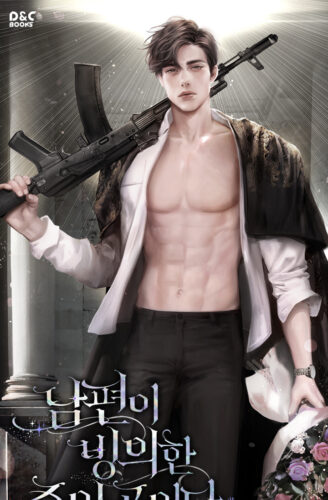
Lisette Islesford is the illegitimate daughter of the Emperor of the Alka Empire, though she was raised in obscurity after being falsely accused of illegitimacy by the current Empress. Labeled a stray cat and stripped of her title, she lives in the detached palace, hiding behind a black veil to avoid the Emperor’s gaze, which is pained by her resemblance to his late first wife. To survive, she works as a clerk for Celia, an eccentric mage known as the troublemaker who runs a mystical shop. In exchange for her labor, Celia grants Lisette’s wish to clear her mother’s name, providing experimental magical tools to gather evidence against the High Priest and Empress who fabricated the paternity test results.

Parallel to Lisette’s struggle, Claude Usta, the Captain of the Imperial Guard and a war hero, faces intense pressure from his father, Marquis Usta, to marry Imperial Princess Natalie. Claude has no interest in marriage or women, viewing them as distractions from his pursuit of strength. Natalie, who has harbored a crush on Claude for years, is set to marry him, though her true nature is revealed to be cruel and abusive toward Lisette. She frequently torments Lisette in the palace gardens, forcing her to prostrate herself and physically assaulting her, unaware that Claude witnesses this cruelty and begins to question the suitability of the match.

The central conflict shifts when Lisette learns of Natalie and Claude’s impending marriage. Viewing Claude as the perfect tool to disrupt Natalie’s happiness, Lisette requests Celia to grant a new wish: to break off the engagement. Celia agrees and concocts a special potion intended to be administered in a damp, dark environment. Claude, suffering from exhaustion due to stress over the forced marriage, visits Celia’s shop for recovery potions. Celia diagnoses his fatigue as stress-induced and prepares a potion that requires consumption in a basement, instructing him to meet the deliverer there.

Unbeknownst to both, Lisette is the one tasked with delivering the potion to Claude’s mansion. Upon entering the basement, she releases the potion’s contents, which transform into a pungent smoke. The smoke acts as a powerful aphrodisiac rather than a simple remedy. Both Lisette and Claude are affected by the miasma, their rational minds clouded by intense, uncontrollable lust. Despite their initial confusion and attempts to resist, the magical influence overwhelms them. Claude, though usually indifferent to women, finds himself drawn to the veiled stranger, while Lisette loses all self-control in his presence.

The story reaches a critical turning point as the two engage in an intense physical relationship within the basement, driven entirely by the potion’s effects. This encounter irrevocably alters the trajectory of their lives. For Lisette, this night represents both a victory against Natalie and a dangerous complication regarding her hidden identity. For Claude, the mysterious woman who smelled familiar and aroused such unprecedented desire becomes a focal point of his obsession, challenging his long-held detachment. Meanwhile, the political machinations of the Empress and the High Priest continue to threaten Lisette’s existence, forcing her to navigate a perilous path where personal desire and a quest for justice increasingly intertwine.

Latest Release
DateGroupRelease
2026-10-03dusk blossoms c39
2026-10-03dusk blossoms c38
2026-10-03dusk blossoms c37
2026-10-03dusk blossoms c36
2026-10-03dusk blossoms c35
2026-10-03dusk blossoms c34
2026-10-03dusk blossoms c33
2026-10-03dusk blossoms c32
2026-10-03dusk blossoms c31
2026-10-03dusk blossoms c30
2026-10-03dusk blossoms c29
2026-10-03dusk blossoms c28

Community Reviews

Rating(0 / 5.0, 46votes)
5 stars
0(0%)
4 stars
0(0%)
3 stars
0(0%)
2 stars
0(0%)
1 stars
0(0%)

Popular reviews

... Read More
The pacing in these chapters is actually masterful and I'm picky about pacing so hear me out. You've got this incredibly high-energy sequence—Natalie getting publicly rejected, storming into a magic shop, threatening arrest, getting magically thrown back—and then BAM, immediate cut to Lisette in complete silence, talking to an ant. The contrast is so sharp it's almost jarring, but it works because it mirrors the two parallel tracks of the story: the public spectacle of political drama versus the private horror of isolation. The middle section with the magical stone messages between Lisette and Celia is where I almost skimmed initially, but looking back, it's doing crucial heavy lifting—revealing that the shop is closed, Claude came looking, and Lisette's goal of clearing her mother's name is still unfulfilled. It's exposition disguised as casual conversation, which is how you do it right. Then the chapter ends with the portrait scene, and I genuinely did not see that coming. The painter noticing the resemblance to the former Empress, Claude's threatening response when Thomas almost slips up—the tension escalates from quiet loneliness to active danger in three paragraphs. That's not dragging, that's a masterclass in tightening the screw. The author knows exactly when to give the reader a breather and when to yank the rug out.
... Read More
Okay, let's talk about structure because this author clearly knows how to build a scene. The chapter opens with Lisette worrying about Claude — a low-stakes anxiety that immediately grounds us in her secret life. Then it escalates: first the shop visits, then the advice about leaving after dark, then the secret passage, then the encounter with Natalie. Each beat raises the stakes slightly higher until we're at the breaking point — Lisette on the ground, humiliated, bleeding. And then, right at the emotional nadir, the maids' gossip about Natalie's marriage arrives like a lifeline. That timing is deliberate and effective. The author doesn't let us sit in despair; they pivot the entire emotional trajectory before we've fully processed the humiliation. Lisette goes from broken to determined in a single paragraph, and that shift keeps the momentum going. What's interesting is how the chapter balances multiple timelines and spaces. We have Lisette's present in the palace, flashbacks to how she ended up there, and then Claude's parallel storyline that briefly intersects before returning to Lisette's world. The transitions are smooth — Celia's advice about patrol times naturally leads to Lisette using the secret passage, which places her in the rear garden where Natalie happens to be. The cliffhanger ending is subtle but potent. Lisette smiles for the first time, her steps feel lighter, and she's plotting. The reader wants to know: Who is Natalie marrying? What will Lisette do? How close is Claude to discovering the truth? The chapter ends on hope and strategy rather than despair, which makes the next chapter feel inevitable rather than forced. One structural choice I appreciated: the empress's backstory about isolating Lisette is woven in organically through Lisette's own reflections, not as an exposition dump. We learn the rules of her imprisonment as she processes her current situation.
... Read More
The conflict here isn't just 'will they or won't they' - it's layered with actual danger. Lisette is being physically assaulted in a garden while wearing a veil that's getting soaked with her own blood. That's not petty drama; that's someone who could be seriously hurt or killed if this continues. And she can't even scream for help because she has to maintain her cover. Natalie's conflict with Lisette represents something bigger - the tension between old power and new survival. Natalie represents the established order, the daughter of the late Empress who lost everything when the current Empress arrived. She has status but no real protection, so she lashed out at someone weaker. Lisette represents someone who's already fallen and is just trying to survive, but she's also plotting revenge because she's reached her limit. Claude's internal conflict is the most relatable in a weird way. He's torn between duty and instinct - his training says this veiled woman is none of his business, but his gut keeps pulling him back. 'I must be losing my mind' is the kind of thought that makes you root for him because we've ALL had that moment where something doesn't add up but logic says to let it go. The stakes for him are professional reputation and personal integrity. And that ending revelation about the marriage? That raises the stakes to personal crisis level. Lisette's not just dealing with physical abuse anymore - she's facing the possibility that the person she's been drawn to might end up married to her abuser. The conflict just became deeply, personally dangerous for her heart.
... Read More
"I must be crazy. I shouldn't have asked someone else for help!" This line. This one line right at the end. It completely dismantles everything that came before it. You spend the whole chapter riding this wave of heat and urgency and raw physicality, and then BAM—Lisette is sitting on the road to nowhere, legs shaking, face burning, replaying every single moment in her head and realizing she made a terrible mistake. Not because the night itself was bad. Because it wasn't. That's what gets me. The text says she remembered everything vividly. Every touch, every sound, every second of it. And her body still reacts to the memory alone. Her waist hurts, she can barely walk, but worse than the physical toll is the emotional whiplash. She asked Celia to break off a marriage. She got something completely different. She didn't ask for this. She didn't want this particular consequence. And now she's stuck with it. What kills me is that she's also trying to convince herself she doesn't feel anything for Claude. "It made no sense for her to develop one-sided feelings." One-sided? She's the one replaying the night in her head like a film. She's the one blushing and covering her face. I swear the author wrote this knowing exactly how to make you feel trapped inside Lisette's head with her. There's no escape from what just happened.
... Read More
That black veil. Let's talk about it because it's carrying so much weight here. On the surface, it's just a disguise - Lisette wearing it to hide her identity, the fallen princess wearing it because the Emperor forced her to. But symbolically? It's about how women in this world are defined by what they cover or reveal. Lisette hides behind it to protect herself. The princess wears it as punishment. Natalie doesn't need it because she has the power to expose others instead. The heat is another symbol that works on multiple levels. That unbearable, sweating, burning heat represents the pressure of court life - everyone is trapped in uncomfortable situations, following rules that make them suffer, pretending everything's fine while slowly losing their minds. Lisette's physical discomfort mirrors her emotional state: she's being squeezed from all sides, trying to endure, looking for relief (those magical orbs), but never quite getting it. And the 'stray cat' comment from Natalie? Ouch. That's dehumanization as a weapon. She's not just punishing Lisette; she's reducing her to an animal, something without status or worth. But cats are survivors, right? They find their way back. That 'stray cat' insult might actually be the most accurate description of Lisette's position - she's outside the power structure, undervalued, but still alive and still moving. The scent memory Claude keeps having - that soft, comforting fragrance from the shop - connects to themes of identity and recognition. He's drawn to something he can't name, can't place, which parallels how Lisette is present but hidden. The veil hides her face, but the scent gives her away. It's about how you can't fully conceal who you are, even when you're trying your best to disappear.
... Read More
I need to talk about Claude because this chapter revealed so much about him in such a subtle way. Everyone around him sees a cold, duty-bound captain who doesn't care about women — but the text keeps showing us the opposite. Remember when Lisette was nervous around him and the other knights made jokes? Claude's reaction wasn't indifference, it was irritation. Not at them, at the situation. At himself. He clenched his fists. He felt dizzy. He abandoned his post to go find Celia. And here's the thing — he didn't go to Celia because he was in love. He told himself he was just overworked. But the narrative keeps poking at this, doesn't it? The father-pressure angle, the marriage he doesn't want, the way his body betrays him with fatigue when the real problem is emotional stress. Classic psychosomatic response and Claude is too proud to admit it. Then in the basement scene — he lies down and closes his eyes and just... trusts her. He doesn't question why the potion needs to be opened while he's lying on a bed in a dark basement. He says 'after you finish your tea, come beside me and open the vial.' That's not a suspicious request if you're already subconsciously drawn to someone. He's setting the stage without knowing he's setting the stage.
See all reviews

Custom lists

See all custom Lists