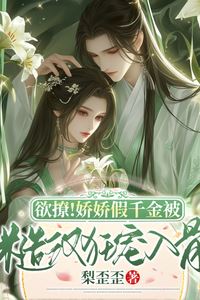
Temptation Unleashed! The Delicate Fake Heiress Is Wildly Spoiled by the Rough Man
Novel Info

Summary

... Read More

Song Miaomiao, a young woman raised in luxury as the second daughter of the wealthy Song family, discovers through a mysterious book that appears in her mind during her menstruation that she is not their biological child. The book, titled "The Real and Fake Heiress," predicts her fate: she will be exposed as a switched-at-birth impostor, forced into a disastrous marriage with a cruel, elderly scholar, and ultimately die on her wedding night. When the revelation arrives and her adoptive mother, Liu Cuilan, slaps her and demands she leave, Song Miaomiao chooses to return to her birth mother, Wang Guifang, a crippled peasant woman living in poverty in Shili Village. Despite the Song family’s attempts to retain her for financial gain, she departs with Wang Erniu, her birth mother’s nephew, leaving behind her silk robes and jewelry.

Upon arriving in the dilapidated mud-brick home, Song Miaomiao reunites with Wang Guifang, who had carried her deceased body in the book’s narrative for two days. The reality of rural life is harsh; Song Miaomiao struggles with manual labor, sleeping on hard beds, and eating simple village food. She learns that her biological father died in an accident and that her uncles, Song Dayong and Song Eryong, seized their two mu of land and forced Wang Guifang into indentured servitude to repay a fabricated debt of three taels of silver. Determined to change her fate and support her mother, Song Miaomiao attempts to apply knowledge from the farming novels she reads, but quickly learns that real life does not follow fictional tropes. Her initial business ideas, such as making soap or selling pig offal soup, are dismissed as impractical or illegal by her mother.

During this time, Song Miaomiao encounters Lu Zheng, a tall, silent hunter who becomes a recurring figure in her life. Their first meeting involves a cart getting stuck in mud, and later, he rescues her from a leech bite in the mountains. Although she initially fears his imposing appearance, she realizes he is kind and protective. Meanwhile, she befriends Xu Bailing, a strong, tall village woman who teaches her how to identify edible wild mushrooms and fruits. Song Miaomiao begins foraging daily, earning small sums to help pay off her mother’s debt. Her life takes a fortunate turn when she discovers a "koi fish" luck, finding injured wild animals that provide food and income, though she suspects Lu Zheng may be responsible for leaving them.

When her mother is injured while working for her uncles, Song Miaomiao spends her savings on a doctor and realizes she needs a more sustainable income. She devises a plan to create illustrated menus for local restaurants, using tree bark as paper and charcoal for drawings. After being rejected by upscale establishments, she successfully sells her services to a modest eatery for one tael of silver, plus additional payment for a binder and expanded menu. This success boosts her confidence, but tragedy strikes when an ox cart driver, Zhang Chui, assaults her on her way home, stealing her earnings. Lu Zheng arrives just in time, shooting Zhang Chui and beating him severely before carrying the traumatized Song Miaomiao back to the village.

Back in the village, Song Miaomiao confronts her uncles’ family, using the money she had hidden to pay off part of the debt and refuse further forced labor. The incident strengthens her resolve to become independent. As she recovers from the assault, her relationship with Lu Zheng deepens, with him quietly watching over her and expressing interest in marriage, though she remains focused on stabilizing her family’s financial situation. The story follows her journey from a pampered but trapped noblewoman to a resilient peasant woman navigating poverty, family betrayal, and the dangers of rural life, all while building a new future with the help of unlikely allies.

Latest Release
DateGroupRelease
2026-08-11shanghai fantasy c20
2026-08-11shanghai fantasy c19
2026-08-11shanghai fantasy c18
2026-08-11shanghai fantasy c17
2026-08-11shanghai fantasy c16
2026-08-11shanghai fantasy c15
2026-08-11shanghai fantasy c14
2026-08-11shanghai fantasy c13
2026-08-11shanghai fantasy c12
2026-08-11shanghai fantasy c11
2026-08-11shanghai fantasy c10
2026-08-11shanghai fantasy c9

Community Reviews

Rating(4 / 5.0, 15votes)
5 stars
4(27%)
4 stars
7(47%)
3 stars
4(27%)
2 stars
0(0%)
1 stars
0(0%)

Popular reviews

... Read More
'You're telling me just leaves and ash water—without any grains—can turn into that smooth, refreshing, and delicious green tofu?' Wang Big Ox's line here is perfect because it sounds exactly like what a skeptical farmer would say. Not literary, not polished—just genuine disbelief from someone who knows how expensive soybeans are and can't wrap his head around a tofu that costs practically nothing to make. And Lu Zheng's dialogue! The man says almost nothing and every word counts. 'What are you doing?' when he sees the leaves. 'Why not wash it by the river?' Simple questions that reveal he's paying attention, that he's thinking about her practical situation. When he promises 'that won't happen again' after hearing about the thief, it's three words that carry the weight of a protective vow without him ever saying 'I will protect you.' The subtext is doing all the heavy lifting and it works beautifully. Lu Jun is the comic relief done right. 'Love really is filling enough to live on. Just a few pastries from a little girl and he's skipping dinner.' This is the brother who sees everything and teases without malice. His dialogue has warmth and humor that balances the more serious tones elsewhere. Song Miaomiao's voice is consistent throughout—practical, slightly self-deprecating, but never insecure in a way that feels manufactured. When she says 'Compared to getting a dog, she actually wanted to change houses more,' that's internal narration that feels like actual thought, not authorial commentary. Even the brief exchange with Wang Tie is noteworthy. 'No need' when offered pastries, then a 'brief grunt in acknowledgment' when she insists. The man of few words, but not unfriendly—just reserved. His character is defined as much by what he doesn't say as by what he does. The dialogue never feels like everyone's speaking with the same voice. Each character has distinct rhythm, vocabulary, and emotional register. That's craft, not luck.
... Read More
"Miss, take braised pork for example. Do you know how much one serving sells for at my place?" 68 wen. "Right now, regular pork on the market is 35 wen. Pork belly is 40. My shop uses only the best pork belly." This is the most realistic business conversation I've ever read in a novel and I am not exaggerating. The shopkeeper doesn't mock Song Miaomiao. He doesn't throw her out. He explains his costs. He clacks his abacus. He walks her through the math. And in doing so, he reveals his entire character in about ten lines of dialogue. He's a small-business owner who's been doing this his whole life. He knows his margins. He respects a girl who came in asking for two taels but also respects that she's out of her depth. So he offers her one tael and tells her the truth: it's a luxury item, his shop can't afford it, but he's being honest. And Song Miaomiao's voice in this scene is equally well-drawn. She starts timid—"It—it's still… negotiable." She holds up her basket like a shield. She's scared of being thrown out again. But then she pivots. "Shopkeeper, these 30 dishes in my illustrated menu likely don't cover everything you serve, right?" She reads the room. She sees his interest. She upsells herself for another 200 wen. Then another 300 wen for a binder. The shopkeeper is stunned: "This girl looked naive and easy to fool, yet she was so savvy in business." The dialogue throughout this section does three things at once: it reveals character, it advances the plot, and it teaches us about the world's economy. When Lu Zheng says "Not happening" to his mother's marriage pressure, we learn he's seventeen and his mother is traditional. When Song Miaomiao says "The book said..." about the tree bark, we learn she reads and she applies what she reads practically. Every line of dialogue is doing work. The narrator's voice is also worth noting—this wry, slightly ironic tone that occasionally breaks the fourth wall with Song Miaomiao's internal monologue. "Was she one of those lucky koi heroines?" The narrator is basically our friend, sitting next to us while we read, making comments. It's a style that makes the reading experience feel personal and immediate.
... Read More
I need to talk about Song Shuyun because this man is WICKED and I love how the author doesn't even try to make him sympathetic. On the surface, he's the refined scholar type — calm, composed, the kind of dad who gives comforting speeches. But the second he finds out Miaomiao isn't his blood daughter, his face changes. The narration literally says he was already plotting how to extract maximum benefit from her. Fifty silver taels for her hand in marriage to a man old enough to be her grandfather. That's not a father protecting his daughter — that's a businessman closing a deal. And Liu Cuilan? The woman who slapped her and called her a "filthy spawn" — she's not even the worst one. At least she's honest about her hatred. Liu Cuilan's resentment is almost understandable in a twisted way — her real daughter suffered in poverty while this "imposter" lived in luxury. But she still chose cruelty over compassion. Then you have Wang Guifang, and the contrast is devastating. Limping on one leg, living in a mud-brick house, slaughtering one of her two chickens just to feed a daughter she's never met. When Miaomiao calls her "Mother" for the first time, Wang Guifang doesn't hesitate — she pulls her into her arms and cries. No conditions, no resentment, no calculation. And Lu Zheng! The quiet hunter who literally just watches Miaomiao from a distance and can't stop thinking about her. His brother keeps teasing him about marriage and he just grunts. But the moment he sees her — porcelain face, trembling, eyes red from crying — he uses a rabbit to push her back up so he doesn't have to touch her with his bare hands. That's... actually kind of sweet in the most awkward way possible.
... Read More
The title of this novel is literally "The True and False Heiress" and I think the author is doing something really interesting with that framework. Because by the end of chapter one, we already know: Song Miaomiao was the REAL daughter in every way that matters. She loved her parents, she built a life with them, she grieved when she was cast out. Song Qingqing is the biological daughter but she's a stranger — and honestly, the author seems to be setting her up as the actual antagonist. The book that appears in Miaomiao's mind is such a rich symbol. It shows up during her period — her body literally transforming, becoming a woman — and it gives her knowledge of fate itself. She's not just a victim of circumstances; she's someone who can SEE the future and choose to fight it. That's agency. That's power. There's also this recurring theme of hands and touch. Song Shuyun's hands are refined, scholarly — but they're the hands that would sell his daughter. Liu Cuilan's hands slapped her. Wang Guifang's hands are rough from labor, limping, but they're the hands that held her. And Lu Zheng's hands — callused from drawing a bow — are gentle enough to use a rabbit instead of touching her directly. Touch as intimacy, touch as violence, touch as protection. The mud-brick house versus the Song estate isn't just a class contrast — it's a authenticity contrast. The rich house is full of lies. The poor house is full of love. The author keeps flipping our expectations about what "real" means.
... Read More
Okay so let me just say this — the way the author set up the magical book device is genuinely clever. Miaomiao gets these books during her period, and one of them turns out to be a PREDICTION of her own life. Not metaphorically, not coincidentally — literally the exact same names, the exact same places. That moment when she connects the dots is pure gold. The setup is tight: slap in chapter one, revelation by chapter two, and by the end of chapter one she's already made the most important decision of her life. Most stories would drag this out for ten chapters of family drama, but this one just... goes. She kowtows, calls Wang Guifang "Mother," and leaves. No drawn-out begging, no fake reconciliation. The part about Song Shuyun plotting her marriage to a sixty-year-old man who tortured his previous wives to death? That's the kind of detail that makes you grip your phone. And the fact that the book also described her death — body thrown in a mass grave, birth mother carrying her on her back for two days — that's what pushed her to run. She wasn't just escaping a bad situation, she was escaping a DEATH sentence. One question though: what's the point of the book appearing now? Is it going to keep showing her futures, or was this one a one-time warning? Because if it keeps coming, that changes everything about how she navigates the rest of the story. I need to know.
... Read More
'Endure hardship to rise above the rest.' Song Miaomiao says this to herself before climbing into that dangerous slope and I literally gasped. The way the author builds this scene is masterful. You've got the rushing river below, the thick greenery where 'who knew what might be lurking inside,' and our protagonist is out there with a stick beating around the ground checking for snakes. The sensory details are what make this work. The faint fragrance of the Immortal Leaf matching the description in the book. The physical exhaustion of hauling water back from the river because she's too scared to leave the house. The packed earth courtyard that's 'damp and muddy.' This isn't just a setting—it's a world that has weight and texture and danger. And the village itself feels alive. The Wang family's tofu business struggling, competitors stealing customers, the loafers who sneak around trying to climb walls, the fact that 'your house is a bit isolated, and there aren't any neighbors nearby to keep an eye out.' This is a world where you have to work for everything, where a dog isn't a luxury—it's a necessity. Where repairing a leaking roof costs 'at least several dozen, possibly over a hundred taels of silver' and feels like a distant dream. The contrast between the dangerous mountain and the intimate courtyard scenes is what gives the story its rhythm. Up in the mountains, Miaomiao is brave and capable and alone. Back in the courtyard, she's sewing, washing leaves, waiting for visitors. The world feels lived-in because every location has consequences attached to it. Even the scene where Lu Zheng runs into his brother on the road after visiting Miaomiao's house—that brief moment of normal village life grounds everything. You can feel the dust on the path, hear Lu Jun's teasing, see the direction Lu Zheng walks away in. This author knows how to make a world that exists beyond the main characters' immediate concerns.
See all reviews

Characters

See all characters

Custom lists

See all custom Lists