Sweet Reward (BL) - Reviews

Sweet Reward (BL)
+Add to Custom List
Sort
Add review
... Read More
What I love about this batch is how smoothly the author moves between completely different energy levels without it feeling jarring. You start with the drinking scene which has this loose, slightly chaotic bar energy—Wen Yuan caught in the middle, Lu Yao paying, Yu Le being his messy drunk self. Then you transition to the quiet inn at night, everyone asleep except a dog chasing grasshoppers. This lull is perfect because it gives you space before the dream hits you. The dream itself is the climax of the chapter, and then the morning-after wakeup where Yu Le frantically tries to recreate it—that's where the real emotional punch lands because you feel his panic. Then the author pulls back again with Lu Qin and the wood carving scene, which feels almost meditative after all that intensity. And the very end with Grandma Lu sitting under the ivy, silent and elegant—it's like the chapter takes one last deep breath before closing. The pacing never drags, never rushes. It flows like actual life.
... Read More
The dialogue in this chapter is a textbook example of character voice differentiation. Let me prove it. Wang Wenyuan's lines are instantly recognizable: "Oh, why cover up? Hasn't the pretty boy kissed before?" She's provoking, teasing, performing. Every sentence she speaks is designed to get a reaction. Later she says "Tsk tsk, so handsome" while Lu Yao is literally pinning someone's face to a wall, and then she switches to wrapping her arm around Chen Fa and giggling. Her dialogue is all surface energy — sharp, fast, never settling. Guan Zheng, meanwhile, is all defensive barks: "Why would I tell you?" "Can't you keep your mind clean?" "Don't say such things in front of others!" His dialogue is reactive, almost always responding to someone else's provocation. He never initiates. He's a man who only speaks when pushed. Lu Yao's dialogue is minimum-effort maximum-impact. "Something like that." "I'll prioritize you." "Stay put." "Don't look." Four words or less, usually. Every line carries weight because he says so few of them. When he does elaborate — "This isn't your home. Watch your words and actions" — it lands like a gavel strike. And Yu Le's internal monologue vs. his spoken dialogue is where the author really shows their craft. Internally he's thinking in full emotional paragraphs, but aloud he says things like "Boss Lu, you really are a jack-of-all-trades" and "the Buddha you took me to see today is really effective." He deflection-through-compliment is his natural state, and the author writes it with such precision.
... Read More
'I like this pace.' Mr. Lu, I give you permission to do anything you want to me without needing my consent.' Stop. These two lines changed EVERYTHING between them. Like, this isn't just a romantic beat — this is a fundamental shift in their power dynamic and emotional architecture. Before this, there was always some tension about pace, about who was leading, about boundaries. And now Yu Le just hands it all over. But what I love is that it doesn't feel like submission — it feels like TRUST. Absolute, terrifying, beautiful trust. And Lu Yao's reaction? He dreams about him ALL NIGHT. He says 'everything in the dream was about you.' This man is emotionally transparent in a way that's almost annoying how genuine it is. He doesn't play games. He kisses, he holds, he touches Yu Le's scar like it's something precious. The scar detail! He traces it with his fingertips. That's not nothing. That's intimacy with history. Then later, during the phone call, he's being shamelessly physical with Yu Le while talking to his sister like it's completely normal. Yu Le tries to push him away out of embarrassment and just... gives up. 'He couldn't win against a thigh, so lying flat was his only option.' The dynamic is so well-written. Lu Yao is the big affectionate dog energy and Yu Le is the flustered cat who keeps pretending to resist while clearly melting. Their relationship feels like it's deepening naturally, not rushing anywhere.
... Read More
I have to talk about how this section breathes. We go from Wang Wenyan's chaotic energy in the hall — all sharp remarks and teasing — and then suddenly we're in this quiet domestic space where Lu Yao is fixing a drawer handle and Yu Le is playing with an abacus like it's the most interesting thing he's ever seen. The author just... lets us sit there. No rush. Seven years in the army. Not long. Why did you retire? ...He doesn't answer. That non-answer is everything. It's a deliberate pacing choice that creates this little pocket of mystery in an otherwise warm, everyday scene. Yu Le asks because he's curious, but Lu Yao deflects because some things aren't ready to be shared. And the chapter just keeps moving forward like nothing happened. Then BAM — Grandma Lu is sick, and suddenly the pace accelerates. The hospital visit, the diagnosis worry, the decision to monitor for one more night. It's not a cliffhanger per se, but it's a tension hinge that the author knows how to use. The reader is left wanting to know what happens next while also feeling satisfied with the character beats that landed. The checkers scene at the end is the perfect exhalation after all that tension. Wen Yuan admitting he napped for three to four hours and begging for secrecy — it's light, it's funny, and it reminds us that life goes on even when serious stuff is happening in the background.
... Read More
The WeChat Moments punishment is the thematic centerpiece of this entire chapter and I keep coming back to it. A public post, visible to everyone, un-deletable for at least one night. What are they really performing here? When Lu Yao posts 'Today I'm a pink little piggy, Little Yao' and Yu Le copies the format, they're creating a shared social artifact—a tiny monument to their closeness that exists outside the yard, outside the tree, outside the private space they've carved out together. But Cheng Xiwu is also performing. His warm smile when Yu Le asks to pair with him, the quick adjustment of his glasses to hide his expression, the slight sullenness he can't quite mask when watching Yu Le feed Lu Yao lychees. Everyone in this scene is curating an image for an audience, even when the audience is just one other person sitting three feet away. The locust flowers themselves are worth thinking about—Su Hui picks them off her head and sniffs them, sighing about how comfortable life is here. Beauty that falls naturally, Fragrance you have to stop and notice. And then Wang Wenyuan immediately punctures the sentiment by listing all the practical complaints: no malls, no cinemas, no pretty dresses. The tension between romance and reality, between wanting to stay and knowing you can't, runs through every line of this chapter like a hidden seam.
... Read More
I keep coming back to the spatial choreography in these chapters. Let me just walk through this. We start in some kind of formal hall where Zhou Fei confronts someone — we don't get the name immediately, which is interesting because it makes the reader feel the disorientation, like we're intruding on a private argument. Then we cut to Zhao Xiaosong's ice powder stall at the ENTRANCE of Lu Yao's inn. This location choice is deliberate. The stall is at the threshold between the outside world and the private space of the inn. Zhao Xiaosong is both inside and outside, a observer positioned at the border. The inn itself becomes this multi-layered stage. There's the front area where business happens, the backyard kitchen where private conversations unfold, the mountain with its hidden pool entrance that only certain characters know about. Each space has different social rules. In the backyard kitchen, Aunt Zhang is familiar enough to ask casually what people want to eat — this is a space of comfort and routine. But the mountain pool is different. It's discovered terrain, a secret that requires guidance to access, and Cheng Xiwu's failed attempt to go there mirrors his failed attempts to get closer to Yu Le. The contrast between the warm, mundane inn interior and the unmapped mountain outside creates this tension between safety and the unknown that runs through the entire book. And Wang Wenyan yawning at the table, ordering sour and spicy noodles, completely unbothered — she grounds the whole scene in this really specific sensory detail that makes the world feel lived-in. I could smell those noodles.
... Read More
There's this one moment early in the chapter where the author describes the window facing clouds and moon, the sheer curtain fluttering, clouds moving quickly pushing the moon slowly until it disappears. I need to sit with this imagery for a bit because it's clearly not accidental. The clouds and moon have been recurring throughout this novel as symbols of fate and destiny — the Mountain God Temple scene, the celestial imagery surrounding their meetings. Here, the clouds move fast and the moon moves slow, and then the moon goes OUT OF SIGHT. It's almost like a preview of Yu Le's fear: the thing he treasures most disappearing from his view. But then Lu Yao's hand is there, massaging his calf, grounding him. The moon may vanish behind clouds but it doesn't actually leave the sky. And the wish at the temple — this is the thematic core of the whole relationship. In a story that keeps asking whether these two deserve each other, whether their love is justified or convenient or real, Lu Yao's wish cuts through all of that. It wasn't about fate or destiny or the Mountain God's approval. It was purely human and selfish and beautiful: I want this person to like me. Not love me, not choose me forever, just... like me. The simplicity of it exposes how both of them keep overcomplicating their feelings with grand gestures and heroic narratives when really they just want to be seen and preferred by each other.
... Read More
Okay so I have to talk about this one line that nearly made me spit out my drink: 'He got beaten with a broom by his girlfriend,' then 'they reconciled.' BRO. The author just casually dropped this entire comedy of errors in three sentences and I am here for it. Lao Mao's arc—what little we get of it—is basically a mini sitcom episode wrapped into one paragraph. But more importantly, this distraction works brilliantly on a structural level. Yu Le had this whole plan about finding Grandpa's lost comrades, right? And the moment Lao Mao's dramatic dating mishap gets mentioned, Yu Le just... forgets it? Completely drops the thread? That's actually really smart writing because it mirrors how real life works. You're having this weighty conversation, then something ridiculous happens and suddenly your serious plan evaporates. The plot doesn't force every subplot to resolve—it lets things fall away naturally. And the hot pot invitation that follows? Perfect tonal shift. After the broom incident, we go from comedic chaos to casual domesticity, which then leads to the entire workplace visit sequence. The author understands that stories breathe through contrast, not through constant escalation.
... Read More
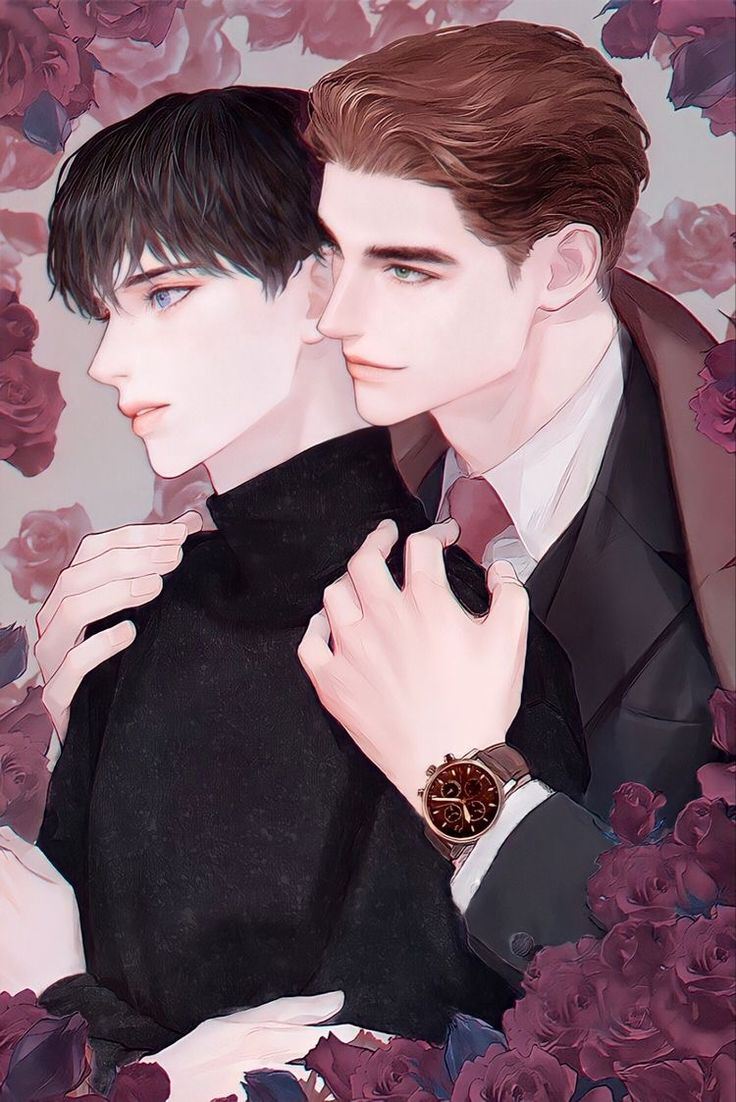
This text is absolutely DRENCHED in symbolic objects, and I'm here for it. The watch. It starts as a gift — presumably meaningful, presumably loaded with intent. Yu Le wants to exchange it, not because he doesn't value it, but because keeping it makes him uncomfortable. What does a watch represent? Time. The passing of it. Waiting. Every time Yu Le looks at that watch on his wrist, he's reminded of Lu Yao's gesture, Lu Yao's attention, the weight of obligation and gratitude and something more. The thimble is the perfect counterpoint. Small, utilitarian, something you wear while DOING — sewing, mending, creating. Unlike the watch which marks time passively, the thimble is about active care. Yu Le offers something made with his hands, something personal (his name engraved!), something unique. It's a bribe but also a gift, a transaction but also vulnerability. And the oil-paper umbrella! Lu Yao giving it to Yu Le to block the sun — it's such a small gesture but it says everything. Protection. Consideration. The desire to shield Yu Le from discomfort. In a world of constant rain, the umbrella represents moments of clarity, of warmth, of care offered without words. The massage itself is rich with symbolism. Hands touching, calloused fingers against smooth skin, pain being soothed into warmth. The wrist as a point of vulnerability — Lu Yao, strong enough to move abacuses and carry buckets, becomes vulnerable, and Yu Le becomes the caregiver. That role reversal is significant. Even the alligator/bird metaphor speaks to the power dynamic — the small and daring against the large and patient. The question hanging in the air: will the alligator open its mouth? Will Lu Yao finally say what he's feeling? The chapter ends without answering, leaving us in that beautiful, agonizing space of almost.
... Read More
Let's talk stakes. Because on the surface, this chapter is about a fashion show rehearsal. Easy, right? But the second Lu Yao steps onto that runway, the tension ramps up like I didn't expect. Yu Le's nervous. Mr. Song's skeptical. The professional models are… well, they're professionals. And Lu Yao is just… Lu Yao. With military posture and no runway experience. The author makes us feel every second of that vulnerability. You're waiting for him to fail. You're waiting for the world to laugh. But then—the partition falls. And in three sentences, the entire genre shifts. From fashion drama to survival thriller. Lu Yao doesn't hesitate. He jumps, he lifts, he rolls. Two meters. A child. A falling object. And he does it all without breaking stride, without looking back at Yu Le. That's not heroism; that's instinct. And that's what terrifies me. Because if his instinct is to protect, what happens when he has to choose between protecting Yu Le and protecting himself? The stakes just went from “will he look good on the runway?” to “will he survive what's coming?” And I'm here for it. I'm so here for it.
... Read More
Let's talk about what's actually at stake here because the author is playing 4D chess and I'm just trying to keep up. On the surface: Yu Le tried on some AR glasses, a video got recorded, it went viral, people are commenting. Sounds minor, right? Wrong. This is a privacy nightmare for someone in Lu Yao's position. He's a CEO. His personal life is already partially public. Now his face, his voice, his HOME, his relationship with this guy — all of it is out there for consumption. The internet comments are genuinely unsettling when you read them carefully. [I'll buy it, is that okay?] [More of this, I love it] [Where did you find this gem? My suggestion is to have them both endorse it directly.] This isn't just fandom — it's appropriation. People are consuming their lives as content. And yet the personal stakes are even higher. Yu Le can't walk into his own bedroom without panicking. Lu Yao notices the red marks on his nose and gently fixes his hair. These are people who are deeply vulnerable with each other and the world just decided to make them a public spectacle. What happens next? Someone at Lu Yao's company is going to need to address the leak. The internet is already connecting dots about their relationship. Grandpa's hospital visit is pending. And Yu Le still hasn't gotten his charger fixed because he can't face going into that room. The tension between private intimacy and public exposure is the engine driving this entire arc forward, and I have never been more invested in watching it play out.
... Read More
This chapter does something I rarely see done well — it has three distinct narrative threads that never actually intersect, but somehow feel like they're all part of the same breathing organism. The Lu Yao hospital scene is brief, almost detached. Then Yu Le's arrival at his apartment drags its feet deliberately, making us feel the weight of his exhaustion. The phone call with his mom is quick and sharp. The Moments scrolling is glacial — we watch him click, read, decide, block, delete. The sleep sequence is blank. Then the roommate dinner explodes with energy and dialogue and then — boom — the flashback hits us like a freight train. The pacing choice to put the Cheng Xiwu backstory at the very end is brilliant because it recontextualizes everything that came before. Every awkward conversation with the roommates, every deflection about his life abroad, every moment of emotional distance — it all becomes a symptom of something that happened years ago and was never processed. The chapter structure itself mirrors Yu Le's emotional pattern: surface-level functioning, gradual accumulation of unaddressed weight, and then a sudden cascade into the real stuff when he least expects it. The line "The chance of mutual" cuts off mid-sentence. I know it's incomplete but honestly the abruptness feels intentional. Like the author couldn't even finish the thought about whether Yu Le and Cheng Xiwu's feelings were reciprocated. Maybe they weren't. Maybe they were. The uncertainty IS the point.

Leave a comment

You must be logged in to leave comments. or
