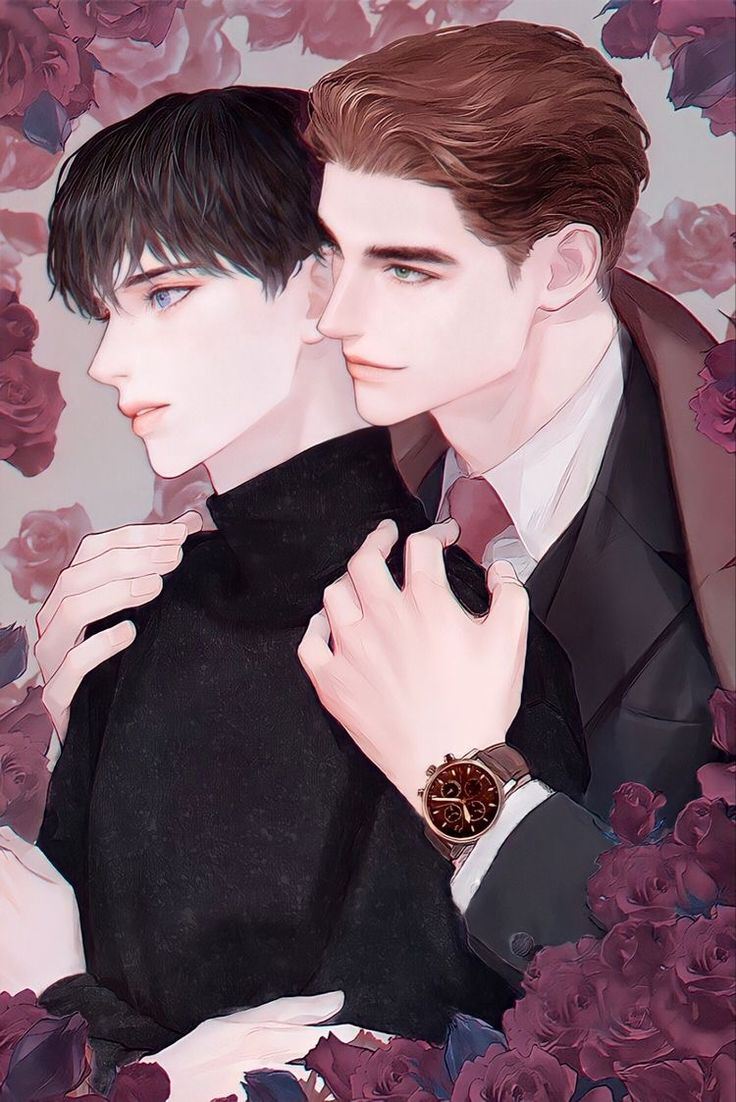
I'm obsessed with how little these characters actually say to each other, and how much of that silence does the work.
Let's start with the quicklime scene because it's a masterclass in subtext.
“What's this? Specially made pouches?” Yu Le asks, and Lu Yao just says “Quicklime.” Not “It's for moisture absorption.” Not “I bought this because the mountain is damp and you might get sick.” Just: Quicklime. Show, don't tell. The action speaks. The placement in corners speaks. The fact that he doesn't let Yu Le touch it speaks.
“What's this for?”
“Moisture absorption.”
“The mountain area is damp; you might not adapt well.”
There it is. The worry, delivered as weather report. The care, disguised as practical advice. And Yu Le's response? “I don't feel uncomfortable.” Which is technically true—he likes the humidity—but it's also a deflection. He's not ready to admit that Lu Yao's concern matters to him.
Then the rain scene. The dialogue here is almost non-existent, which is the point. Lu Yao doesn't say “I'm worried about those flowers.” He moves. He struggles. He drops the pot. Yu Le doesn't say “Let me help.” He runs. He slips. He gets caught.
“What are you doing?”
This is the only line. The only question. And it's not really a question—it's shock. It's “why would you risk yourself for something I could handle?” It's “why do you care enough to be reckless?” It's “I just moved these pots and you came running after me like—
And Yu Le has nothing to say. “Yu Le was stunned into silence.” Not because he's guilty. Because he's caught. Caught caring. Caught running. Caught being exactly the kind of person who would sprint into a hurricane for a pot of hydrangeas.
The towel scene is where the voice really shines. Lu Yao wraps the towel around Yu Le's head and rubs it “roughly.” Not gently. Roughly. Like he's mad. Like he's frustrated. Like if he's gentle, he might say something he doesn't want to say. The action is the dialogue. The towel is the voice.
“It's only been a short time. Do you want to go to the hospital already?”
This line is pure Lu Yao. Deflective. Practical. Masking concern with exasperation. He's not actually asking about the hospital—he's asking why Yu Le is being dramatic about getting wet. But underneath: why are you making me worry?
“I thought you might be too late to move the flowers, and if they die—”
“It's just a pot of flowers,” Lu Yao says, frowning.
The frown is doing so much work here. It's not anger. It's “you're overreacting, but also thank you for caring.” It's “I moved the pot because I wanted to, not because I needed saving.” It's “why do you think I can't handle this?”
And then the bedtime scene. The dialogue is minimal, almost primal.
“I really didn't catch a cold,” Yu Le says. Defense. Justification.
“I haven't sneezed even once.” Evidence. Proof.
Lu Yao makes a noncommittal sound. Not agreement. Not disagreement. Something in between that means: I know. I don't care. You're still going to sleep with the door open.
And then the masterpiece line:
“Am I made of clay, that a bit of rain would make me melt?”
This is Yu Le finally saying what he's been feeling. The infantilization. The fragility. The “go back to your room” energy. And Lu Yao's response?
“Pretty much.”
With AMUSEMENT. He's teasing him. He's letting him have this moment. He's not denying it. He's not confirming it. He's just… agreeing, lightly, like it's obvious.
And the dream? No dialogue. Just Nüwa muttering about poor-quality clay. Which is Yu Le's internal voice externalized. The thing he can't say out loud becomes a mythological threat.
The morning scene has almost no conversation. Just observation. “The tank top was an old-fashioned one, but the person was not old at all.” This is Yu Le's narrative voice—detached, slightly sarcastic, noticing details he shouldn't. “Broad shoulders, a narrow waist, and a straight back.” He's looking. He's comparing. He's deflection through aesthetics.
“Even a guesthouse owner in a deep mountain forest had such a good physique. The world really is competitive these days.” This line is everything. It's humor. It's self-deprecation. It's “I noticed his body and now I need to pretend I didn't.” It's also “I'm going back to dreaming about clay because that's safer than admitting I just watched a guy in a tank top.”
The chapter ends with the mother-child argument, which is pure noise. Chaos. “You're unreasonable!” “You're making a fuss!” “It's child abuse!!!!” This is the narrative letting go. After all that silence, all that subtext, all that carefully controlled dialogue—boom, pure sound. The author knows when to speak and when to scream.
What strikes me most is how little these characters say what they mean. Lu Yao never says “I was worried about you.” He says “Pretty much” to the clay question. Yu Le never says “Thank you for the ginger soup.” He scrunched up his nose and drank it. Their voices are in the pauses, the actions, the deflections. The dialogue is what they don't say. The narrative is what they can't help but reveal.
And I'm here for it. Give me more silence. Give me more quicklime. Give me more clay dreams.