Sweet Reward (BL) - Reviews

Sweet Reward (BL)
+Add to Custom List
Sort
Add review
... Read More
I keep coming back to the animal subplot because it's doing SO MUCH WORK. You've got Da Huang — who we didn't even see all day until suddenly he's there — lying on top of Shui Cai's belly, and Shui Cai is too careful to move. Who writes this? Who looks at a cat and a dog and says 'yes but what if one is using the other as a heated blanket' and then commits to it? This isn't just cute filler. This is worldbuilding disguised as comedy. We don't know much about Da Huang yet — when does he show up, why is he around, what's his deal? — and Shui Cai is brand new, introduced in one chapter and already the center of emotional drama (who gets to wash the dog, who gets to feed the dog). Meanwhile Aunt Zhang is in the kitchen like a Greek chorus member, observing everything and dispensing commentary about college kids being tired. The plot is moving sideways here, not forward, and that's kind of the point. The real story is the slow accumulation of a world where people and animals and buildings and food all exist together, and none of it is happening in a vacuum. The border wall construction Lu Yao is helping with? That's a literal metaphor happening in the background while we're watching a cat nap on a dog. Beautiful.
... Read More
Okay so let's talk about Lu Yao. This guy is just... relentlessly present. I need to point out the moment when Yu Le wakes up in the hospital and his first thought is basically 'is the ghost gone?' and he looks at Lu Yao and just accepts that he's there without a single question about it. Not 'why are you here?' Not 'how did I get here?' Just straight to the point like Lu Yao sleeping by his hospital bed is the most normal thing in the world. And Lu Yao doesn't explain himself either. He just nods and says 'it's gone.' The subtext is absolutely deafening. This man drove through a torrential downpour at midnight because someone he knows is sick, stayed up all night monitoring an IV drip, and when the kid wakes up confused and half-delirious, he doesn't make a big deal out of any of it. He just... exists there. Like he always will. There's also the scene where the nurse looks at those marks on Yu Le's neck and then flicks her eyes to Lu Yao with a flushed face. I literally gasped. She saw something and immediately connected the dots, and Lu Yao just sat there letting her look. No embarrassment, no hiding. He'd already pulled down the collar himself to shield the injection site. That's not casual intimacy, that's... something else. Then Wen Yuan runs back because his new anime episode is about to start and I'm wheezing. The contrast between these two guys treating this situation with completely different energy levels is hilarious but also kind of perfect. Wen Yuan is chaos incarnate, Lu Yao is pure steadiness. And Yu Le is caught in the middle of both of them like a sleepy little sunflower. The itchy allergy detail though — Lu Yao noticing that Yu Le said his teeth hurt and then checking for allergic reactions. That's the kind of attention to detail that says he pays attention to everything about this person. Not just the obvious stuff. The small tells. The mumbled complaints in the dark.
... Read More
I need to be honest with you guys — the pacing in these chapters is actually kind of insane and I want to dissect it because it's doing something really specific. The first half moves at a completely different speed than the second half. The dinner scene with Yu Le and his roommates? It's unhurried, almost domestic. They drink, they eat turtle soup, they chat about Daiwa Town. The neon lights come on outside. Empty soup bowls and wine bottles. They call a designated driver. It's five minutes of reading that feels like an evening. The author is letting us breathe, letting us settle into this warm friendship circle. Even the description of Yu Le walking unsteadily but managing to stay on his feet — it's tender, careful. Then Chapter 4 hits and the tempo changes completely. Lu Yao arrives at exactly 8 PM, already calculating when he can leave. The prose becomes sharper, more clipped. Sentences get shorter. His internal monologue is all business — 'patience was, after all, limited,' 'he could leave around 9:30 PM, or maybe ten minutes earlier.' You can feel the ticking clock. And then the message from his mom about the blind date? Quick, dismissive, another layer of his controlled life ticked off. The cocktail arrives, he drinks it, and within moments the pace STOPS. The text says he 'closed his eyes and exhaled a breath of uncomfortably hot air' and suddenly time seems to slow down. Every action becomes deliberate — turning off his phone, standing up, walking out. The elevator button press. Watching the numbers increment from 7. Each one a beat of tension. And that final paragraph where the elevator opens and Yu Le is already inside? The author basically held our breath for the entire chapter and then — CUT to black. The pacing went from lazy evening warmth to surgical precision to outright breathless, and I was completely unprepared for it.
... Read More
Okay so this sequence is genuinely clever when you think about it. We get a butterfly fluttering past Lu Yao's face, which triggers something in Yu Le's brain—literally—and he moves in to nudge noses with Lu Yao. Then everything derails into the most awkward 'can't eat it' conversation because apparently Yu Le accidentally touched Lu Yao's nose and now there's this weird tension about who gets to taste the cantaloupe. The plot here isn't moving forward in a traditional sense, but it's advancing the relationship in a way that feels earned. The author doesn't give us some big dramatic event; instead, they use a butterfly, a sweet melon, and a misunderstandable comment to create genuine romantic tension. And then right after that tension peaks, the kids literally scream about a starfish to break the mood. That's not accidental writing—that's controlled chaos. Yu Le then makes this tiny brave move, kisses the corner of Lu Yao's mouth behind a mask, and Lu Yao reciprocates by kissing him back through the mask itself. The plot of this whole passage is basically: tension builds, almost explodes, gets deflected through humor and childhood interruptions, then reconnects on a quieter level. It's a loop, not a line. Which honestly feels more true to how relationships actually work.
... Read More
The pacing of this chapter is masterful and I want to break it down because the author knows exactly what they're doing. It opens IN media res with the kiss—no buildup, no warning, just pure intensity. We don't get a long foreword about how much they missed each other, we just get thrust into the physical reality of it. That's a bold choice and it works because by chapter 47, we already know these two. The tension was built over 46 chapters. Here, the author just reaps the reward. Then—and this is the key move—they don't linger. After the cabinet scene, there's a hard cut to dinner. Lu Yao comes down in different clothes. Wen Yuan makes a joke. Everything seems normal. But YOU KNOW what happened. And that dramatic irony is delicious. Every line of dialogue at the dinner table carries this double meaning because we saw what happened upstairs and nobody else does. The Yan Jia/Wen Yuan tangent is perfectly placed too—it gives the reader a breather from the main couple's intensity while simultaneously building a new emotional thread. Then Yan Jia gets a work call (capitalism Jab,love), Yu Le naps until noon, they go exploring, and THEN Grandma Lu's surgery news drops. That ending beat is a perfect structural pivot—upbeat news but the story isn't over, it's just shifting gears. Chapter structure done right.
... Read More
On the surface, this chapter is low-conflict. There's no big drama, no villains, no external threats. But if you actually look at what's happening underneath, the stakes are genuinely high and the conflicts are multi-layered. The primary conflict is internal to Lu Yao—his hunger, his desperation, the 'tumult of emotions' he has to press down before he can be gentle. That's not just physical thirst, that's a man who has been waiting, who has been separated, who is terrified of losing what he's finally gotten. The stakes here are emotional survival. Then there's Wen Yuan vs. Yan Jia—and this is interesting because neither would call it a conflict. Wen Yuan genuinely doesn't want to talk to Yan Jia, but Yan Jia keeps finding ways in. The tension isn't about hatred, it's about someone who won't take no for an answer and someone who doesn't know how to set a boundary. That's a much more realistic and therefore more stressful dynamic. And Grandma Lu's surgery—this raises the stakes on the family front. We now know the surgery was successful, which removes an immediate threat, but it also means there's a recovery period, potential complications, and the whole family dynamic is now orbiting around this event. Yu Le felt happy hearing the news, which shows how invested he's become in Lu Yao's family. The real question hanging over all of this: how long can this fragile peace last? Everyone is happy right now, the dogs are fed, the ribs are gone, the surgery went well—but this is fiction. Something has to test this happiness eventually. And when it does, I will not be ready.
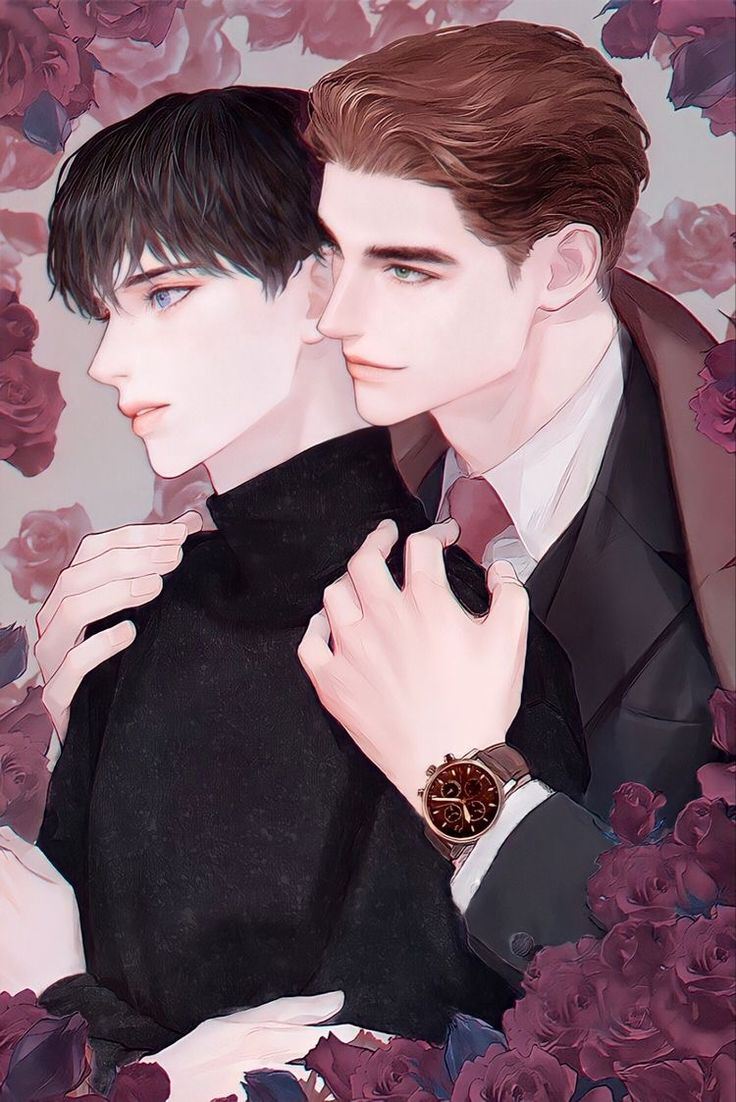
... Read More
This chapter hits you with two completely different emotional frequencies and somehow they complement each other perfectly. On one hand you've got this incredibly tender, almost domestic scene between Yu Le and Lu Yao — handmade figurines, shared snacks, the mountain god puppet receiving a kiss. It's soft. It's intimate. It's about connection and small gestures meaning everything. And then Long Fei walks in and drops the entire weight of legacy, duty, and inherited purpose onto the scene like it's nothing. His dad's badge number — retired when an officer dies, reactivated when a child continues the mission — this is such a loaded symbol. A badge isn't just metal, it's a promise from one generation to the next. And Long Fei isn't just excited about joining the police, he's carrying his father's unfinished work on his shoulders at what, twelve years old? Yu Le's watermelon suddenly tastes dry. That's the author telling you something without saying anything at all. The juxtaposition is brutal: Yu Le and Lu Yao building something small and personal and private, while Long Fei is looking at something enormous and public and sacrificial. The pink princess dress funded by ice powder sales — that's childhood joy. The retired badge number — that's childhood ended too soon. Both are valid. Both are heartbreaking in different ways. The chapter holds both without flinching.
... Read More
I am genuinely not okay. The dream where Yu Le measures Lu Yao's body like it's some kind of instrument—"using his deep breaths as chords, gently strumming to create a melody"—this is the most romantic sentence I have ever read and I will die on this hill. The way the narrative builds from that drunken evening where Yu Le gets possessive ("Isn't my company enough? Do you need to spend money on others?") all the way to this hyper-vivid dream where he's crafting something beautiful for him, and then WAKING UP disappointed because he can't remember the measurements... that is EMOTIONAL TORTURE and I love it. The physical closeness in the dream, Lu Yao pinching his chin, the tension between them, and then the sudden jolt back to reality—it mirrors exactly what their relationship feels like throughout the whole novel, right? So close but always just out of reach, always one step away from crossing some invisible line. And then the next morning when he can't find Lu Yao and has to improvise? That longing ache is everything. No wonder I re-read this section five times.
... Read More
I need to talk about Guan Zheng for a hot second because this man is OUT HERE surviving and I respect it. He follows Yu Le upstairs on a whim, completely forgets his own room exists, and when caught - his excuse? 'It's quieter up here because I keep running into Zhou Fei.' BRO. You snuck into someone's bedroom and your solution is to complain about noise levels. And Yu Le just... accepts it? 'Sure, come hang out whenever'? I love this friendship. It's not dramatic, it's not forced, it's just two guys who vibe together and occasionally share personal space. But here's what kills me - the way Guan Zheng watches Yu Le from upstairs while both of them are lost in their own thoughts about LU YAO. Two people, two floors, same moon, same unspoken obsession. It's giving tragic rom-com energy and I am HERE for it. And Lu Yao! This man takes a flower off his potted plant, puts it in his dog's mouth, sends the dog upstairs to lure Yu Le down, and then stands there shirtless waiting. This is not a man who plays it safe. He's calculating, lazy, shameless, and absolutely devastating. The way he holds Yu Le's wrists and doesn't let go immediately? The deliberate pause? This man is playing 4D chess with someone's heart and he KNOWS it. The dynamic between all three of them is so electric right now. Guan Zheng hiding feelings, Yu Le drowning in them, Lu Yao weaponizing them. A love triangle where everyone's partially aware of the other parts and nobody's saying anything out loud. Peak.
... Read More
Let me just say this: the author knows exactly what they're doing with pacing here and I am impressed. You start with this absolutely dreamy sequence — music box dolls, Chinese knots, the swan dance, golden sunlight. It's languid and warm and you're leaning back in your chair going 'this is nice, this is cozy.' Then Zhou Fei shows up and the temperature drops. Not gradually — immediately. One sentence he's insulting art students and the next Lu Yao is dismantling him with facts. The confrontation is swift, almost surgical. Three exchanges and Zhou Fei is defeated. Then the girls ask about the couple thing, which gives us a little emotional beat, and then — BAM — night falls, rain starts, and we cut to Zhou Fei sneaking around stealing sketchbook pages. The transition from the rain scene description directly into Zhou Fei's POV is masterful. No chapter break, no reset, just the darkness swallowing everything up. And the ending? He tears out all the pages and... we literally cut off mid-action. The dog barks, he shushes it, calls the pet ungrateful, tears the pages, puts the book back. End of chapter. No resolution, no consequence yet, just the act itself hanging there. That's a cliffhanger that doesn't announce itself as a cliffhanger.
... Read More
So the chapter does something really interesting structurally. It starts at peak drama—with the suitcase revelation, the frantic run to Lu Yao, the desperate hope—and then it just... deflates. Not badly. Intentionally. Yu Le gets his clothes, thanks Lu Yao, goes back to his room, and the chapter keeps going. For a long time. About him trying to use an electric mosquito repellent. At first I was like okay this is slowing down but then I realized the author is doing something clever. The pacing mimics Yu Le's actual experience. He's exhausted, his brain is foggy, he's lying in bed and can't settle and now there are mosquitoes and he has to figure out this stupid plug-in thing. The reader goes along with this slow, heavy, irritated rhythm because that's literally what Yu Le is feeling. It's immersive in a way that jumping straight to the next dramatic beat wouldn't be. And then the sleep paralysis sequence! That's where the pacing flips again—everything gets thick and slow and impossible, and you feel Yu Le trapped between sleeping and waking. The prose itself becomes heavy. "His eyelids felt heavy, as if weighed down by two large stones." You're reading it and you feel it too. It's a brilliant technique. Then right after that nightmare sequence, we cut to Lu Yao finishing his work, looking at Yu Le's dark window, worrying about whether he ate. The chapter ends with Lu Yao walking toward the kitchen in the rain. Two parallel threads—Yu Le suffering through uncomfortable sleep, Lu Yao keeping watch. The structure itself is saying something about these two characters now occupying the same emotional space even when they're in separate rooms.
... Read More
There are three images in this text that won't leave my head, and I think they're connected in a way the author may or may not have intended. First: the locust flowers. Steamed, served at summer reunions, made by a dead grandmother, kept alive by an old man whose memory is failing. This is such a rich symbol—food made from memory, ritual performed for ghosts, commitment that outlasts the people who made it. The grandfather can't remember what month it is, but he will remember to keep the appointment. Some things sink deeper than facts. Second: the suitcase full of stones. Yu Le drags it from the airport, twists his back, can barely manage the elevator. It's heavy, inconvenient, essentially pointless baggage that he chose to carry. I know this isn't meant to be symbolic, but I can't unsee it. He's carrying weight from somewhere else, and it's making his shoulders ache in real time. Third: the gown. Something Yu Le designed with two months of effort, crafted to make someone else beautiful at an event celebrating someone else's happiness. 'Everything in the end was for others' benefit'—this line echoes the locust flowers. Both are acts of love that persist even when the beloved is gone or unattainable. The grandmother steamed flowers for comrades who may never come back. Yu Le designed a gown for a man who's moving on without him. I keep thinking about what the text is really saying beneath the surface. It's about the things we carry that nobody asked us to carry. The promises we make to people who can't keep them anymore. The beauty we create for occasions that break our hearts. The love that persists as habit even after it stops being returned. And then there's Lu Yao, the man who catches a falling suitcase, who promises his sick grandfather he'll attend a gathering he's never been to, who says 'I'll go in your place' with the same calm certainty he uses to discuss business schedules. Maybe he's the answer to all those unanswered questions. Maybe he's the kind of person who understands that some things are worth carrying even when they're heavy. I need to read more.

Leave a comment

You must be logged in to leave comments. or
