Sweet Reward (BL) - Reviews

Sweet Reward (BL)
+Add to Custom List
Sort
Add review
... Read More
Okay let's talk about the stranger with the dog because WOW. The way this whole interaction plays out is such a masterclass in comedic tension, and honestly I think I just fell in love with Yu Le's energy all over again. The guy is sitting there chatting up Yu Le about dogs and shedding and pet stores while Lu Yao is just sitting beside him hearing literally zero of this because, you know, different earpieces and entirely different conversations. The dramatic irony here is *chef's kiss*. And then Yu Le's response—"Sorry, I'm on the phone with my boyfriend"—was delivered so casually but it basically ended that entire storyline in one sentence. No hesitation, no awkwardness, just pure commitment to his person. But what really got me was the Lu Xingxing moment. She helps him hold this box of documents, looks up, sees his face, and her entire energy shifts from stressed businesswoman to: "So bright and handsome!" Then she texts her brother: "I told you, there's always someone better out there! Bro, you're done for." The sibling dynamics here are giving me life. Lu Yao clearly has no idea his sister just had a full romantic epiphany about his boyfriend's best friend, and the dramatic irony of that situation is going to be SO much fun when it eventually comes to light. Meanwhile, Yu Le's relationship with his parents feels so real—the way he shrinks his neck when his mom threatens to chop his head off with a fruit knife, the way he deflects with humor instead of confrontation. It's not perfect family energy, but it's honest, and that makes his internal conflict about coming out feel earned rather than manufactured.
... Read More
There's something quietly remarkable about how the author builds atmosphere without ever describing a single room in proper architectural detail. We know two spaces exist—Yu Le's room upstairs and whatever communal area is downstairs—and the geography matters more than the description because it creates emotional distance and proximity. The opening image of Da Huang stretching between them, exposed belly up, making discontented meows—that's worldbuilding through animal behavior. The cat's mood tells us everything about the emotional climate of the scene without a single narrator comment. "Since being rescued from the tree, the kitten had been a bit moody"—one sentence and we understand that this household has history, that these characters have saved things, that there's a backstory we're only beginning to trust them with. Then there's the sensory detail of the well water. Lu Yao rinsing the lychees outside, the sound of water delighting Shui Cai—that's the most alive moment in the entire chapter. The wet ground, the splashing dog, the casual domesticity of it all. It contrasts sharply with the tense indoor scenes and reminds us that this world exists beyond the emotional drama. There's a garden, there's outdoor space, there's nature that operates on its own timeline regardless of human complications. The clothing-making subplot also grounds us materially. Waterproof fabric, cut lines marked with precision, the practical considerations of a raincoat for a cat in summer—that's the kind of detail that makes a fictional world feel lived-in rather than designed for plot convenience. The author trusts us to care about these small things. And honestly? We do. By the time Zhao Xiaosong appears with his basket of lychees still attached to branches, we've somehow arrived at a place where this feels real enough to ache for.
... Read More
I don't know how many chapters in this story is at this point but the author has absolutely masterful control over rhythm. This chapter does something really clever with its structure—it opens at HIGH energy with the family reveal and Lu Yao's tactical comfort operation, then drops us into comedy gold with the love letter subplot, then transitions to the road trip where everything slows down to conversational pace, and FINALLY lands in that quiet bedroom scene where time essentially stops. The morning-to-afternoon-to-evening timeline creates a natural breathing room. We get a breather between the drama and the sweetness because we're literally traveling. The plane ride is genius pacing—a two-hour window where nothing urgent happens, just two people talking, a blanket being spread, a head being patted. It's the literary equivalent of a held hand. Then arriving at Yu Le's parents' place briefly raises the tension again (will this go well? yes it does) before dissolving completely into the bedroom scene. That final image of Lu Yao listening to photo stories with Yu Le's legs as his seat—it lingers because the pacing earns it. Nothing rushes toward it, but everything leads there. The author could have ended on the high note of the parents accepting Lu Yao, but instead chose the lower, warmer register. Sometimes the quiet ending is the one that sticks.
... Read More
Let me just say this about Lu Yao and Yu Le: their relationship is absolutely immaculate. I kept re-reading the red envelope scene because it's so casually beautiful. Yu Le gets all defensive about money — 'Do you also calculate like this with others?' — and Lu Yao just says, quietly, 'You're you, others are others.' That's it. That's the whole romance genre in one sentence. Not a flower, not a poem, just the simple devastating logic that some things aren't transactional because the person matters. And then Yu Le's internal monologue about having already started worrying about his husband's money since they got married? I literally gasped. That's not devotion, that's domesticity. That's the kind of love that sneaks up on you and you don't even notice you've become this person who counts abacus beads and worries about joint accounts. The fact that he calls it a 'dowry' so casually tells me everything about how comfortable they are together. But what really got me was Wang Wenyan's voice in this whole thing. She's this sharp, cynical character who claims she doesn't believe in love, and yet — and YET — she's the one making sure Yu Le and Lu Yao stay together. 'You and Mr. Lu must never break up.' Why? 'Because you're starting off well. If you break up, you probably won't find someone else.' Oof. Is that comfort or threat, I can't tell. But the fact that she gives Yu Le the psychologist contact anyway, even though she said she didn't need help, tells me she's not as detached as she pretends. She's protecting the people she cares about in her own twisted little way. Also can we talk about how Lu Yao brings fruit downstairs right after Yu Le gets emotional about the empty inn? Like the guy just KNOWS how to redirect him. 'What are you going to do with these?' and suddenly they're washing vases and looking at cantaloupe together. This is a man who understands his husband on a cellular level.
... Read More
CAN WE TALK ABOUT YU LE FOR A SECOND? He accepts the milk tea, starts drinking it, and ONLY realizes something is off when Wen Yuan calls him out?? Like bro, did you even register who handed it to you or were you just grateful for free boba?? This is such a Yu Le moment—he's present but also completely absent, operating on a different frequency than everyone else. It's either profound emotional unavailability or genuine scatterbrained energy and I cannot decide which is funnier. But the REAL tea (pun intended) is between Yu Le and Lu Yao. That shared straw moment. Yu Le offering to share without missing a beat, Wen Yuan having an absolute meltdown about it, Lu Yao with his aching wrist from whatever happened before we even got here... the tension is palpable and everyone ELSE notices except the two people it involves. And Lu Yao watching Yu Le avoid his gaze after the firefighter reveals his past? That's not guilt. That's something else. Something quieter. I need a diagnosis.
... Read More
The pacing in this batch is absolutely filthy and I'm here for it. It starts tight. Cheng Xiwu's arrival immediately creates an undercurrent of discomfort. Every line of dialogue during the lunch scene is layered with subtext—you're constantly aware of what's NOT being said. The green pepper passing, the lingering looks at Lu Yao, the careful wording of the offer to help. The author keeps the pressure building without ever breaking the polite surface. You're leaning in, waiting for someone to snap. Then—bam. Rain. Sunset. Rainbow. The author just opens a window and lets all that tension bleed out. The transition is so smooth you barely notice the gear shift, but it's absolutely deliberate. We go from a cramped dining table with three people doing emotional judo to an open backyard with a muddy dog and golden light. And once we're in that softer space, the pacing slows down beautifully. The ice cream melting, the dog shaking water everywhere, Yu Le asking about the old restaurant—these small moments breathe. The author trusts us to sit in the warmth without rushing to the next plot point. But here's where it gets really smart: the romantic confession doesn't come as a separate beat. It emerges naturally from the conversation about the past. Yu Le was reminiscing about school, then he was thinking about Lu Yao, then he was comparing them, then—unexpectedly, organically—he's confessing. The emotional peak arrives without any fanfare because the pacing has been earning it moment by moment. Lu Yao's final lines about thinking about Yu Le constantly are the payoff the entire chapter has been building toward. But by getting there through such a relaxed, meandering path, the author makes it feel inevitable rather than manufactured. We didn't rush to this moment. We arrived here together, like Yu Le and Lu Yao themselves.
... Read More
Let me just say this: the stakes in this section are deceptively simple and absolutely brutal. On the surface, it's an old lady with a cold. But the author spends three seconds establishing the environment — 'the environment on the mountain was good, but transportation and infrastructure were major drawbacks' — and suddenly everything changes. A 'simple cold' in the city is a sneeze. A 'simple cold' up here could be the difference between watching someone recover and watching someone you love slip away because the nearest proper hospital is too far, too late. Lu Yao sees it. We see it. But Grandma Lu won't go, and Grandpa Lu is caught between protecting his wife from her own fears and doing what's actually safe for her. That's the real conflict here — not illness versus health, but love versus survival, tradition versus modern medicine, pride versus pragmatism. And Yu Le's anxiety about it all? 'Should we go to the hospital I visited last time?' He's already imagined worst-case scenarios and mapped out contingency plans while Lu Yao is still talking. That's the thing about caring — it makes you anticipatory, it makes you prepare for storms that haven't broken yet. Lu Yao's promise — 'If that place can't diagnose it, we'll take them to Xuan City. Don't worry too much. I'll be here for everything.' That's not just reassurance. That's a stake being placed on the table. He's betting his time, his resources, his peace of mind on making sure this family gets what they need. And honestly? That's when I knew this story wasn't just about romance. It was about what we owe each other when the people we care about are vulnerable.
... Read More
'The bride's feet must not touch the ground.' This rule alone contains so much meaning. From the moment Yu Le steps out of that room until he enters the mountain god's hall, he exists in a liminal space—neither fully himself nor entirely transformed. Being carried by Lu Yao, elevated above the earth, he becomes something sacred. The mountain god ritual itself is layered with symbolism. The plague and hidden demons aren't just plot devices; they represent real human suffering, and the ritual is an attempt to confront it through ancient tradition. The mask is perhaps the most powerful symbol here. Lu Yao wears it literally, but Yu Le also hides behind one when placing it on Lu Yao's face—literally touching the boundary between identity and performance. Who is the mountain god? Who is the bride? Are these roles they're playing, or are they revealing something true about themselves? The bells replacing annually speak to renewal, to cyclical time versus linear time. The incense, candles, tea, wine—all offerings that connect the earthly to the divine. And that whispered 'hang in there' from Lu Yao before the veil covers Yu Le's head? It's the most human moment in an otherwise transcendent scene. Even gods need encouragement.
... Read More
The dialogue in this chapter between Father Lu and Mother Lu is absolutely elite. Let me just say that. You've got Father Lu coming out sideways trying to get rid of those love letters—"Can we also put away those outdated textbooks?" Sir, it's been decades. Those aren't textbooks. And then Mother Lu just quietly sabotages the whole plan by letting Lu Xingxing read them first. The power dynamics in this marriage are fascinating. She's the one actually pulling the strings while he pretends to be in charge. Then Lu Xingxing comes in and starts QUOTING the letters back to them—"You're the wind that lost me in the starlit night, I love you more than anything in this world"—and Father Lu just immediately bolts to water the orchids like a man running from a crime scene. I was screaming. And then it cuts to the Lu Yao and Yu Le dialogue, which is so much quieter and more economical. Their exchanges are sparse but loaded: "Will Uncle and Aunt hit people?" "Of course not." That back-and-forth says SO MUCH about how well they know each other by now. They're not performing for anyone. The humor lands because it's earned. Also the fact that Lu Yao quotes Lu Xun casually? Perfect character detail. Shows he's educated but not pretentious about it.
... Read More
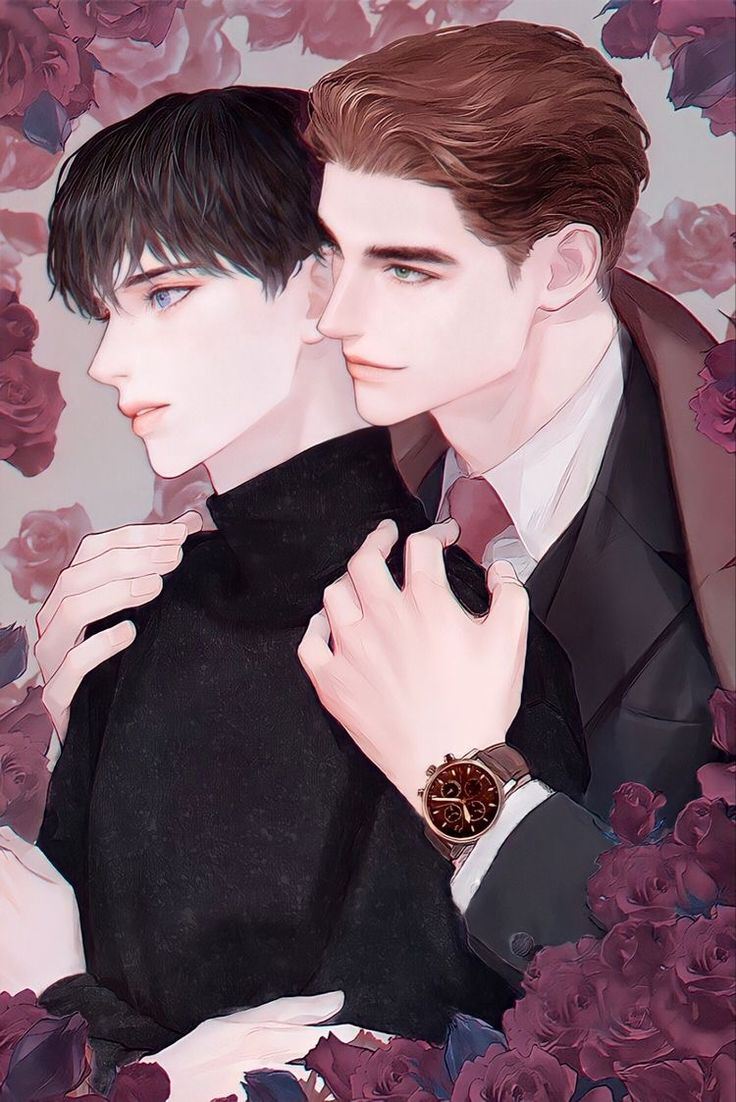
There's this one line Yan Jia drops that stuck with me like a splinter: ‘The quickest way to forget a relationship is to start a new one.' Sounds cynical, right? But then Yu Le says, ‘He doesn't like men,' and everything shifts. That's not just information. That's grief dressed as a fact. I need to talk about Yu Le and this ‘white moonlight.' Whoever he is, whoever they were, the way Yu Le carries them is heartbreaking. He's not sad in a dramatic, tear-streaked-window sort of way. He's sad in the quiet, clenched-jaw, ‘I'm fine, really' way. He went from top of his class at seventeen to establishing his own brand at twenty-one, and somewhere along the way, he learned to bury everything. But then there's Yan Jia. Man, I love this friend. He's the only one who sees through Yu Le's armor, and instead of forcing it, he just… stays. Teases him about blind dates, calls him out when he's being an idiot, but never abandons him. That's the kind of friendship that doesn't need grand gestures. It's in the small things—the ‘don't hang up' when Yu Le tries to end the call, the way he drops the whole ‘white moonlight' conversation and lets Yu Le catch up on his own terms. And the family pressure? Oh, it's there. The blind date isn't just an annoyance; it's a symptom of everything Yu Le's running from. They want him settled, productive, moving forward. But how do you move forward when part of you is still standing still, waiting for someone who'll never come back? I'm already invested in whatever happens between Yu Le and this mysterious person he lost. Not romantic, maybe—but the ache is. And I'm here for it.
... Read More
I have to admit, when I saw this chapter shift from the hotel aftermath to Yu Le on a long-distance bus, I was worried it might drag. But the author somehow made a SIX-HOUR BUS RIDE feel absolutely essential to the story. Every uncomfortable detail — the smell, the woman closing the window, the bumpiness of the mountain roads, the stale cigarette smoke — it all serves a purpose. We're IN Yu Le's headspace. He's physically suffering and emotionally reeling, and the bus ride is the perfect metaphor for his entire situation: stuck, uncomfortable, moving slowly toward an uncertain destination. The transition from Lu Yao's cold, calculated morning-after (pulling up guest lists, deleting footage) to Yu Le's chaotic hospital visit and then the grueling bus journey creates this brilliant push-pull rhythm. One character is in control, the other is surviving. The pacing here is deliberate suffering, and it works because we're meant to FEEL Yu Le's exhaustion. And that ending? "It was getting late" and he's determined to find a place to stay — the chapter just... stops. No big revelation, no dramatic cliffhanger. Just Yu Le, exhausted and arrived somewhere new. It's almost anti-climactic in the best way. Like the author is saying, yeah, this is hard. Deal with it.
... Read More
Okay so this whole mountain god wedding sequence is absolutely masterful storytelling. Let me start by saying I literally gasped at the scene where Lu Yao picks Yu Le up. Like, you read about it happening but somehow the prose makes it feel inevitable. The plot here is doing multiple things at once—moving the ritual forward, advancing their relationship, AND setting up the larger conflict around the plague and demons. The author doesn't dump exposition; we learn about the mountain god's role, the tradition, the stakes, all through the ritual itself. That's how you weave worldbuilding into plot. The way the ceremony builds tension is brilliant too—from the preparation inside the room to the moment they step outside and the crowd erupts into whispers and phones. The chanting, the bells, the veil being placed... it all cascades forward like a wave. And then that cut-off ending? We're left watching the sedan chair move through the crowd, and somehow the author makes you feel every step toward the mountain hall. This isn't just a cultural scene; it's a turning point. Yu Le goes from nervous participant to actual bride in the ritual, which means something. Lu Yao becomes the mountain god in the eyes of everyone watching. And somewhere between adjusting the robe and carrying him over the threshold, their whole dynamic shifts irreversibly. The plot doesn't just move—they transform.

Leave a comment

You must be logged in to leave comments. or
