Summary

... Read More

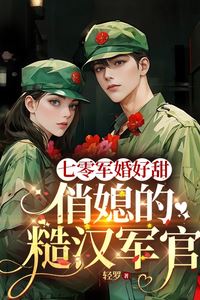
An Lan was a brilliant student whose life was destroyed by a stolen future. Born to university professors in a prominent intellectual family, she was sent to the countryside during political purges to protect her from persecution. Despite her family's fall from grace, An Lan maintained her academic excellence, hoping to return to the city through the worker-peasant-soldier recommendation system or the college entrance exam. When the exam was reinstated, she scored 335, a result that should have secured her admission to a top university. However, she was told she had failed. In reality, her exam results were swapped by Bai Weiwei, a classmate who coveted An Lan’s life. Stripped of her future, An Lan was forced to remain in Yong’an Village, where she endured a miserable existence, marrying a paralyzed man and burying her in-laws and husband before dying in obscurity.

After her death, An Lan discovered she was a minor character in a novel, a cannon fodder whose only purpose was to provide the female lead, Bai Weiwei, with a jade pendant that contained a spiritual spring space. This space allowed Bai Weiwei to grow crops and beautify her appearance, launching her into stardom. Devastated by the revelation that her suffering was merely plot device for another’s glory, An Lan was reborn into her past, returning to the moment she first arrived in the countryside. She was bound to the Hey Xiu Hey Xiu System, which tasked her with rewriting the story’s outcome and weakening the heroine’s halo. Equipped with new abilities, including the power to transform her appearance and an item that forced others to speak the truth, An Lan resolved to reclaim her life and expose the injustices done to her.

Upon her return, An Lan immediately faced hostility from Li Yanli and Zhang Chunmei, who were manipulated by Bai Weiwei to sabotage her. They attempted to lure An Lan into a dangerous part of the mountain, intending to leave her to die among wild beasts. An Lan, however, was rescued by Huo Linyuan, a quiet and capable man from a poor family who had harbored unspoken feelings for her in her previous life. With the help of the mountain watchman and physical evidence, An Lan exposed the plot, turning the villagers’ sympathy against her accusers and securing a punishment for Li Yanli and Zhang Chunmei. This victory marked the first crack in Bai Weiwei’s seemingly perfect facade.

An Lan’s rebirth also allowed her to intercept the jade pendant that her parents had sent her, preventing Bai Weiwei from obtaining the spiritual space that had fueled her success. Without the pendant, Bai Weiwei’s advantages diminished, and An Lan began to systematically dismantle the support network that had sustained the female lead. She formed alliances with other characters who had been mistreated by Bai Weiwei, including Yao Chunjing, and used the system’s rewards to improve her living conditions and prepare for the future. Meanwhile, her relationship with Huo Linyuan deepened, as he became her steadfast protector and ally in her quest for justice.

The core conflict centers on An Lan’s determination to correct the wrongs of her past life while navigating the constraints of a world controlled by narrative forces. Bai Weiwei, aware of the changes, attempts to maintain her status through manipulation and deceit, but An Lan’s foreknowledge and system-assisted abilities give her the upper hand. As An Lan works to secure her own future, she also seeks to save those who suffered due to Bai Weiwei’s actions, including her parents, who are imprisoned in a labor camp. The story follows An Lan’s strategic efforts to rebuild her life, uncover the truth behind her stolen exam results, and ultimately confront the forces that sought to erase her existence.

Latest Release
DateGroupRelease
2026-08-11shanghai fantasy c20
2026-08-11shanghai fantasy c19
2026-08-11shanghai fantasy c18
2026-08-11shanghai fantasy c17
2026-08-11shanghai fantasy c16
2026-08-11shanghai fantasy c15
2026-08-11shanghai fantasy c14
2026-08-11shanghai fantasy c13
2026-08-11shanghai fantasy c12
2026-08-11shanghai fantasy c11
2026-08-11shanghai fantasy c10
2026-08-11shanghai fantasy c9

Community Reviews

Rating(3.8 / 5.0, 14votes)
5 stars
4(29%)
4 stars
3(21%)
3 stars
7(50%)
2 stars
0(0%)
1 stars
0(0%)

Popular reviews

... Read More
Let me sit with this for a moment, because the deeper I go, the more I realize this isn't just a rebirth romance. It's a story about AGENCY. An Lan was a character whose thoughts, feelings, and actions were controlled by a narrative she never chose. Her resentment — and the System explicitly calls it 'resentment' — isn't just about losing a love interest or watching her 'things' go to the female lead. It's about the fundamental violation of having your entire existence scripted by someone else's story. And she's not alone. The supporting male characters who loved Bai Weiwei also filed complaints. They were controlled too. The System calls it a 'malfunction' — but was it really? Or was the system working exactly as designed? To create characters who feel real enough to suffer, then manipulate them for entertainment? The Honest Puppet is the perfect symbolic reward for An Lan. A week where everyone tells the truth. Not because they want to, but because they CAN'T lie. It's the ultimate counter to a world built on narrative manipulation — if you can't control the story, at least you can force the truth out into the open. Then there's the imagery of snakes. In her first life, An Lan was bitten by a snake as a child — a formative trauma of betrayal and pain. In this life, Huo Linyuan kills a rat snake that was about to bite her, and she jumps into his arms. The snake transforms from a symbol of past trauma into... well, into something more complicated. Is it protection? Is it danger? Is it the story itself, threatening to bite her again? And the rain. The relentless rain in Chapter 4 washing blood from Bai Weiwei's face — cleansing, erasing, making the dead look peaceful. Rain as purification. Rain as the boundary between death and rebirth. The moon rose blooming by the hole in the pit, still in the same spot — a symbol of continuity in a world that has been turned upside down. Some things remain, even when everything else changes. This story is about what happens when a character WAKES UP. When she realizes the walls of her world are made of paper, and she can tear through them. That's the theme that's going to carry this whole novel.
... Read More
Let me just sit with the imagery in this chapter for a moment because the author really knows how to paint a scene. The loess ground with sand and stones that scratches Bai Weiwei's palm when she falls—that's such a specific, tactile detail. You can feel the grit. You can taste the dust. This isn't some romanticized period piece; this is dirt and hardship and the ground itself is against you. Then there's the cowshed. The captain literally has no idea where to put Bai Weiwei because no one lives in the cowshed. It's leaking wind and rain. There's not even a quilt. And Bai Weiwei's so-called friends are out there worrying about whether she'll catch a cold. The contrast between the dirty, damp, neglected cowshed and the comfortable dormitory where everyone else is eating and chatting is so sharp it hurts. The dinner scene is another masterclass in worldbuilding. The big pot of corn paste is already empty. The male educated youth wolfed it all down. An Lan's throat becomes sore from eating such coarse food—'Corn paste in later generations was made by machines and was very fine, unlike the cornmeal today which is very rough.' This single sentence does so much work. It tells you about the era, about scarcity, about how far things have come, all without a single exposition dump. And the visual of those three male educated youth peeking at An Lan and turning red when she catches them looking? That's such a specific, almost cinematic moment. The golden hour light, the awkward glances, the innocence of an era before people would openly flirt on the street. The author captures the atmosphere of that time period so vividly—it feels lived-in, not researched.
... Read More
Okay I need to talk about this absolute comedy of errors that is Bai Weiwei's latest scheme because honestly I was wheezing. She literally orchestrated the whole manure-carrying punishment for Li Yanli and Zhang Chunmei, right? She's the mastermind here. And what happens? An Lan takes the hit, turns it into a blessing, and gets a full year's work points for free while Bai Weiwei's two cronies end up covered in shit. The irony is so thick you could cut it with a knife. But then the plot thickens even more when Bai Weiwei loses her damn mind in the dorm and starts accusing An Lan of controlling her mouth. An Lan's reaction? She just slaps her. Like, actually slaps her. And then when Bai Weiwei tries the oldest trick in the book—pretending to be insane—An Lan doesn't even flinch. She just nods and says 'it's possible' and suggests the cowshed. The girl is a natural strategist. I love her. The whole sequence from the manure incident to the cowshed sentencing is so tightly woven. Every beat builds on the last. Bai Weiwei's own words come back to haunt her when she accidentally says 'you are stupid' out loud. That moment where she covers her mouth and realizes she's been exposed? Chef's kiss. And then the male educated youth showing up demanding her release while An Lan just sits there calmly dismantling their arguments one by one—'First: it's my jade pendant. Second: she cursed everyone. Third: go find the captain.' Three points, three bullets, dead. I also love how the system rewards show up right after the conflict resolves. It's like the universe is saying 'good job, here's your loot.' The Koi Physique for seven days is such a fun detail. Seven days of good luck—what could go wrong? (Everything, probably. That's the genre.)
... Read More
This chapter is really digging into something I haven't seen handled this well in transmigration fiction—the idea of the 'heroine halo' as something almost parasitic. Bai Weiwei has this gravitational pull that warps everyone around her. The four male educated youth who are her 'bootlickers,' Yao Chunjing throwing herself away for a man who doesn't want her, even Li Yanli and Zhang Chunmei letting themselves be used as pawns. The system literally measures this as 'heroine's halo' and An Lan reduces it by 10% just by existing and refusing to play along. The jade pendant is such a loaded symbol too. It's not just a piece of jewelry—it's a test. Bai Weiwei 'liked it too much and said something crazy,' which is code for 'I want what you have and I don't respect your boundaries.' An Lan's refusal to share it is a tiny act of defiance against the entire narrative logic that says the heroine deserves everything, including other people's possessions. And the cowshed itself—what a powerful symbol. The person who's 'crazy' gets locked away in the place meant for animals, while the people who are actually cruel and calculating sit around eating dinner and gossiping. The story is asking: who is really insane here? Bai Weiwei who screamed and cried and ranted? Or the people who manipulated, betrayed, and used others while maintaining their composure? The Koi Physique is another layer of symbolism I can't stop thinking about. Koi fish in Chinese culture represent perseverance, luck, and transformation—especially the legend of the koi swimming upstream to become a dragon. An Lan getting seven days of this luck isn't just a game mechanic; it's the story telling us that sometimes you need to swim against the current to survive.
... Read More
The opening of Chapter 4 is one of those passages that just LINGERS. Let me paint it for you: Rain that won't stop. A forest that looks dark and chilling. Rainwater trickling down tree trunks and pooling at the roots. And from those roots — a foul stench of rotting wood. Then, following the roots forward, a badly mutilated corpse. The rain has washed the blood from her face, revealing a delicate appearance. It's Bai Weiwei. I mean, that's a haunting image. The rain cleansing the violence from her face, making her look almost peaceful, almost beautiful — while the rotting wood beneath her suggests everything underneath is decay. It's visual storytelling at its finest. Then the weather shifts. Thunder booms, lightning flashes, torrential downpour — and she gets sucked into dark fog. The atmosphere goes from eerie to supernatural in seconds. The system voice that follows — 'Ding, host detected. 1%, 5%... 30%, 70%, 100%' — is such a jarring tonal shift from the gothic forest scene, but it works because it signals that the rules of this world have changed. And then there's the 1976 setting. The educated youth camp. The fact that people are so poor that a snake is a prized catch and a rabbit is a generous gift. Huo Linyuan's family fled famine, his youngest brother is sickly, medicine costs could bankrupt them. This isn't just background — it's the reason he works himself to the ground, the reason he's the only one eager to leave the village after reform and opening up. The mountain scene where Huo Linyuan clears the path through waist-high grass, sweating through his coat, is so vivid I can feel the humidity. And when he suddenly stops and puts a finger to his lips — 'Shh, there's someone over there' — the tension is immediate. You can hear the leaves rustling, feel the closeness of their faces, smell his 'strong hormone scent.' The author doesn't need words for this scene to work. This world feels lived-in. Not a generic historical backdrop, but a specific time and place with real stakes.
... Read More
The stakes in this chapter keep escalating and I am here for it. Let me just lay out what's actually at risk here because on the surface it looks like dorm drama but underneath it's survival. Bai Weiwei is completely isolated. She's been exposed as a manipulator, she's lost her social standing, and now she's being sent to a cowshed with no quilt in leaking weather. If she actually does end up there, this could be life-threatening. The barefoot doctor couldn't even examine her properly—the medical resources in this setting are basically nonexistent. A fever from sleeping in a damp cowshed isn't a minor inconvenience, it's a death sentence in this world. Meanwhile An Lan is playing a dangerous game. She's openly defying Bai Weiwei's entire faction—the four male educated youth, the dorm mates who've been manipulated. If they decide to retaliate, she has no system backup, no army, just her wits. The fact that she stays so calm and composed under that pressure is genuinely impressive. When Zhou Hong and Song Shuhang come at her with accusations, she doesn't flinch. She just lists three facts and walks away. The suspense around Yao Chunjing is what really gets me though. We know from the narrative hints that in the original timeline, she hanged herself. Every interaction between her and Zhou Hong now is loaded with dramatic irony—we're watching a car accident in slow motion and there's nothing we can do to stop it except hope An Lan changes things. When Lin Zhe teases her and she chases him, stomping her feet, it's almost painfully sweet because we know how dark this story gets. And then there's the system itself, dangling rewards like 'Koi Physique for 7 days'—seven days. What happens after? The countdown is always the most tense part in these stories.
See all reviews

Characters

See all characters

Custom lists

See all custom Lists