Summary

... Read More

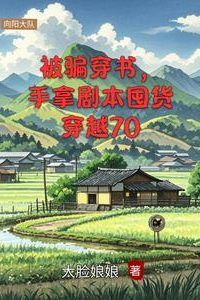
Song Li, a hardened survivor of a nuclear apocalypse, dies after fifteen years of fighting zombies and is reborn into the body of a woman with the same name in 1970s China. She awakens in the home of He Linyuan, a cold military officer who despises her because the original owner had abused their twin children, He Mingze and He Qingqing. The original Song Li had attempted to abandon the children on a freezing mountain, an act that in the source novel led to their permanent disabilities and He Linyuan’s descent into villainy. Song Li rushes to the mountain and saves the twins from a wild boar and a deep trap, using a Tang sword she keeps in her spatial dimension. Her sudden change in behavior confuses He Linyuan, who suspects a scheme, but the children begin to trust her as she provides them with warm food and care.

Song Li discovers she retains her spatial ability from the apocalypse, though it is initially small. She learns that water condensation beads from her previous life can fertilize the soil within her space, allowing her to grow spiritual crops that heal ailments and accelerate plant growth. To support her new family and secure resources, she visits the local black market, exchanging high-quality cosmetics and soaps from her space for money and ration coupons. She uses the funds to buy food and clothing for the twins, inadvertently repairing her relationship with the villagers by sharing wild boar meat. Meanwhile, He Linyuan’s half-brother, He Cheng, a reborn businessman who views He Linyuan as an obstacle to inheriting the family fortune, plots to ruin him. He Cheng manipulates Xiao Hongling, a woman obsessed with He Linyuan, to spread rumors and sabotage his marriage.

The central conflict intensifies as He Linyuan returns from a mission to find Song Li acting differently. He initially believes she is plotting to keep him bound to her, but his suspicion turns to confusion when she calmly agrees to a divorce and prepares travel supplies for the children. After a misunderstanding where he accuses her of wasting money at the black market, Song Li reveals she bought winter clothes for the twins. He Linyuan apologizes, and the family shares a meal, marking a tentative truce. Song Li continues to nurture the children, using spiritual food to improve their health and winning over He Mingze’s guarded heart. She also mends relations with her own family, the Song clan, who had previously been alienated by the original owner’s arrogance.

As the story progresses, Song Li establishes a small food business, selling sweet potato treats and other snacks to generate income. She faces opposition from Zhao Fengzhu, a jealous villager who blames Song Li for her own failed marriage, and from Xiao Hongling, who continues to scheme against the family. He Cheng’s influence grows in the capital, where he attempts to intercept He Linyuan’s promotion and discredit his character. Song Li remains focused on protecting her children and building a stable life, utilizing her spatial abilities to cultivate crops and store supplies. The narrative follows her efforts to alter the tragic fate foretold in the novel she once read, navigating political intrigue, family dynamics, and the lingering threats from those who wish to see He Linyuan fall.

The story concludes with Song Li solidifying her role as a capable mother and wife, despite the ongoing machinations of He Cheng and his allies. She balances the demands of her secret spatial powers with the social constraints of the era, slowly earning the respect of her community. The twins, once neglected and abused, flourish under her care, becoming the emotional anchor that begins to soften He Linyuan’s cold exterior. As external pressures mount from He Cheng’s schemes and internal doubts persist within the marriage, Song Li prepares to face the challenges ahead, determined to rewrite the destiny of everyone involved.

Latest Release
DateGroupRelease
2026-08-11shanghai fantasy c21
2026-08-11shanghai fantasy c20
2026-08-11shanghai fantasy c19
2026-08-11shanghai fantasy c18
2026-08-11shanghai fantasy c17
2026-08-11shanghai fantasy c16
2026-08-11shanghai fantasy c15
2026-08-11shanghai fantasy c14
2026-08-11shanghai fantasy c13
2026-08-11shanghai fantasy c12
2026-08-11shanghai fantasy c11
2026-08-11shanghai fantasy c10

Community Reviews

Rating(4 / 5.0, 4votes)
5 stars
1(25%)
4 stars
2(50%)
3 stars
1(25%)
2 stars
0(0%)
1 stars
0(0%)

Popular reviews

... Read More
There's something really powerful about Song Li carrying a Tang sword from the apocalypse into the 1970s. It's not just a weapon — it's a symbol of everything she is. She's a woman who survived fifteen years of hell by being hard, by being willing to kill, by never letting her guard down. And now she's in a body that everyone sees as weak and worthless, but she still has that sword. The spatial ability is another symbol I keep thinking about. Ten square meters — small, but enough to store what matters. In the apocalypse, water and food were everything. In this new life, the children are what she needs to protect. The space becomes a metaphor for her capacity to hold onto what's precious while the world around her falls apart. Then there's the dream sequence that turns out to be memory. The erotic encounter with He Linyuan — was it the original owner's memory? Song Li's own subconscious? Or something that actually happened in this timeline that she's now inheriting? The ambiguity is deliberate. It forces her (and us) to question: who is responsible for the past? Can you be punished for sins you didn't personally commit? The children themselves are symbols. Mingze and Qingqing — their names sound almost poetic, contrasting with the brutal fate the original plot reserved for them. In the book, they become broken, vengeful, tragic. But here, Qingqing immediately calls Song Li 'Mom' and throws herself into Song Li's arms. The moment of connection between a mother who didn't choose these children and children who didn't choose this mother — that's the emotional core the whole story is built on. And He Linyuan, the man who became a villain because his children were ruined... Song Li is now the one holding the knife that could either complete his tragedy or prevent it. The weight of that is enormous.
... Read More
The pacing of this thing is absolutely unhinged and I am here for it. Chapter 1 starts with an erotic dream sequence that's apparently not a dream, then jumps to Song Li waking up with a spatial ability, then we get a five-year montage of her traveling north with supplies, then she dies in the apocalypse, then she transmigrates into a 1970s body and has to immediately save two kids from a wild boar and a trap. ALL IN THE FIRST TWO CHAPTERS. Most novels take thirty chapters to establish a premise. This one does it in the time it takes to finish a cup of instant noodles. What works though is that the author doesn't linger. The apocalypse backstory is compressed into essential beats — the nuclear waste water, the gender ratio crisis, the water beads, the fight, the death. It's fast but it's not confusing because each beat serves the emotional core: Song Li is a survivor who spent her whole life fighting and now she's been given a second chance at something softer. The transition from death to rebirth is almost seamless, which is both a strength and a slight weakness. She wakes up, hears voices, opens her eyes, and the memories hit her like a truck. No prolonged disorientation scene, no 'where am I' monologue. It's efficient storytelling but I kind of wish we'd gotten one more beat of her actually processing the shock. That said, the chapter ends on a great note — Song Li has just exposed Xiao Hongling's schemes, the villagers are turning, and He Linyuan is looking at his wife like he's seeing a stranger. The pacing builds from chaotic action to tense confrontation to a cliffhanger that makes you immediately want to turn the page.
... Read More
The contrast between the two worlds in this book is honestly brutal and I love it. You go from a sun-scorched, blood-red desert apocalypse where Song Li is fighting for water condensation beads to... Heilongjiang in early winter, temperatures ten degrees below zero, with kids running around in leaky cotton-padded jackets. The opening scene of the apocalypse is so vividly rendered. I can literally see it — the yellow sand, the blood-red sunset, the suffocating heat. Song Li's Tang sword leaving an afterimage as she fights, blood dripping from her wrist. Then *bam*, she's shot between the eyebrows and the screen goes black. But the 1970s setting is where things get really interesting. The village life, the thatched hut, the cold wind blowing through the door when she wakes up. The way the author describes the temperature shift — after fifteen years of extreme heat in the apocalypse, that cold wind actually makes Song Li shiver. It's a small detail but it grounds the transmigration in physical sensation rather than just intellectual confusion. The mountain scene where she runs to save the kids is one of those moments that feels almost cinematic. The wild boar charging, the trap four or five meters deep, the children's cries. And then the Tang sword flying through the air and decapitating the boar — 'Puff! His head flew out, hot blood gushing.' Qingqing describing it afterward with excitement instead of trauma is both heartbreaking and realistic. These are four-year-old kids who barely processed what just happened. The village atmosphere with the neighbors rushing out, the wild boar being carried like a communal prize, the gossip and judgment all swirling around Song Li — it makes the world feel lived-in. This isn't just a backdrop, it's a pressure cooker.
... Read More
Okay so let me just... process this for a second. Song Li survives fifteen years of apocalypse, kills a hundred zombies, gets shot in the head by a bearded man who literally says 'You're dead' like he's stating the weather, and then WHAT — she wakes up in a 1970s body as cannon fodder? The man she had that insanely vivid dream about is actually the villain from the book? The one whose kids get maimed because of her original self's cruelty? That opening sequence with the bearded man is such a great misdirection. You think he's just some random raider, right? But then when she wakes up and he shows up at her door asking about Mingze and Qingqing with that look of disgust... it clicks. The dream wasn't just a dream. Or rather, the dream was the original owner's memory bleeding through, and Song Li is now trapped in the body of the woman who ruined this family. The plot structure here is honestly clever. She's not just transmigrated into a random story — she's inside the exact moment where everything goes wrong for these kids. The original author set up a tragedy where two children are abandoned, fall into traps, and become permanently scarred both physically and psychologically. And now Song Li has to undo that. The tension isn't just 'will she survive' — it's 'will she fix a broken family before the plot drags them all into hell again?' Also the Xiao Hongling subplot is already simmering. That woman literally shows up right after the rescue and starts pushing for divorce like she hasn't been caught spreading rumors about the army doctor. Song Li calling her out directly — 'Xiao Zhiqing wants to be a stepmother?' — is such a satisfying moment. The kid He Mingze defending his dad's reputation even against his own mother is a detail I need to sit with.
See all reviews

Characters

See all characters

Custom lists

See all custom Lists