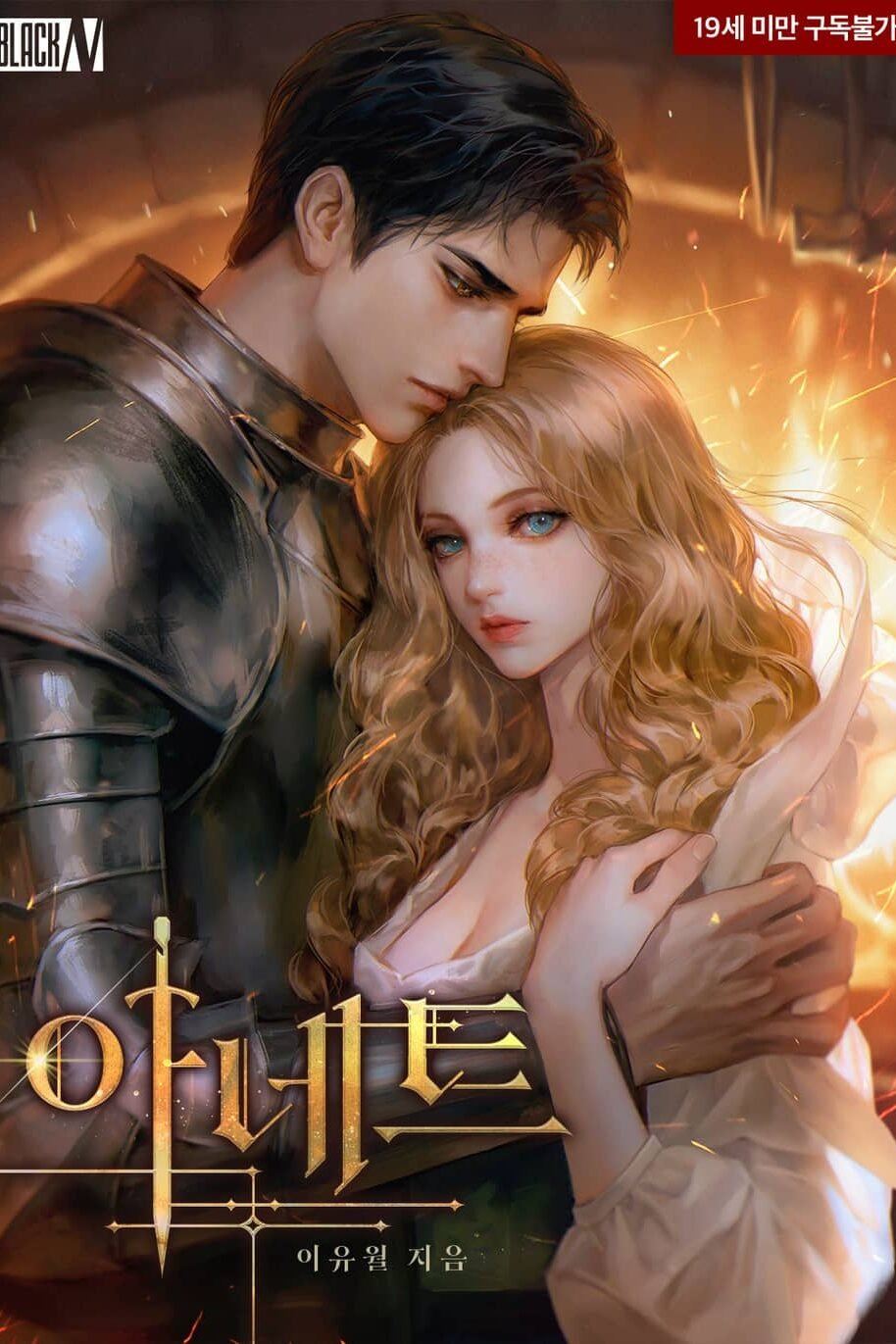
Sweet Fruit Attracts Beasts
+Add to Custom List
Novel Info
  • Author:
  • Status:Ongoing

Summary

... Read More

Hari, also known as Margharita, is a prophetess of the Lagonian tribe, which possesses the ancient gift of seeing the future. The story begins with the fall of Lagonia, destroyed when Hari's mother, Ananta, betrayed the tribe's secrets to King Mempion of Galate. Driven by love for the king, Ananta revealed her people's prophetic abilities, leading to their enslavement and death. Hari survived but was taken as a concubine by the Galate royal family, living as an outcast among her half-siblings until the conquest of Galate by the Hitais empire.

Following Hitais's military victory, Hari is claimed by Prince Achilleon, the Third Prince and renowned general. Achilleon brings her to Hitais not for romance but for her prophetic abilities. He requires her visions to secure his path to the throne against his rival brother, Prince Antor, and their father, King Mempion. Hari enters a dangerous political landscape where she is treated as both a valuable asset and a prisoner, constantly under suspicion from Antor, who covets her gifts for himself.

The central conflict revolves around Hari's struggle for survival in Hitais's oppressive palace. She faces hostility from Selina Karnos, Achilleon's fiancée, who becomes increasingly jealous of Hari's presence. Selina manipulates Hari into trespassing on sacred temple grounds, attempting to expose her and remove her from Achilleon's favor. When Hari is caught, Achilleon intervenes but forces her into a subservient role, making her pretend to be his concubine to avoid further suspicion from the High Priest Egoto, who watches Hari with distrust.

Achilleon reveals to Hari that he needs her prophecies to navigate the treacherous political waters of Hitais. He explains that while Hitais has conquered many lands, they cannot access divine wisdom through their own priests. Only those connected to the world tree Igrito, like Hari, can hear the gods' words. Hari must decide whether to cooperate with Achilleon for her own survival or attempt escape, knowing both paths carry mortal danger.

The story progresses as Hari experiences visions through dreams, including a recurring prophecy about a great fire at the Cradle of Stars temple. She discovers that Achilleon shares her interest in uncovering the truth behind ancient prophecies involving a black serpent and the world tree. Their relationship evolves from captor and captive to reluctant allies, as both recognize the necessity of cooperation for their respective goals.

Meanwhile, political tensions escalate between the brothers. Antor continues his schemes to eliminate rivals and consolidate power, while Selina's obsession with Achilleon drives her to increasingly desperate actions against Hari. The narrative weaves together themes of power, prophecy, betrayal, and survival as Hari navigates a world where her ability to see the future makes her both invaluable and vulnerable.

Key turning points include Hari's confrontation with Selina's manipulation, her vision at the temple fountain revealing deeper connections to the ancient mythology, and her growing understanding that her prophecies may hold the key to preventing catastrophic events foretold in the Igrito myth. The story sets up a complex web of political intrigue, personal vendettas, and supernatural elements that will determine Hari's fate and the future of the nations involved.

Latest Release
DateGroupRelease
2026-10-03dusk blossoms c1

Community Reviews

Rating(0 / 5.0, 28votes)
5 stars
0(0%)
4 stars
0(0%)
3 stars
0(0%)
2 stars
0(0%)
1 stars
0(0%)

Popular reviews

... Read More
Let me just say it upfront: Ipea threw herself into a suicide mission for Hari and I am OBSESSED. Here's this girl who gets into fistfights because slaves are insulting her homeland, who has blue bruises on her face and zero chill, and when Hari asks her to help escape — knowing full well the punishment if they get caught — Ipea's first instinct isn't to say no. It's to negotiate. "What if I report you?" And then after a long, tense silence, she goes to get her emergency pouch and returns with valuables and silver coins and basically says: you're crazy, but fine, I'm with you. "If this goes wrong, you'll pay for it." That line should come with a warning label. And then she gets CAPTURED. Right when they're almost free. And Hari's reaction — screaming "Ipea is innocent! I threatened her to guide me. I dragged her into this, please let her go!" — is the most honest thing she's said in the entire chapter. She's not just panicking about her own fate. She's watching her friend get taken and she's tearing herself apart because she brought Ipea into this. Meanwhile Achilleon is just watching this whole thing with this cold, amused expression, noting the stolen royal jewelry and the silver coins, and then ordering them BOTH to the underground prison. Not killing them. Not executing anyone. Just... trapping them together in the dark. That's the kind of calculated cruelty that makes me want to throw books at walls. Also can we discuss how Hari called Ipea out earlier for fighting over national pride when her own country is already fallen? "National pride for a country that's already fallen?" Harsh. Accurate. And then Ipea immediately risks everything for a different country's prisoner. The irony is not lost on me.
... Read More
"Everything after tonight will be forgotten." She kept saying this to herself like a mantra. Like if she repeated it enough, the memory would detach from her body. But nothing about this scene feels forgettable. Not the way her grandmother's voice echoes—be like sand, accept life firmly yet flexibly—while Hari is literally being used as a pawn in the most literal sense. The most devastating emotional beat isn't even the sex itself. It's the moment her vision blurs and she sees the burning palace of Galate superimposed over Achilleon's body. She thinks: "Now, this man is burning me." The physical violation and the political violence become the same thing in her mind. She's not just losing her body—she's reenacting her trauma with the very man she needs to destroy. And yet. Her body responds anyway. That's the cruelest twist. The betrayal of her own flesh deepens her despair more than anything he does. She scoffs at herself afterward—not at him, at herself. She won't die in vain like her mother. That line about her mother hit me so hard. Generational trauma passed down like heirlooms. Achilleon's perspective is equally devastating but in a different way. He's aware of his own shamelessness. His humorless laugh. The discomfort his body shows even as he acts on instinct. He's not a monster who enjoys this—he's a man trapped between duty and something he can't name.
... Read More
"Princess of Galate. If you don't want to die, stay still." That line. I need to talk about it. Because everything I know about Achilleon comes from someone telling a child not to move, and somehow — and I hate myself for this — I'm weirdly invested in whether he meant it as a threat or a warning. Let me be clear: he destroyed her world. He cut off her father's head with a sword. He dragged her into chains. But then here's the thing the text keeps sliding past us — he refused to actually *use* her the way everyone assumed he would. When Hari strips and offers herself with that hollow, dead calm, he stops her. 'I need prophecies. Not your body.' That's not something a monster says. That's someone who has a purpose, yes — but also someone who draws a line even when everyone around him is treating her like a trophy. And then Antor walks in. Oh god, Antor. 'It's just like you to bring back a trophy whenever you venture out.' The way he looks at Hari — appraising her 'like a beast or object' — chills me more than anything Achilleon has done so far. Because Achilleon's cruelty is honest. Antor's is wrapped in silk. Their dynamic during the bath scene is masterclass writing. The brotherly conversation is all doublespeak — 'I was eager to hear tales of your heroics' / 'Rather than confirming my limbs are still attached' — but Hari is just standing there, filling a water pitcher, completely invisible to them. And then Antor finally acknowledges her existence with that condescending 'a servant girl like you should know your place.' What an absolute villain who thinks he's charming. But then Achilleon tosses her a towel and says 'Remember your worth and don't forget it.' His voice is described as gentle, even as the meaning is cruel. Is he reminding her to survive? Or is he genuinely trying to tell her she matters? I can't tell and it's driving me insane. Hari herself though — she's fascinating in her numbness. Six years old, watched her tribe burn, spent a decade being bullied by half-siblings, became a concubine, lost another kingdom. And yet her final thought after the fever breaks is 'There was her reason for living. To escape from this place and find freedom.' That's not a broken person. That's someone who has distilled her entire existence down to a single point of clarity. I respect it. I also deeply fear for her. The mother-daughter parallel is haunting though. Ananta betrayed her people for love and became a concubine. Hari is now in the exact same position. Will she repeat the cycle? Or break it?
... Read More
Okay so the plot just keeps circling back to the same nightmare for Hari. She thinks she's making a strategic move in chapter 14 — bargaining with Achilleon, offering her prophecies in exchange for freedom. That's basically her entire arc since the beginning: she tries to use whatever leverage she has, she thinks if she's useful enough, maybe she'll get out. And he LAUGHS at her. Not even a cruel laugh, just this dismissive, almost pitying sound. Like she told a joke that wasn't funny. "There are many ways to make truth spill from your mouth. But you probably don't want to repeat what happened in the tower." And suddenly every chapter that came before this hits differently, doesn't it? The tower. Whatever happened there. It's become this ghost that haunts every interaction between them. But here's what actually got me — Hari still doesn't fully grasp who she's dealing with. She negotiates with him like he's a rational actor. Like there's a deal to be made. But he literally says: "It's just a means to shed less blood — I'll become king of Hitais with or without your prophecies." She's not a negotiator in his world. She's a variable he refuses to accept. The plot keeps setting her up to think she has agency, and then just as she's building momentum, it gets yanked away. And then chapters 17-20 hit with the festival prep scene, and suddenly the whole court is arrayed against her. The nobles, Selina, the servants — nobody accepts her. She's collecting copper coins and throwing away gold because she can't afford to look too flashy. That's not a side character struggling for survival. That's a protagonist trapped in a story where every door keeps closing.
... Read More
The dialogue in these chapters is doing something remarkable that I want to unpack. Hari's voice — it's the most controlled performance I've read in a fantasy novel. Listen to this exchange: "Your Highness is the only one I can depend on. I know this well. While everyone else treated me like a test subject, you didn't." That's not a person talking to someone they trust. That's a hostage negotiating with their captor using the vocabulary of loyalty. Every compliment is armor. Every submission is strategy. And the beautiful, terrible thing is — Achilleon KNOWS it. He says so explicitly: "Just days ago you were threatening to run to Antor and confess everything, and now you're worried about my reputation." He sees through it completely. And he grants her the brooch anyway. Why? Because he's curious. Because for once, someone in this castle is playing the game honestly. Hari isn't pretending to be virtuous like Selina. She's saying exactly what she wants — keep the brooch, it's valuable, it's survival. No masquerade. Achilleon's voice, by contrast, is all deflection and cruelty. He never says what he means. "Such decoration is too good for a slave" when he clearly means he doesn't want her adorned because it makes her look human. "You should call me by my name" when he clearly means I don't know how to be near you without losing control. And Selina — oh god, Selina's dialogue is the most dangerous of all. "We can help each other without burden, like family." Said with a smile that shows white teeth like sharp diamonds. The author has given each character a voice so distinct that I never once had to look at the dialogue tags to know who was speaking.
... Read More
I swear the most emotionally devastating thing in this entire section isn't the throat-grabbing or the tower threats. It's the Harpy incident. Hari saves Achilleon's life. She takes a blade meant for him, and he watches her bleed, and she wakes up in his bed and his first response is to announce they're engaged to his mother. Not "are you okay." Not even a thank you. Engagement as a transaction to protect his political position. And then — THEN — when she's recovering, when she's weak and he's supposedly caring for her, he tells her to call him by his name. In private. Where no one is listening. And she says yes. And I thought — maybe? Maybe this is the moment the whole dynamic shifts? Maybe this is when he starts seeing her as a person instead of a prop? NO. Of course not. Because three chapters later he's calling her "that woman" in his head and throwing her clothes in the garbage like she's contaminated his space. The cruellest thing about this story isn't that Achilleon is a villain. It's that he's capable of moments of genuine care — the bandaging, the bed, the name — and then he actively punishes himself for those moments by doubling down on cruelty. Every time he shows her even a sliver of humanity, it terrifies him more than any enemy ever could. And Hari? She's still there. Still trying. Still believing that if she just survives long enough, if she's useful enough, maybe he'll see her. God help her, she still wants to be seen.
See all reviews

Custom lists

See all custom Lists