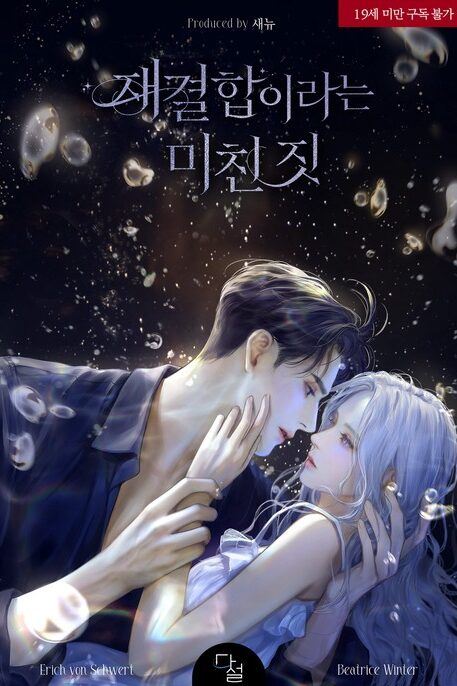
Swapped Souls with a Friend
Novel Info
  • Author:
  • Status:Ongoing

Summary

... Read More

Judy Grant is a noblewoman engaged to Earl Wesley Wilderun, a man she deeply admires and trusts completely. She has known Young Duke Theo Crawford since childhood, though their friendship faded as social expectations pulled them in different directions. Theo is known for his blunt demeanor and love of hunting, while Judy despises the cruelty of blood sports and avoids such events whenever possible. Wesley, eager to please his fiancée, invites her to accompany him to a grand hunting tournament hosted by Theo. Despite her fear and aversion to the hunt, Judy agrees, hoping to strengthen her bond with Wesley and appear as the supportive partner he desires.

At the tournament, the reunion with Theo is tense. He addresses her with cold indifference, seemingly resentful of her engagement to another man. Before the hunt begins, a small bee startles Judy’s horse, causing it to bolt uncontrollably. In her terror, she loses her grip and falls from a cliff into a deep, isolated forest. Alone and severely injured, she encounters a mysterious blue deer struck by an arrow. Motivated by compassion rather than self-preservation, Judy tends to the animal’s wound and provides it with water. The deer bites her arm before bounding away, and shortly after, Theo arrives, having searched frantically for her. He rescues her from the forest, and they return to the surface, though Wesley is nowhere to be found among the searchers.

The following day, Judy wakes to find that she has swapped bodies with her friend Asilly Leroni. While her soul now inhabits Asilly’s physical form, Asilly’s consciousness resides in Judy’s body. The transformation occurs without warning or explanation, leaving Judy disoriented and vulnerable. As Asilly, she is subjected to severe abuse by her own family, including corporal punishment from her stepmother and sisters. Meanwhile, the entity wearing Judy’s body begins to enjoy the luxurious life, the wealth, and the affection of Judy’s former friends. When Judy attempts to reveal the truth to those around her, no one believes her. They dismiss her claims as the ravings of a jealous madwoman, particularly because Asilly has been manipulating their perceptions for years.

Wesley reveals his true nature when he encounters Judy in Asilly’s body. He confesses that he never loved Judy and that their engagement was a transactional arrangement to secure financial gain. He is secretly involved in an affair with Asilly, whom he has known since childhood. The betrayal devastates Judy, but she is forced to flee when Asilly plots to murder her to permanently secure Judy’s identity and status. The entity in Judy’s body hires thugs to kill the real Judy, intending to stage the death as an accident and claim Judy’s life without consequence. Judy barely escapes the assassination attempt, suffering further injuries in the process.

Desperate and hunted, Judy seeks out Theo, the only person who might still listen to her. She uses a childhood secret involving Legato roses to prove her identity, recalling a private moment that only the real Judy would know. Theo, skeptical but intrigued, tests her with another shared memory—a lullaby he composed exclusively for her. Satisfied that she is indeed Judy, Theo offers her protection, but only on the condition that they enter into a contract marriage. This union will provide her with a legitimate status within the Crawford Duchy, shielding her from Asilly’s attempts on her life and preventing her from being dismissed as a lunatic.

Theo reveals that he carries a curse that causes the deaths of any children he might father, a fact that has kept him isolated from romantic commitment. However, he is willing to set aside his fears to protect Judy. The two agree to publicly announce their engagement, forcing Asilly and Wesley to retreat into the shadows. As they prepare for the wedding, Judy and Theo begin to navigate a complex new dynamic, moving from childhood acquaintances to reluctant partners. The story concludes with them standing together against a common enemy, as Judy prepares to reclaim her life while Theo grapples with the unexpected depth of his feelings for her.

Latest Release
DateGroupRelease
2026-10-03dusk blossoms c20
2026-10-03dusk blossoms c19
2026-10-03dusk blossoms c18
2026-10-03dusk blossoms c17
2026-10-03dusk blossoms c16
2026-10-03dusk blossoms c15
2026-10-03dusk blossoms c14
2026-10-03dusk blossoms c13
2026-10-03dusk blossoms c12
2026-10-03dusk blossoms c11
2026-10-03dusk blossoms c10
2026-10-03dusk blossoms c9

Community Reviews

Rating(0 / 5.0, 40votes)
5 stars
0(0%)
4 stars
0(0%)
3 stars
0(0%)
2 stars
0(0%)
1 stars
0(0%)

Popular reviews

... Read More
Okay so let me just start by saying the opening scene hit me like a truck. Judy running after a carriage grabbing Theo's trouser leg screaming for help — what even happened? Who was chasing her? We don't know yet, and honestly that kept me flipping pages. The whole first chapter is basically one long question mark. But here's what really got me: the author doesn't dump exposition. We learn about Judy's engagement to Wesley, her hatred of hunting tournaments, her childhood history with Theo — all organically through conversation and memory. No infodumps. When Wesley mentions the hunting tournament invitation, it's not because the author needed to introduce it, it's because it's actually driving the story forward. That's smart writing. The subplot with Asilly is already simmering. She comes in acting sweet but there's something off about her — dropping that comment about Theo and Judy playing house like husband and wife right in front of Wesley. Was that accidental? Probably not. That line kept playing in my head all day. Who knows more than she's letting on? Also the bee scene — classic misdirection. Judy screams about a bee but we're supposed to think it's about the bee, right? Except it's not. It's about Theo crushing it so casually while she's trembling. That contrast says everything about their power dynamic.
... Read More
I need to talk about Theo because WOW. This guy. He shows up and immediately ruins Judy's perfectly curated moment with Wesley just by existing. His first words to her after a year of silence? 'Why are you dressed like that?' Not 'hello.' Not 'how have you been.' Just an immediate critique of her clothes. And Judy — sweet, desperate Judy — still tries so hard to impress him. She shoots an arrow from horseback just to prove something. But the thing that wrecked me was this moment: Theo asks if she's really going to hunt when she trembles at dead animals. He KNOWS she's terrified. He remembers. He was there five years ago when she screamed at the wolf carcass. And instead of being gentle about it, he weaponizes it. That's not just bluntness — that's personal. And Wesley... honestly? Wesley makes me uncomfortable. He's TOO nice. When Asilly makes that loaded comment about Theo and Judy, Wesley just pats Judy's shoulder like it's nothing. When Theo insults Judy, Wesley tells Asilly not to take it to heart — HE comforts Asilly while Judy stands there smiling. Who is he performing for? Because something feels off. The CP energy between Judy and Theo is electric in the worst way. Every interaction crackles. She hates that he ignores her, he acts like she's invisible, but the second they're in the same room it's like the air changes. Five years of history compressed into glances and sharp words. I'm already shipping them against my better judgment.
... Read More
I started reading this batch at like 11pm and by chapter 54 I was fully regretting my life choices because I couldn't stop turning pages. The pacing in these chapters is really well-calibrated. You've got the quiet domestic moment between Theo and Judy — the bath scene, the awkward touching, the softness — and then IMMEDIATELY it pivots to Asilly walking in like a storm cloud with a smile that doesn't reach her eyes. That whiplash is intentional. The author knows exactly what they're doing. Then Judy collapses from anemia after Asilly leaves, barely recovers, and immediately goes into detective mode about finding Gianna. No breather. No 'okay now I process my feelings.' Just straight into the next move. And the Gianna encounter on the street — crowded, public, desperate — ends mid-sentence with Gianna shoving and yelling, and the chapter just stops there. That cliffhanger though. I literally made a sound out loud. The author is weaponizing Chapter 54's ending against me and I am not ready for chapter 55.
... Read More
So Theo's dialogue is my absolute favorite thing ever and I need everyone to understand this. When he finds Judy and pulls her into that hug, he doesn't say anything grand or poetic. He just says: 'I'm glad you're alive. I'm really glad.' That's it. But it hits different because you can HEAR the fear in that voice—'a low voice, faintly trembling.' He was out there panicking, searching, and when he finally found her, all he could manage was the truth. No drama, no flourish. Just raw relief. And then later, when Judy says she saw a blue deer and it bit her, Theo's immediate reaction is 'Wait. I'll catch it for you right away.' He's genuinely offended on her behalf. A blue deer BIT her and he wants to go find it. The fact that she shuts him down with 'Please, you—stop hunting, too' and his response is just 'Forget it'—he doesn't argue, he doesn't pressure her. He just drops it. But the REAL gold is Theo tripping Wesley. His excuse? 'I forgot my legs are long and couldn't judge the distance properly. My apologies.' MY APOLOGIES. He is LOOKING at Wesley the whole time with 'icy eyes.' There is zero apology in that tone. The narration basically tells us he did it on purpose and then laughs in formal courtesy. And Judy's dialogue throughout is so naturally panicked—'B-b-b-bee! Earl...! Theo...!' switching from calling for her fiancé to calling for Theo without even realizing it. That's such a subtle but devastating detail about where her instincts actually live. She didn't even know she was doing it.
... Read More
Can we just stop and appreciate how cinematic some of these scenes are? Because I am OBSESSED with the imagery in this text. The opening of Judy's consciousness back to life—'the chilly wind and the rustling leaves grinding against it sounded bleak, and above her head, crows flew around, making unpleasant noises.' That word 'grinding.' It's not just rustling leaves, it's GRINDING. You can hear that sound. It's harsh, alive, and it sets this whole tone of isolation immediately. She's alone. No people anywhere. Just her and those crows circling like they're waiting. And then—the blue deer. 'A faint, animal-like whine drifting in from somewhere.' Before we even SEE the deer, we HEAR it. That's masterful. The author builds this whole mystical creature through sound first, then reveals it at a large lake, panting, struck by an arrow, with mournful eyes. 'As if it had foreseen its own death.' I also love how the forest itself becomes this character. It's got 'nameless grasses thickly grown,' cold air that makes pain feel more acute, the dizzying height of the cliff face above her. The world feels tangible. When she and the deer finally bond—'the deer rested its face on Judy's thigh'—this entire hostile environment suddenly becomes somewhere warm and shared. They're relying on each other in 'this scary forest.' The ending image of the mansion room being darkened 'like a deep cave' by Gianna drawing the curtains? Chilling. Perfect contrast to that brief warmth with the deer.
... Read More
I have to talk about the rain. Not just because it's a classic romance trope but because the AUTHOR used it SO deliberately and beautifully across multiple scenes. Let me break this down because every rain moment serves a different narrative purpose and I need to appreciate the craft. The first time we see the rain is when Theo leaves the Grant Marquisate after Judy collapses. "Rain was pouring down with a frightening force as if the sky had burst open." This isn't just weather—it's atmospheric mirroring. The sky is literally crying because something terrible has happened. Judy, the person Theo cares about most (even if he'd never admit it), is lying unconscious in a stranger's arms while the world outside is being washed clean. The contrast between the chaos inside the mansion and the storm outside is cinematic. Then Theo arrives home and sees ASILLY standing in front of his mansion, drenched, stamping her feet. She's been waiting in the rain. Was she worried? Or was this another manipulative performance? The text says: "It seemed his warning had been quite amusing to her." Which means she KNEW he'd warned her and came anyway, deliberately putting herself in the rain to make a scene. Classic Asilly. But then—and here's where it gets interesting—Judy appears. Not Asilly. The REAL Judy, who fled from the alley and couldn't go home because she'd be beaten, couldn't go to the Marquis because she'd be framed. So she goes to Theo. The person who seemed safest precisely because he's the one person who wouldn't physically hurt her. And there she is, kneeling in the rain, grabbing his trouser leg, begging for salvation. The image of this proud noblewoman reduced to clinging to someone's clothing while drenched and shivering—this is one of the most visually striking scenes in the entire book. Inside Theo's mansion, the contrast is stark. Warmth, dry towels, tea. A servant brings a towel and Theo shoos them out immediately. Why? Because he needs to interrogate her privately. But also—I think—because he wants this moment to be JUST between them. No audience. No witnesses to his vulnerability. The dress description is worth noting too. "The dress is very worn." Theo notices details about her appearance even in crisis. He's observing her, cataloging her condition, and the fact that he notices her clothes are worn shows he pays attention to her in ways he'd never admit aloud. Then there's the public square scene the next day. Theo walking beside Judy through the crowd, guiding her to the inside of the street because "you might get hit by a carriage." In the past, he would've just shoved her. Now he explains, he reaches his hand out, he asks instead of commands. The evolution is in the DETAILS of how he moves through the world with her. And the ending image—Theo's family rushing toward the Leroni Barony. We get a sense of the geography of this world: estates, baronies, dukedoms, carriages traveling through rain-soaked roads. The Crawford Dukedom is a real political entity, the Leroni Barony has its own power structure, and Earl Wesley Wilderun is connected to the nobility through engagement. The political landscape is WIDE and complex, and every location matters. The worldbuilding here isn't about grand descriptions of castles or markets—it's about how the physical environment (rain, streets, rooms, dresses) shapes the emotional beats of the story. The storm mirrors the internal chaos. The warm room represents safety. The public walk represents performance. Every setting is serving the narrative.
See all reviews

Custom lists

See all custom Lists