Swapped on My Wedding Day? I Brought My Dimensional Space and Followed the Army Smiling - Reviews

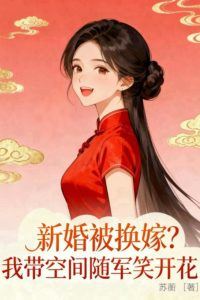
Swapped on My Wedding Day? I Brought My Dimensional Space and Followed the Army Smiling
+Add to Custom List
Sort
Add review
... Read More
This is the scene that made me laugh out loud. Shen Niao drops this casual "oysters are a man's gas station and a woman's beauty salon" and then has to awkwardly explain what a gas station is because this is apparently a different era where those don't exist. The dialogue writing here is so natural and character-revealing. Zhang Cuihua's reaction—"Really? I had no idea they were that amazing! Then Jianguo and I are definitely eating oysters more often"—is perfectly pitched. She's the enthusiastic, straightforward military wife who immediately latches onto practical benefits. Li Jianguo is just there for comic relief, nodding along and getting teased by his wife. But the real gem is Wu Qingchuan's silence. He doesn't say a single line during the oyster explanation. He just eats the potato and watches. The author uses his silence as a dialogue substitute—his lack of response IS his response. And Shen Niao's internal monologue at the end, "Well... If they end up having a few more children in the future... don't blame me," while she silently picks up a char siu rib—this is peak character voice. She's plotting and eating at the same time. The narrative voice throughout these chapters has this wonderful grounded quality where the humor comes from situation rather than punchlines. The cooking instructions read like a recipe but somehow also like a love letter to food. Every character has a distinct voice and the author never lets them blur together.
... Read More
I need to talk about Li Big Mouth because this woman is the perfect antagonist for this moment. She's not some grand villain—she's just a petty, jealous neighbor who can't stand someone looking better than her. But that makes her dangerous in a very real way. In a military family compound, reputation is everything. Being called "indecent" isn't just an insult—it's a threat to Shen Niao's standing in this new community. The stakes feel genuinely high even though it's just a squabble at a market. And Shen Niao understands that. She doesn't just want to win the argument—she wants to go to Director Xu and make it official, to clear her name publicly. That's smart. The confrontation with Li Big Mouth works because the author makes you feel the tension—Shen Niao's anger is justified, Li Big Mouth's jealousy is palpable, and Director Xu's intervention feels like the right balance of authority and fairness. But the real conflict underneath is about who gets to define what's acceptable in this community. Li Big Mouth wants to enforce strict, conservative standards on women's appearance. Shen Niao refuses to accept that definition. And Xu Guifang? She represents the institutional power that ultimately decides the outcome. The resolution satisfies because it's not just about winning an argument—it's about establishing that Shen Niao belongs here and won't be bullied into shrinking herself.
... Read More
I need to talk about Wu Qingchuan because this man is EVERYTHING and the author is playing 4D chess with his characterization. First off, the scene where he's standing on a ship deck in Yacheng, tanned and stern, completely unreadable—then he sneezes and his commander Li Jianguo immediately assumes someone is thinking about him. The contrast between this impenetrable military man and the mundane act of sneezing is comedy gold. But here's what got me: he genuinely doesn't remember what his childhood fiancée looks like. Eight years apart, and all he recalls is that she was "quiet and reserved." When Li Jianguo teases him about wanting someone who "doesn't cause trouble," Wu Qingchuan's deadpan response about appearances not mattering feels almost... vulnerable? Like he's genuinely not interested in romance at all, which makes the whole arranged marriage setup feel tragic rather than romantic. Meanwhile, Shen Niao is casually stealing his future wife's letter and planning to dump an apology on him. The triangular tension between Wu Qingchuan (who knows nothing), Shen Su (who betrayed him), and Shen Niao (who's manipulating everything) is so deliciously messy. I'm already predicting Wu Qingchuan's eventual realization will hit like a freight train.
... Read More
"Just as she shut her eyes, convinced she was about to hit the ground— A strong arm wrapped firmly around her waist. The next instant, she fell into a broad, sturdy chest carrying a cool, clean scent." I have read this sentence five times. FIVE TIMES. And each time it hits different. Let's be real about what just happened. Shen Niao just performed CPR for who-knows-how-many cycles on a stranger's child. She's exhausted, her legs give out, and she's about to faceplant on hospital steps. And Wu Qingchuan — who has been cold, distant, barely speaking to her all day — catches her. Without hesitation. Without being asked. And she murmurs a quiet thanks. Not dramatic. Not emotional. Just... gratitude. And he just says "Mhm" and walks into the hospital like nothing happened. But here's the thing that got me: she STUCK OUT HER TONGUE at him after. She thought he was as hard as an iron wall. She's annoyed at him. And he's walking around with his heart basically exposed and he doesn't even realize it. The shopping scene is pure comedy gold though. She's calculating how much she can buy with his money. She carries two washbasins and makes him carry everything else. She's treating him like free labor and she's NOT apologizing. And yet — he follows her. He pays. He translates in the local dialect even though he's clearly still annoyed. He's a terrible boyfriend material but an excellent husband for someone who needs protection. The moment that actually made me emotional was when the kid cried "Mama..." and Shen Niao nearly cried too. She saved this child. She didn't know the kid, didn't owe anything to the family, and she just... did it. And the mother's gratitude — "The only reason she was alive now was because of the beautiful young woman before her" — that's the kind of moment that reminds you why Shen Niao is worth protecting. Wu Qingchuan clearly knows this already.
... Read More
Let's talk about what's actually at stake here, because on the surface this looks like a romance novel and underneath it's a survival story. Shen Niao is a transmigrator in a political environment where the purge is "drawing closer and closer." She doesn't have status. She doesn't have protection. She has a body that can be questioned, a past that can be investigated, and a world that doesn't belong to her. The marriage certificate isn't romantic — it's a shield. A piece of paper that says "this woman is accounted for, this woman has a sponsor, this woman is not a threat." When she asks "Is there any way to speed it up?" and the words escape before she thinks about them — that's not excitement. That's panic. That's someone who has calculated exactly how much time she has left and found it wanting. And Wu Qingchuan's reaction to that panic is fascinating. He asks "You really want to marry me that soon?" and the text says his eyes go "dark and turbulent like the black waves of the sea beneath a typhoon." Is he angry? Is he hurt? Is he realizing that she needs him but doesn't want him? Or is he afraid that she'll realize she doesn't need him at all once the political storm passes? The stakes are layered: political survival on one level, emotional vulnerability on another. Shen Niao is playing chess while Wu Qingchuan is still figuring out if he's even at the same table. Then there's Zhang Chengzhi — a man who had an affair while married, blamed his partner when it was exposed, and is now fantasizing about Shen Niao. He represents a different kind of threat: not political, but personal. A man who knows how to use authority to manipulate women. And Wu Qingchuan — who barely speaks, who seems cold and indifferent — sees it immediately and reacts with pure hostility. The man who can't express his feelings can still protect her. The child's fractured rib from the CPR — that's another layer of stakes. Good intentions can cause harm. Saving a life isn't clean. Shen Niao apologizes to the mother and the mother says "This isn't your fault. You were saving my child." But Shen Niao knows the difference between accident and negligence, and she carries that weight. Everyone in this story is carrying something. The question is whether they'll drop it or use it as armor.
... Read More
I keep coming back to this image of Zhang Cuihua's vegetable patch and it's become this perfect symbol for the whole story. Saline-alkali soil. No matter how much care you put into it, it won't grow decent vegetables. Every typhoon season it's ruined and returns to its original state. This is the world Shen Niao has entered—hostile, unforgiving, resistant to effort. But then there's her dimensional space. She can exchange items from other worlds. The vegetables she can't grow here, she can trade for. It's this beautiful metaphor for adaptation versus resistance. The military compound itself is another layer—built on high ground overlooking the endless blue sea, gray-white walls and green wooden doors, orderly rows. It's a place of structure and discipline, but also of scarcity. The supply ship brings goods, the tofu-making group creates community cooperation, and Shen Niao's cooking becomes this unexpected gift that transforms the social landscape. The oyster itself is symbolic too—it's something the locals take for granted (Zhang Cuihua always just steamed them), but Shen Niao reveals its hidden potential through skill and knowledge. What was worthless becomes extraordinary. That's basically her entire arc in miniature. She's entering a world that seems barren and figuring out how to make things grow where nothing should survive.
... Read More
I need to address the emotional core of this section because it's surprisingly tender beneath all the scheming and supernatural comedy. The original owner's lingering will—desperate, furious, wanting her uncle's family out of her home—is what drives Shen Niao's actions more than any personal gain. There's this moment where Shen Niao feels guilty enough to burn joss paper and silently apologizes: "Please don't blame me. It's not that I don't want to drive them out... I just haven't found the right method yet." That brief vulnerability humanizes her calculated exterior. And the memory sequence of the parents dancing to gramophone music? That's not worldbuilding—that's grief. The original owner's lost happiness made concrete through sensory detail. Then there's Qiao Fengying's internal monologue about her satisfaction at sleeping in her sister-in-law's bed, which is horrifying but also tragically human—she's a poor woman who seized opportunity and revels in it without a hint of remorse. The emotional landscape here is messy and real. Shen Niao herself is a fascinating study: she's coldly pragmatic about stealing letters and summoning ghosts, yet she takes time to properly mourn a stranger whose body she inhabits. That contradiction is where the story's emotional depth lives. The Wu Qingchuan subplot adds another layer—he's completely unaware that his childhood engagement is being manipulated, and that dramatic irony creates a quiet sadness underneath the scheming.
... Read More
I need everyone to slow down and really process what Wu Qingchuan did in that hospital scene. Let me set the table first: Shen Niao is chatting happily with a doctor, discussing medical procedures, smiling. Proper conversation. Completely innocent. And Wu Qingchuan — who has been basically a statue the entire chapter — suddenly radiates "icy hostility" that makes a grown man's smile freeze into a grotesque expression. Then he blocks her view when she tries to look back. Says "There was nothing." Bro. There was literally a creepy doctor who was fantasizing about you. And Wu Qingchuan saw it ALL. Here's what I think is happening: Wu Qingchuan is confused by his own reaction. The text literally says he "wasn't entirely sure what had come over him." He KNOWS the conversation was proper. He KNOWS Shen Niao didn't notice the doctor's creepy staring. And yet — his body reacted before his brain could stop it. That's not rational. That's something else. And then the shopping trip! He's been wrapped in "an invisible layer of ice" ever since she said she wanted the marriage approved sooner. But why is HE mad? She's the one who needed the marriage for protection. She's the one who proposed the whole arrangement. He's the one who agreed. Yet somehow SHE's the one who hurt his feelings by wanting it faster? The text says: "Maybe he was even hoping it would be rejected altogether, freeing him from her." But then his eyes go "dark and turbulent like the black waves of the sea beneath a typhoon" when she says she wants to marry him that soon. That's not the reaction of a man who wants to be freed. That's the reaction of a man who wants something he's not ready to admit he wants. Meanwhile Shen Niao is over here thinking he's just a crafty man who doesn't want the marriage, completely missing that he's having an existential crisis over her urgency. The dramatic irony is killing me.
... Read More
There's a layer to this chapter that I think a lot of readers might miss if they're just enjoying the drama. Let's talk about the children selling seafood. They're barefoot, in ragged clothes, dark from the sun. Shen Niao's immediate reaction is compassion—she sees them and thinks they're pitiful. But then Zhang Cuihua reveals the truth: it's a deliberate scam. The children are sent out to play on people's sympathy, and the military wives who keep buying from them are actually being taken advantage of. This is such a rich thematic moment. It's about how kindness can be exploited, and how the world isn't always as it appears. The oysters themselves are symbolic too—they're described as mostly shells with tiny meat, cheap and abundant, yet Shen Niao sees value in them that others don't. She knows how to prepare them properly. There's a metaphor there about seeing potential where others see nothing. And the coral trout, worth a fortune in her previous life but sold for peanuts here—again, the theme of hidden value, of knowing something that others don't. The story keeps asking: what do you really see when you look at something or someone? The children's bare feet are a recurring image that lingers.
... Read More
Let's talk about Wu Qingchuan's dialogue because this man says absolutely nothing and yet communicates everything. His entire contribution to the scene where he brings Shen Niao food: 'Come in and close the door. There are mosquitoes in the evening.' That's it. That's his line. He's standing there with lunch boxes, clearly went to the trouble of bringing her food, and his most expressive sentence is about mosquito prevention. And yet—the narration tells us he placed the chopsticks 'neatly and perfectly straight, just like the man himself.' The man is a walking metaphor for his own personality. Shen Niao's voice is so much more expressive. 'I just woke up,' she says with a smile, 'Sorry for making you wait.' Casual, warm, unbothered. She hooks a stool toward herself with her foot. She wipes the chopsticks clean without being asked. She's comfortable in her own skin in a way that seems to completely confuse Wu Qingchuan. Zhang Cuihua's dialogue is pure warmth. 'How pretty! Such a graceful figure. A young, beautiful girl should dress herself up. Like a blooming flower.' This woman is just... so happy to be alive and talking to a young person. Her dialogue feels genuine, not forced. She's not performing kindness, she's just genuinely pleased. Shen Su's dialogue is where it gets interesting. Her fake tears and 'Chengzu... don't worry. No matter what happens, I'll stay by your side'—you can practically see the calculation behind every word. And then Wu Chengzu's response: 'Su'er... thank you.' The nickname! He calls her Su'er! This man who can't muster more than a sentence about mosquitoes for his actual wife is calling his fake-devoted wife by a tender nickname. The dramatic irony is SO thick I could spread it on toast. The narrative voice itself is also worth praising. It's close third-person, dipping into characters' internal thoughts without ever feeling intrusive. When we get Wu Qingchuan's perspective about Shen Niao's feet, it's handled with this deadpan humor that makes me snort-laugh. The author has a great sense of when to be serious and when to let the situation speak for itself.
... Read More
The pacing in these chapters is absolutely ruthless and I respect it so much. Let me walk through the rhythm: We open at FULL THROTTLE. Drowning child. No time to waste. CPR cycles counted out loud. Sweat. Panic. Then — relief. The kid lives. You think you can breathe now, right? Wrong. Because immediately we're in a jeep speeding to the hospital, then another crisis — Shen Niao collapsing from exhaustion, then the doctor reveal, then the hostility from Wu Qingchuan, then the wedding discussion, then the shopping trip. There is NO downtime. The author doesn't let you settle. Every scene ends with a new complication or emotional beat that propels you forward. But here's what's clever: the tension doesn't just come from plot events. It comes from the SHIFTS in tone. One moment you're watching a woman perform life-saving CPR on a beach, the next you're watching her haggle over enamel washbasins while her future husband carries everything. The juxtaposition is almost comedic, but it's also deeply human. Shen Niao just saved a life and now she's thinking about wedding supplies. That's not tonal whiplash — that's realism. The chapter titles themselves are doing heavy lifting. "Do You Really Want to Marry Me That Much?" — that's a question that reframes everything. Then "How About You Head Back First?" — and we never actually see them head back. We just... move on. The author trusts you to fill in the gaps. The only moment I wanted to slow down was the hospital scene with Zhang Chengzhi. It's important for plot, but it briefly shifts from Shen Niao's perspective to the doctor's internal monologue, which felt like a slight detour. That said, it served its purpose — establishing him as a threat before Shen Niao even knew his name. The wedding application timeline — two to four weeks — is such a brilliant pacing device. It's a ticking clock that neither character fully acknowledges but both feel. Every page after that carries the weight of that deadline.
... Read More
Okay so I need to talk about the drowning rescue because WOW. The author just drops us right into the chaos — no preamble, no slow build, just a kid sobbing and a girl underwater and Shen Niao already taking charge. I love when authors do this. It's like being thrown into the pool without being told to learn to swim first. The CPR sequence is where it really gets good though. "Twenty-eight... Twenty-nine... Thirty." She's counting out loud, sweat stinging her eyes, just mechanically going through the motions. And then the kid coughs up water and cries and I literally exhaled for the first time in five pages. The four-minute detail was such a smart touch — it makes you realize how close she was to losing her. Brain damage threshold is ten minutes, but six already? That's terrifying. Then the Nourishing Origin Pill — wait, so she actually has cultivation world medicine in her pocket now? That's a game-changer for the plot. The kid wakes up almost immediately after. I'm curious how this changes the trajectory. Does Shen Niao start relying on these pills more? Does it become a resource others notice? And then the Zhang Chengzhi reveal — oh, the author is playing 4D chess here. We meet this charming doctor who wants to learn CPR, and just when you think he's a minor ally, BAM. He's Shen Su's future lover. The affair, the blame-shifting, the creepy fantasies about Shen Niao. I love how Shen Niao just... withdraws her hand. No drama, no confrontation. She knows exactly who this man is and she's done with him already. Meanwhile Wu Qingchuan is radiating hostility from three feet away and I'm screaming at the page. The wedding shopping subplot feels almost casual compared to the life-or-death opening, but it's setting up the political tension underneath. The marriage certificate isn't romance — it's armor. And that line about facing the executioner's blade? Chilling.

Leave a comment

You must be logged in to leave comments. or
