Supporting Role’s Aura - Reviews

Supporting Role’s Aura
+Add to Custom List
Sort
Add review
... Read More
Okay so this chapter had me literally stop mid-scroll. Ye Chen thinking about tampering with those drums — and then Ye You just appears behind him like a ghost and calls him out? THAT is how you build tension. Not with some cheap cliffhanger, but with the quiet moment where the reader realizes the protagonist already knows everything and is just watching the antagonist dig their own grave. The structure here is really smart: we get the setup (Ye Chen alone, contemplating sabotage), the escalation (his internal monologue gets darker and darker), and then the deflation — Ye You isn't scared, isn't angry, just casually listing all the reasons it won't work. It's like watching someone try to pick a lock while the owner is standing there holding the key. And then Ye Chen finally explodes with 'Why do you have to compete with me everywhere?!' which is both hilarious and heartbreaking because honestly? He's not wrong about the competition, he's just completely misdiagnosed the motivation. Ye You isn't competing with him — he's just... existing at his level, which is apparently impossible for Ye Chen to process.
... Read More
Okay so here is the thing — this entire chapter is basically the calm before the storm and I am HERE for it. Let me break down what just happened because wow. Liu Hui has been playing chess while Ye You was busy being polite, and it shows. She brought in a professional choreographer from the National Dance Academy, got head leader approval, and turned the dance team into this massive group performance machine with Ye Chen as the lead. Meanwhile Ye You — who was basically treated like an outsider by the team after his wedding — decides he is going to assemble a seven-person ragtag squad and take them on. "In addition to myself, there are seven people in total, which is totally enough." Seven people against an army. The odds are absolutely ridiculous and that is exactly why I am invested. This is classic underdog storytelling and the author knows it. But here is what really got me — the bathroom scene at the end where Ye Chen is basking in everyone's admiration about his "explosive potential." He won't tell them that Liu Hui let him practice secretly before his wedding vacation. That little detail changes everything. He didn't earn any of this fairly. And Ye You, who is literally excluded from the group dance, is the one actually preparing to step up and challenge the whole system. The plot is setting up this gorgeous confrontation where skill and integrity face off against privilege and cheating. I need to know what happens next.
... Read More
I need to talk about Zhao Yu for a second because THIS is the kind of character detail that makes me put the book down and just stare at the wall. A guy who barely says a word but communicates his entire emotional state through a cello piece called "Dark Surge"—about a musician who was misunderstood and wronged. That's not subtlety, that's devastating storytelling. "Ye You's mood was definitely the same as the feeling expressed in this piece." Ji Wen didn't even need to say it out loud. The translator noted this is about frustration and anger at being wronged, and knowing what we know about Ye You's situation, it just landswithso much weight. Then there's Ji Wen. I love how he's the type who questions everything. "You still know regrets huh? I thought you wouldn't know what regrets is without breaking your head against the south wall." Ouch. But also—he's testing Ye You. He's checking if his dorm mate has actually changed or if he's still the same person who took the fall without fighting back. And Ye Chen... the envious glances, the pride, the favoritism from Liu Hui—it all sets up this rivalry that's simmering under the surface. Ye Chen gets handed everything on a silver platter because of his connection to Liu Hui, while Ye You is out here trying to prove himself from nothing. The dorm arrangement itself (musicians together, dancers together) feels like the author is deliberately grouping people who will collide later.
... Read More
Let's talk about the bite. Not the metaphorical kind, but the actual one. Ye You, in a fit of pique, grabs Du Yao's shoulder and bites down hard. Is it anger? Yes. Is it also a cry for help? Absolutely. The raw vulnerability in that moment is staggering. Du Yao doesn't fight back; he holds Ye You, prevents him from falling, and sighs. He's used to this. Or maybe he's resigned to it. The line 'I didn't expect that you just happen to came in, and I didn't want you to know that I had to use the ointment for such a small wound, so I kept it from you' is almost tender in its simplicity. He didn't want Ye You to worry. But what does that say about Du Yao? That he carries things alone? And Ye You, with his 'little tiger' anger, is so beautiful when he's upset—rosy complexion, white and red. Du Yao finds it ticklish, unbearable. There's a deep fondness there, buried under layers of suspicion and games. And then the car ride, where Ye You suddenly realizes he's been tricked again. 'You set a trap for me again, right?' It's not just about the medicine; it's about feeling manipulated. But even in his frustration, Ye You is concerned. He drives to see Elder Xu, he wants guarantees for Du Yao's health. That's love, messy and fierce and frustrating. When Du Yao finally says, 'Actually, if you want to make sure if the injury on my leg recover or not, I have a better way,' it feels like a turn. A promise of something deeper, something more honest. I can't wait to see what that better way is.
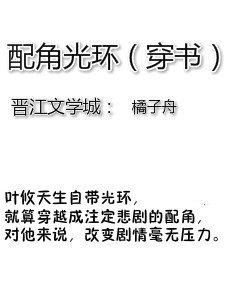
... Read More
Let me be real with you—this dowry scene isn't just flashy spectacle. It's a power move, and everyone in that yard knows it. The stakes here are enormous but invisible. Ye Chen needs to survive in the Du family, and part of his survival depends on being associated with someone whose family can literally fill a mansion with wealth. If the Du elders are impressed by Ye You's dowry, does that reflect on him? Yes. Is that his quiet anxiety in the corner? Also yes. Meanwhile, the military guests—people who presumably have their own status and power—are being humbled by pure material abundance. One guy says “it was not this extravagant when marrying a princess before, right?” That's not just shock; that's someone recalibrating their entire understanding of the social hierarchy in real time. The tension between what's displayed and what's hidden is what really gets me. We don't know what's in most of the boxes. The guests are moving around frantically, trying to catch glimpses, and the author refuses to give us the full reveal. That withholding creates this delicious suspense—what ELSE is in there? How much further does this go? Every opened crate raises the stakes for the next one. And underneath all of it: Ye You's position is both secured and precarious. This dowry makes her invaluable to the Du family, but it also makes her a commodity on display. The men circling the cars, the guests speculating about prices, the soldiers treating luxury like religion—she's at the center of an economy of desire she may not have chosen.
... Read More
There's something about the way this story builds its world that I can't quite shake. It's not about massive descriptions of castles or magical systems — it's about the feeling of being somewhere, knowing the rules, understanding the hierarchy. The Cultural Regiment itself feels like a living organism. These are literary soldiers — performers, musicians, actors — all pressed together under military discipline, all desperate to prove themselves before a big performance. The assessment scenes with the Deputy Leader sitting at the head, the register book, the formal procedures — it gives you this sense of a rigid institution where one mistake could end everything. But my favorite moment of atmosphere came at the end, during the actual performance day. Even the veterans are nervous. The first row is full of senior officers and generals. The recruits who didn't make it are doing logistics work, watching from below, envious. Backstage is busy but not chaotic — everyone knows their place, everyone has their role. And then the crisis hits and that carefully maintained order shatters in two sentences: "Loss of voice?! Why didn't you say so earlier that his throat is inflamed?" In that single outburst, the Deputy Leader's controlled authority cracks, and suddenly this whole world of practiced composure feels fragile. The tension between military precision and artistic vulnerability is what makes this setting so compelling. It's not just a backdrop — it's a pressure cooker that shapes everything the characters do.
... Read More
I need to talk about this scene because my heart is literally not okay. Du Yao shows up under a streetlamp and the second Ye You walks into his arms—it's like the author just paused the entire military drama to serve us pure yandere energy. The way he picks him up, presses him onto the sofa, the whispered 'do you miss me?'—I've read this author's work before and they KNOW how to make romance feel dangerous and tender at the same time. But what really gets me is what comes AFTER. Ye You biting a handkerchief so the neighbors don't hear, Du Yao carrying him to the bathroom like he's made of glass, helping him wash while Ye You is half-conscious. That level of devotion isn't just spicy—the caretaking afterward shows genuine tenderness that makes the whole relationship feel real instead of just hot. 'En, miss.' Ye You's simple answer said everything. Sometimes the shortest lines carry the most weight. And then the next morning, Du Yao is out leading combat training like nothing happened, and Ye You is still there pouring water for the soldiers. They're a team in every sense. I can't unsee this couple.
... Read More
This chapter hits different because it's not just a scene—it's a narrative pivot. For the first time, we see Ye You explicitly reject the original plot rather than passively absorbing it. The transmigration trope is often played for wish-fulfillment, but here it becomes a mechanism of defiance. The author makes a sharp choice: instead of having Ye You try to win over Du Hao or prove himself in the second house, he walks away entirely. That's a structural departure that reorients the entire story's trajectory. What strikes me is how the chapter handles exposition without drowning in it. Ye You's confession to his parents—about the meat being stolen, the forced confession, the two-day fast punishment—is delivered in a single breath, almost casually, as though he's finally done carrying it alone. That casual delivery is a deliberate narrative compression. The author doesn't slow down to dramatize every beat; instead, the facts land with cumulative weight. The reader hears “they ate the meat, I got nothing” and immediately connects it to everything else: the false accusation, the grandfather's blindness, Ye Chen's performance of guiltlessness. The subplot about Du Hao is handled efficiently. The original text establishes a classic “love at first sight” trap, but Ye You's internal narration—“I will never fall in love only to lose my dignity”—shatters that setup before it can take root. This isn't a rejection born of trauma alone; it's a calculated choice. The chapter implies that the transmigration itself has given Ye You a lens the original character lacked. Where the original Ye You saw romance, the transmigrated Ye You sees a plot designed to erase him. The pacing here is worth noting. The author opens with a quiet domestic scene—breakfast, servants, food—and uses the mundane to contrast the emotional violence of the backstory. When the grandmother asks about the deer meat, we're lulled into thinking this is just family banter, then suddenly it becomes evidence of systemic theft and betrayal. The shift is seamless but devastating. By the time Ye You says “nowhere is better than home,” the chapter has already dismantled the second house's authority more effectively than any dramatic confrontation could.
... Read More
The dialogue between these two is genuinely some of the best I've read. It's natural, it's funny, and it reveals everything about their dynamic without anyone saying what they actually mean. Ye You's line 'This bed is so big, one more person here won't squeeze me' followed immediately by his flustered clarification that he means they should sleep on opposite sides is character assassination in the best possible way. You can hear him panicking internally while trying to sound casual. And Du Yao's response—just looking at him without speaking, letting the silence do the work—is perfect. He doesn't need to say anything because the look says it all. Then later, the exchange about whether Du Yao wants to eat the fruit is devastatingly sweet: Ye You offers him food, Du Yao just leans in and eats it from his mouth instead. Classic move, but executed with such confidence. And Ye You's weak protest of 'I don't want... with you... here' while his body is clearly betraying him? Chef's kiss. The writer understands that romantic comedy gold lives in these tiny moments of verbal sparring where neither person is actually saying what they mean.
... Read More
The atmospheric shift between the first section and the second is something I need to talk about because it is genuinely masterful storytelling through environment. Chapter 287-288 is trapped inside a practice room. Narrow slit on the door. A wall clock that has been tampered with. Ye Chen sliding down the wall. Dense fog in his heart. The whole sequence is suffocating — literally and psychologically. You feel trapped in that room with him. The lighting, the ticking clock, the narrow doorway through which Ye You appeared behind him — every sensory detail works together to create pure unease. "He saw a narrow slit was left on the big practice room's door, then he walked in, and then Ye You appeared behind him." This line alone is enough to make anyone's skin crawl. It is cinematic without being flashy. Just a simple visual that hits like a truck. Then the narrative opens up completely. We get the welcoming ceremony. The performance hall full of soldiers and marshals. Two nations on display. The Military Band versus the Cultural Regiment. Marshal Bunaber's undisguised pride. The interpreters sitting behind the two leaders. The whole setup feels enormous and formal — a stark contrast to the suffocating intimacy of the earlier scene. What makes this worldbuilding work so well is that the political tension is never far from the surface. The Aurico army has arrived. Their Marshal is here. There is a competition happening. This is not just some cultural exchange event — it is a proxy war fought with music instead of weapons. And Ye You is holding a Pipa on that stage, about to represent her entire nation. The visual of Ye You standing backstage holding the Pipa while the curtain is about to unfold — that image stuck with me for hours.
... Read More
So this arc is called "Even Getting Married Also Have to Compared" and honestly the title basically SUMS UP everything. The plot here is deceptively simple on the surface—two weddings happening within a month—but the moment you peel back the layers, it's a full-on family strategy game. Sun Ting overhears Qin Yuwei trying to rush Du Yao's wedding, and instead of letting that happen, she decides the Sun family needs to "win" by pushing Du Hao's wedding forward first. That's the inciting incident right there, and from there the whole thing unravels into this beautifully layered plot about who gets what, when, and how it's perceived. What I love is that the author never lets us forget that both families are playing the same game, just on opposite sides. The Ye family is also involved in the comparison trap. Ye Jiande and his wife are adding items to Ye You's dowry list, and he's HIDEING the list to protect it. Meanwhile, Elder Sun is so desperate for a grandson that he's considering having Du Hao change his surname to Sun. These aren't background details—they're active plot threads that could blow up later. And that line about the two weddings being "competing in secret"? That's the thesis of the entire section. The author drops it like a bomb and then spends the rest of the arc showing us exactly how every decision, every gift, every guest is calculated. Brilliant plotting.
... Read More
Okay so can we talk about how satisfying it is to watch Du Hao get absolutely put in his place? This whole arc is basically a beautiful cascade of consequences. He spent the entire story pulling strings, spreading rumors, thinking his family name made him untouchable. And then Ye You just... drops the truth in front of everyone and suddenly Du Hao's entire world collapses. The Head and Deputy Leaders turning on him is the best part. They were annoyed at Ye You at first for making things public, but the second they heard what Du Hao actually did, their loyalty instantly shifted. That's how you write institutional consequences - it feels real. But here's what really gets me: Du Hao still doesn't get it. He thinks Ye You is evil for exposing him, not once considering that maybe his own actions were the problem. And now he's stuck being challenged by every soldier in the regiment on sight. Wang Qiang literally beating him up and then saying 'you can only bully someone smaller than you' is peak poetic justice. The plot is moving fast now though - Ye Chen's confrontation at the end is a whole new complication. Elder Ye finding out, the factions in the army shifting... it all feels like the calm before a much bigger storm. What's going to happen when Ye Chen and Du Hao's secret relationship becomes public knowledge for everyone?

Leave a comment

You must be logged in to leave comments. or
