Substitute Bride Turns into First Love? The CEO Really Knows How to Play - Reviews

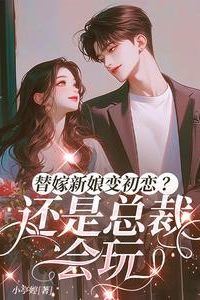
Substitute Bride Turns into First Love? The CEO Really Knows How to Play
+Add to Custom List
Sort
Add review
... Read More
"The bed was large, yet Xu Zhiyuan was pressed against the edge, leaving enough space between them to park an airplane." I literally laughed out loud at this. The author really understood what they were doing with this scene. Let me paint it for you: it's dark, moonlight sneaking through the curtains, Xu Zhiyuan has just gone through this entire routine of pretending to be normal while internally screaming, and then she turns over and BAM—He Jiayu is right there watching her. The tension is palpable but also kind of funny because she's clearly terrified and he's just... amused. But what really made this scene work for me was the sensory detail. Water droplets sliding down his neck. The warm glow of the bedside lamp making him look softer. Her damp hair. The sound of her phone locking. Every little detail builds this intimate, slightly awkward atmosphere that feels so real. You can feel the silence between them—not uncomfortable exactly, but charged with everything neither of them is saying. And the home theater/audio-visual room setup? That's such a nice worldbuilding touch. It tells us about He Jiayu's wealth without him having to brag about it. The equipment arriving by afternoon, top-notch quality—this is someone who has resources and uses them casually. The villa setting, the staff (Nanny Zhang, Assistant Yuan Yuan), the Xinda Group's entertainment company—all of this builds a world that feels lived-in and expensive without being overwrought. The scene where Xu Zhiyuan is so focused on her music software that she doesn't notice He Jiayu standing at the doorway until her stomach growls? That's the kind of detail that makes the world feel alive. People are going about their lives, absorbed in their own things, and the romance subplot develops in the margins rather than in some dramatic confrontation.
... Read More
There's a moment in Chapter 10 that I've been replaying in my head like it's the most important scene in the book. He Jiayu is watching Xu Zhiyuan look at her phone — probably checking the song charts — and the text says he "could almost see her expression through it — she was probably beaming with pride and a hint of smugness right now." He is watching her. He is thinking about her. He is imagining her face. And she has no idea. This is the central relationship dynamic of these chapters, and it's devastating in the best way. Xu Zhiyuan keeps telling herself she's just being friendly, that they're nominal spouses, that if he falls for the female lead she'll just divorce him. She's building walls everywhere, but He Jiayu is just... there. Leaning over her. Taking her hand. Remembering she's never had red wine before and gently putting food in her bowl instead of commenting on how she chugged it. The original male lead is absent — literally nowhere to be found — and in his place is a man who is slowly, carefully, genuinely falling for his wife while she's still convinced she's just playing defense. The tragedy and the sweetness of this is almost unbearable. Every time he does something tender, she rationalizes it away. Every time he gets closer, she tells herself it's nothing. And yet. The way he looks at her. The way he remembers small things. The way he arranged that dinner without even realizing he was trying to impress her. This man is already gone, and she doesn't even know the war has started.
... Read More
Okay so I have to talk about how this story sets up Xu Zhiyuan's whole situation because honestly it's kind of brilliant. She wakes up in a new body, married to He Jiayu, and instead of panicking or doing something dramatic, she just... assesses. Resigns from her dead-end job, claims she wants to write songs, and He Jiayu just... agrees? Like, no drama, no 'who do you think you are?' scene. It's refreshingly smooth. But here's what got me: the original owner's backstory. She was a forensic medicine graduate who loved music, got injured on the stairs, couldn't do delicate work anymore, and just... disappeared into obscurity while her family clearly didn't care. That detail about the Xu family—she worked at a small company under them while Xu Zhixiao (the original female lead?) got the headquarters position—this is the author quietly telling us that Xu Zhiyuan was always the overlooked one. And now she's married to the most powerful guy in the room? The contrast is chef's kiss. The song-writing angle is also a smart plot device. Instead of making her some overnight celebrity, the author gives her a realistic path: copy songs, find a singer, release them gradually. It's a slow burn strategy that keeps the plot grounded. And the Valentine's Day timing for her debut song? That's not random—that's the author setting up a future scene where this song causes waves. I can already tell there's going to be some major public reaction coming. What I'm curious about though: where's the actual female lead? He Jiayu is clearly the male lead, and Xu Zhiyuan is the 'villainess' or side character who got transmigrated into. But the real female lead hasn't shown up yet. When she does, I'm guessing the plot is going to get a lot messier. How long can this peaceful arrangement last before the original storyline crashes in?
... Read More
I need to sit with the conflict in these chapters for a moment because it's more layered than it first appears. On the surface, Xu Zhiyuan's conflict is simple: survive her father's abuse, avoid the original plot, and live a quiet life writing songs. But the deeper conflict is something I can't stop thinking about — she's falling for He Jiayu, and she KNOWS she shouldn't. The text makes this clear: she told herself they could just divorce if he falls for the female lead, that her life was safe because she'd never cheat. But then she says "I inexplicably had confidence in He Jiayu, believing he wasn't that kind of person." That's not just hope — that's the beginning of emotional investment, and emotional investment is dangerous when you're trying to survive a story. The stakes keep rising too. Her father represents the original plot's gravitational pull — he's the force that was supposed to keep her small and obedient. When she quits and walks out, she's not just leaving a job, she's rejecting the fate written for her. But the question that haunts me is: what happens when the plot fights back? Because Xu Tianhe clearly hasn't given up on controlling his daughter, and He Jiayu's involvement — sending Yuan Yuan, arranging dinners, playing piano — is pulling him deeper into her rebellion. And then there's the cliffhanger. She's drunk, vulnerable, standing unsteadily in front of him. The stakes just shifted from "will she survive the plot" to "what happens when two people who shouldn't want each other finally do?"
... Read More
Let's talk about that one line: 'plump, moist, and rosy, like jelly—soft and sweet.' I know it sounds simple but the author keeps coming back to food metaphors for Xu Zhiyuan's body, and I think that's intentional. Jelly is fragile, it wobbles, it's delicate. It's also sweet. This is a woman who is being described as something consumable, something soft, and He Jiayu is the one doing the consuming. But here's the thing—she's not powerless in this. She's the one who was working, who had professors on a call, who has her own annotations and her own life. The jelly metaphor is his perspective, not hers. And then there's the ringtone at the end. What does that represent? An intrusion of the outside world into their private bubble? A reminder that their domestic bliss doesn't exist in a vacuum? The professors already saw her happiness—now someone else is calling. Every time they get close to something perfect, the world interrupts. Is that the theme? That love and intimacy are constantly under threat from external forces? Or is it more about how these two are learning to carve out space for each other in a world that keeps pulling them apart? I keep thinking about that last line—'It's me…' Who is 'me'? A lover from the past? A family member? Someone connected to the conflict I sense is building? The symbolism here is layered and I'm not done unpacking it.
... Read More
I need to talk about the internal conflict here because it's so well done. Xu Zhiyuan is dealing with SO much simultaneously and the author never lets up. She's a transmigrated person in a foreign world, married to a man she's met twice, trying to figure out if she's safe or if she's in danger, all while managing this weird social anxiety that the original owner apparently had. The scene with Yuan Yuan is a perfect example of the stakes at play. Xu Zhiyuan doesn't know how to act around him. She's nervous, her hands betray her, she hesitates before speaking. And He Jiayu notices ALL of it. He's observant, calculating, and he's watching his new wife struggle to appear normal. The power dynamic here is huge—he has all the information, all the control, and she's just trying to survive the interaction. But what really raises the stakes for me is Xu Zhiyuan's internal monologue about the 'female lead.' She's aware, somehow, that she's in a novel. She knows He Jiayu is supposed to save himself for the original female lead. She's occupying the body of someone who was probably supposed to be the antagonist or the side character. Every day she's living is a day she's stealing time from the original plot. What happens when the real female lead shows up? What happens when He Jiayu realizes his wife isn't the woman he was supposed to marry? The physical tension is also interesting—He Jiayu is clearly attracted to her ("He was a perfectly normal man; having desires was natural"), but he's holding back because she's not ready. That's a conflict within the conflict: his desire versus his respect for her boundaries. And Xu Zhiyuan's fear of intimacy versus her growing comfort with him. These are the small, quiet stakes that make you care about whether they'll ever actually connect.
... Read More
This chapter is a masterclass in pacing. It starts SO slow—He Jiayu walking upstairs, remembering she borrowed the study, finding her absorbed in writing. The prose itself slows down to match his pace. We linger on details: her hair, her glasses, the annotations on her paper. It's deliberate. It's calm. It's domestic. And then the professors appear and suddenly there's this funny little social layer—the awkwardness of being caught between work and personal life. He Jiayu's wrist massage is another beat of tenderness that could have been rushed but isn't. The author lets it breathe. Then the kiss escalates. And escalates. 'After what felt like an eternity'—the pacing shifts here, the prose gets heavier, more sensory, more intense. Every touch is described in slow motion. And just when you think it's going to peak, just when Xu Zhiyuan has completely surrendered to the moment, the ringtone. The abruptness is brutal. One second it's this lush, intimate scene and the next it's 'Who is it?!' The chapter doesn't fade out or resolve—it cuts. This is the kind of pacing that makes you immediately open the next chapter, and honestly, that's exactly what the author wants. The contrast between the slow, sensual buildup and the jarring interruption is what makes this scene unforgettable.
... Read More
Okay so let me just say this: the plot mechanics in this section are actually really tight. The way Xu Zhiyuan goes from being a nobody songwriter to having a #1 hit on Valentine's Day is satisfying, but what I love more is how the author layers in conflict. First you've got the family drama with her dad calling to demand she bring He Jiayu home for dinner—classic toxic parent energy. Then BAM, she gets fired from her job. The timing is perfect because it happens right after she hangs up on her father, which makes you wonder if it's retaliation. And then there's the song release subplot that runs parallel to all of this. The song itself becomes this tiny rebellion against the Valentine's Day romance industrial complex. Everyone's posting couple photos and she drops a song called Single Love Song? That's not just a plot point, that's a statement. The rival fan wars at the end also set up future conflict nicely. I'm curious who's actually behind her firing though—her dad or someone else? And what about the sister situation? The original host's sister eloped with someone and forced Xu Zhiyuan to take her place in the marriage. That's a whole thread that hasn't been fully explored yet.
... Read More
Can we talk about the dialogue in these chapters? Specifically, He Jiayu's internal voice? Because the author has given him this perfectly dry, understated, slightly exasperated inner monologue that is absolutely my favorite thing in the book. When Xu Zhiyuan sends him the screenshot of the song hitting #1 and he just replies "Mm" — that's not coldness, that's a man who is deeply fond of this woman and doesn't know how to say it out loud. When he thinks "So this is the wonderful image I have in my wife's heart. Truly, it's too good." — I laughed out loud. He knows he's being painted as this gentle, considerate CEO and he's simultaneously touched and slightly annoyed by it. And the dialogue between Xu Zhiyuan and He Jiayu? It's so natural. They banter. They have actual conversations. When she asks him to play piano and he says "Can we specify separately that the piano performer is me? I'd also like to experience what it feels like to be famous?" — that is a man who is flirting and pretending it's a joke. The worst (best) flirt in fiction. Xu Zhiyuan's voice is equally distinct — she's earnest, occasionally clumsy with wine, but sharp when it counts. Their exchanges feel like two people who are genuinely discovering each other, not performing romance for the reader.
... Read More
This song title keeps echoing in my head. Single Love Song. On Valentine's Day. It's not just a plot device—it's the thematic heartbeat of the entire section. The story is full of people who are single in different ways. Xu Zhiyuan is single in marriage—she's married to a man she barely knows, living in a house that feels foreign. Her father is single in love—married to his wife but clearly preferring his eldest daughter. The sister is single in loyalty—she eloped and left everyone else to clean up the mess. And the song becomes this anthem for everyone who's been told they're not enough, not wanted, not chosen. The lyrics Xu Zhiyuan sends He Jiayu—"I can't hold onto love, always watching helplessly as it slips away, happy people are everywhere in the world, why can't I be one of them"—that's not just a pop song, that's her entire emotional state. But here's the thing: she wrote it. She took that pain and turned it into something beautiful that millions of people can relate to. The song charting at #1 isn't just professional success—it's validation. She exists. Her feelings matter. She's not invisible anymore. And the He family's rigid traditions around eating, about hierarchy and duty, contrast so sharply with Xu Zhiyuan's world where love is supposed to be earned through obedience. The story keeps asking: what does it mean to belong? And maybe the answer is that you build your own family, note by note.

Leave a comment

You must be logged in to leave comments. or
