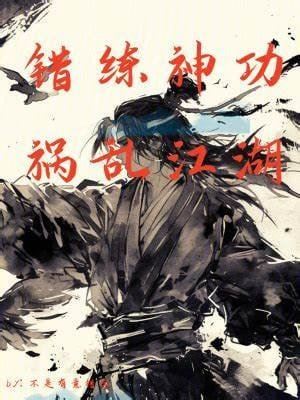
Started as a Cat? I Rely on Role-Playing as a Deity to Become an Immortal!
+Add to Custom List
Novel Info

Summary

... Read More

Lu Jueming, a former human volunteer firefighter from a modern world, transmigrates after sacrificing himself during a forest fire on Taiming Mountain. Upon awakening, he discovers he has become a weak raccoon cat demon at the Qi Refining Layer 2 cultivation level. The original body’s memories reveal a tragic history: his parents were killed by demon extermination officers, and he had been bullied and starved to death by a Yellow Weasel Demon who stole his cave and food supplies. Despite his dire circumstances, Lu Jueming maintains a pragmatic and optimistic mindset, recognizing that as long as he can cultivate, he may eventually transform back into a human and reach immortality.

On the verge of starvation, Lu Jueming crawls to a dilapidated temple dedicated to the Taiming Mountain God. Inside, he finds only meager offerings, including a dried salted fish, which he steals to survive. This action triggers the activation of the God Role-Playing System, binding him as the new embodiment of the Taiming Mountain God. The system reveals that the deity’s faith is on the brink of collapse, with only a handful of believers remaining. Lu Jueming learns that he can convert incense power from believers into spiritual energy, drastically accelerating his cultivation. His immediate goal becomes clear: bless the common people to gain believers, unlock divine abilities, and strengthen himself while fulfilling a novice mission.

His first target is Xu Ling, a young herbal farmer who visits the temple to pray for her brother, Xu Ping’an, who is suffering from miasma poison. Lu Jueming discovers that the cure requires Purple Bauhinia Silver Ginseng, a rare herb growing in the dangerous Black Obsidian Forest. Using the Divine Machine Enters Dream ability, he guides Xu Ling in her sleep to the herb’s location. Simultaneously, he faces the Yellow Weasel Demon, the same creature that killed the original body. Rather than engaging in direct combat, Lu Jueming uses his raccoon cat transformation and divine perception to frame the Yellow Weasel for stealing a Wild Boar Demon’s offspring. The enraged boar chases the weasel to its death, eliminating Lu Jueming’s rival and securing the area for Xu Ling.

Xu Ling successfully retrieves the herb and cures her brother. In gratitude, she and Xu Ping’an become devout believers, increasing the mountain god’s incense power. Lu Jueming claims his novice reward, obtaining spiritual pills that raise his cultivation to the completion of Qi Refining Layer 6. He also unlocks three new divine abilities: All Grass and Trees Become Soldiers, All Mountain Perception, and Beast Taming Art. He promptly uses Beast Taming Art to subdue a weakened Yellow Weasel spirit monster that had colluded with a local woodcutter, Zhou Liqiang, to harass Xu Ling. After forcing the weasel to lead him to a hidden spirit fruit, Lu Jueming allows the beast to encounter a far more powerful entity in the forest depths, resulting in its demise.

With his cultivation boosted and new abilities mastered, Lu Jueming expands his domain. He harvests a Flowing Water Jade Lotus from behind a waterfall using his flora manipulation power. The story follows his gradual consolidation of authority over Taiming Mountain as he manages his growing flock of believers and deals with local threats. The narrative establishes a progression where Lu Jueming must balance his role as a deity serving humans with his personal growth as a demon cultivator, setting the stage for future conflicts with stronger demonic beasts and rival factions who threaten the stability of his newfound worship.

Latest Release
DateGroupRelease
2026-10-01lightnovelasia c352
2026-10-01lightnovelasia c351
2026-10-01lightnovelasia c350
2026-10-01lightnovelasia c349
2026-10-01lightnovelasia c348
2026-10-01lightnovelasia c347
2026-10-01lightnovelasia c346
2026-10-01lightnovelasia c345
2026-10-01lightnovelasia c344
2026-10-01lightnovelasia c343
2026-10-01lightnovelasia c342
2026-10-01lightnovelasia c341

Community Reviews

Rating(0 / 5.0, 32votes)
5 stars
0(0%)
4 stars
0(0%)
3 stars
0(0%)
2 stars
0(0%)
1 stars
0(0%)

Popular reviews

... Read More
'The sunlight was warm, but his heart was ice-cold.' That line hit me. Lu Jueming's been waiting three days for believers and got nothing. Twenty-two followers, three of them gone. Fickle opportunists, he calls them. And yet he's out here trying to build a proper divine following with beast taming and spirit plants. The snake's evolution made me smile—a creature reborn because someone believed in it enough to share power. Meanwhile, Xu Ling's eyes shimmered with tears as her brother ran ahead to stop those strongmen. No romance here, just raw sibling loyalty. And the villagers feasting at Zhou Liqiang's funeral like they'd won the lottery? Chilling. Everyone's motivated by something—faith, family, fear, greed—and it's all tangled together. I just hope Lu Jueming finds people who stick around.
... Read More
Let me just appreciate the pacing here because wow. We open with the Xu siblings at the market, see the yellow weasel corpse, meet Zhou Liqiang stealing buns, cut to the temple where Lu Jueming is eating leftovers, then loop back to Zhou Liqiang plotting revenge, and end with him literally creeping through the dark toward the mountain with fire oil in hand. That's four distinct locations, three POV characters, and a full escalation from petty theft to attempted murder in roughly twenty thousand characters. And somehow it never feels rushed. The market scene establishes the world and the rumor about the weasel demon dying — which sets up WHY Zhou Liqiang's plan failed. The temple scene introduces Lu Jueming's powers and his personality. Then we cut back to Zhou Liqiang fuming in his house, and the transition to the night sequence with 'the moon was dark, the wind was fierce, and the night was as black as ink' — that cliffhanger ending is chef's kiss. Just leaves you hanging there wondering if he actually makes it to the temple. The author knows exactly when to speed up and when to linger. The prayer scene slows everything down beautifully before the whole thing explodes into action again.
... Read More
The stakes in this section are grounded in a way I really appreciate. It's not the world ending—it's a brother dying from miasma poison and a precious herb costing ten taels of silver, which is more money than these two siblings have ever seen. When Xu Ping'an pulls out those two taels of broken silver from under the bed, that IS the climax. Not some big battle, just a guy risking everything he has on a prayer to a god everyone else says doesn't exist anymore. What makes it tense is that we literally do not know if Duke Taiming is real. The narrative gives us Lu Jueming as a Mountain God figure, but from Xu Ling's perspective, she's just hoping. The farmer wives gossiping about whether the healing was even real or just expensive—this external doubt mirrors the internal doubt any believer carries. And then the resolution comes not through spectacle but through a brother waking up and a sister passing out from exhaustion beside his bed. The relief hits hard precisely because the fear was so quiet and domestic. Zhou Liqiang's subplot adds a different kind of stakes—he's coming after them, confused and angry, and we know from genre conventions that an angry cultivator with resources isn't going to stop. The calm after the medicine works is therefore also the calm before something worse.
... Read More
There's a haunting economic realism beneath this cultivation fantasy that I keep coming back to. The Purple Bauhinia Silver Ginseng isn't just a plot MacGuffin—it's a symbol of how scarcity creates exploitation. Xu Ling gathered one plant and sold it for four taels, feeling delighted. The doctor now charges ten taels for a small piece. The herb hasn't changed; her desperation has. Zhou Liqiang knows this and weaponizes it. He offers exactly what she needs on the condition that she surrender her autonomy. The herb becomes a metaphor for every form of predatory lending in history—rescue that comes with teeth. Lu Jueming's entire scheme is built on manipulating belief. He doesn't want to save Xu Ling for her sake; he wants her to believe in Lord Taiming so he gains Incense Power. This raises an uncomfortable question: does the miracle matter if the motive is selfish? When he sends her the dream guidance, is he helping her or farming her faith? The text seems to suggest both are true simultaneously. The temple setting itself is deeply symbolic. Xu Ling prays to a god who seems absent—her brother is still dying, the medicine is still too expensive, the monsters are still lurking. But then Lu Jueming, hiding in the shadows behind the Divine Statue, hears her prayer and decides to act. Is the god real? Is the god a raccoon cat with ulterior motives? Or is the god simply whoever shows up when you're desperate enough? The Black Obsidian Forest represents the unknown dangers of poverty—once you're forced into it, predators wait for you whether human or demonic. The Wild Boar Demon sleeping in the mud pit is an image of dormant power, potential violence waiting for a spark. That's exactly what Lu Jueming plans to provide.
... Read More
Okay so let me just say this—Lu Jueming turning the tables on the Yellow Weasel Demon was the most satisfying moment I've read in forever. Like, the original body got bullied, eaten from, driven out of its own cave by this creature, and now here comes the new soul who just straight-up enslaves it. The author really leaned into that underdog-to-overdog transition and made it count. What I loved was the strategic layer to it all. He doesn't just waltz in and dominate—he actually assesses the situation first. Uses his new perception ability to scan the area, spots the weasel injured at the bottom of the gully, and then thinks it through: weaker state means higher capture chance. That's not brute force, that's brains. And then when the weasel tries to pull the classic "I'll betray you the second I'm up" move? Chef's kiss. The moment Lu Jueming slices off its ear with a thrown leaf and forces it to its knees—that wasn't just violence for drama's sake, it was a plot pivot that established the power dynamic for everything that follows. But here's where it gets interesting: the Earth Flower Fruit. The weasel knew about it, waited years for it, and tried to use Lu Jueming as bait for whatever terrifying thing was guarding it. That trap setup creates this incredible tension because we don't know what's lurking in those woods yet. The author deliberately withholds the monster's identity and just describes it as "energy so red it was nearly black, demonic power soaring into the heavens." Mystery done right. And then—BAM—Lu Jueming sees through the trap, sends the weasel forward as a proxy, and the thing gets obliterated in a single encounter. No wound on its body except that ear. Just... dead. From some invisible force. What IS that thing? I need to know. The pacing of the reveal was also sharp. First we get the perchance, then the journey, then the discovery, then the subversion of expectations. Everything served the main thread without bloating. But I'm genuinely curious about one thing—why did the original owner's body get taken over? Was there a reason beyond just transmigration, or is that still a mystery?
... Read More
What strikes me about this entire batch is how seriously the book takes faith as a MATERIAL force, not just a spiritual one. Duke Taiming isn't saving souls — he's saving Xu Ping'an's life, he's deterring arsonists, he's attracting curious carpenters who then donate silver. The religion here is pragmatic from day one. The Good Karma Box itself is such a loaded symbol. It's nailed to the ground so no one can steal from it. It's placed at the entrance like a threshold crossing — you literally step over generosity to enter sacred space. And the fact that the Xu siblings, who have almost nothing, still contribute their last hundred copper coins each? That's not blind faith, that's calculated hope. They've experienced divine intervention and they're investing in it. Then there's the fire imagery running through everything. The camphor tree burned, the temple gutted, the gate carbonized and brittle. Fire destroys but it also clears space. Zhou Liqiang's death by fire establishes divine retribution. The arson itself was an attack on the god's physical domain. And yet the believers clean the ashes away and rebuild. The cycle of destruction and restoration IS the narrative engine. The line that haunted me: "Believing that disbelief could bring losses while faith could never hurt." That's the whole philosophy of this village condensed into one sentence. It's not about truth — it's about risk management.
See all reviews

Custom lists

See all custom Lists