Spring Prison Terrace
+Add to Custom List
Genres:
Novel Info

Summary

... Read More

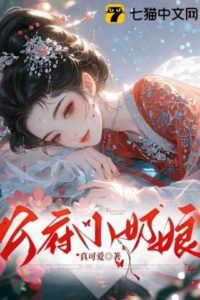
Sang Yu is a former palace maid who rose from beggar status to become the shadow guard and secret weapon of Prince Qi Heng. Raised by Consort Hui, she swore to protect Qi Heng with her life after the consort’s death. For over a decade, she endured physical torture, political intrigue, and personal sacrifice, taking poisoned arrows and blades meant for him. She believed their bond was rooted in mutual dependence and eventual love, despite her lowly origins and physical scars. When Qi Heng ascended the throne as Emperor, Sang Yu expected to be honored, but instead found herself marginalized as he welcomed back Lu Wanning, his childhood sweetheart who had been exiled to the Northern Tribes and widowed for three years.

The core conflict emerges immediately upon Lu Wanning’s return. Qi Heng, now Emperor, grants Lu Wanning the title of Noble Consort and resides her in the prestigious Palace of Eternal Joy, while Sang Yu is relegated to the remote and damp Qingwu Courtyard with the low rank of Jieyu. Despite Sang Yu’s years of loyalty and the blood she shed for Qi Heng’s rise to power, he treats her with cold indifference and public humiliation. The Emperor’s affection is entirely reserved for Lu Wanning, whose fragile demeanor and noble background contrast sharply with Sang Yu’s bloodstained past. Qi Heng’s cruelty is compounded by his jealousy and insecurity; he resents Sang Yu’s independence and her refusal to remain a passive, subservient figure in his new court.

Key turning points accelerate Sang Yu’s emotional detachment and physical suffering. After being forced to kneel for an extended period by Ji Yuan’an, the Commander of the Imperial Guard and an old acquaintance whose family she executed on Qi Heng’s orders, Sang Yu collapses. Qi Heng finds her but offers only verbal abuse, calling her servile nature fitting for her “servant’s bones.” Later, when Lu Wanning frames Sang Yu’s loyal eunuch, Jinfu, for theft, Sang Yu defends him with a dagger. Qi Heng, believing she intends to assassinate him, orders Jinfu to be beaten severely. Sang Yu trades Consort Hui’s jade pendant, her only remaining connection to her past and her promise, for Jinfu’s life. She then secretly seeks medicine from her uncle, Shen Kang, to save Jinfu, an act that Qi Heng discovers. In a fit of possessive rage, Qi Heng burns Shen Kang’s medicine and forces himself on Sang Yu, only to recoil in disgust upon seeing her burn scars, further deepening the emotional chasm between them.

As the story progresses, Sang Yu’s hope for Qi Heng’s love彻底 dissipates. She realizes that her devotion was a one-sided illusion and that she is merely a discarded tool in his eyes. Lu Wanning, aware of Sang Yu’s lingering attachment and her own precarious position, schemes to break Sang Yu’s spirit rather than kill her, plotting to drug her and ruin her reputation. Sang Yu, however, begins to reclaim her agency. She accepts the help of Lu Huaian, a mysterious and free-spirited nobleman who visits her in secret, offering her a glimpse of life beyond the palace walls. She also prepares to leave the palace, holding onto a token from Shen Kang that promises her safety and freedom in the south. The narrative concludes with Sang Yu no longer waiting for Qi Heng’s attention, instead focusing on her own survival and escape, while Qi Heng is left grappling with his growing, albeit confused, sense of loss and regret.

Latest Release
DateGroupRelease
2026-08-11shanghai fantasy c24
2026-08-11shanghai fantasy c23
2026-08-11shanghai fantasy c22
2026-08-11shanghai fantasy c21
2026-08-11shanghai fantasy c20
2026-08-11shanghai fantasy c19
2026-08-11shanghai fantasy c18
2026-08-11shanghai fantasy c17
2026-08-11shanghai fantasy c16
2026-08-11shanghai fantasy c15
2026-08-11shanghai fantasy c14
2026-08-11shanghai fantasy c13

Community Reviews

Rating(3.8 / 5.0, 6votes)
5 stars
2(33%)
4 stars
1(17%)
3 stars
3(50%)
2 stars
0(0%)
1 stars
0(0%)

Popular reviews

... Read More
Okay so I need to just... sit with this for a second. Sang Yu cauterizing her own wound. She just... did it herself. No doctor, no screaming, just sat there by the window watching the snow like her hand wasn't literally being seared shut. And then when Qi Heng came at night and asked why, she said 'It was faster. Less trouble.' LESS TROUBLE. Like she was talking about doing laundry, not permanently damaging her hand. And then she looked at him with these dead eyes and said she would truly forget everything. And Qi Heng... he FLED. He actually turned and ran out of that room. Like he couldn't handle the fact that the girl who loved him so fiercely was now completely gone. What is wrong with this man. I kept re-reading that part where he left the candle flickering and she just stared at the door after he left. She didn't even cry. That's what got me. Not the physical pain, but the emotional surrender. She accepted it all. No resistance, no hope, no anything. And then the breakfast scene where he kept trying to provoke a reaction by talking about Wanning—"I've never touched Wanning"—and she just... ate. Didn't even flinch. Just set down her chopsticks and said she was full. That silence was louder than any scream. He was desperate for her to care, to get jealous, to show him she still loved him. But she didn't even have the energy left to pretend. The worst part is Qi Heng actually thought her coldness meant she was still jealous. He couldn't comprehend that she might have just... stopped. That her love actually died. I swear I was sitting there like what is happening to me right now I can't breathe. This author is a monster and I love them for it.
... Read More
Let me just say this—the snow in these chapters is NOT just atmosphere, it is doing SO much heavy lifting. From the very first paragraph where Sang Yu is chained by the window watching snow fall, the white coldness mirrors her internal state perfectly. She's becoming part of the winter. And then there's this line from Ji Yuan'an's perspective: 'Even the brightest gem dims when covered in dust.' But it's the snow scenes that really stick with me. The one where Qi Heng comes at night after the snow stopped, the room is dim with a single flickering candle, and Sang Yu hasn't slept—she's just sitting there like a ghost. The visual of her pale face against the darkness, the chain at her ankle, the way the moonlight later streams through the window lattice casting a pale glow on her thin figure... I could literally see this as a TV drama. Every frame would be blue and white and cold. And Lu Huaian standing in the falling snow after Ji Yuan'an's confrontation—chest tight, lost and unsure—that's such a perfect visual metaphor for his moral position. He's literally frozen in place, unable to move forward or backward. The palace itself feels like a character. Qingwu Courtyard being reduced to Cold Palace conditions, the disciplinary bureau looming as a threat, the way every corridor and doorway becomes a threshold she can't cross freely. The chain at her ankle clinking with every movement—that sound must have haunted Qi Heng's dreams. I keep thinking about how the author uses physical space to show emotional imprisonment. She's not just locked in a room, she's locked out of her own life. And the snow keeps falling, covering everything in this false purity while underneath it all is rot and betrayal and a girl who burned her own flesh to stop the bleeding.
... Read More
The pacing in these chapters is a masterclass in controlled escalation, and I need to unpack why it works so well. It starts almost whisper-quiet. Sang Yu trying on a hairpin. Nanny Lin bringing breakfast. A moment of tenderness. Then the Emperor arrives and the tension spikes—but it's the wrong kind of tension. It's not exciting; it's suffocating. He compares her to Lu Wanning. He calls her spineless clay. And she just... absorbs it. No drama, no outburst. That restraint is what makes it hurt. Then Lady He enters and the pacing accelerates like a stone rolling downhill. Each line she delivers is another layer of cruelty peeled back. The slap on Nanny Lin. The grip on Sang Yu's wrist. The revelation about the crabapple blossoms. By the time Sang Yu crushes the jade pendant, I was physically shaken. The author doesn't give you a moment to breathe between each blow. But then—sudden stillness. Sang Yu piecing the pendant back together. Wrapping it in silk. The quiet conversation with Nanny Lin about her scars. This is where the structure really impresses me. After the explosion of Lady He's visit, the author pulls back to a near-whisper. The pacing slows deliberately, letting the devastation settle in. And then, just as you think the chapter is winding down, Ji Yuan'an appears. The final scene with him is paced like a slow-motion car crash. He demands she kneel. She hesitates. The guards shift uncomfortably. And then—she kneels. Not in defiance, not in anger, but in quiet acceptance. The chapter ends on that image, and I was absolutely wrecked. What's brilliant is how the author uses these pacing shifts to control emotional impact. The quiet moments hit harder because they come after the storm. The kneeling scene lands with devastating force because we've had time to process everything that led to it.
... Read More
I have to talk about the atmosphere in these chapters because the author absolutely nails it. Let me start with the very first image: Sang Yu looking at herself in the bronze mirror, trying on that hairpin, and Nanny Lin telling her she looks radiant. The pallor on her face is softened by the touch of red. This is a woman who has forgotten what it means to be seen as beautiful, and the moment is so fragile. Then the Emperor arrives and the spell breaks instantly. But the scene that lives in my head—the one I can't stop returning to—is the confrontation with Lady He. The way it's written, you can feel the temperature dropping. Lady He's golden hair ornaments jingling as she moves, the tea being deliberately weak, the way she grips Sang Yu's ruined wrist. And then Sang Yu's hand, trembling, reaching for the jade pendant in her sleeve. The pendant that Consort Hui left her. The pendant she crushes. "Outside, a dead leaf drifted silently to the ground." That line. That single line. Autumn came earlier to the Qingwu Courtyard than anywhere else. The courtyard itself feels like a character—remote, cold, abandoned. It's not just a setting; it's a metaphor for Sang Yu's position in the palace. She's been discarded here, left to wither while the rest of the palace moves on. And then the imperial garden scene with Ji Yuan'an. Armor clinking, autumn wind sweeping leaves between them, the golden eaves of the imperial hall glinting in the sun. The visual contrast between the warmth of sunlight and the coldness of his words—"You're just his dog"—is masterful. The world feels alive because every detail serves the emotional truth of the scene. The palace isn't just a backdrop; it's a cage, a battlefield, and a graveyard all at once.
... Read More
Okay, let me just say this: the way the author handles the revelation about Lu Wanning is absolutely devastating. I need to sit with this for a second. Lady He comes in like a storm—congratulations, another villain who thinks cruelty equals power—and drops the bomb that the Emperor visited Lu Wanning every single year, that she planted crabapple trees, that Sang Yu didn't even know his favorite flower. And the worst part? Sang Yu already knew something was off. She remembered he'd started traveling incognito, coming back with the scent of crabapple on his robes, and she'd asked him once what he liked about them. His answer: "Stumbled upon a field of blossoms. Thought it was novel." A lie. A small one. About a flower. But it unravels everything. The plot structure here is brutal in its simplicity. For ten years, Sang Yu has been a weapon—taking arrows for him, killing for him, destroying the Ji family on his orders. And what was she to him? Nothing. Not even a secret. Just a blade he used and then set aside in a remote courtyard. The investiture scene at the beginning already set the tone: he calls her late, compares her to Lu Wanning who "managed the northern palace alone for three years without a single mistake." Three years. She was forgotten while Lu Wanning was remembered. But here's what got me—the jade pendant. Consort Hui's pendant, which Sang Yu had been guarding, and which she crushes in her hand during the confrontation with Lady He. When she pieces it back together and wraps it in silk, saying "your debt, I've repaid it," that's the moment the entire plot pivots. She's not just heartbroken—she's settled her account and is walking away. The story shifts from "will she win his love" to "what happens when a weapon decides she's done serving." And then Ji Yuan'an appears. The boy she once protected, now her commander, demanding she kneel. The plot threads are multiplying—romance, revenge, political intrigue, and the ghost of a girl named Lu Wanning who hasn't even appeared yet but controls everything. I'm already obsessed.
... Read More
I need to talk about the dialogue in these chapters because every single line feels like it was chosen with surgical precision. Let me start with Qi Heng. His dialogue is sparse but devastating. "You were late to the investiture. No explanation?" He doesn't yell. He doesn't threaten. He just... compares. "Lu Wanning managed the northern palace alone for three years without a single mistake." Three years. And Sang Yu—his bloodstained shadow, the woman who took an arrow for him—was late to her own coronation and all he can think about is how Lu Wanning never made him wait. But the real dialogue masterpiece is the confrontation between Sang Yu and Ji Yuan'an. Listen to this exchange: "You're just his dog. Did you really think you were anything more?" "Yes." Sang Yu spoke suddenly. "Yes, I once loved him. But I don't anymore." That "Yes"—it's not submission. It's the opposite. It's her owning the truth so completely that it becomes a weapon. And then her follow-up: "I won't chase what was never mine. I won't love someone I shouldn't." The voice shift here is incredible. Throughout the earlier scenes, Sang Yu speaks in soft, deferential tones. But with Ji Yuan'an, there's a coldness that wasn't there before. She's not performing obedience anymore. She's done performing. And Lady He's dialogue—oh, the cruelty in every line. "A cripple should act like one." "You're nothing but a dog he raised. A blade he tossed aside when he was done." She speaks in insults because that's all she has. Her dialogue reveals everything about her insecurity and nothing about Sang Yu's actual worth. The narrative voice itself is also worth praising. It stays close to Sang Yu's perspective, filtering everything through her exhaustion, her pain, her slow awakening. When she thinks about the lie regarding the crabapple blossoms, the internal monologue is devastating: "Why lie about something so small?" The answer, of course, is that it wasn't about the flower. It was about the fact that he never bothered to tell her anything real.
See all reviews

Characters

See all characters

Custom lists

See all custom Lists