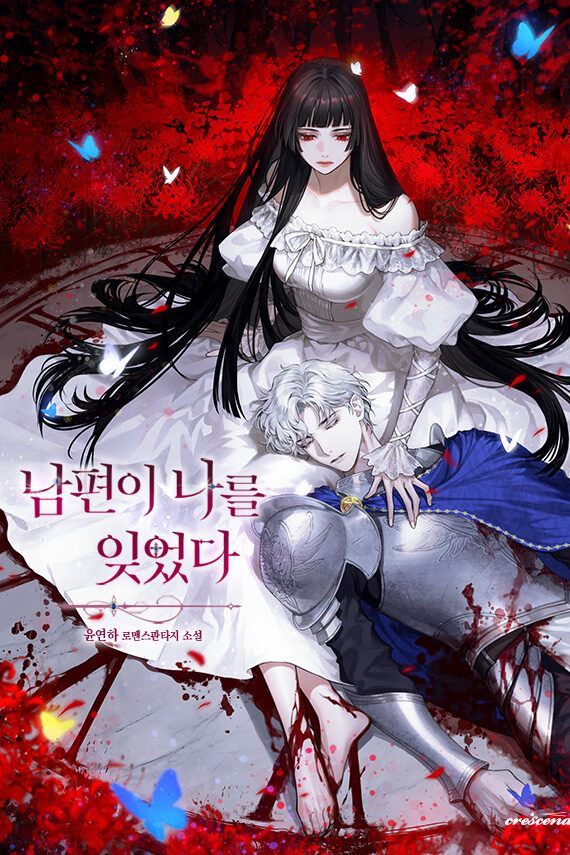
So The Duchess Wants To Die
+Add to Custom List
Genres:
Novel Info
  • Author:
  • Status:Ongoing

Summary

... Read More

Leilia Charlotte has lived the same life four times, trapped in a relentless temporal regression loop. In her fourth iteration, she reaches a breaking point during a confrontation with Carlisle Liston on a cliffside. Pregnant and desperate, she confesses her regret over ever meeting him. Carlisle reveals that he never loved her, viewing their entire relationship as a tool for his own amusement, and cruelly goads her into jumping. Leilia falls to her death, only to wake up five years earlier, realizing she has returned to the start of the timeline again.

This fifth iteration begins with Leilia reading news of Emperor Igret’s wedding to Claudia, a woman who holds secrets about Carlisle’s true nature. Leilia has spent years in her previous loops secretly researching alchemy, hoping to find a way to end her suffering permanently. She commissions a rare and forbidden substance known as the Alibu fruit from the black market, believing it can erase her existence entirely. However, her father, Marquis Pielon Charlotte, reveals that he has arranged a political marriage between Leilia and Carlisle, now the Duke of Liston, to save his failing family from debt. This marriage was the catalyst for her tragedy in all previous lives.

Refusing to let the cycle continue as before, Leilia attempts to poison herself with the Alibu fruit after the Marquis leaves. She drinks the lethal concoction in her attic room, expecting oblivion. Instead, she wakes up alive in her bed, discovering that the fruit Timo purchased from the black market was a fake. Panicked by this failure, Leilia learns from a street urchin that the real Alibu fruit only grows in Gridana, the southern territory ruled by none other than Duke Carlisle Liston. Her only path to escaping her fate now lies within the grasp of the man she despises.

Carlisle arrives at the Charlotte estate to finalize the marriage arrangement. He is cold, calculating, and menacing, viewing Leilia not as a wife but as an obedient possession. He proposes a transactional marriage: he will guarantee her freedom and a share of his estate if she bears his child within a year. Leilia, having lost all emotional attachment to him, agrees to the terms without hesitation. She negotiates from a position of detached indifference, shocking Carlisle, who is accustomed to her fear and submission. The wedding proceeds, and during the reception, Empress Claudia sends a gift—a carved bird statue. When the statue is broken, it reveals a hidden curse intended to harm Leilia, a cruel prank orchestrated by Claudia out of jealousy.

Leilia smashes the statue deliberately, using the incident as leverage in her negotiations with Carlisle. She realizes that Carlisle, like a merchant, values utility and control. She offers him cooperation in exchange for access to Gridana, where she can find the real Alibu fruit. Carlisle, intrigued by her newfound defiance and recognizing her potential usefulness, accepts her terms but maintains his dominance, reminding her that he holds all the cards. He grants her the title of Duchess but binds her to his will, insisting she prove her worth by conceiving his heir before granting her any territorial demands.

As Leilia settles into her new role at Liston Manor, the tension between her and Carlisle intensifies. She treats him with cold politeness, refusing to show the emotional dependence he expects. Meanwhile, her maid Timo remains fiercely loyal, unaware of Leilia’s repeated deaths and her ultimate goal of suicide. The story establishes a dynamic where Leilia is playing a dangerous game, using Carlisle’s desire for an heir and his interest in her unpredictability to buy time. She must navigate the treacherous waters of aristocratic society, evade Claudia’s malicious schemes, and secure passage to Gridana while living under the watchful eye of a husband who sees her as nothing more than a valuable asset to be broken or bred.

The narrative shifts focus to the political undercurrents of the Feltro Empire. Emperor Igret’s marriage to Claudia has created a delicate balance of power, and Carlisle’s rise as a powerful duke threatens the traditional nobility. Leilia’s marriage to him is a strategic move that elevates her family’s status but chains her to a man who embodies her trauma. The core conflict remains internal for Leilia: she is no longer fighting for love or redemption, but for the right to die. Every interaction with Carlisle is a calculated maneuver to gain the freedom she desires, even as he seeks to confine her further. The story concludes with Leilia accepting her role as Duchess, not out of duty, but as a necessary step toward her ultimate escape, setting the stage for a cat-and-mouse game where the prey has decided to bite back.

Latest Release
DateGroupRelease
2026-10-03dusk blossoms c145
2026-10-03dusk blossoms c144
2026-10-03dusk blossoms c143
2026-10-03dusk blossoms c142
2026-10-03dusk blossoms c141
2026-10-03dusk blossoms c140
2026-10-03dusk blossoms c139
2026-10-03dusk blossoms c138
2026-10-03dusk blossoms c137
2026-10-03dusk blossoms c136
2026-10-03dusk blossoms c135
2026-10-03dusk blossoms c134

Community Reviews

Rating(0 / 5.0, 40votes)
5 stars
0(0%)
4 stars
0(0%)
3 stars
0(0%)
2 stars
0(0%)
1 stars
0(0%)

Popular reviews

... Read More
There's this one moment where Carlisle gets up, looms over her, starts touching her like she's some object he can rearrange, and whispers about how their love might grow inside her. And Leilia's internal monologue is just... completely dead. She's observing herself from three feet away. "If it had been the old her, she might have been fooled by sweet words like these, wagged her tail, and gladly rolled over." OOF. That line hit me in the chest. The old Leilia would've melted, would've pretended to want him, would've played the game. But she's done that dance so many times across so many lifetimes that now she just watches it happen to someone else. And then the worst part? Her body betrays her. Heat rises to her cheeks, instincts kick in, and she LOATHES herself for it. She tries to hypnotize herself into not caring, and it's CLEAR she's only half succeeding. Meanwhile Albion reads her like an open book in their first meeting and that's somehow MORE threatening than Carlisle's physical intimidation. She doesn't flinch at violence but a kind man who sees too much makes her actually nervous. There's a difference between being brave and being hollow, and Leilia is sitting somewhere ugly right in between.
... Read More
Let me just say this: the stakes in this chapter are ASTRONOMICAL and the author makes sure you feel every single one of them. On the surface, the conflict is simple: Leilia needs to find the Alibu fruit before her wedding or she's trapped. But the deeper conflict is what makes this unputdownable — she's fighting a system that was designed to keep her trapped. Her father sold her. The economy runs on Carlisle's word. Magic is illegal. And her only hope is a fruit that grows on enemy territory. The internal conflict is even worse. She's been through this FOUR times. Four times she thought she could change the outcome. Four times she ended up married to the same man, making the same choices. And now she's on cycle five, and the Alibu fruit — her secret weapon, her mother's legacy — was a SCAM. 'That's rather weak' — her response when Carlisle offers protection from abuse as a bargaining chip. This woman has nothing left to lose and everything to fight for, and that combination is terrifying. The suspense is maintained brilliantly because we know Leilia's endgame (survival, freedom) but we don't know HOW she'll achieve it. Every conversation with Carlisle is a minefield — he thinks he's winning, she's playing a longer game. The chapter ends with her realizing the game might be rigged from the start. And honestly? That's what keeps me coming back. Not the romance, not the drama — the sheer, unrelenting tension of watching someone fight for freedom when every door seems locked.
... Read More
Okay so let me just say — the way this whole chapter unfolds is honestly masterful tension-building. You start with what feels like a political negotiation at the ballroom, Carlisle being smug and Leilia playing along, and then BAM — the Imperial Household shows up with a gift. A wedding gift from the Empress herself. Sounds sweet right? Wrong. Because the second Leilia sees that golden box, you can practically feel her soul leave her body for a third time. And then the statue gets smashed and inside? Gore. Animal bones. Blood-stained carpet. A curse wrapped in imperial gold. I actually gasped out loud. The layers here are insane — the Empress isn't just sending a gift, she's sending a weapon disguised as congratulations. And Leilia, who's been through this nightmare before, recognizes it immediately. She's lived this scene five times and still, even with foreknowledge, she's not safe. The fact that Carlisle's first instinct isn't 'are you okay' but 'was that an act of defiance?' tells you everything about where their power balance sits. And then his offer — Gridana for a child — that's the real plot bomb dropping at the end. He's been holding that card this whole time and now he's revealing it like a magician showing you the trick while still making it work. Chef's kiss.
... Read More
Let me sit with this for a second. Leilia pressing her fingertip to stop the bleeding before the doctor even finishes talking? She's done this so many times she's numb to it. The blood sacrifice on a 'sacred relic imported from the Holy State' to calculate fertile days—this is religion weaponized as reproductive control. The statue that won't stay destroyed, coming back 'like weeds in a field,' is basically the physical manifestation of everything she thought she'd erased: memories of that other woman, Carlisle's cruelty, the cycle she's trapped in. And then there's the whole body-as-commodity thread running through the chapter. Carlisle talks about children like picking an item off a shelf ('Didn't they say your fertile days start in two days?'). Leilia offers her body to Albion as a transaction that simultaneously saves him and enslaves her further. Three characters, three different kinds of bondage. The recurring motif of the bird statue—the sleek back, the sparkling gem in its beak, watching from the cold mantel—is doing heavy thematic lifting here. Birds are supposed to symbolize freedom. This one is encased in plaster, fixed in place, its beak stuffed with someone else's gem. Just like Leilia.
... Read More
The stakes in this book escalate SO fast and I am here for it. Let me walk through why this is working so well. On the external level, Leilia is facing literally everything: an abusive father who treats her like a punching bag, a cruel love interest who used her as a tool, a regression curse she can't escape, and now a mysterious black market object she's willing to give EVERYTHING for. The escalation from 'I just want to rest' to 'I'll sell my soul if that's what it takes' in the span of a few chapters is not gentle at all and I appreciate it. But the INTERNAL conflict is what actually has me shook. Think about it—she's been through FOUR lives of suffering, watched the same tragedy repeat, and instead of going completely numb she's somehow found the will to try again. That's not weakness, that's an insane amount of stubborn courage disguised as apathy. The moment she slams that emerald ring onto the box and tells Timo 'this is the first and last thing I'll ever ask of you'—she's not just buying an item, she's declaring war on her fate. What keeps the tension razor-sharp is that we don't actually know what the item does yet. Is it a way to break the regression? To kill Carlisle? To save someone? The author is playing a long game here and the uncertainty is delicious. Every chapter feels like it's adding another layer of threat while simultaneously raising the question of whether any of this effort will actually matter if the loop resets again. The suspense technique is also smart—by showing us the ENDING first (the suicide on the cliff) and THEN showing us the beginning, every single action Leilia takes is shadowed by the knowledge that things can and probably will go wrong. That dramatic irony makes even small moments feel dangerous.
... Read More
The atmosphere in this section is suffocating, and I mean that in the best way possible. You can feel the weight of the castle on Leilia's shoulders. I keep coming back to the visual of that chandelier—'glittering like a spray of stars.' It's so beautiful and so cold, right above her while Carlisle is looming over her. The contrast between the magical ceiling and the filth happening beneath it is visceral. And then there's the aftermath scene. Timo noticing the handkerchief, the marks on her neck, the way Leilia tries to hide them like they're shameful when they're really just evidence of survival. The banquet scene later shifts the vibe completely—gossiping noblewomen, the Duchess missing, the Duke staring into his wine like a brooding vampire. The author does such a good job making the social world feel alive and dangerous. Those whispers about Empress Claudia aren't just filler; they paint a picture of a court where reputation is a weapon and everyone is watching everyone else. I could smell the perfumes, the wine, and the underlying fear in every room.
See all reviews

Custom lists

See all custom Lists