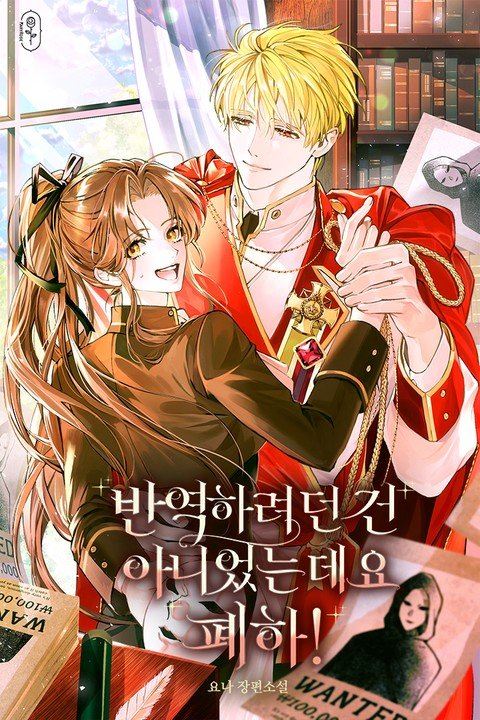
Sir Knight, Do You Wish to Break Off Our Engagement?
+Add to Custom List
Genres:
Novel Info
  • Author:
  • Status:Ongoing

Summary

... Read More

Diana Winchester, the young Duchess of a prestigious ducal house, endures a tragic and betrayal-filled existence in her first life. After the sudden death of her parents in a carriage accident, she suffers a miscarriage and falls into deep despair. Her husband, Clive Orkney, whom she married under her father's guidance, reveals his true nature by conspiring with his mistress, Charlotte, who is also a servant in the household. Clive orchestrated the deaths of Diana's parents to seize control of the Winchester family estate, as imperial law forbids women from inheriting the title. On the night of Diana's attempted suicide, Charlotte assassinates her, and they throw her body off a cliff. As Diana falls, she regrets her loveless marriage and the man she secretly admired but never confessed to, Edwin Lauderdale, the Captain of the Imperial Knights.

Diana awakens in her childhood bedroom, discovering that she has returned to the past, one year before her marriage to Clive. She is twenty-one years old, and her parents are still alive. Realizing she has been given a second chance, Diana resolves to change her fate. Her immediate priority is to avoid marrying Clive, whose kindness was a calculated facade designed to manipulate her family into handing over their wealth and power. She also seeks to dismiss the servants who betrayed her in her previous life, including those who accompanied her to the villa where she died. When she presents a list of names to her father, the Duke of Winchester, he agrees to dismiss them, trusting his daughter's judgment despite her unusual assertiveness.

Diana’s next goal is to secure her independence by becoming the head of the Winchester family. Currently, imperial law dictates that only men can inherit the dukedom, meaning her husband would take over the estate upon marriage. Diana petitions her father to allow her to receive heir training and eventually inherit the title, arguing that she can prove herself as capable as any male heir. The Duke is initially resistant, citing tradition and political feasibility, but he offers a compromise: Diana must present a suitable marriage candidate who is acceptable to him, and only then will he reconsider allowing her to take on heir responsibilities. This ultimatum forces Diana to search for a husband who is not only worthy but also unlikely to betray her or covet her power.

At various social gatherings, Diana evaluates several noblemen but finds them lacking in integrity or genuine affection. Meanwhile, she is drawn to Edwin Lauderdale, the man she loved in her previous life. Edwin is a commoner who rose through the ranks to become the Empire's most celebrated knight and a baron. In her past life, Diana had confessed her feelings to him as a teenager, only to be rejected because he harbored secret feelings for another woman. Upon returning to the present, Diana learns from overheard conversations that Edwin still holds a grudge or perhaps a lingering attachment that prevents him from pursuing her. Despite her initial hesitation due to past rejection, Diana recognizes Edwin’s honesty and strength as qualities that would protect her family.

As Diana navigates the complexities of noble politics and her own emotions, she attempts to repair her relationship with Edwin. She recalls their youthful interactions, where he served as her guard and often clashed with her rebellious nature, yet ultimately protected her from danger. Determined not to repeat the mistakes of her past, Diana decides to pursue Edwin as a potential partner, hoping that her maturity and changed circumstances might alter his perception of her. The story follows her efforts to balance her desire for romantic love with her strategic need to secure the Winchester legacy, while evading the scheming presence of Clive Orkney, who remains oblivious to her foreknowledge and continues to maneuver within high society.

The narrative highlights Diana’s transformation from a passive victim into an active agent of her own destiny. She confronts the structural limitations placed on noble women, challenging not just her personal relationships but the legal and social norms that allowed her family to be stripped of its heritage. With Clive still circling as a suitor and Edwin remaining an enigmatic figure with his own hidden heart, Diana must carefully distinguish between genuine alliance and further deception. Her journey involves mastering the political landscape of the empire, utilizing her knowledge of future events to outmaneuver adversaries, and ultimately deciding whether to risk her heart again for a man who may never return her feelings. The tension builds as Diana prepares to make a decisive move, aiming to claim both her family’s future and her own happiness in a world where trust is a scarce commodity.

Latest Release
DateGroupRelease
2026-10-03dusk blossoms c52
2026-10-03dusk blossoms c51
2026-10-03dusk blossoms c50
2026-10-03dusk blossoms c49
2026-10-03dusk blossoms c48
2026-10-03dusk blossoms c47
2026-10-03dusk blossoms c46
2026-10-03dusk blossoms c45
2026-10-03dusk blossoms c44
2026-10-03dusk blossoms c43
2026-10-03dusk blossoms c42
2026-10-03dusk blossoms c41

Community Reviews

Rating(0 / 5.0, 42votes)
5 stars
0(0%)
4 stars
0(0%)
3 stars
0(0%)
2 stars
0(0%)
1 stars
0(0%)

Popular reviews

... Read More
What I love about this passage is that the tension isn't coming from some external threat or plot twist—it's coming from two people who want the same thing but are blocked by their own principles and circumstances. Edwin's internal conflict is beautifully layered. On one level, he's a man who has tasted something he's been deliberately denying himself (the promise to wait until marriage, reinforced by Duke Winchester's pressure). On another level, he's someone who actually RESPECTS Diana enough to not take advantage of her when she's drunk. But here's the thing that makes the stakes feel REAL: if he gives in this time, what happens next? Will he lose control completely? Will he become the kind of man who takes what he wants regardless of consequences? His fear isn't just about 'morality'—it's about his own self-image as someone who can be trusted. And Diana's stakes are different but equally high: she's risking her heart on a man who may never fully choose her. The engagement was arranged by powerful men. She rejected him once. He accepted the proposal through emotional manipulation by the Emperor. Neither of them is choosing freely here, and that awareness hangs over every single moment between them like a bomb ticking. The scene where Edwin leaves without looking back and then later decides he can't even face her because he's afraid of losing control again—that's not resolution, that's escalation. He's punishing himself AND her by avoiding her, which will absolutely cause more problems down the line. The author knows this. I can feel the next explosion coming.
... Read More
The pacing in this batch is absolutely brutal and I mean that in the best way. We open with Diana's internal monologue about being greedy as an adult — this quiet, almost tender moment where she's figuring out her own desires. Then BOOM, she walks into her father's study and the argument hits like a freight train. She's shouting, he's dodging, the tension is so thick you could cut it with a knife. "Either pass the Winchester family to a collateral relative or do whatever you want. If you don't like that, then make me the family head!" And then — and this is where the author REALLY shows their hand — she storms out. The chapter breaks. We get a hard cut to: "Sir Lauderdale has accepted the engagement with you." One line. That's all it takes. The entire emotional temperature of the scene flips from hot anger to frozen shock. Diana goes from furious to stunned to... excited? Happy? Confused? All of it, compressed into a few pages. Then the banquet scene, where the gossip flies and Diana has to own her choice publicly, followed by these dates that are technically going well but feel so emptily wrong. The pacing moves from high drama to quiet melancholy, and that downward slope is devastating. It doesn't rush any of it. It lingers on the uncomfortable silences. The cliffhanger ending is perfect — not a big event, just Diana sitting with the uncomfortable realization that getting what you wanted might not feel like winning at all.
... Read More
This chapter is a masterclass in using restraint as a narrative device. The first half—maybe 60% of the text—moves at a breathless, almost claustrophobic pace. Every sentence piles sensation on top of sensation, and the prose itself seems to accelerate, getting shorter, more fragmented, more urgent. The dialogue becomes sparse. There are single-word exclamations. The pacing mirrors Diana's loss of control, her descent into something she can't name. And then—BOOM. Right at the climax, the brakes are applied. Hard. 'Just before climaxing, Edwin stopped his movements.' The sudden shift in rhythm is jarring, and that's THE POINT. The reader is left gasping, exactly as Diana is. The author doesn't let us have the satisfying resolution we've been building toward. Instead, we get silence, then this devastating line from Edwin that deflates everything. The flashback structure is also doing heavy lifting here—dropping us into the engagement backstory right after Edwin leaves, which reframes everything we just read. We go from physical intensity to political maneuvering, from intimate vulnerability to cold calculation. Then we snap back to Diana alone with her maids, the domestic normalcy of it almost comical in its contrast. The chapter ends on this note of suppressed emotion—Diana giving short answers, hiding behind courtesy—and it's the perfect cliffhanger because we KNOW something has changed irrevocably between them, but neither of them can articulate what yet.
... Read More
Let me just say this author knows how to pace a section like absolutely nobody's business. You go from Diana being literally dragged onto an ox-cart wrapped in straw—that is a HOOK—to her cutting herself free with a hairpin to Edwin bleeding out his way to rescue her, to the fallout with her father, to her confession, rejection, and then a time skip that lands us years later with her married and miserable. That is A LOT of story compressed into these chapters and it NEVER feels rushed. The pacing trick that works especially well is the confession scene. After all that tension—from the kidnapping all the way through her guilt and her repeated attempts to give him gifts (and him rejecting everything except the handkerchief)—the actual confession happens almost impulsively. She walks into the training grounds and just blurts it out. No buildup within the scene itself. It feels earned because the CHAPTERS earned it, not because the individual scene dragged it out. Then the author does something brave: instead of resolving the emotional conflict, they SKIP. Go forward years. Let us watch Diana try to live without him and fail. That's a structural risk—most authors would force a reunion right after the rejection to keep momentum. But the time skip creates this aching sense of lost time that no immediate resolution could match. The banquet scene at the end works because we've already lived through eight chapters of emotional history. When their eyes meet and she looks away, it carries the weight of everything that came before. The pacing isn't about constant action—it's about emotional rhythm, and this author understands that perfectly.
... Read More
This batch is a massive pivot in the narrative structure. We go from courtship buildup to consummation, and it feels earned rather than rushed. The author spends chapters establishing tension through small gestures—bedtime routines, outdoor dates, stolen moments—and then delivers when the reader is ready. What I love is how the physical intimacy becomes a plot device that shifts their entire dynamic. Before this, they were navigating engagement politics and social expectations. After? They're in something real, even if Diana still worries about Edwin's feelings for someone else. The pacing here is masterful. The author doesn't just dump the sex scene and move on. They linger on the awkwardness, the hesitation, the “it's too big” moment that makes Diana question everything. And then there's the aftermath—the second round, the contraceptive promise, the discussion about where to meet next. It's all building toward something bigger than just romantic fulfillment. One subplot I noticed: Diana's past-life memories keep intruding even during intimate moments. She compares Edwin to Clive, which adds layers to her internal conflict. The author is weaving reincarnation tropes into the present narrative without making it feel like exposition dumping. “There is someone I admire” hangs over this scene like a ghost. Is that emotional infidelity? Is it unresolved grief? The plot isn't just about two people becoming physical—it's about whether love can coexist with lingering attachment to another person.
... Read More
Everything about the conflict in these chapters has been INTERNAL and it's been eating me alive. Not external drama—no villains, no scheming rivals (at least not yet)—just two people standing in a room, both wanting the other, both convinced they can't have each other. And that's somehow MORE tense than any action scene could be because the stakes are so intimately personal. Diana's conflict is layered in the nastiest way. On the surface, she's fighting her own insecurity—will he ever want her? But underneath that, there's this guilt she carries about how she got here. She "pushed out Clive, who was Diana's original husband, and forcibly made Edwin her partner." She knows her position is built on manipulation, on using her power as the duke's daughter to redirect his fate. And that makes her want him EVEN MORE intensely because part of her thinks: he's mine by design, so why does he look at me like I'm a stranger? Edwin's conflict is equally tormented but in a completely different direction. He's torn between his duty (accept the engagement, be the good knight, don't hurt her) and his本能 (she's literally offering herself to him and he's been starving for months). The text says he tried to "maintain reason" and "gritted his teeth and tried to refuse" but the moment her lips touched his cheek, "the line he had drawn" crumbled. What's terrifying and thrilling about this scene is that once he crosses that line, there's no going back. "Once aroused, it wouldn't be easy to calm his lust." The stakes just shifted from emotional to PHYSICAL, and the author is clearly setting up something that will change their entire dynamic. I'm not sure if I'm ready for what comes next but I definitely can't stop reading.
See all reviews

Custom lists

See all custom Lists