Summary

... Read More

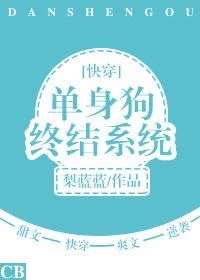
Qin Lang, a wealthy and aloof president from the year 4333, is forced into a futuristic "Single Dog Ending System" project by his mother. He transmigrates into the body of a fat, arrogant high school student named Qin Lang in a campus romance novel. His mission is to increase the favorability of the novel's male protagonist, Ye Qian, from a hostile -60 to full positive affection, or face permanent entrapment across multiple worlds. The original character was Ye Qian's bully, but the real Qin Lang must navigate this new reality while concealing his identity from two distinct AI systems: the aggressive Twenty-Five and the cunning Zero.

Upon awakening, Qin Lang discovers he is now a two-hundred-catty young man with a bad temper and poor grades. His first step is an intense weight-loss regimen combined with academic rehabilitation. He also learns that the "handsome" Chen Ziyu, who raised him, is actually a hypocritical second male lead who manipulated the original owner. As Qin Lang sheds weight and improves his appearance, he adopts a blonde hairstyle and changes his demeanor, confusing his peers and rivals alike. He strategically avoids the original plot points, such as the ring-planting incident that would frame Ye Qian for theft. Instead, he publicly defends Ye Qian when accused, shifting their dynamic from open hostility to uneasy neutrality.

The core conflict revolves around Qin Lang's struggle to gain Ye Qian's trust. Ye Qian, a poor student with a injured father, initially views Qin Lang with deep suspicion and hatred. Qin Lang must balance his task requirements with his own survival, as he foresees his family's impending bankruptcy due to revenge taken by Ye Qian's wealthy biological parents. To secure a financial future, Qin Lang decides to befriend Ye Qian before his own downfall. He begins small gestures of kindness, such as exchanging meals with Ye Qian and helping him during a family medical emergency.

A key turning point occurs on Qin Lang's birthday. Ye Qian cannot attend due to his father's suicide attempt. Qin Lang brings a cake to the hospital, where he learns about Ye Qian's traumatic past and his own family's connection to it. Qin Lang shares a vulnerable moment, admitting that Ye Qian is his only true friend compared to the sycophants around him. He gives Ye Qian a bank card containing half a million as emergency capital, claiming it is just for storage due to a premonition of bankruptcy. This act of sincere generosity, disguised as strategic planning, significantly boosts Ye Qian's favorability to seventy.

The story direction shifts from simple bullying to a complex relationship building. Qin Lang continues to improve his physical and academic standing, drawing attention from female classmates and jealousy from Chen Ziyu. He maintains a careful distance from the original female protagonist, Han Han, recognizing her manipulative nature. As the final exams approach, the dynamic between the former bullies and the new friends solidifies. Qin Lang prepares for the inevitable fall of his family empire, relying on the bond he is cultivating with Ye Qian to ensure his survival and eventual return to his own world.

Latest Release
DateGroupRelease
2026-09-26knoxt c53
2026-09-26knoxt c52
2026-09-26knoxt c51
2026-09-26knoxt c50
2026-09-26knoxt c49
2026-09-26knoxt c48
2026-09-26knoxt c47
2026-09-26knoxt c46
2026-09-26knoxt c45
2026-09-26knoxt c44
2026-09-26knoxt c43
2026-09-26knoxt c42

Community Reviews

Rating(4.1 / 5.0, 321votes)
5 stars
114(36%)
4 stars
110(34%)
3 stars
97(30%)
2 stars
0(0%)
1 stars
0(0%)

Popular reviews

... Read More
'His skin was as white as porcelain, which made him look colder. However, there is such tenderness in his eyes, which makes people willing to drown in it.' I literally stopped reading at this sentence. The author just described an entire relationship dynamic in two sentences and I'm over here emotionally compromised. Let's be real though — the whole Qin Lang and Lu Yuan thing is built on this incredible foundation of trust that most fiction never manages. Qin Lang sees this video of himself doing something he doesn't even REMEMBER and his first instinct isn't to panic about the internet reaction, it's to grab Lu Yuan's hand and desperately seek reassurance. That's not codependency, that's having found your person. And Lu Yuan? He doesn't mock him, doesn't make it weird, just pulls him into a hug and whispers 'that's you too, it's nothing else.' Then later when Qin Lang goes all cold and feral in the studio, Lu Yuan doesn't flinch. He just lets himself be drawn and says 'okay, I'll just let you draw.' Who does that? Who has this much patience for someone who's clearly struggling? Meanwhile the side characters are having their own moments — Zhang Ping being this loyal friend who shows up without asking questions, Yang Yan doing actual psychological analysis instead of just gossiping like everyone else, and Xu Qianqian being this fascinating mix of sweet on the surface and secretly sharp underneath. The web novel genre usually glosses over these dynamics but this author writes relationships like they're actual living things that breathe and change.
... Read More
Can we just talk about the Lu Yuan situation for a moment because MY EMOTIONS. This man literally fell off the bed when Qin Lang kicked him and still had the AUDACITY to say "I had a great time today, I just want to repay my master." Repay him. Repay him. Bro, you assaulted him at 2 AM and you're negotiating a bonus structure?! But then — and here's where it gets genuinely touching — Qin Lang's response. He doesn't freak out. He doesn't summon some bigger ghost to eat Lu Yuan. Instead he says: don't call me master, don't pretend to be my slave, you can protect Xiao Lang and live your own life. That is not the reaction of a victim. That is the reaction of someone who immediately recognized power imbalance and chose compassion anyway. And the favorability system — Ding, Lu Yuan favorability 50, current favorability -19 — this guy is SO conflicted. He went from attacker to... what, exactly? The scene where he wraps Qin Lang in his black cloak in the studio corridor, shielding him from the other students' stares? That softness in moonlight detail, the author wrote it perfectly. Lu Yuan is still unhappy, still confused, but he's learning. Also: Qin Lang with the bruises on his chest and waist hiding under a sweater collar, making breakfast like nothing happened. That man is made of stern material.
... Read More
Can we just talk about the apple scene for a moment? Half an hour to finish one apple. One. Apple. Qin Lang refusing to hand it over, Yan Han negotiating with a ring, the whole thing devolving into some mouth-to-mouth fruit-sharing session that left Qin Lang flustered and red-faced. I spent way too long reading that paragraph and I have no regrets. But beneath all the sweetness—and there was so much of it—there's this undercurrent of 'we almost lost each other.' Yan Han admitting he didn't see how good his baby was when he was with Bai Yue. That's not just a romantic line, that's genuine remorse. He's acknowledging his own blindness, his own mistake, and making it clear that he sees now. Truly sees. The quiet moments hit harder than the dramatic ones for me. Like when Qin Lang just sits there staring at Yan Han's closed eyes for three days straight. No dialogue, no system prompts, no plot movement. Just a man keeping vigil. And then when Yan Han wakes up and Qin Lang's first words are 'You really have no eyes'—playful, but underneath it: I was scared, I was so scared, don't ever do that to me again. Even Xiao C's news agency subplot, which could have been filler, somehow adds to the emotional texture. The fact that Yan Han and Qin Lang never scolded him for曝光—they just let their love be public, be known—that's a small detail but it shows how far they've come from hiding, from shame, from the shadows Bai Yue pulled them into.
... Read More
Okay, let me just say this upfront: the opening classroom scene is one of the most vivid, oppressive sequences I've read in any web novel, and I need to unpack why it hits so hard. "When the students in the class saw him, one by one, they would cautiously call him 'Young master Qian'. Because their parents have reminded them, if they don't want to be like the Qin family then don't mess with the Fang family." THAT. Right there. In one sentence, the author builds an entire social ecosystem. This isn't just a school setting—it's a microcosm of how power corrupts every human interaction. The other students aren't naturally cruel. Their parents TOLD them to stay away from the Qins. The cruelty is inherited, transmitted through generations of survival instinct. These kids are mirroring their parents' fear, and the result is a classroom that operates like a courtroom where Qin Lang is permanently on trial. But here's what makes the scene truly cinematic: the visual contrast. Qin Lang standing at the door, the last to enter, staring blankly at the boy in the back row by the window. Ye Qian looking at him first, then deliberately looking away. The Blonde hair—once described as having an "arrogant color"—now dull and lifeless. The author uses COLOR as emotional shorthand throughout this entire passage, and it's devastating. Then there's the taxi joke scene. The classmates whispering about how Qin Lang got cheated by a taxi driver. "The young master was also cheated by a taxi. He used to be so thoughtless before, why didn't he beat up the driver?" This is the kind of casual, offhand cruelty that's more painful than any direct insult. These kids aren't even trying to be mean—they're just performing their superiority like it's second nature, and that's what makes it so realistic. High school social hierarchies are brutal precisely because nobody thinks they're being cruel. They're just... being normal. The infirmary scene provides the perfect emotional counterpoint. Spacious, quiet, with a rest area—this is the only place in the entire chapter where the two boys can actually breathe. Outside these walls, they're performers in each other's tragic play. In here, they're just two boys who miss each other.
... Read More
This chapter structure is absolutely brilliant. We open in media res—Ye Qian opening the door to find Qin Lang on the hospital night. No setup, no explanation, just BOOM you're thrown into the emotional core immediately. The author doesn't waste time. What I love is how the plot layers revelation on top of revelation like an onion and I was literally choking on my tears. First layer: Ye Qian's dad attempted suicide and is now in the hospital. Got it. Heavy. Then the author pulls the rug again—Ye Qian's dad wasn't ALWAYS poor, he was a listed company president who went bankrupt, got falsely accused of embezzlement, ended up moving bricks at a construction site, broke both legs, and couldn't afford proper treatment. The tragedy isn't just one event, it's a SLOW DESCENT that the author unpacks in this quiet corridor scene while Ye Qian eats takeout. That's masterful plotting. Then Qin Lang drops his own backstory bomb—his family might go bankrupt in a year, he's had prophetic dreams, he's already prepared a financial escape plan. The parallel is NOT subtle and I loved it. Two boys from ruined wealthy families, one dealing with it NOW, the other preparing for it LATER, bonding over hospital corridors and birthday cake. The pacing here is perfect because it moves from external plot (hospital drama) to internal character revelation and back out to a concrete action (the money card). Every beat serves the relationship between these two. And that ending where Qin Lang practically forces the money on Ye Qian? That's a plot pivot that's going to matter SO much later. I can feel it.
... Read More
Okay so I have to talk about this house. Not just because it's a murder house or whatever the hell it is, but because the author actually made me feel like I was standing in those rooms. The first impression of Qingyang Road during the day is almost deceptive — bright, normal-looking, just a regular villa sitting there. But then you go inside and the author doesn't just say 'it was creepy.' They show you. The closet with cobwebs, the talisman paper peeling off Qin Lang's fingers and landing on the surface, and then — bricks falling, dust rising, bones exposed. That sequence had me holding my breath. Like, actual physical breath-holding. But the bathroom. Oh my god the bathroom. A glass compartment full of eyeballs? Fresh on top, rotted underneath? The stench that made Officer Chen's gun hand shake? I literally had to pause and stare at the wall for a minute. The detail about the eyeballs being 'still fresh' at the top and 'rotted into black stuff' at the bottom — that's the kind of gruesome specificity that sticks in your brain. And the atmosphere isn't just horror. There's this warm, almost domestic layer too. The incense burning, the tea being brewed, Qin Lang teaching his apprentices to practice Qi before the police even knock. It creates this weird contrast — a normal home life existing alongside something deeply unsettling. That juxtaposition makes the horror hit harder because it feels like it could happen anywhere. The evil qi visual was also surprisingly cinematic. Lu Yuan pulling something from the void, the black smoke becoming visible, Zhang Ping nearly peeing himself — these aren't just described, they're choreographed. I could see this as a TV show sequence. The worldbuilding here is doing a lot of heavy lifting without ever stopping to explain itself. Ghosts, talismans, evil cultivation, the yin-yang road — it's all woven into the action naturally. I wasn't given a textbook; I was given a walkthrough of a nightmare house.
See all reviews

Custom lists

See all custom Lists