Summary

... Read More

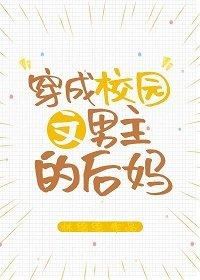
Zhu Yu is a young Chinese art student studying in London who was sent abroad three months prior after a rebellious incident angered his family. His living expenses are strictly controlled, leaving him with insufficient funds to afford proper meals. Having grown up in China, he finds the local British food unpalatable and suffers from chronic hunger, often watching food live streams on an empty stomach to distract himself. He lives in a university dormitory with his rescued cat, Liu Bo, and works a part-time job at a café to supplement his income. His personality is described as spoiled and willful, yet he is also independent and proud, refusing to apologize to his family despite his difficult circumstances.

Bai Chen is a twenty-five-year-old architectural design student who recently returned to school after taking a two-year leave of absence due to psychological issues. During his break, he taught himself to cook and began posting food tutorials online under the handle "Bai Ze," developing a desire to feed others. He moves into the same dormitory building as Zhu Yu, specifically in room 514, while Zhu Yu occupies room 515. Bai Chen is physically imposing with a muscular build, gentle in demeanor, and skilled in the kitchen. He maintains a low profile and keeps his personal life private, though he is well-regarded by his professors for his talent.

The core conflict begins when Zhu Yu, driven by hunger and following the aroma of cooking from his neighbor, discovers that Bai Chen is his online food idol. In a desperate and humorous encounter, Zhu Yu and his cat knock on Bai Chen's door, leading to Bai Chen inviting the starving student inside for a meal of braised chicken rice. Zhu Yu eats with such intensity that he tears up from the deliciousness of authentic Chinese food, marking the beginning of their close relationship. Bai Chen, who has never cooked for anyone before, feels a strange sense of satisfaction from feeding Zhu Yu.

As their friendship develops, Zhu Yu attempts to cook for himself but repeatedly fails, resulting in burnt dishes. Bai Chen steps in to help, teaching him proper cooking techniques and sharing meals with him. Zhu Yu gifts Bai Chen a hand-painted ceramic cup, which Bai Chen places prominently in his home, signaling his growing attachment. Meanwhile, Zhu Yu’s professors, Mayra and Vera, reveal that Bai Chen is a former student of theirs who has lost his creative spark in architectural design, producing rigid and formulaic work. They ask Zhu Yu to help Bai Chen regain his inspiration, leveraging their shared cultural background and Zhu Yu’s artistic boldness.

A key turning point occurs when Zhu Yu learns that his neighbor is the troubled student his professors wish to help. He accepts the role of "junior brother" to Bai Chen, the "senior brother," and begins to interact with him more frequently. Zhu Yu’s vibrant personality and artistic perspective start to influence Bai Chen, who had been feeling stuck and isolated. The story highlights the contrast between Zhu Yu’s chaotic, colorful life and Bai Chen’s orderly, restrained existence. Their bond deepens through shared meals and daily interactions, with Zhu Yu relying on Bai Chen for food and emotional support, while Bai Chen finds purpose and joy in caring for Zhu Yu.

The narrative moves toward a romantic development as Bai Chen’s desire to feed and care for Zhu Yu evolves into deeper feelings. Zhu Yu, initially oblivious, begins to notice Bai Chen’s attentiveness and physical attractiveness. The story sets up a dynamic where Zhu Yu’s rebellious spirit helps break down Bai Chen’s emotional walls, while Bai Chen’s stability and generosity provide Zhu Yu with the nurturing he lacks from his distant family. As they navigate their studies and personal growth, their relationship transitions from neighborly friendship to a more intimate connection, driven by mutual support and the simple, grounding act of sharing food.

Latest Release
DateGroupRelease
2026-08-11shanghai fantasy c64
2026-08-11shanghai fantasy c63
2026-08-11shanghai fantasy c62
2026-08-11shanghai fantasy c61
2026-08-11shanghai fantasy c60
2026-08-11shanghai fantasy c59
2026-08-11shanghai fantasy c58
2026-08-11shanghai fantasy c57
2026-08-11shanghai fantasy c56
2026-08-11shanghai fantasy c55
2026-08-11shanghai fantasy c54
2026-08-11shanghai fantasy c53

Community Reviews

Rating(3.7 / 5.0, 31votes)
5 stars
10(32%)
4 stars
8(26%)
3 stars
8(26%)
2 stars
5(16%)
1 stars
0(0%)

Popular reviews

... Read More
"I'm crying because it's so delicious. I really haven't had Chinese food in so long." I need a minute. Just a minute. This scene is absolutely devastating in the most beautiful way possible. Zhu Yu hasn't had Chinese food in three months, he's alone in a foreign country, he's been surviving on dry bread and whatever he could scrape together, and then this stranger's cooking hits his taste buds and he just—breaks. Not dramatically, not loudly, but a single tear drops onto the table and the whole world shifts. And Bai Chen's reaction? He doesn't make it a big deal. He doesn't say "don't cry" or try to fix it. He just hands him a tissue and asks if he burned himself again. That's the thing that killed me. He thinks it's physical pain, not emotional overwhelm. He has no idea what he's done to this person, and that ignorance makes it even more powerful. The food itself becomes this emotional conduit, doesn't it? It's not just chicken rice—it's home, it's memory, it's the first time someone has shown Zhu Yu genuine kindness since he arrived in this cold, unfamiliar country. And Bai Chen doesn't even realize he's the one doing it. He's just... cooking. Being himself. And that's what makes it hit so hard. I also love that Liu Bo is there for the whole thing like a tiny emotional support cat, meowing approval and eating chicken breast from a separate bowl. The cat is basically the Greek chorus of this scene. "Today, he had said thank you more times than he had in an entire month at home." That line alone is enough to make me want to read the entire rest of the book immediately.
... Read More
This chapter is a masterclass in emotional whiplash and I'm here for it. It starts SO warm—Bai Chen and Zhu Yu in a café, sunlight, coffee, genuine connection. Zhu Yu is being his energetic self, sharing cooking disasters, grabbing hands, talking about being confident. It feels like a rom-com meet-cute if you squint. The pacing is lazy and pleasant, like a weekend afternoon. Then—BAM. Fu Wenyu appears. The tone shifts immediately. We go from warm café sunlight to a confrontational reunion that reveals Zhu Yu's entire situation: he's working part-time in London, he's lost weight, he's been sent here as punishment, his family won't let his friends help him financially. The pacing accelerates hard. Every line from Fu Wenyu drops another piece of Zhu Yu's backstory like a stone into water. And then the final scene. Evening. A Chinese restaurant. Zhu Yu drunk and crying. The pacing slows down again but the emotional temperature has completely inverted. What was playful warmth has become raw vulnerability. The chapter structure is essentially: light → revelation → collapse. Three movements that take the reader from smiling to heartbroken without any warning. The transition between scenes is seamless though. The café scene ends with Zhu Yu running off, then we cut to his shift, then Fu Wenyu finding him, then the restaurant. There's no chapter break between the happy afternoon and the drunken evening—it's all one continuous flow of Zhu Yu's day, which makes the emotional drop hit even harder because we're still with him, still following his timeline. The cliffhanger is subtle but effective. Zhu Yu allowing Fu Wenyu to remove others from his blacklist. "Whatever." That single word carries so much. He's not closing the door completely. He's leaving it cracked. And the chapter ends on that note of tentative hope rather than despair. Smart structure.
... Read More
Okay can we just talk about how Bai Chen handles that phone call with his aunt?? The way he instinctively says sorry three times in one conversation is just... devastating in the best way. He's so conditioned to apologizing for existing, for taking up space, for whatever he did two years ago when he was diagnosed with depression. And then he catches himself mid-sentence — "Sorry, I..." "No, I..." — and they both laugh. That laugh between them felt so real, so warm, and it made my chest ache because you can tell Bai Chen doesn't get to be himself with his family. He performs the role of the grateful nephew, the one who's doing fine, while inside he's still carrying all that weight. Then Zhu Yu shows up at his door in full orange dungaree mode with Liu Bo also dressed up, and Bai Chen's entire energy shifts. The text says "This scene was... cute. Bai Chen inhaled lightly." Just that. But it's everything. This person who struggles to talk to his own family about his mental health melts completely for this kid who walks in like a little sunflower. And the whole dynamic with Zhu Yu — he's so effortlessly affectionate, sending voice messages, using all those emoji faces, calling him Senior Brother with four exclamation marks. He doesn't tiptoe around Bai Chen's sadness. He just... exists with him. Cooks for him. Eats his food. That's the real intimacy here, isn't it? Not grand declarations but someone making tomato and egg noodles because you asked.
... Read More
I keep thinking about that opening message — 'the plane now, goodbye, don't think about me' — and how it hangs over everything like a ghost. Someone is leaving. Someone Zhu Yu clearly cares about. And the fact that he can't even confirm if last night was real or a dream while someone is literally flying away? That's not accidental. The theme of things slipping through your fingers is everywhere in this chapter. Then there's the sketching trip. Zhu Yu has to travel an hour each way to the suburbs just to draw things. The Western students treat it like a field trip — a fun excursion to gather scenery and colors. But for Zhu Yu, it's just hunger and exhaustion. This is such a quiet but sharp commentary on privilege. The same activity, completely different experiences depending on who you are and what you carry with you. And Chen Ding. Oh, Chen Ding. His entire introduction is built around the class divide. He has to work part-time, earn his own tuition, cook for himself because he can't afford to eat out. Zhu Yu, meanwhile, has never thought about money, has his expenses 'controlled' by his family, and genuinely doesn't understand why someone would study accounting if they love art. When Chen Ding says 'if you were really short on money, you'd probably force yourself to learn,' Zhu Yu's immediate reaction is offense — not because he understands the economic reality, but because someone dared to assume he hadn't tried. The author is building this tension between two worlds that are supposed to be colliding, and I have a very strong feeling Chen Ding's backstory isn't what it seems. The 'odd light' in his eyes, the way he positions his tragedy like a product on a shelf... something about him doesn't add up. And that's the real theme here — appearance versus reality, and how easily someone like Zhu Yu, for all his kindness, can be manipulated because he's never had to guard against it.
... Read More
I have to address the Chen Ding subplot because at first glance it seems like random worldbuilding — this guy wants to be friends, asks about tea, comments on Zhu Yu's expensive backpack, sends a voice message about hooking a big one. But I think it serves a purpose. Chen Ding represents the surface-level social life Zhu Yu could have. Friendly, practical, based on shared major and nationality. And Zhu Yu is polite about it — he shares his QR code, he talks about his senior proudly — but you can feel he's already mentally elsewhere. Every time Chen Ding talks, Zhu Yu is already thinking about Bai Chen. The backpack detail is interesting too. Chen Ding notices it costs over 20,000 and immediately calculates Zhu Yu's worth. Meanwhile Zhu Yu uses it just to carry his drawing tools — to him, it's functional, not a status symbol. This small contrast tells you everything about how these two people see the world differently. But the real plot movement happens between Zhu Yu and Bai Chen. The sketching trip gives Zhu Yu something to share. The cafeteria food gives Bai Chen a reason to cook. The 3am phone call reveals the depth of Bai Chen's hidden struggles. Each scene builds on the last, and by the time Zhu Yu shows up at Bai Chen's door in those ridiculous orange outfits, you're completely invested in whatever comes next.
... Read More
Can we just take a moment to appreciate how DISTINCTIVE Zhu Yu sounds compared to every other character? His dialogue is like if you took sunshine and put it in text form. He goes from "But don't worry, I'll do my best to help you!" to "Senior brother, I don't like it when you say things like that!" to "I want Chinese food" to "I also want to drink alcohol" in the span of three paragraphs and each line sounds exactly like the same person. The way he speaks is so physical. "Placed his hands on his hips," "tilting his head proudly," "pretended to cover his face, making sobbing noises." His dialogue is accompanied by constant bodily expression. He can't just say things—he has to perform them. Bai Chen's voice is the perfect foil. Calm, measured, gentle. "You don't need to worry too much." "Alright, I understand." "Thank you for sharing so much with me." Every sentence is carefully placed, never overshooting. He's the water to Zhu Yu's fire, and it works so well. Fu Wenyu's dialogue is comedic relief but also genuinely touching. "You really are... always caring about your image" said while looking at photos of Zhu Yu crying. That's the kind of line that makes you laugh and then immediately feel warm inside. The best exchange has to be: "Aren't you supposed to unconditionally stand by me?" "That's not possible. I'm still reasonable." Zhu Yu's demand for unconditional loyalty versus Fu Wenyu's stubborn reasonable-ness. This is the core of their friendship dynamic and it's hilarious and real. "Live as if heading towards the sun" as a WeChat profile picture caption. Zhu Yu literally cannot even be subtle about his optimism. He uses a meme as his profile and makes it earnest. That IS Zhu Yu.
See all reviews

Characters

See all characters

Custom lists

See all custom Lists