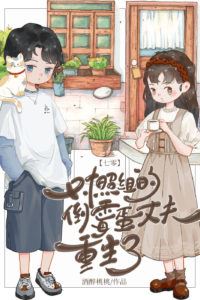
Shocking! The Reborn Troublesome Concubine’s Daughter Turns Over a New Leaf
Novel Info
  • Author:
  • Status:Ongoing

Summary

... Read More

Cui Yunchu, a concubine-born daughter of the prestigious Cui family, wakes up on the edge of a cliff with her life hanging by a thread. Tang Qingwan, her cousin and the betrothed of the Crown Prince, threatens her before letting her drop, only to pull her back. This confrontation serves as a stark reminder of Cui Yunchu's past life, where her obsessive scheming to become Crown Princess led to her brutal murder by Shen Xiabai, a descendant of the rebel Shen Clan, after she foolishly climbed into his bed. Having returned to the past, Cui Yunchu is determined to change her fate and avoid the tragic end that awaits her.

Back in her courtyard, Cui Yunchu reflects on the toxic influence of her late mother and Nanny Zhang, who had instilled in her the belief that coquettish manipulation was the only path to security. She decisively rejects these teachings, discarding the illicit manual of stratagems that had guided her misguided actions. Her resolve is tested by her family dynamics: Tang Qingwan, the ideal future Empress, views her as a pest, while her legitimate half-sister, Cui Yunfeng, despises her for her past behavior but harbors a secret kindness. Prince An, Cui Yunfeng’s childhood sweetheart, remains oblivious to the dangers Cui Yunchu now perceives in their past-life romance.

At the Grand Princess’s flower-viewing banquet, the political undercurrents of the capital are laid bare. Cui Yunchu witnesses the tension between Tang Qingwan and Liu Wanting, a woman the Empress intends to place as a side consort to the Crown Prince to balance the power of the Cui and Tang families against the military influence of Liu Wanting’s father. Instead of causing a scene or competing for male attention, Cui Yunchu adopts a strategy of calculated indifference. She bets with Cui Yunfeng on the talent competition’s outcome, predicting Liu Wanting’s victory based on her knowledge of the predetermined arrangements.

When the Grand Princess attempts to humiliate Tang Qingwan by exposing Cui Yunchu’s past transgressions with the Crown Prince, Cui Yunchu turns the tables. She recites a moral lecture delivered by Old Madam Cui about dignity and integrity, implying that those who judge others should first examine their own hypocrisy regarding Liu Wanting’s insertion into the Crown Prince’s household. This verbal deflection earns her Old Madam Cui’s approval and secures a reward, marking a significant shift in her family’s perception of her.

Later, Old Madam Cui reveals the deeper political stakes to Tang Qingwan: the Emperor’s suspicion of the Cui and Tang clans’ influence necessitates the marriage alliance with the Liu family. Tang Qingwan accepts this duty with stoic grace, reaffirming her commitment to the family’s survival. Cui Yunchu, overhearing snippets of the conversation, learns that the Shen Clan’s rebellion is the root cause of her death in the previous timeline. Realizing that Shen Xiabai is the descendant of the very clan her family helped dismantle, she resolves to avoid him completely to preserve her life.

The story follows Cui Yunchu’s transformation from a scheming antagonist to a pragmatic survivor who navigates the treacherous waters of imperial politics with newfound wisdom. By rejecting the toxic expectations of her past and leveraging her family’s protection, she seeks to carve out a safe and independent existence, far removed from the fatal entanglements with the Crown Prince and the vengeful Shen Xiabai.

Latest Release
DateGroupRelease
2026-09-26akknovel c277
2026-09-26akknovel c276
2026-09-26akknovel c275
2026-09-26akknovel c274
2026-09-26akknovel c273
2026-09-26akknovel c272
2026-09-26akknovel c271
2026-09-26akknovel c270
2026-09-26akknovel c269
2026-09-26akknovel c268
2026-09-26akknovel c267
2026-09-26akknovel c266

Community Reviews

Rating(0 / 5.0, 38votes)
5 stars
0(0%)
4 stars
0(0%)
3 stars
0(0%)
2 stars
0(0%)
1 stars
0(0%)

Popular reviews

... Read More
The opening scene is cinematic to the point of almost feeling like a drama production. Moon hanging high in the sky, night mild and gentle — this softness immediately contrasts with the violence of a half-conscious woman dangling over a bottomless abyss. The visual contrast is everything. Tang Qingwan's skirt fluttering in the wind, her white robes making her look like a ghost or a goddess, while Cui Yunchu is sprawled on the ground in dirt and cold sweat. I keep coming back to the moonlight imagery. It's not just atmospheric — it's thematic. The whole story seems built on contrasts: clouds and mud, straight roots and crooked flowers, the perfect fiancée and the concubine-born schemer. The moon illuminates everything equally, but only Tang Qingwan looks beautiful in it. The Cui family estate itself feels alive. Century-old aristocratic family, prestigious and prominent — but there's rot underneath, and Cui Yunchu is its most visible symptom. The birch trees rustling as she limps back, the bluestone path that her sister wishes she could shatter with her footsteps. These details make the world feel tangible, not just a backdrop for intrigue. What strikes me most is how the author uses physical spaces to reveal character hierarchy. Tang Qingwan stands above, literally and figuratively. She's on solid ground, pristine, surrounded by servants carrying thick stacks of letters — proof of Cui Yunchu's failed schemes. The thrown letters scatter like fallen leaves, a perfect visual metaphor for everything Cui Yunchu has built crumbling to the ground. The bedroom scene with Xing'er and Nanny Zhang helps too — intimate, domestic, grounded. It's where we see Cui Yunchu's vulnerabilities without the spectacle of the courtyard confrontation.
... Read More
I need to talk about the Old Madam Cui scene because I re-read it four times and each time I felt something tighten in my chest that I cannot fully articulate. So rewind. Cui Yunchu's grandmother asks if Qingwan came looking for her last night. Cui Yunchu lowers her head in embarrassment. Just... in embarrassment. Not fear, not anger. She's eleven, or whatever age she is, and she's embarrassed that she got cornered by a scheming cousin and her grandmother noticed. And Old Madam Cui says 'Sigh. Come here, Yunchu. Come to Grandmother.' And the girl walks over with 'a sense of trepidation creeping into her heart' because this woman marched onto battlefields and was made a general by the late Emperor. She is not a cozy old lady in a rocking chair. She is terrifying. And yet. 'Come to Grandmother.' That's it. That's the whole emotional mechanism of the scene. Not 'I will teach you a lesson.' Not 'let us discuss your failure.' Just: come here. Be near me. And then she pats her head. Startled, Cui Yunchu shrinks back, and the older woman withdraws her hand. 'You act so boldly, yet you still know fear?' And that line broke me a little because it acknowledges both parts of her at once. The boldness is new - it's the reincarnation layer, the 'I refuse to be pushed off a cliff anymore' layer. The fear is the old wound. The body remembers what the mind tries to forget. And the grandmother sees both without judgment. Then the actual words. 'A person of honor does not steal what others cherish.' 'Fame, wealth, and glory are indeed tempting. But a person lives for their pride and integrity.' And I think what makes this hit different from, say, a father giving a similar speech, is that this woman is telling it from a position of total power. She doesn't NEED to be honest with her granddaughter to get something. She's not bargaining. She's just saying: this is what I value, and I will not make you trade it for a prince's glance. 'Grandmother will never treat you unfairly. We don't need to steal from others. I will definitely choose an outstanding husband who is perfect in every way just for you.' And then the last line. 'In the future, once you have your own husband, you can torment and boss him around however you please.' In a capital where men are explicitly 'the lords of the sky,' this woman just... said that. Casual. Like she was handing out napkins. And Cui Yunchu peeked up with red eyes and BURST INTO LAUGHTER. Not crying. Laughing. Because the humor was the release valve for everything the grandmother had built up. And I think that's the most honest reaction I've seen in this whole book. You don't sob at being told you deserve good things. You laugh because the absurdity of finally hearing it makes you stupid for a second. What the romantic subplot needs, and I keep coming back to this, is for the eventual husband to be someone who LOVES that the grandmother raised her this way. Someone who finds the 'integrity over stratagems' philosophy genuinely attractive rather than naive. Because the whole emotional arc of this book is not 'will she get the prince.' It's 'will she get a life where she never has to kick a nanny and drink cold tea to calm down.' Will anyone ever just hold her head down and say come here without it being a strategy session?
... Read More
I was going to write about the overall prose style first, but I got derailed by Cui Yunfeng and I'm just going to go with it because she's so fun. 'Cui Yunchu, do you not know how to walk without swaying your hips?' And then 'Cui Yunchu, get the hell away from me!' Three sentences. That is the entire character. She does not build up to her anger. She does not modulate. She is a match being struck. 'We are going to a banquet, not a beauty pageant' is the kind of line that just lands perfectly because it's true and it's delivered with zero apology. And when the grandmother calls them in, Yunfeng's face 'immediately turned a bit pale' and she pouts and glares at Yunchu. She is not subtle. She is a very loud, very small firecracker who is terrified of her grandmother and lets everyone else see it. I love that the author does NOT give her a sly internal monologue. We just see the pout. We just see the glare. She's eleven or twelve and she's performing outrage because actual fear is worse. But Cui Yunchu's dialogue is the real standout and it's because of the rhythm. Short declaratives. No qualifiers. 'I am beautiful. It is pleasing enough to look at myself in the mirror every day. Why would I go looking for trouble?' That's three sentences and the entire philosophy of her new self in them. She doesn't say 'I think perhaps I am quite lovely and therefore I see no need to compete.' She just states it like gravity. And the contrast with Nanny Zhang's wobbly, overlong speeches ('The Cousin Miss is just trying to scare our Miss. She would not actually do that. Besides, if our Miss wins the Crown Prince's favor, His Highness will naturally protect her.') is SO on purpose. Nanny Zhang talks in conditionals and hedges and 'besides.' Yunchu talks in periods. And the humor! 'You already have one foot in the grave, so stop acting cute. It gives me the creeps.' I kept trying to imagine the actual delivery. I think it's flat. Deadpan. She's not even smiling. She's just stating a biological fact about hispanic servitude and moving on. 'No, they were corrupted by those Thirty-Six Stratagems. Another day, I would have to ask around and find out which idiot wrote that book.' That internal voice is so good. It's not the grand narration voice. It's her talking to herself while she's still furious and slightly out of breath after kicking someone. It's messy and specific and it makes me trust that this is an actual person and not a character in a plot. The author also does something I don't see enough: they let the dialogue be incomplete. 'Miss...' Nanny Zhang starts, and Yunchu glares her back into silence. No sentence. The threat is the sentence. Or Old Madam Cui 'shot her a glance but said nothing.' The silence is doing work. I don't know if I can articulate why that feels so right for this book specifically but I think it's because the whole world operates on unwritten rules, on things that are said by NOT being said. You don't announce the threat. You just look at them. And they know. And that's scarier than words. Anyway I'm rambling. The point is the voices don't blend. If you shuffled the dialogue tags I could still tell who's talking by the sentence length alone. That's a high bar and I think the author clears it here. Whether they keep clearing it through the banquet chapters is what I'm wondering as I turn the page.
... Read More
The dialogue in this novel is sharp enough to draw blood and I'm obsessed. Let me just quote the line that made me laugh out loud: 'I am already living a good life, so you can go die now.' That is arguably one of the most brutal, perfect dismissals I've read all year. Cui Yunchu says it so flatly, after Nanny Zhang has been going on this entire speech about how the Old Madam is biased and how Cui Yunchu will be bullied for the rest of her life. The woman has just essentially predicted her own demise and Cui Yunchu's response is a polite 'no thanks, I'm good, you may leave.' The author's voice here is doing something really interesting — the narration often matches Cui Yunchu's internal cynicism, so when she thinks 'What young girl wouldn't go crazy after being continuously manipulated and corrupted, first by her mother and then by Nanny Zhang?' it reads like both her thought AND the author's commentary simultaneously. Then there's Cui Yunfeng's dialogue, which is wildly distinct from everyone else. She doesn't speak in complete, polished sentences when she's flustered. 'I... I... I'll have Cousin Sister throw you to your death!' You can literally hear her stammering. She's trying to project authority over someone she knows is smarter than her and failing adorably. And Nanny Zhang's voice is completely different again — she speaks in loops, in worries, in the anxious cadence of someone who genuinely believes she's protecting her charge. 'Before Concubine Zhou passed away, her greatest worry was you. She begged me time and time again...' This is the voice of a woman who has rehearsed this grief so many times it's become her native language. The author gives every character a fully realized vocal identity and it makes the exchanges feel alive, not scripted.
... Read More
The phoenix hairpin is doing so much thematic heavy lifting and I keep circling back to it. It's a wedding token. "If a girl were to wear it on her wedding day, which family would not hold her in higher esteem?" So it's literally the object that marks you as a valuable marital asset. And the competition to win it is between young ladies whose families are already positioned in the political ecosystem. The hairpin doesn't make you valuable, it *certifies* your value. Which is such a bleak thing to realize halfway through a chapter about zither music. And then Cui Yunchu's internal monologue about her own position: "although she was despised by everyone, even the Grand Princess would respectfully address her as Eldest Miss Cui. Giving her plenty of face." The hairpin vs. the title. The phoenix hairpin is a thing you *win*, a prize that comes from the Empress, from the top down. "Eldest Miss Cui" is a title you're *given* by social convention, an empty formality that keeps you at the table without giving you a seat. Both are symbols of worth that aren't actually worth. One is a trinket. The other is a name. Neither changes what anyone thinks of you when the lights go off. I've been thinking about the word "face" (面子) as the operating currency of this entire world. The Grand Princess gives face. Cui Yunfeng gives Cui Yunchu face by covering her "illness." Tang Qingwan gives Miss Liu face with congratulations. The hairpin is the ultimate face-object, the thing you display on your wedding day so everyone can see what you've won. And the whole competition is a public face ritual. Nobody talks about what they actually want. They talk about the hairpin. They talk about zither skills. They talk about the Empress's generosity. And underneath all of it: who is being valued, by whom, and at what cost. The phoenix is supposed to be auspicious. But in this world it's just a pretty pin that tells you where you rank in a queue. That's genuinely a bitter image and I keep coming back to it.
... Read More
Okay I'm going to say something and I want you all to just hear me out: Cui Yunfeng and Cui Yunchu have the most *aggressively* codependent sister dynamic I've seen in years. Like she literally will not let her older sister out of her sight at a banquet. "Today you should not even dream of leaving my sight for a single step. I will not give you another chance to seduce His Highness the Crown Prince." Wait. WHAT. She's not mad about the hairpin bet. She's mad that Cui Yunchu might go flirt with the Crown Prince while she's not watching. That's... actually insane and also the funniest jealousy I've read in a while. And Cui Yunchu's response to being called "a calamitous beauty" is just "You were the one staring blankly at me, so why are you scolding me?" which made me physically snort wine. She's so lazy and unbothered about it. She's just there, sipping fruit wine, letting everything happen, and Cui Yunfeng is the one flustered and upright and "Do not hold yourself so stiffly" UGH. The power dynamic keeps flipping. One moment Cui Yunfeng is the one keeping Cui Yunchu in line, next moment she's the one choking with anger at a hairpin bet she lost. But here's what actually got me: they're a unit. When the Grand Princess asks if Eldest Miss Cui needs a physician, Cui Yunfeng covers for her immediately without a second thought. "Perhaps she just had a few too many pastries earlier." It's such a small moment but it shows they've got this shared language, shared rhythm. Cui Yunchu tugs at her skirt, Cui Yunfeng brushes her hand away and pulls the fabric up. Two seconds of choreography that says "we're in this together, deal with it later." And then when Cui Yunfeng says the sick excuse, Cui Yunchu just grumbles "Why did you not just say that you were sick?" like she's annoyed at the logistics of the lie, not at her sister protecting her. I keep thinking about how this would look in a family where the eldest is the schemer and the second is the enforcer who's actually the more emotionally invested one. It's inverted from what I expected. The "villainous" Cui Yunchu is the detached one, and the "proper" Cui Yunfeng is the one who's actually sweating and choking and turning red. That gap is doing so much work in their scenes. Do you think Cui Yunfeng is actually jealous of Cui Yunchu's relationships with men, or is it genuine possessiveness? Because the line about "not giving you another chance" reads so much more threatening than it needs to be for a sister.
See all reviews

Custom lists

See all custom Lists