Summary

... Read More

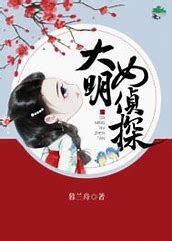
Yan is a college freshman who possesses the rare ability to see golden halos above people’s heads, displaying text that reveals their hidden destinies or secrets. Having endured years of living in the shadow of genius neighbors and a reincarnated high school desk mate, she chose Bin City University specifically to escape such extraordinary individuals and live an ordinary life. Upon arrival, however, her hopes are immediately dashed when she discovers that her dormitory roommates all bear powerful halos: Yi Zhi is a Post-Apocalyptic Superhuman, Gu Jiasui is an Ancient-to-Modern traveler, Ding Ling is a Ghost King Reborn, and Chu Bingbing is bound by a Spend Money or Die system. Despite her desire for normality, Yan finds herself inexorably drawn into the dramatic orbits of these five unique personalities.

The narrative establishes the distinct characteristics of each roommate through their interactions and secrets. Yi Zhi, an orphan from a wasteland timeline, secretly uses spiritual energy to revive plants, nearly exposing her powers to Yan, who manages to cover for her with quick thinking. Gu Jiasui, a former princess from the Great Zhou Dynasty, struggles to adapt to modern society while dealing with her toxic family dynamics. Chu Bingbing is forced by her system to spend large sums of money under threat of death, leading to extravagant gestures like gifting expensive skincare to her new friends. Ding Ling, a resurrected ghost, brings back funeral offerings as gifts, unaware of their inappropriate nature in the modern context. Yan, the only truly ordinary person, acts as the grounded anchor of the group, navigating their bizarre behaviors with pragmatism and wit.

A central conflict arises when Gu Jiasui is targeted by internet trolls and harassed by a student who throws water at her on campus. Yan instinctively saves Gu Jiasui with superhuman reflexes, revealing latent physical abilities that hint she may not be as ordinary as she appears. The incident goes viral, and Gu Jiasui’s younger sister, Lu Jianian, exploits the situation for publicity by posting a manipulated photo of Yan online, effectively doxxing an ordinary student. This forces Yan into the spotlight she desperately wanted to avoid, causing her significant distress and leading to a brief estrangement as she tries to lay low.

The story reaches a turning point when Gu Jiasui publicly confronts her sister on social media, defending Yan’s privacy and exposing Lu Jianian’s manipulative tactics. This act of solidarity strengthens the bond between the roommates, transforming them from strangers into a protective unit. Yan begins to accept her role within the group, realizing that her presence provides a necessary sense of normalcy and stability for the chaotic individuals around her. Meanwhile, Yi Zhi becomes increasingly observant of Yan, suspecting that her calm demeanor and reaction speed conceal a hidden power similar to those she encountered in her past life.

As the semester progresses, the group navigates various challenges that test their compatibility and loyalty. Chu Bingbing’s spending tasks create comedic scenarios where she dumps wealth on her friends, while Ding Ling’s supernatural nature occasionally causes chilling incidents that Yan learns to manage. Gu Jiasui continues her journey of cultural adaptation, finding comfort in the acceptance of her dorm mates. Yan’s relationship with her childhood friend Zhu Jue remains a steady emotional support, though she increasingly finds herself entangled in the dramas of Room 320.

The overarching direction suggests that Yan’s ordinary life is impossible, but her unique position as the only "normal" person makes her indispensable to the haloed individuals around her. She serves as the bridge between their extraordinary lives and the mundane world, helping them navigate social norms and emotional complexities. The story moves toward a deeper exploration of Yan’s own hidden potential, hinted at by Yi Zhi’s suspicions and her own uncanny reflexes, while the roommates continue to rely on her for grounding and friendship. The narrative balances comedic situations arising from cultural and supernatural misunderstandings with moments of genuine camaraderie, establishing a dynamic where Yan’s desire for ordinariness is constantly challenged by her growing connections with her extraordinary roommates.

Latest Release
DateGroupRelease
2026-09-26akknovel c168
2026-09-26akknovel c167
2026-09-26akknovel c166
2026-09-26akknovel c165
2026-09-26akknovel c164
2026-09-26akknovel c163
2026-09-26akknovel c162
2026-09-26akknovel c161
2026-09-26akknovel c160
2026-09-26akknovel c159
2026-09-26akknovel c158
2026-09-26akknovel c157

Community Reviews

Rating(3.9 / 5.0, 56votes)
5 stars
17(30%)
4 stars
19(34%)
3 stars
18(32%)
2 stars
2(4%)
1 stars
0(0%)

Popular reviews

... Read More
Okay, so this whole sequence is honestly genius writing. Yi Zhi reviving that nearly-dead flower with her spiritual energy and then getting caught by Yan? That is such a loaded moment. On the surface it looks like a minor scene, but it's really the foundation for everything going forward. The way the author structures it is what I love. First we get the tension of Yi Zhi being caught red-handed, then her immediate threat reflex with the forget-me-not flower — which, by the way, is a brilliant detail because it tells us SO much about her past life without a single exposition dump. She immediately thinks memory erasure. That's not something a normal person would reach for. And then Yan's response completely flips the script. Instead of being suspicious or exposed, she plays it off as 'oh you just wanted to save face, I get it.' That's not just clever dialogue — that's a character choosing to protect someone instead of exploiting them. The fact that Yan ends up bringing up the control experiment pot shows how perceptive she actually is. She sees everything but chooses kindness. What's also wild is the bathroom conversation that follows. Yi Zhi offering to bring a Purification Grass to solve their dorm hygiene issues? That's worldbuilding disguised as casual roommate chat. The author is layering plot points so efficiently here. We're getting character development, power system hints, AND worldbuilding all in one exchange.
... Read More
"This level of beauty! This charm! Celebrities are on a completely different levels compared to ordinary beauties, okay? Spending a mere 50,000 to make such a beauty smile and feel happy? Totally worth it!" I need to talk about this moment because it completely wrecked me in the best way. Chu Bingbing, this girl who just spent 113,000 yuan on a whim, watching Gu Jiasui's reaction like it's the most important thing in the world — and honestly? Same. If someone defended me the way Bingbing defended Gu Jiasui on Weibo, I would literally spend my entire savings too. There's something so tender about this whole subplot. Gu Jiasui is constantly under hate attacks, and here comes this random CC123 account — which we know is Bingbing's throwaway — standing up for her with generous giveaways. It's not a romantic love story (yet?), but the emotional connection between these two women feels more genuine than half the romance I've read. Bingbing doesn't even know Gu Jiasui personally, and yet she's emotionally invested enough to spin that roulette wheel with skill, calculate her critical hit multiplier, and turn a spending task into an act of love. The moment when Gu Jiasui smiles and says 'she must be a wonderful person' — that's the kind of warmth that makes you believe in kindness again. Amidst all the internet toxicity, someone chose to be generous. And Bingbing's reaction, curling her toes against the floor like she's trying to dig a hole with them?? The crush is REAL and I am not okay with it.
... Read More
I re-read the Yi Zhi and Gu Jiasui duvet scene four times. Not because it's romantic or anything, but because there's something about the emotional texture of it that I can't stop circling. Gu Jiasui is kneeling on her bed, struggling, clumsy, and she shows no intention of asking for help. She's from ancient times. She's been dropped into a world with zippers and Tencel sheets and WeChat group chats and she just... endures it. And Yi Zhi watches from below with her arms crossed, unable to bear it any longer, and just goes and fixes it. And here's the thing that got me — it's not warm. There's no "hey, you okay?" There's no smile. Yi Zhi grabs the rail, climbs in two rungs instead of three, takes the quilt, folds it into a square, hands it back, hangs the curtain, jumps down. And Gu Jiasui just arranges her classical makeup box and thread-bound books on her desk and nods. It's the most tender moment in the whole batch and it's also the most emotionally closed one I've ever read. And I think that's exactly the point. These two people are so fundamentally different from each other — one lives in a world where survival means physical dominance and military discipline, the other lives in a world where a jade hairpin and a pipa are the whole cosmos — that the only language they share right now is action. No small talk. No "your pillow looks uncomfortable, do you want mine." Just do the thing. Fix the square. Hang the curtain. Nod. Move on. What's killing me a little is that nobody else in the room would do this. Chu Bingbing is already gone, running off with her Miu Miu bag. Ding Ling is a shell. The emotional gap between these five is so vast that the smallest gesture of practical help reads like a declaration. I think if this becomes a friendship later, it'll be the kind where they never say "I care about you" but they'll always be the first one in the room when the other crashes. And honestly? That might hit harder than any cute pairing subplot the author could write. I just need them to share one meal by chapter ten so I can confirm this isn't my brain projecting a whole bond onto two people folding a duvet. But I'm projecting. I'm fully projecting and I'm happy about it.
... Read More
Okay so I need to talk about how this whole Weibo crisis got resolved because I was actually impressed. Like, usually in these stories the conflict just... evaporates? Someone says 'it's fine now' and moves on. But here Gu Jiasui literally writes out three numbered points, and each one hits differently. Point one is the privacy argument: 'you showed up at 8 a.m. to check on me' when she never even sent a message. Point two is the legal age thing—GJiasui is 18, she's an adult, why are you thanking someone on my behalf. Point three is the whole 'you're a public figure, a university is not your reality show set' thing. And the beautiful part is that the plot actually lets the *readers* play internet detective for like two pages. They show us the comments shifting, the 'are you looking for an ordinary person or targeting one' replies, the videos getting blurred. It's almost a meta-narrative about how online discourse works in real life. The main plot line (Yan trying to stay low-key) stays quiet the whole time while this subplot roars, and then suddenly it's just... handled. One WeChat message: 'This happened because of me, and I'll make sure it's resolved.' Clean. I love that Gu Jiasui takes ownership instead of letting everyone else do the work. The one thing I'd nitpick: the transition from 'crisis on Weibo' to 'let's go to the museum' felt a little too breezy. Yan just... zips through the subway in a crowd, signal goes dead, crisis passes while they're in air-conditioned silence. It works mechanically but emotionally it short-circuited the tension I was feeling. Like I was bracing for a bigger confrontation and got a museum instead. Still, the arc from public shaming → targeted counter-attack → total wipe of the evidence? Satisfying. Really satisfying. And the fact that it's framed through Yan's internal relief rather than some dramatic showdown makes it feel grounded.
... Read More
'Just this small bottle of serum and the eye cream would cost at least 6,000 yuan.' And I want to zoom in on that number because it's not just a worldbuilding detail about wealth. It's a conflict detonator. Think about it. Four girls, first day of school, one of them just casually distributes two months of living expenses as 'samples.' The stake here isn't money. The stake is the social contract of the dorm. If you accept 6,000 yuan from someone you met three hours ago, you owe them something. You're in their economy now. You're a person who receives, not a person who gives. And the author drops this in the middle of a conversation about campus network speeds and student card top-ups, which is such a low-stakes, domestic topic that the wealth drop lands like a hand grenade in a library. 'Quiet! Everyone is reading!' Now, the bigger conflict I'm tracking across these chapters is the Yan-identity thread. What's the actual danger if her secret slips? Not just 'people find out she's powerful.' It's: people find out the girl who was saving lives in that video is the same girl who's in Room 320, scrolling Gu Jiasui's fan page and debating internet packages. The exposure isn't to the public. It's to the roommates. To Bingbing, who will immediately try to befriend her with more expensive 'samples.' To Gu Jiasui, who probably has a whole entourage and PR team that would absorb her into their orbit. To Yi Zhi, who already has a past-life memory of what happens to hidden powerhouses. The text doesn't say it outright but the fear in Yi Zhi's observation—'This unassuming, ordinary demeanor... it was just too similar to that hidden S-class ability user'—carries the weight of 'something bad happened to that person, I think, and you're going to be next.' I haven't gotten a clear picture of what that 'bad thing' is yet, and the author is making me hold that uncertainty, which is smart. The suspense isn't 'will Yan be caught?' It's 'what happens after she's caught, and does she even want to be caught?' The Gu Jiasui subplot adds a second pressure valve. The water-throwing incident is ongoing. The online discourse is toxic. If Yan publicly connects to Gu Jiasui (say, defends her, or the investigation into who threw the water drags the dorm into it), her cover is blown not just in the ability-user world but in the celebrity world. Two visibility systems colliding. And she's in a dorm room, wearing headphones, pretending to play a game, while the entire architecture of her secret life has two different audiences who both want to consume her. I'm not sure she can hold both secrets at once. And I'm not sure she wants to. Which means the next time something happens in this room—another incident, another video, another 'passerby'—I'm going to be genuinely anxious. Not because the stakes are life-or-death. Because the stakes are: can you be the person you are when every layer of that person is a lie you chose to tell?
... Read More
Okay so I just have to say this: the comedic setup here is *chef's kiss* levels of petty cosmic irony. Yan literally prays to every deity she can name before her college entrance exam, begging for a normal life, and the universe looks at her and goes "nah, bet you five roommates in a six-person dorm are all supernatural." That's not just a plot point, that's a *punchline*. The whole first chapter is this long, slow build of her feeling safe, feeling relieved, text Zhu Jue, grab her key, climb three flights of stairs in pure joy. And then boom, four halos. Five. In one room. The pacing of that reveal is actually really well-done because you feel her despair alongside her — she's already cleaning her desk with disinfectant wipes by that point, trying to stay calm, and then the voices start coming from the room and she's basically on the floor emotionally. What I'm excited about is the structure. You've got this main thread of "Yan wants normalcy" running under everything, but the actual plot is going to be driven by the interactions between these five very different supernatural types coexisting in a 30-sqm dorm. You've got a Post-Apocalyptic Superhuman, a Ghost King Reborn, a Spend Money or Die type, an Ancient to Modern type, and one more I haven't met yet. Each one is basically a different genre crammed into a dorm room. The superhuman one's a wuxia/fantasy, the ghost king is urban horror, the spend-money-guy is... some kind of business thriller? Ancient to Modern sounds like a historical reincarnation. And they all just... share a bathroom. I can't believe I'm saying that. I can't believe I'm actually excited about that. The subplot layering is sneaky good too. The flashback to her high school deskmate, the reborn Xu Jiaojiao, is doing double duty: it shows us how the halo system works in a dramatic context (romance, bullying, multiple love interests orbiting one character) while also establishing that Yan has been *watching* these people her entire life. She's not new to this. She's tired of it. That changes how I read every interaction in the dorm — she's not curious, she's weary. She's the straight man in a room full of crazy people and she just wants to sleep. One thing I want to flag: the author is clearly building toward some kind of group dynamic where these five have to work together, probably forced by an external threat. The "Post-Apocalyptic Superhuman" label is doing a lot of worldbuilding in two words. What kind of apocalypse? Has it happened yet? Is Yi Zhi the one who survived it and now just... lives in a university dorm? That detail of her potted plant and saying "I can keep an eye on your things" is doing subtle character work that contrasts so hard with the horror of what her halo says. I'm keeping my eye on this.
See all reviews

Custom lists

See all custom Lists