Summary

... Read More
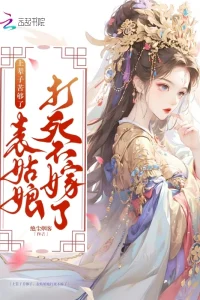
Ye Wanshu is reborn on the eve of her coming-of-age banquet, retaining memories of a tragic previous life where she was betrayed by the two Gu brothers, Tingzhou and Tingchen, who raised her with devotion after her mother's death. In her past life, they humiliated her by bringing a courtesan, Jiang Yueling, to her celebration, leading to her ruin and lonely death. Determined to escape this fate, Wanshu coldly rejects the brothers' expectations and the engagement to marry into the Duke Rong household, a union arranged by both families and sanctioned by the Empress Dowager. The Gu brothers, believing Wanshu is merely throwing a tantrum to gain their attention, bring Jiang Yueling into the mansion, claiming pity for her background. When Yueling stages a dramatic fall into a pond to frame Wanshu for malice, Wanshu openly admits to pushing her, shocking the brothers and her aunt, Ye Huaisu, who have long manipulated Wanshu's isolation and finances to secure their own interests. The conflict escalates when the Duke of Rong, Gu An, discovers his sons' scandalous behavior and the Empress Dowager's marriage decree has already arrived, cementing the betrothal between Wanshu and Tingzhou. Wanshu's biological father, Ji Yuan, the Chief Minister, arrives not out of paternal love but to secure a political alliance, hoping to use Wanshu to counter the Empress Dowager's influence. Wanshu plays both sides, pretending to be a willing bride to manipulate her father into annulling the engagement through imperial channels, while simultaneously exposing the Gu brothers' true nature. Tingzhou, enraged by Wanshu's perceived scheming and his father's anger, publicly declares he will never marry her and defends Jiang Yueling, leading to a violent confrontation where Gu An beats his son. In a pivotal turn, Tingzhou and Tingchen choose to leave the Duke Rong household rather than submit, taking Jiang Yueling with them and formally defying the Empress Dowager's decree. This act frees Wanshu from the immediate threat of marriage to the men she despises. However, her freedom is precarious; her aunt has sold her ancestral estate in Tongyang, leaving Wanshu financially dependent and trapped within the mansion. Wanshu realizes she must navigate the treacherous political landscape involving her father, the Emperor, and the Empress Dowager to secure her independence. During a walk in the capital, she encounters Fu Mingchi, the Prince of Yongning, an obscure royal figure who arrives in the capital for marriage negotiations. Their brief, charged interaction hints at a new alliance, as Wanshu seeks to reclaim her destiny away from the manipulative Gu family and her selfish father, setting the stage for her rise in the capital's complex social and political hierarchy.

Latest Release
DateGroupRelease
2026-08-11shanghai fantasy c93
2026-08-11shanghai fantasy c92
2026-08-11shanghai fantasy c91
2026-08-11shanghai fantasy c90
2026-08-11shanghai fantasy c89
2026-08-11shanghai fantasy c88
2026-08-11shanghai fantasy c87
2026-08-11shanghai fantasy c86
2026-08-11shanghai fantasy c85
2026-08-11shanghai fantasy c84
2026-08-11shanghai fantasy c83
2026-08-11shanghai fantasy c82

Community Reviews

Rating(4 / 5.0, 5votes)
5 stars
2(40%)
4 stars
1(20%)
3 stars
2(40%)
2 stars
0(0%)
1 stars
0(0%)

Popular reviews

... Read More
I have to appreciate how the author builds this world through the smallest details. Take the dinner scene for example. Ji Yuan specifically tells Aunt Zhou: 'From now on, let the concubines dine in their own quarters. Tonight's meal should also be sent to Mucang Hall.' This one line tells you EVERYTHING about the power structure in this household. The legitimate daughter gets her own hall. The concubines eat separately. Ji Ningxi is not invited to share a meal with her elder sister. The spatial arrangement of the household IS the political arrangement. And then there's the description of the conferring ceremony — the maids helping Ye Wanshu dress, the ceremonial attire, the palace involvement. These details make the world feel tangible and real. I could practically see the silk robes, the elaborate hairstyles, the incense in the air. The author also weaves in worldbuilding through gossip — the maids casually discussing the Gu family's turmoil while dressing Ye Wanshu is such a natural way to reveal plot developments without heavy exposition. And the contrast between the grand public ceremony and the private bedroom conversations between Ji Yuan and Zhou Ru creates this layered sense of a world that operates on multiple levels simultaneously. Every room, every meal, every ceremony is charged with meaning. This isn't just a backdrop — it's a character in itself.
... Read More
I need to talk about this one meal scene because it absolutely wrecked me. Ye Wanshu and her father sitting together, eating food that reminds her of her childhood, and he's crying — actually CRYING — telling her how sorry he is for neglecting her. And she's just sitting there, taking it in, feeling this warmth she's been denied for over ten years. I literally had to pause and process my own emotions because the author made me FEEL what Ye Wanshu was feeling in that moment. The text says 'For a fleeting moment, Ye Wanshu was deeply moved and truly wished she could remain in the Ji household as his cherished daughter.' And I understood. I UNDERSTOOD. Because we've all been there — that moment when someone shows you kindness after years of being treated like nothing, and your heart just... cracks open. The author then immediately undercuts it with 'but having endured the hardships of her previous life, she found it difficult to trust anyone's sweet words again.' That's the knife twist. She wants to believe. She DESPERATELY wants to believe. But she's been burned before. This is the emotional core of the entire novel — Ye Wanshu's hunger for genuine connection warring with her hard-earned suspicion. And it's so relatable because that's literally how trauma works. You want to trust but you can't. The author doesn't make Ye Wanshu an unfeeling robot; she makes her human, vulnerable, and achingly real.
... Read More
Okay so let's talk about Ji Yuan because this man is a whole vibe and not in a good way. The scene where he's sitting across from Ye Wanshu, feeding her food her mother used to love, telling her he wants to make amends — it's so perfectly crafted that you almost believe it. Almost. Because the next chapter he's casually telling Zhou Ru about using his own daughter as a political pawn to marry into the Prince of Qi's household. The man literally said 'I will do my utmost to make up for the years I've neglected you' to her face while already planning to sell her into another arrangement. And the worst part? Ye Wanshu ALMOST believes him. She feels a 'twinge of confusion' and thinks 'maybe he truly wanted to make amends.' That's the tragedy right there — she's so starved for a father's love that even obvious manipulation feels like hope. Meanwhile Ji Ningxi is watching from the sidelines, seething, and Aunt Zhou is playing the long game. The household dynamics in this novel are absolutely delicious — every character is wearing a mask, every smile has an agenda, and the legitimate daughter vs concubine's daughter tension is simmering under every interaction. Ji Yuan is a fascinating villain-adjacent character because he genuinely seems to love his daughter in his own twisted way while simultaneously treating her like a chess piece. That contradiction makes him so much more interesting than a cartoonishly evil father.
... Read More
The dialogue in these chapters is absolutely masterful. Let me give you one example that perfectly captures what I mean. Ji Yuan tells Ye Wanshu: 'Father has heard there will be many suitable men among the successful candidates in this spring examination. Why not choose one of them?' On the surface, this sounds like a loving father giving his daughter freedom. But read it again — he's setting up the introduction to Ji Yunze, the top scholar he's already chosen for her. He's framing a political arrangement as a romantic opportunity. And Ye Wanshu's response? 'Father, as the Chancellor, even if you wish, ordinary men may not dare to marry your daughter.' She's pushing back gently, testing the waters, and he immediately reassures her: 'As long as Wanshu finds him suitable, everything else is no issue.' Classic manipulation wrapped in paternal warmth. Then later, Zhou Ru's dialogue with Ji Yuan is equally layered. She says 'I am a woman, I have my ways to make the eldest miss willingly marry into the Prince of Qi's household' and the way she phrases it — almost playful, almost conspiratorial — makes her feel like a real person with agency, not just a scheming concubine. The author gives every character a distinct voice. Ji Yuan speaks with the measured cadence of a seasoned politician. Zhou Ru's dialogue is softer, more seductive, but sharp underneath. Ye Wanshu's lines are increasingly confident — she's learning to navigate this world. And the narration itself has this dry, knowing tone that makes you feel like you're being let in on secrets.
... Read More
Let me just say this: the political maneuvering around Ye Wanshu's marriage is more intense than any battle scene I've read. Think about the stakes here. She's been granted the title of County Princess — which should be a huge win, right? Wrong. Because now EVERYONE wants a piece of her. Ji Yuan wants to marry her to the Prince of Qi as a secondary wife to secure political alliance. The Emperor has essentially promised her to the top scholar. And Zhou Ru is already plotting in the background, trying to manipulate her into accepting the Prince of Qi match. Meanwhile, the Gu family is falling apart — Gu Tingzhou is confined, his heir title stripped, because he refused to give up on Jiang Yueling. The novel is weaving multiple conflict threads simultaneously and they all connect back to Ye Wanshu's future. What's brilliant is how the author raises the stakes without ever making it feel forced. Every character has a legitimate reason for their actions. Ji Yuan isn't evil — he's a man who's spent his life walking on thin ice and sees marriage as the only insurance policy. Zhou Ru isn't a cartoon villain — she's a concubine who's fought for ten years to secure her daughter's future and sees the legitimate daughter as a threat. The tension comes from competing loyalties, not simple good vs evil. And Ye Wanshu? She's the prize everyone's fighting over while barely having a say in her own fate. That's the real conflict — a 13-year-old girl caught in a web of adult ambitions.
See all reviews

Characters

See all characters

Custom lists

See all custom Lists