She Quit the Restaurant Business to Sell Vegetables in the 1990s
Novel Info

Summary

... Read More

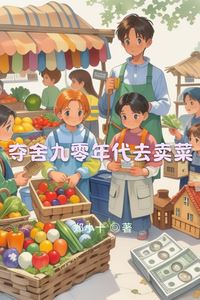
Yu Ling, a twenty-five-year-old woman from 2025 who lived a comfortable but lonely life in a city apartment, dies after accidentally choking on a lychee pit. Upon regaining consciousness, she finds herself in the body of a twenty-year-old woman named Yu Ling in rural China, July 20, 1994. The original owner of the body had also died after choking on roasted soybeans, an incident that allowed Yu Ling’s soul to inhabit the new body. She wakes up in a humble village home, cared for by an elderly woman who refers to her as a daughter-in-law and is raising a toddler named Miaomiao. Yu Ling quickly realizes she has traveled thirty years into the past and is now trapped in the life of a young mother in a poor rural household.

Initially resistant to her new role, Yu Ling struggles with the responsibilities of childcare and the stark poverty of her surroundings. The household lacks modern amenities, possessing only a black-and-white television and basic farming tools. Despite her reluctance, she finds herself caring for Miaomiao, gradually forming a maternal bond with the child who clings to her. Her aunt, a woman who rides a motorcycle to visit, plays a significant role in Yu Ling’s life, taking her to a county hospital for medical examinations after Yu Ling claims to have memory loss from the incident. The doctor confirms no brain damage, suggesting her personality shift may be due to natural maturation or psychological factors.

As Yu Ling adapts to her new reality, she discovers that her husband, Shitou, is incarcerated, leaving her to manage the household alone with the elderly grandmother. She learns that the family’s financial situation is precarious, with all important documents and savings hidden by the grandmother, who distrusts her. Determined to gain some independence, Yu Ling begins to explore economic opportunities within the village. She observes the local market dynamics and identifies a potential business venture involving the sale of goose eggs, which her aunt brings in bran for preservation. Recognizing the value of these eggs in urban markets, she decides to start a small-scale trading operation.

Yu Ling’s journey involves navigating the complexities of rural social dynamics, including interactions with neighbors like Old Lady Yang and dealing with the limitations imposed by her lack of mobility due to childcare. She reflects on her past life, comparing her previous comfort and freedom with her current constraints. Despite the challenges, she resolves to make the best of her situation, focusing on earning money to support herself and Miaomiao. Her strategic thinking and willingness to learn from her surroundings mark a significant shift from her initial despair to proactive engagement with her new life.

The narrative follows Yu Ling’s gradual integration into the village community as she balances motherhood with her entrepreneurial ambitions. She seeks to improve her family’s living standards while maintaining a sense of self-identity amidst the unfamiliar customs and hardships of 1990s rural China. Her story is one of adaptation and resilience, as she navigates the unexpected twists of fate that have thrust her into a completely different world.

Latest Release
DateGroupRelease
2026-08-11shanghai fantasy c48
2026-08-11shanghai fantasy c47
2026-08-11shanghai fantasy c46
2026-08-11shanghai fantasy c45
2026-08-11shanghai fantasy c44
2026-08-11shanghai fantasy c43
2026-08-11shanghai fantasy c42
2026-08-11shanghai fantasy c41
2026-08-11shanghai fantasy c40
2026-08-11shanghai fantasy c39
2026-08-11shanghai fantasy c38
2026-08-11shanghai fantasy c37

Community Reviews

Rating(4.4 / 5.0, 5votes)
5 stars
3(60%)
4 stars
1(20%)
3 stars
1(20%)
2 stars
0(0%)
1 stars
0(0%)

Popular reviews

... Read More
I'm going to be honest with you — dialogue in novels is where I usually lose interest. Too formal, too expository, too many characters sounding like the same person. But this? This is different. The grandmother-in-law has a voice that's instantly recognizable. She's practical, occasionally dismissive, but always caring in her own way. "No need. You just rest with Miaomiao." Short. Direct. She doesn't ask for help because she doesn't want Yu Ling to tire herself out, but she also doesn't coddle her. She gives her seeds and says "plant these" and moves on. Yu Ling's voice is different — she's the learner, the question-asker. "Why plant here?" "Can we still plant beans this time of year?" She's not performing. She's genuinely trying to understand. And when she comes up with the idea to sell different vegetables together, it's not some grand monologue — it's practical thinking spoken out loud: "a basket sells too fast, but if they're not good, a basket can't be sold. But a bucket's worth is just right." Then there's the grandma customer: "Hey, little wife!" — that address alone tells you everything about the era and the relationship. She's familiar, warm, slightly bossy in that Chinese grandma way. "I've been waiting days for you." Not accusatory — just genuinely excited. And the narration? It has its own voice too. Dry humor. "This child really had improved." Said with the weight of someone who measures love in competence. "She was getting more and more used to being this 'cheap mom.'" The quotation marks around cheap mom are doing so much work there. Every character sounds like they could walk out of this page and into your life. That's rare.
... Read More
I want to talk about something that might sound counterintuitive — this chapter is basically about planting vegetables and selling them, and I did not want to skip a single page. How does an author make farming *interesting*? Let me tell you, most novels would turn this into a boring montage. But here, the pacing is deliberate in a way that actually works. The author gives us time. Time to walk through the yard and discover what's growing. Time to learn about the land and its history. Time to cook and eat. Time to ride the tricycle to town and find the perfect selling spot. The structure moves in these natural cycles: wake up early → check the yard → plant → cook → eat → go sell → come back. It mirrors the actual rhythm of rural life, which means the reader naturally falls into that rhythm too. You're not being pushed toward some climax — you're being invited to slow down and notice things. And yet, there's still forward momentum. Yu Ling is learning. She's expanding. She goes from not knowing what malabar spinach is to planning to sell it. She goes from watching her grandmother-in-law do everything to carrying water and planting beans herself. She goes from selling eggs at the compound gate to finding a new spot by the park. The chapter ends with her meeting a regular customer — a grandma who recognizes her from before. That's a small moment, but it's also a hinge. It means Yu Ling is building something. She's not just surviving — she's establishing herself in this new world. And the pacing lets you feel that growth happening in real time, which is honestly kind of magical.
... Read More
I have to say, the way this author builds the world through the yard and the land is just *chef's kiss*. You don't get some grand description of the village or the province or the era — you get it through what people grow, what they eat, what they sell, and what they waste. Let me paint this for you: the yard has a chicken coop in what used to be a pigpen, sweet potato vines crawling everywhere, malabar spinach climbing three posts, chives in two beds, water spinach in a ditch, and this whole hidden world behind the cornfield that turns out to be this tiny homestead plot bought for two yuan total. And the land itself tells the story. The old lady explains that the family's main land is near the canal because that's where the water is, but this slope land had no access — so nobody wanted it. Except the grandfather bought it for two yuan for twenty years. Two yuan. For an entire plot of land. That single detail says everything about the era, the rural economy, the value of things. Then there's the cooking scene — the iron pot, the steam rising, the garlic braid hanging on the wall, the water-flower bowl with white enamel and green speckles. These aren't just set dressing. They're the texture of a life. The author doesn't tell us this is 1980s rural China — we figure it out from the details: the tricycle cart, the state-owned work units with their residential compounds, the way the grandmas do morning exercise in the park and then shop for vegetables on the way home. The world feels lived-in because it is. Every object has a history. Every plot of land has a story.
... Read More
Okay so let me just say this — the relationship between Yu Ling and her grandmother-in-law is genuinely one of the most realistic depictions of a mother-in-law/daughter-in-law dynamic I've ever read in a novel. In most stories, these two are either at each other's throats or it's some forced harmony. But here? It feels earned. The grandmother is clearly the practical one — she's the one doing the actual farming work, digging up the wasteland, teaching Yu Ling which beans grow where, when to plant, how to prep the sweet potato leaves. And Yu Ling? She's not just sitting around. She's learning. She's asking questions. She's carrying water after planting. She's taking initiative to go sell vegetables on her own. But the real moment that sold me was when the old lady thinks to herself: "This child really had improved. In recent days, the way she talked and handled things—her mind was clear. As long as she was doing well, then Miaomiao's future would be secure." That's not just observation — that's genuine affection wrapped in practicality. The grandmother isn't gushing or being sentimental. She's measuring Yu Ling's worth in actions, and Yu Ling is passing every test. Meanwhile, Yu Ling has clearly started to see the old lady not just as a caregiver but as someone with depth — her knowledge of the land, her history with the grandfather, her resourcefulness. And Miaomiao? She's the glue. Every time she cries or reaches for her mom, it pulls both women into the same orbit. That's honestly the most realistic family dynamics I've seen — not grand declarations of love, but shared responsibility and quiet moments of connection.
... Read More
I need to talk about this one moment and I'm not even sure how to approach it because it hit me harder than I expected. Miaomiao wakes up crying, pressing her head into the pillow, butt in the air. And Yu Ling's reaction isn't hesitation or annoyance — it's immediate. "The moment Yu Ling heard, she lifted her leg and dashed into the house like a gust of wind." She picks the kid up, wipes her tears, coaxes her. And then the narration says something that just stopped me cold: "Yu Ling sighed in her heart—she was getting more and more used to being this 'cheap mom.'" Cheap mom. That's what she calls herself. Not a bad mom. Not a good mom. Just... cheap. Like she's doing the minimum. But the reader knows better, doesn't it? She's learning. She's trying. She's going out to sell vegetables at dawn, dealing with land and crops and cooking for a child who isn't even biologically hers. And then there's the sweet potato leaves scene — all three of them eating together, no steamed buns needed, just this simple meal that becomes this perfect domestic image. The grandmother cooking, Yu Ling feeding Miaomiao, the three of them sharing something that none of them had ever really experienced together before. It's not romantic love. It's not even the kind of亲情 you see in dramas with tears and confession scenes. It's quieter than that. It's the kind of love that shows up when you're hungry at two in the afternoon and someone already figured out what to feed you. It's the kind of bond that grows in the space between "I don't know how to do this" and "actually, I think I'm getting the hang of it."
See all reviews

Characters

See all characters

Custom lists

See all custom Lists