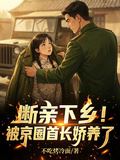
Severing Ties with Family and Sent to the Countryside! Pampered by Beijing’s Elite Officials
Novel Info

Summary

... Read More

Su Qing was reborn twenty-three years after her tragic death. In her previous life, she was coerced by her stepmother Zhao Jinhua and stepsister Su Zhirou into signing a document that sent her to a rural commune. There, she suffered for three years, lost her university placement, and was ultimately murdered in a staged traffic accident to silence her. Upon waking, Su Qing finds herself back at the moment of signing. Instead of submitting, she demands a formal severance of kinship, cutting all ties with the Su family. The family, eager to be rid of her, agrees immediately. Su Qing then utilizes a mysterious spiritual space inherited from a jade pendant, which contains vast supplies of food, medicine, and currency. She systematically empties the Su household of all valuable assets, including hidden gold bars and personal belongings, leaving the family with nothing before departing for the countryside.

During her train journey to Hongqi Commune, Su Qing encounters Lu Zhanye, a regiment commander suffering from severe post-traumatic stress disorder and chronic migraines. She discovers that her spiritual spring water has a calming effect on his condition. When the train brakes suddenly, Lu Zhanye instinctively grabs her to prevent her from falling, and he clings to her presence to stave off his pain. Upon arrival at the commune, Su Qing faces hostility from the station head, Ma Hongmei, who assigns her the worst living quarters. Su Qing retaliates by using a powder that causes intense itching on Ma Hongmei’s bedding, then cures her with herbal medicine, quickly shifting the social dynamic in her favor. She also begins treating villagers with her advanced medical skills, gaining respect and authority.

Lu Zhanye arrives at the commune for an inspection and recognizes Su Qing. He learns she is being bullied and intervenes, publicly declaring her as a special medical consultant under the military region’s protection. He physically assaults a local thug, Zhao Goudan, who had attempted to harass Su Qing, and establishes her safety as his priority. Their relationship deepens as Lu Zhanye becomes increasingly dependent on Su Qing’s presence to manage his PTSD. He frequently summons her to the military clinic, where he holds her close to find relief from his agony. Su Qing views this as a mutually beneficial arrangement, using his protection to secure her position while providing him with the spiritual water he needs.

Su Qing also discovers that the local village elder, Shen Henian, is the exiled nation’s greatest physician. Recognizing her mastery of lost acupuncture techniques, he requests to take her as a disciple. She agrees, forming a partnership where she teaches him ancient methods in exchange for his clinical experience. Meanwhile, Su Qing begins selling surplus goods from her spiritual space at a black market, accumulating significant wealth. Her life stabilizes as she builds a network of allies and gains financial independence. However, a madwoman in the village claims that a baby was swapped twenty years ago and points out a red mole on Su Qing’s collarbone, hinting at a hidden truth about her origins that connects to her past life’s mysteries.

The narrative follows Su Qing as she navigates the harsh realities of the sent-down youth era with the advantages of her rebirth and supernatural space. She systematically dismantles the power of her former abusers by thriving in an environment designed to break her. Her alliance with Lu Zhanye evolves from a transactional relationship based on his medical needs to a deeper emotional bond, complicated by his existing engagement to another woman in Beijing. Su Qing’s primary goal remains self-preservation and the accumulation of power, using her medical skills and spiritual resources to rise above her circumstances. The story sets the stage for her eventual return to the city, armed with wealth, status, and the protection of a powerful military commander, as she seeks to uncover the secrets of her birth and exact revenge on those who wronged her.

Novel Items

More
Treasure
A half-broken jade pendant that was found by Wang Cuihua when she adopted baby Lin Kexin. It was hung around Lin Kexin's neck for over a decade. Lin Tianci stole it as a gift for a girl, was rejected, and threw it at Lin Kexin's face, breaking it into two pieces. When Lin Kexin's blood touched the jagged edge, it activated a Spatial Spirit Spring mystical space.
Magical Item
A personal spatial ability possessed by Su Wanwan where she can store items mentally, shower, and access Spirit Spring water. She hid the soda bottles Xie Beishen gave her inside this space.
Materials
Water from An Ruoyan's space that made her skin white and tender as a peeled egg after drinking it.
Documents
Legal document stating Su Qing voluntarily severed all ties with the Su family. Written by Zhao Jinhua who included the clause that 'all personal belongings of Su Qing shall be disposed of by herself.' Su Qing used this clause as legal basis for clearing out the entire house. Contained fingerprints and official stamps.
Item
Valuable items Chu Xuan had sold to Brother Yi. He sold ten gold bars initially and later exchanged the remaining gold once more. Most of his gold had been sold off until only a few pieces kept for collection remained, leaving him broke.
Item
Located under the bed in the parents' bedroom. Contained Zhao Jinhua's dowry jewelry and private savings. Transferred to Su Qing's spiritual space along with thirty-two yuan and grain, meat, and cloth tickets that were tucked under the pillow.
Latest Release
DateGroupRelease
2026-08-11shanghai fantasy c20
2026-08-11shanghai fantasy c19
2026-08-11shanghai fantasy c18
2026-08-11shanghai fantasy c17
2026-08-11shanghai fantasy c16
2026-08-11shanghai fantasy c15
2026-08-11shanghai fantasy c14
2026-08-11shanghai fantasy c13
2026-08-11shanghai fantasy c12
2026-08-11shanghai fantasy c11
2026-08-11shanghai fantasy c10
2026-08-11shanghai fantasy c9

Community Reviews

Rating(3.9 / 5.0, 22votes)
5 stars
5(23%)
4 stars
9(41%)
3 stars
8(36%)
2 stars
0(0%)
1 stars
0(0%)

Popular reviews

... Read More
The moonlight scene at the end is pure cinema. I can literally see the frame—the two of them walking side by side, the moon blazing bright above them, casting sharp lines into Lu Zhanye's profile. The author writes: "these days it seemed to shine extra hard whenever they met after dark, like a spotlight on stage." That line alone transforms the entire scene from a simple walk into something mythic, like the universe itself is framing this moment. But the worldbuilding details throughout this passage are what really ground it. The olive-green scarf visible through Su Qing's window crack. The hard wooden chair with a faded army-green cushion. The military compound with its commander's quarters. The black market where Su Qing sells goods. The red clay unique to Hongxing Commune caked on Li Jianjun's shoes. Every detail feels specific and lived-in, not generic. The visual contrast between Lu Zhanye's damp, half-dressed vulnerability inside and the stark moonlight outside mirrors the emotional arc of the scene—he's guarded and buttoned-up indoors, but under the open sky, something shifts between them. The setting isn't just backdrop; it's actively shaping the mood.
... Read More
The author's use of environmental contrast here is actually insane and I don't say that lightly. Let me paint this for you: Lin Wanqing arrives and the snow is described as coarse, gritty, stinging the face like handfuls of sand. Northwest snow is nothing like the fine soft flakes of the capital. This isn't just atmosphere—it's a statement. The capital girl comes to a place that doesn't care about her polish. Her tailored black wool coat and lambskin boots are mentioned like armor she thinks will protect her, but the environment itself is already working against her. Meanwhile Su Qing is standing in that same snow in a faded grey cotton jacket, no makeup, hair simply tied back, and she looks like a white plum blossom pushing through ice. The imagery is almost cruel in how it sets up the two women: one dressed for a magazine cover, one dressed for survival, and the survival one is the one who wins every scene. And then the clinic scene—the packed room, the tea steam, the way Lin Wanqing's voice carries perfectly across the space like she's on a stage. The author keeps giving us these theatrical moments for Lin Wanqing and quiet, intimate moments for Su Qing. The window tapping three short two long—that detail alone tells us everything about their relationship. No grand gestures. Just code. Just two people who've learned to speak in whispers. The world feels lived-in because the author never forgets that this is 1976 China, where a pair of Shanghai soap bars and fifty yuan can buy you an ally, where a wool scarf is the closest thing to a love letter you'll get.
... Read More
The author has this incredible ability to lull you into a cozy rhythm and then YANK the rug out. Let me walk through how this sequence works because it's masterclass-level pacing. We start with Su Qing's daily routine—studying medicine, treating villagers, selling on the black market, accumulating five hundred yuan in two weeks. It's satisfying, almost peaceful. The Lu Zhanye candy scene adds warmth and romantic tension. You're settling in, right? Feeling good about Su Qing's progress. Then—bam. A madwoman appears at the village gate screaming about swapped babies. The transition is seamless. Su Qing is finishing an acupuncture session, walks toward a crowd, and suddenly the entire narrative axis shifts. The madwoman's cries of "Swapped! They've all been swapped!" echo through twenty years of silence. And that red mole—Su Qing's birthmark, something she never thought twice about—becomes the key to an eighteen-year-old mystery. What's brilliant is how the author controls the reveal. The madwoman doesn't just say "swap"—she says it for twenty years in fragmented bursts, and only in her clearest moment does she lock eyes with Su Qing and whisper about the mole. Then the chapter ends with Su Qing watching Aunt Zhou clutched in the moonlight, whispering apologies to a ghost, holding a frayed swaddling cloth. No resolution. No answers. Just the question hanging like the north wind: who swapped her, and why? The pacing here is like a slow exhale followed by a gasp. You don't see it coming because the author makes you comfortable first.
... Read More
Okay so this clinic scene is genuinely one of the most vividly staged moments I've read in a while. Let me just say it: Su Qing doesn't need to raise her voice to destroy someone. She crouches, touches a wrist, closes her eyes for ten seconds—and suddenly thirty people are witnesses to Lin Wanqing's private suffering. The way the author writes it, the words literally hang in the air like a stone. That's not just dialogue, that's spatial awareness. You can feel the crowd leaning in, you can feel Lin Wanqing's face burning, you can feel the awkward pity of the onlookers parting as she flees. And then the shift to the youth quarters at night—lights out, snores rising and falling in waves, Su Qing curled under her quilt with a candle from her storage space. The image of that candle flickering down to its wick and dying, leaving her in total darkness, is cinematic in a way that made me actually pause and sit with it. She doesn't light another candle. She needs the dark. That detail alone tells you everything about her emotional state without a single internal monologue. Then the materials exchange fair—shoulder to shoulder crowds, over a hundred work units, coarse grain and farm tools and homemade pickles. Dull and rustic, the author says, before Su Qing's stall appears. I'm already imagining the visual contrast. This is a world that feels lived-in, not just described. The loess soil, the dry winter grass, the crisp air of a northern Chinese county in the 1970s—it all accumulates into something you can step into.
... Read More
Let's talk about what's actually at stake here, because on the surface this looks like a survival-and-thriving story but underneath it's a mystery about identity that could shatter everything Su Qing thought she was. The madwoman's revelation isn't just dramatic flair—it's the inciting incident for Su Qing's entire origin story. That red mole on her collarbone, something her parents never cared about, becomes the single piece of evidence that connects an eighteen-year-old baby swap to her very existence. And Aunt Zhou? She's not actually mad. Or at least, the clarity flashes suggest she saw something so terrible—"they said they'd kill me if I told"—that her mind broke rather than betray her. Twenty years of silence. Twenty years of clutching that frayed swaddling cloth. The stakes just went from "Su Qing needs to survive in a harsh era" to "Su Qing may not be who she thinks she is, and powerful people have been lying about her entire life." The jade pendant growing warm when she touches it feels less like a magical convenience and more like it's reacting to the truth closing in. Even Su Jianguo—someone she trusts—might have fought to bury this secret. And Lu Zhanye? His family connections, the surveillance, the capital ties—all of it suddenly feels less like romantic subplot and more like pieces of a larger puzzle. The author is weaving multiple threads of conflict together and the tension is compounding with every chapter. What happens when Su Qing learns the truth? Who are her real parents? And what does that mean for her position in this world?
... Read More
The gloves are such a loaded symbol and I keep coming back to them. They're ugly—messy, crooked stitches, homely and lumpy. But they're also an act of love so specific and practical that it transcends romance. Lu Zhanye can't do anything delicate, but he can protect her from having to touch other people's skin. It's jealousy and care wrapped in cotton. Su Qing pressing them to her cheek and calling him a "jealous, stubborn fool"—she sees through the rough exterior to the tenderness underneath. Then there's Lu Zhanye's scar. The author describes it as "a pale old scar curving like a silver centipede across his skin." A centipede—many legs, creeping, ancient. It's on his face, visible to everyone, a permanent mark of whatever he's survived. And yet Su Qing only looks at his collarbone for 0.3 seconds before darting her gaze away. She notices everything about him but pretends not to. The scar is his history written on his body; the gloves are his present-tense devotion. And of course the title metaphor itself—"the mantis stalks the cicada"—carries the whole theme of hidden predators and underestimated victims. Su Zhirou thinks she's the hunter, but Su Qing is the sparrow waiting behind everything. The story keeps flipping who has the power, who sees clearly, who's actually in control.
See all reviews

Characters

See all characters

Custom lists

Oops…There is nothing here.