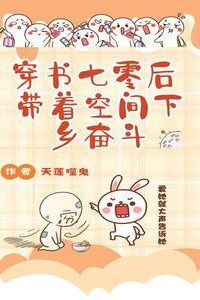
Seventies Rebirth: Farming with a Space
+Add to Custom List
Genres:
Novel Info

Summary

... Read More

Wang Shuning, a modern woman who died while reading a novel titled A Culinary Master Transmigrates to the 1970s, wakes up in the body of her namesake character in 1970s Beijing. She discovers she has transmigrated into the book as a cannon fodder character destined to pursue the male lead, Lu Beichu, only to be rejected and commit suicide after the female lead, Guo Jingyi, appears. Realizing her fate, Wang Shuning resolves to avoid the original plot entirely. She possesses a mysterious space that appeared after she hit her head, containing fertile land, fruit trees, and a small wooden house with processing equipment. This space becomes her critical advantage, allowing her to grow food and survive independently.

Wang Shuning is an educated youth scheduled for countryside assignment. In the original story, she insisted on going to City B to be near Lu Beichu. Determined to escape this fate, she begs her mother, Song Guiying, to change her assignment location. Song Guiying is initially reluctant, having already spent favors and money to secure the City B placement. Wang Shuning secretly uses fruit from her space to bribe Aunt Li, a connection at the street office, and successfully changes her assignment to City D, a remote and impoverished rural area far from the original plot. Her family is unaware of her secret space, and her mother scolds her for being stubborn and wasteful, though she eventually provides Wang Shuning with money and food coupons for the journey.

On the train to City D, Wang Shuning encounters Lu Beichu, who is also assigned to City D, specifically Dafeng Village. She is shocked to find that the plot has shifted; the female lead, Guo Jingyi, is also on the same train, seated next to another educated youth, Zhao Heping. The original meeting between Lu Beichu and Guo Jingyi on the train to City B has been altered. Wang Shuning keeps a low profile, selling oranges from her space to Lu Beichu to avoid direct interaction while maintaining a facade of politeness. The group arrives in Dafeng Village, where they face housing shortages. The village dormitory is full, forcing the new educated youths to stay with local villagers for a monthly rent.

Upon arrival, Wang Shuning and her peers are pressured by older educated youths who want the better housing conditions. The village chief, He Haiming, reveals that renting a room costs three yuan a month, a significant sum for the poor villagers and newcomers alike. Wang Shuning negotiates with the village chief and the homeowner, He Zhuzhu, a widow with two children. She agrees to pay for repairs and build a separate kitchen in exchange for a lower rent and the use of the family's kitchen temporarily. Her negotiation skills impress the village chief, who notes her cleverness and social grace. Wang Shuning secures a private room, while Guo Jingyi and Zhang Meili share a room with He Pingping, and Lu Beichu and Zhao Heping share with He Zhaoyang.

Wang Shuning explores the local black market in Yihe Town, learning the prices of grain and other goods. She discovers hidden alleys where clandestine transactions occur, planning to use her space's produce to trade for necessities in the future. She buys second-hand household items and supplies, carefully managing her resources. Back in the village, she hosts a dinner for the villagers who helped repair her room, using meat and dishes that are luxuries in the poor village. The meal strengthens her relationship with the village chief and neighbors, establishing her as a respectful and capable newcomer. As she settles into her new life, Wang Shuning remains vigilant about the original plot, knowing that Lu Beichu and Guo Jingyi are now in the same village, and she must navigate her surroundings carefully to avoid becoming entangled in their romance or meeting a tragic end.

Latest Release
DateGroupRelease
2026-08-11shanghai fantasy c24
2026-08-11shanghai fantasy c23
2026-08-11shanghai fantasy c22
2026-08-11shanghai fantasy c21
2026-08-11shanghai fantasy c20
2026-08-11shanghai fantasy c19
2026-08-11shanghai fantasy c18
2026-08-11shanghai fantasy c17
2026-08-11shanghai fantasy c16
2026-08-11shanghai fantasy c15
2026-08-11shanghai fantasy c14
2026-08-11shanghai fantasy c13

Community Reviews

Rating(3.9 / 5.0, 22votes)
5 stars
7(32%)
4 stars
6(27%)
3 stars
9(41%)
2 stars
0(0%)
1 stars
0(0%)

Popular reviews

... Read More
I keep coming back to Wang Shuning's secret space and what it represents. On the surface it's a cheat code—a magical dimension where crops grow fast, sugarcane regrows, and she can make brown sugar that would cost double the price of rice in the real world. But I think it's deeper than that. It's her autonomy. In a world where she has no control over her work points, her living situation, who she gets assigned to, or what the village elders decide about her future—her space is the ONE thing that is entirely hers. The brown sugar detail is particularly interesting. She makes it because it's 'good for women and pregnant women' and has better market demand. This isn't just survival—it's economic strategy. She's thinking several steps ahead, building something that could eventually give her real power in a system designed to keep her powerless. The fact that she can't sell apples or oranges in town but CAN sell brown sugar tells us everything about what this world values. Then there's the work points system itself as a symbol. Three points for Wang Shuning versus ten for normal villagers. It's a quantified measure of worth in a society that measures human value by labor output. She says she doesn't need the points, but the fact that she needs six or seven just to eat enough shows how the system traps everyone. Even 'not caring' is a luxury she can't fully afford. And the rice harvest at the end—rice as survival, rice as everything. The villagers rushing to save the crop in the rain isn't just plot; it's a reminder that for these people, the difference between abundance and starvation is measured in hours and weather. Wang Shuning's space protects her from this, but she's still out there in the rain with everyone else, pretending to be one of them.
... Read More
I'm genuinely impressed by how distinct the voices are in this chapter. Let me give you some examples because this is the kind of thing that usually goes unnoticed but makes or breaks a novel. Lü Beichu speaks in declarations: 'The government requires the village to provide housing for educated youths. Three yuan rent is against regulations; we'll report you to the town.' That's not how a normal person talks in a tense moment — that's someone who's comfortable using authority and rules as a weapon. It tells you everything about his background and his instincts. Guo Jingyi, on the other hand, speaks in hedging: 'Village Chief, three yuan is too much for us. Could you reduce it?' She's always negotiating, always trying to soften her requests. Even when she's being manipulative about who lives where, she wraps it in politeness. 'Meili, let's live at He Pingping's house, okay?' That 'okay?' is so telling — she's used to getting her way through gentle pressure rather than confrontation. Zhang Meili is blunt and direct: 'Shameless!' She lifts her chin and says it. No filter, no softening. And her line 'Poor conditions are fine as long as it's free' is pure id, no social masking at all. Wang Shuning's dialogue is the most interesting because it's almost never emotional. 'Repairs and a kitchen would cost over ten yuan.' She states facts. She doesn't beg, she doesn't threaten, she calculates out loud. Even when she's being strategic about living arrangements, her dialogue reads like she's solving a math problem. And the village chief? His voice is all authority and deflection. 'There aren't many spare rooms. If you don't stay here, you'll have nowhere to stay.' Short. Final. No explanation needed. The narrative voice itself is also worth noting — it's close third person, dipping into characters' thoughts but never staying there too long. It moves fast, matching the pace of the scene. The author trusts the dialogue to carry most of the weight, which is a confident choice.
... Read More
Let's talk about stakes because this batch is stacking them like dominoes and I am HERE for it. First layer: the work conflict. Wang Shuning vs. Aunt Dajiao is basically David vs. Goliath if David was a scrawny city girl and Goliath was a gossipy woman with a sickle and a grudge. Three work points out of ten possible. That's not just embarrassing—that's a survival threat. If she can't earn enough points, she doesn't get enough food. It's not abstract drama, it's literally 'will I starve this month.' And she handles it with this incredible calm that's either genuine acceptance or the kind of strategic patience that makes her dangerous. Second layer: the social conflict. The educated youths are being ranked and sorted like livestock. The team leaders arguing over who gets the men while the women get leftovers. Zhang Meili's romantic desperation. Guo Jingyi being the prize everyone wants. Zhao Leyi and Liu Sicun being absolute creeps who show up at girls' doors at night—this isn't just drama, this is DANGER. Wang Shuning even acknowledges it: 'they weren't kind; even if they knew Lü Beichu's family was wealthy, it was too late to be nice.' She's reading the room correctly while everyone else is too busy with their own problems. And then the third layer drops on us like a ton of bricks: the midnight storm. The rice harvest. Dozens of people running through darkness with flashlights, rain starting to fall, and if the rice gets soaked without sun, they're done. This is life-or-death stakes for an entire village, and Wang Shuning is right in the middle of it. The chapter ending with 'He Haiming, with a flashlight, coordinat'—cutting off mid-word during a crisis—is the kind of cliffhanger that makes you immediately open the next chapter regardless of what time it is. Three separate conflict threads, all escalating simultaneously, and they're about to collide. I'm not ready but I have no choice.
... Read More
I need to talk about Wang Juan because honestly she's the most interesting character in this whole batch and I think the author is setting something up with her. First she appears cycling like she owns the place, wobbling all over the road, and then she runs into Wang Shuning guarding those five sacks of rice. The dynamic between them is so understated but loaded. Wang Juan could've just honked and kept going, but she stops. She asks what Wang Shuning is doing. She even lifts her own bicycle to squeeze past those sacks because Wang Shuning can't move them. There's this moment where Wang Shuning explains the village chief made them remove the rice and Wang Juan just nods like she sort of gets it but also doesn't, and I found myself really wanting to know what Wang Juan is thinking the whole time. Then we cut to her home and she's bringing her dad lunch, scolding him for eating too fast, and suddenly this girl who seemed like just a passing encounter has this whole family context. Her mom made soup, she has a premonition that he'd go hungry, she's worried about the other uncles at the grain station. She's observant, caring, a little bossy. And she's the station master's daughter—which means she's basically on the other side of the system from Wang Shuning. I'm already predicting that their paths crossing again is going to matter more than either of them realize right now.
... Read More
Okay so I have to talk about Aunt Dajiao because THIS WOMAN is absolutely insufferable and I love her. Like, she's the kind of person who would complain about the weather while you're dying in a field. The scene where she literally stands behind Wang Shuning like a grim reaper with a sickle? 'You're always slacking off.' SIR. It's a BREAK. She's resting too but somehow Wang Shuning's water bottle is the problem. The detail about scattering rice chaff toward the water bottle is so petty I almost laughed out loud. This is peak petty energy. But here's what's interesting—Wang Shuning doesn't break. She just says 'my future husband will serve them; they didn't raise me' and walks away. That line absolutely DESTROYED Aunt Dajiao. I swear you can see the woman's finger trembling. Wang Shuning is this quiet storm. She doesn't yell, she doesn't cry, she just dismantles your entire worldview with one sentence and goes back to digging sweet potatoes. And the work points thing—three points! Children get more for collecting grass! She just accepts it like 'okay' and moves on. That's not weakness, that's calculated survival. Then there's the whole Lü Beichu situation. Zhang Meili is OBSESSED with him and it's so painfully obvious. She's asking Wang Shuning about his family wealth like she's doing background research for a heist. Meanwhile Guo Jingyi is just... existing? Getting watches gifted to her? I need to know what her actual personality is because right now she's just the pretty girl who gets stuff. Also Zhao Leyi and Liu Sicun being creeps is the least surprising thing ever. Classic village drama. The relationship between Wang Shuning and He Zhuzhu is genuinely sweet though. Free vegetables, kids saving her candy, the whole thing. It's the only wholesome thread in this whole mess and I'm clinging to it.
... Read More
Okay so I need to talk about the space. I know it's a transmigration golden finger trope but the way it was described actually made me stop scrolling. Wang Shuning steps into this vast expanse with vegetable fields, rice paddies, fruit trees, a river teeming with fish and shrimp and crabs, and this little wooden house beside it. Pineapples and coconuts in 1970s Beijing?? The author really said 'why not both.' And the rice stalks bent over under the weight of the grain — that detail actually made me feel something. Like, here's this girl who just found out she's in a novel where she's supposed to die, and the universe gives her a literal paradise as a survival tool. Meanwhile the female lead gets nothing but her cooking skills. The contrast is kind of brutal when you think about it. The 1970s Beijing setting is also doing a lot of heavy lifting. The wooden basin, the soy sauce bottle, the two catties of rock sugar as a bribe, the reused frying oil — these tiny details make the era feel lived-in rather than decorative. Song Guiying scolding about the wasted soy sauce ('You wasted twenty cents worth of soy sauce!') is the kind of line that grounds the whole story in a specific time and place. You can feel the scarcity, the calculation, the way every single item had value. It's not just background noise, it's the actual texture of their daily survival. I also loved the contrast between the cramped, cobwebbed ceiling of Wang Shuning's room and the boundless space she discovers. The physical compression of her real life versus the expansive freedom of her golden finger — that's not accidental writing, that's thematic worldbuilding. The author is telling us something about her situation without saying it outright.
See all reviews

Characters

See all characters

Custom lists

See all custom Lists