Seizing the Eldest Sister-in-Law: The Mad Marquis' Relentless Pursuit
Novel Info

Summary

... Read More

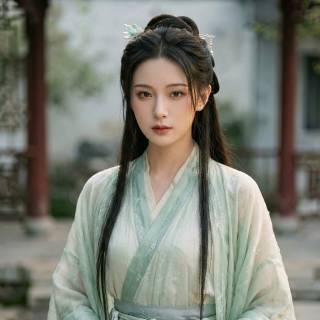
Jiang Yao was born into a poor family in Yizhou that was devastated by a plague. After her parents died, her greedy relatives sold her to a brothel to survive. She escaped and fled to Xingfeng, where she was rescued by Ling Chen, a sickly but kind scholar who was the elder brother of the formidable military officer Ling Xiao. Ling Chen, who had never married due to his poor health, fell in love with Jiang Yao and insisted on marrying her properly despite his family's reservations. He bought her freedom with two taels of silver and treated her with genuine kindness and respect. Their marriage was brief but deeply loving, as Ling Chen’s health continued to deteriorate. He passed away suddenly after being injured while protecting Jiang Yao from Rong Shi Chang, the arrogant son of a local official who had spread rumors of an affair between Jiang Yao and himself to force a divorce so he could take her as a concubine.

Ling Xiao, a ruthless and powerful Military Marquis who had recently returned from the front lines with great military merit, arrived at the funeral with a heart full of grief and suspicion. He believed the rumors that Jiang Yao had bewitched and murdered his beloved brother. Confronting her at the funeral, he drew his sword and threatened her life, accusing her of being a demon who had destroyed his family. Jiang Yao, though terrified, stood her ground and denied the accusations, explaining that Rong Shi Chang was the one who had slandered her. Ling Xiao remained unconvinced, his cold demeanor masking his grief, but he was stayed by his brother’s final letter, which begged him to care for Jiang Yao. He ordered the arrest of Rong Shi Chang, interrogating him brutally and cutting out his tongue when the man attempted to shift blame onto Jiang Yao again.

The conflict escalated when the Rong family arrived to rescue their son, only to discover that Ling Xiao held the power of the Military Marquis and had uncovered their father’s treasonous dealings with the defeated Prince Yong. Ling Xiao ordered the entire Rong family to be taken into custody and sent to the capital for trial, effectively destroying their power. Following the funeral, Ling Xiao decided to move the family to the capital, the imperial city of Yanjing. Jiang Yao, heartbroken and feeling like an outsider in the presence of such a dangerous man, struggled to cope with her new status as the widow of a gentle scholar and the sister-in-law of a feared general. She was tasked with managing the household and organizing a banquet for the capital’s nobility, a role she undertook with nervous diligence.

During the banquet, Jiang Yao encountered Princess Huaining, who was openly affectionate toward Ling Xiao, revealing that the Marquis had a complicated past with the royal family. Ling Xiao himself appeared unsettled by Jiang Yao’s presence, particularly when he saw her smiling and interacting with others, a stark contrast to the fearful widow he expected. He felt an unfamiliar flutter of emotion that he could not explain, leading him to withdraw and avoid her. Despite his hostility, Jiang Yao continued to serve his mother, Mrs. Lin, who had grown fond of her. As the story progresses, Jiang Yao finds herself navigating the treacherous political landscape of the capital while living under the same roof as the man who suspects her of murder. The tension between them shifts from pure hatred to a complex dynamic of suspicion, forced proximity, and unacknowledged attraction, as Ling Xiao begins to realize that his brother’s judgment of Jiang Yao may have been correct.

The narrative sets the stage for a deeper investigation into Ling Chen’s death, with Ling Xiao now holding the power to uncover the truth but still struggling to trust his sister-in-law. Jiang Yao, determined to live a good life as her husband wished, must protect herself from Ling Xiao’s wrath while establishing her place in the Marquis mansion. The political intrigue surrounding the late Prince Yong’s rebellion adds another layer of danger, as Ling Xiao’s enemies seek to undermine his authority. Jiang Yao’s past as a former brothel resident and her current role as a noble widow place her in a vulnerable position, yet she demonstrates resilience and intelligence in handling social obligations. The story explores themes of grief, misunderstanding, and the harsh realities faced by women in a patriarchal society, as Jiang Yao fights to clear her name and find peace in a world dominated by powerful men.

Latest Release
DateGroupRelease
2026-08-11shanghai fantasy c60
2026-08-11shanghai fantasy c59
2026-08-11shanghai fantasy c58
2026-08-11shanghai fantasy c57
2026-08-11shanghai fantasy c56
2026-08-11shanghai fantasy c55
2026-08-11shanghai fantasy c54
2026-08-11shanghai fantasy c53
2026-08-11shanghai fantasy c52
2026-08-11shanghai fantasy c51
2026-08-11shanghai fantasy c50
2026-08-11shanghai fantasy c49

Community Reviews

Rating(3.6 / 5.0, 31votes)
5 stars
9(29%)
4 stars
8(26%)
3 stars
7(23%)
2 stars
7(23%)
1 stars
0(0%)

Popular reviews

... Read More
Let me just say — the visual storytelling in these chapters is unreal. The author doesn't need a thousand words to paint a scene. Sometimes two sentences are enough and I'm already seeing the whole thing in my head like it's a movie. Take the spear practice scene. 'A tall figure in black armor was holding a red-tasseled spear, spinning and leaping. The spear moved like lightning, and the wind howled as it swept past, sending leaves fluttering down.' That's it. That's the whole description and I can SEE it. Black armor, red tassels, the sound of wind, leaves falling. It's cinematic. And the fact that Jian is standing there with his back covered in sweat while his master is just... radiating restless energy? The contrast between Ling Xiao's controlled violence and his internal chaos is the kind of visual detail that sticks with you. Then there's Fushou Garden. Mrs. Lin's courtyard, the Old Madam tending her garden, the actors performing — it's a whole world built through small domestic details. Yao making medicinal concoctions, organizing her late husband's manuscripts, inviting actors to entertain the Old Madam. These aren't just filler scenes, they're worldbuilding that makes the mansion feel like a real place where people actually live. And the hunting preparation scene! Yao getting dressed, the maids helping her with pearl and silver hairpins, the light airy skirt. The mirror scene where she asks if she's too flashy and the maids tell her she's too beautiful? I felt like I was right there in the room. The jingling tassels, the clouds-and-mist movement of the skirt — it's all so tactile. But the scene that got me was the corridor encounter. Ling Xiao walking past Xuan courtyard, hearing Yao's soft voice saying 'Yes, I'm bringing the medicinal concoctions,' and then her stepping out in that outfit. The way he 'unconsciously quickened his pace' — the setting itself seems to pull him toward her. The corridor, the inner courtyard, the quiet morning — the environment is almost a character in how it brings them together.
... Read More
I have to talk about the dialogue in these chapters because the author has given Ling Xiao this incredibly sharp, cutting voice and I am obsessed. Every time he opens his mouth, it's either a dagger wrapped in silk or a question that's actually an accusation. 'Just someone who is obedient, well-spoken, and has a good appearance, both inside and out.' Translation: I'm talking about YOU and I know you know it. Classic Ling Xiao. And Yao's voice is such a good contrast—short, careful, deferential on the surface but there's this undercurrent of steel. 'Okay.' 'I'll handle it.' 'Is there anything else, Your Highness?' She's not saying much, but every 'okay' feels like she's swallowing something. The dialogue between them is basically two people speaking different languages and pretending they understand each other. What I love most is how the minor characters have distinct voices too. Steward Wang is all flattery and practicality. Mrs. Lin has this warm, slightly naive energy—'That's good, that's good. Don't worry about the banquet invitations.' She genuinely means well. And Jian, the guard, just exists to deliver lines like 'Madam, please come in' with this weird politeness that makes you wonder what he thinks of his master's treatment of Yao. The narrative voice itself is also worth noting—it's close third person, mostly anchored to Yao's perspective, which means we get her internal reactions ('a chill ran down her spine,' 'her face flushing with anger') while still maintaining that slight distance that makes the political intrigue feel real.
... Read More
So here's the thing about this chapter that I didn't expect to care about as much as I did: the matchmaking cards. On paper, it's a pretty standard trope—widowed sister-in-law gets forced to help pick a bride for her brother-in-law. But the way the author uses it is actually really smart. It's not just romantic comedy setup. Those cards are a weapon. Ling Xiao throws them at Yao like 'you want to play house? fine, you pick my wife and you take the blame if I hate her.' And Yao, sweet cautious Yao, takes the bait because she has no choice. But then she outmaneuvers him by actually doing the work—sorting the cards, binding them into a booklet, presenting them organized. She's not just passively accepting his gaslighting; she's building competence. And when he tries to snatch the booklet back, she TUGS IT AWAY. That's a plot turn right there. She's not going to be pushed around anymore. The banquet invitation is the next layer—Ling Xiao thinks he's dumping more work on her, but Yao sees it as an opportunity. 'Once a wife enters the family, she will definitely have to take over the management of social interactions and banquets.' She's playing the long game. She's preparing to be indispensable so she can survive in this mansion on her own terms. Meanwhile, Mrs. Lin is completely oblivious, thrilled that this banquet will help 'choose a daughter-in-law.' The dramatic irony is delicious. Everyone thinks they're manipulating Yao except Yao, who's been manipulating back this whole time.
... Read More
Let me just say this upfront: the author of this novel has a pathological inability to let any character have a quiet moment, and I am here for it. The assassination attempt in the hunting grounds is the kind of opening move that raises the stakes across every axis simultaneously. We're talking about the Emperor's life, the Princess's life, a noble lady's life, political stability, personal relationships, and marriage prospects—all detonating at once. That's not just action; that's narrative overdrive, and the author handles it with remarkable control. What makes the stakes feel real isn't just the physical danger (though the arrow hitting Jiang Yao, the horse going wild, the steep ravine—all of that is genuinely tense). It's the political stakes layered underneath. The Emperor's barely secured his throne. Prince Yong and Prince Qi still have factions. This assassination isn't random violence; it's a calculated strike against the new regime. And the fact that the assassins 'swallowed poison and committed suicide after failing' means there's no easy answer, no obvious culprit to punish. The investigation will be slow, frustrating, and dangerous. But the personal stakes are what keep me hooked. Ling Xiao's internal conflict—duty versus desire, loyalty to his brother versus his own feelings—is the engine driving this entire section. Every decision he makes is weighted with consequence. Save Jiang Yao? He risks appearing attached to his brother's widow. Leave her? He can't. Find her? He has to confront what she means to him. Marry someone else? He's already making that choice, but we know it won't be easy. The Emperor's marriage proposal for Huaining adds another layer of political stakes. This isn't just about romance; it's about consolidating power, about balancing factions, about the Emperor using his daughter as a political tool. The Duke of Mu's family has 'strong foundation' and 'a lot of influence among the old officials.' This marriage would strengthen the Emperor's position—or it would create a new power center that could threaten him. And Jiang Yao? She's injured, missing, unconscious, and still the most important person in the room. Her sacrifice saves the Princess, which makes her valuable to the court, which means her life is now entangled with political calculations she never asked for. The tension never drops. Not for a second. And that's why I can't stop reading.
... Read More
Okay so I need to talk about how this whole matchmaking subplot is being used as a smokescreen and I love it. On the surface, the plot is: Ling Xiao needs to pick a wife, his mom and Yao are helping him, everyone's being polite about it. But what's actually happening underneath is so much juicier. The author keeps cutting between Yao's quiet domestic life and Ling Xiao's internal turmoil, and the contrast is doing so much heavy lifting. Remember that scene where Ling Xiao is practicing with his spear and can't stop thinking about Yao? That's not just random characterization — that's the plot telling us something his mouth won't. He's restless, agitated, and the narrative makes it clear it's because of HER. And then he deliberately avoids going into the inner courtyard for days? That's not indifference, that's the plot showing us a man who's fighting something he doesn't understand. The hunting trip request from the Princess is another brilliant plot device. It forces Yao and Ling Xiao into the same space, it raises the stakes for Yao (she's a nominal wife, she doesn't belong with the noble crowd), and it gives the author an excuse to have Yao dress up and look stunning. The scene where Ling Xiao sees her at the carriage and his eyes widen? Chef's kiss. The plot is setting up a collision course and I am HERE for it. Also — and this is the part that made me actually gasp — that line at the end of Chapter 11: "The eldest sister-in-law was taken by force, and the crazed military marquis pressed her step by step." Yao is READING a novel while getting dressed for the hunt. She's literally reading about a forced marriage and a crazed male lead while sitting next to one in real life. The meta-commentary is insane and I think the author is deliberately blurring the line between the story Yao is consuming and the story Yao is living. That's not just a throwaway detail, that's a structural choice that pays off later. Mark my words.
... Read More
There's something haunting about the Military Marquis Mansion that the author never quite says out loud but you feel it in every description. It's magnificent—'carved beams and painted columns, pavilions and towers, winding corridors'—but it's also a trap. Yao arrives as a widow with no power, no money, no voice, and this mansion is both her shelter and her prison. The matchmaking cards are the perfect symbol for this whole situation. They represent every path available to her: marriage as salvation, marriage as duty, marriage as political alliance. None of them are really about what SHE wants. Even the banquet—a celebration disguised as a social event—is really about consolidating power in a unstable political landscape. Everything in this world is performance. And Yao's silence? It's both her survival strategy and her rebellion. She pretends to be mute, obedient, invisible—and in doing so, she gathers information, builds competence, and waits. The spirit tablet of her dead husband that she keeps in her room is another powerful image. She preserves his memory, her identity, her sense of self, even as the mansion tries to absorb her into its machinery. The recurring motif of doors and thresholds is interesting too—Yao constantly crossing into new spaces (the mansion, the study, the banquet hall) and being watched while she does it. Ling Xiao observes her from doorways, from behind desks, from across rooms. She's always being evaluated, always performing for an audience she didn't choose. But by the end of these chapters, she's starting to perform on her own terms. The question is whether that's enough to break free or if the cage is just too well-built.
See all reviews

Characters

See all characters

Custom lists

See all custom Lists