Seasonal Ceremony
+Add to Custom List
Genres:
Tags:
Novel Info
  • Author:
  • 非10
  • Status:Ongoing

Summary

... Read More

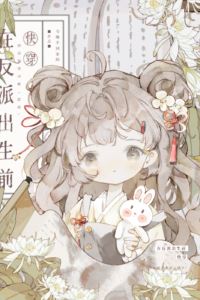
On the day of Lichun in the modern era, a palace museum staff member named Xiao Li photographs the historic grounds alongside an older colleague. The museum is home to a renowned orange cat known as Orange, a seasoned resident who serves as both a mouser and a beloved attraction for visitors. While basking in the courtyard, Orange engages in a territorial dispute with a newly arrived tabby cat. During the altercation, Orange is knocked backward over a stone railing. Instead of landing normally, she experiences a disorienting fall that transports her consciousness into the body of a kitten in the Qing Dynasty, specifically in the year 1769 during the reign of the Qianlong Emperor. She awakens in a humble courtyard in Jinling, where she is claimed by a large tabby cat who becomes her mother. Orange, now a kitten, is named Ju Zi and raised alongside three siblings in the household of the Wang family.

The Wang family is a prominent scholarly lineage in Jinling. The matriarch, Old Madam Dong, rules the household with strict authority, while the patriarch, Wang Zhefu, is a disgraced official currently returning from exile in the remote region of Jiaying. The family dynamics are complex; Wang Xichen, the second son, is the father of the newborn girl, Wang Zhenyi. Born on the Beginning of Spring, Zhenyi is the product of a union that carries the weight of familial expectation, particularly because the Wang family desperately desires a male heir to continue the lineage. As Zhenyi grows, Ju Zi becomes her constant companion, observing the intricate social hierarchies and emotional undercurrents of the household from her unique feline perspective.

Zhenyi displays an extraordinary intellect and curiosity from a young age, particularly regarding the natural world and astronomy. Her grandfather, Wang Zhefu, recognizes her sharp mind and takes it upon himself to educate her in the classics and the solar terms, fostering a deep bond between them. This relationship stands in contrast to the rigid Confucian expectations placed on the women of the family. The central conflict emerges when Zhenyi approaches the age of five, the traditional time for foot binding. Upon witnessing her elder sister Shuyi undergoing the painful procedure, Zhenyi is terrified and resolves to escape her fate. She attempts to hide in a dilapidated shed, only to be discovered and brought before Old Madam Dong. The incident causes Zhenyi to fall ill with a high fever, which temporarily halts the plans for her foot binding.

During her recovery, Zhenyi’s interest in the solar terms deepens under her grandfather’s guidance. He explains that these time divisions were derived from careful observation of nature rather than divine intervention, sparking a scientific curiosity in the young girl that defies the superstitious norms of her time. As she grows older, Zhenyi’s reputation for wit and intelligence spreads. During the Lantern Festival, she impresses a gathering of scholars and officials, including the famous writer Yuan Mei, by solving complex riddles. Her performance draws attention from various suitors and families, highlighting the tension between her intellectual capabilities and the societal constraints imposed on women. The narrative follows her development from a curious child into a young woman navigating a world that values female virtue over female intellect, all while Ju Zi remains her silent, observant guardian throughout the changing seasons and family trials.

Latest Release
DateGroupRelease
2026-08-11shanghai fantasy c40
2026-08-11shanghai fantasy c39
2026-08-11shanghai fantasy c38
2026-08-11shanghai fantasy c37
2026-08-11shanghai fantasy c36
2026-08-11shanghai fantasy c35
2026-08-11shanghai fantasy c34
2026-08-11shanghai fantasy c33
2026-08-11shanghai fantasy c32
2026-08-11shanghai fantasy c31
2026-08-11shanghai fantasy c30
2026-08-11shanghai fantasy c29

Community Reviews

Rating(4.2 / 5.0, 5votes)
5 stars
3(60%)
4 stars
0(0%)
3 stars
2(40%)
2 stars
0(0%)
1 stars
0(0%)

Popular reviews

... Read More
'If Father hadn't forbidden me to come near, why would I have peeked?' — this line alone is worth the price of admission. Wang Yuan's voice is so distinct and so perfectly rendered that I immediately understood who was speaking before I even saw the name. He's the comic relief, sure, but he's also the most honest person in the room. While everyone else is performing their roles—the dutiful granddaughter, the shy prospective bride, the respectful guest—Wang Yuan is crouching behind a rock eating snacks and making snide observations. His internal monologue about Manchu women vs. Han women is wild. A twelve-year-old boy thinking about foot-binding and gender segregation like it's the most absurd thing he's ever read? That's not just humor, that's the author using a child's voice to say things that no adult in the story would dare say out loud. And the dialogue between the adults? Chef's kiss. Old Madam Dong's practical assessment of the Wen family—'It's not a bad thing for a woman to marry down'—is delivered with such casual cruelty. She's being sincere, she's being helpful, and she's reducing a human being's entire future to a calculation of social standing. The contrast between Wang Yuan's boisterous voice and the hushed, indirect speech of the adults is what makes this novel sing. Even Zhenyi's sleepy murmurings have a voice—'After today, you can't carry me anymore'—so small and so devastating. The author gives every character a distinct rhythm of speech, and I can hear them all in my head now.
... Read More
The symbolism in these chapters is so layered I can barely keep up. Let me start with the dragon. The old man teaches the children that the Azure Dragon is made of seven mansions—its head, neck, body, and tail are all stars. On the second day of the second lunar month, the horn rises and the dragon 'raises its head.' This is supposed to be celebratory, a folk festival, a family gathering. But what does the dragon actually represent here? Power. Cosmic order. The kind of authority that moves in predictable cycles. And then you have the human drama playing out beneath it: Shuyi's marriage being arranged, the father's political downfall, the grandmother measuring women's bodies like objects. The dragon raises its head, spring comes, life begins—and for Shuyi, this is the beginning of her life being decided by others. The Spring Equinox itself is a symbol of balance: equal day and equal night, yin and yang in perfect harmony. But nothing in the human world is balanced. The Wang family is declining. Shuyi is marrying 'down.' The father is absent from these negotiations. The 'order' the old man admires in the stars is precisely the kind of rigid order that traps people in their social roles. And then there's Orange the cat, who represents something outside this system entirely. Cats don't care about solar terms or marriage arrangements or imperial examinations. The cat sniffs the prospective groom's shoes and moves on. In a story about everything being measured and calculated, Orange is the only character who acts on pure, inexplicable instinct. That has to mean something.
... Read More
This is the kind of writing that makes my stomach tighten. On the surface, nothing bad is happening. The family is gathered. The children are happy. A marriage is being discussed. But the stakes are enormous and everyone knows it except maybe the kids. Shuyi has never met the man she's expected to marry. She's being evaluated by his grandmother on the basis of her earlobes and feet. Her own mother watches from behind a carved window, too shy to look directly. And she doesn't get a choice. That's the conflict here—it's not dramatic, it's not violent, it's the slow, polite violence of a society that treats young women as commodities in a negotiation between families. But the stakes go beyond Shuyi. The father's dismissal from office is the elephant in the room. The guests come, they frown, they sigh, they shake their heads. The old man smiles and tells the children he'll show them a dragon. What is he hiding? The tension between what's said and what's unsaid is the real conflict here. Wang Yuan senses it—he's the one who notices that his father forbids him from being near the guests, that he's considered 'unpresentable.' Even a child can feel the family's shame. And Zhenyi, at seven years old, is already asking the big questions: 'Who can measure the height of the heavens?' She's standing at the edge of understanding something vast and terrifying, and she doesn't even have the vocabulary for it yet. The author makes you care because nobody is screaming. Nobody is crying. They're just... existing in this situation, smiling, bowing, pretending everything is fine. And that's what makes it hurt.
... Read More
I need to talk about the pacing here because honestly it's kind of insane. The author takes you from a deeply intimate family scene—kids on bamboo mats, the old man pointing at stars, a seven-year-old girl feeling small in the vast universe—and within two chapters you're in a marriage negotiation. There's no jarring transition, no 'meanwhile, three months later.' It just flows. The Spring Equinox poem line about willow and pear blossoms becomes the bridge, and suddenly we're at Defeng Pavilion with Shuyi peeking through a window. That's a masterclass in scene transitions. The author doesn't rush, but they also don't linger. The marriage arrangement unfolds through snippets: a visit, a second visit with gifts, a garden encounter. Each beat is short, almost casual, which makes it feel more real. You're not being told 'this is a tense plot development,' you're just watching people do things and slowly realizing what's happening. The Wang Yuan subplot—hiding behind the hill, getting shooed away, making fun of the whole situation—is the perfect pacing valve. It gives you a laugh right when the story gets heavy. And Orange the cat? Absolutely essential for pacing. The cat sniffing the young man's shoes, the cat being carried by Zhan Mei, the cat dozing in a willow tree—these moments breathe life into scenes that could otherwise feel stiff and ceremonial. The structure here is like a well-conducted symphony: quiet strings, a sudden brass fanfare, back to whispers. I kept wanting to slow down and re-read the star-gazing part, but the author gently pushed me forward, and I'm glad I went along.
... Read More
Okay so this whole section is deceptively cozy on the surface, right? You've got the family gathering under the stars, the old man teaching the kids about the Twenty-Eight Mansions and the Azure Dragon, and it all feels warm and idyllic. But the plot is quietly stacking up tension like someone loading a bowstring. The Spring Dragon Festival scene is gorgeous, but what's really happening is the author is setting up a structural pivot. The old man talks about measuring the heavens, about order in the cosmos—and then immediately, the very next chapter, we're into the marriage negotiations for Shuyi. That's not an accident. The plot is saying: the same cosmic order that governs the stars also governs these arranged marriages, these social arrangements. The dragon raises its head and spring begins, and simultaneously, Shuyi's future is being decided without her saying a single word. Meanwhile, the father's dismissal from office hangs over everything like a cloud you can't quite see but definitely feel. The guests with the frowning and sighing, the head-shaking—what's going on there? The plot is whispering big things while pretending to tell you about a cat sniffing shoes at a garden party. And that's the genius of it. The Shuyi-Wen Yiheng setup is basically a ticking clock. They've never spoken. They've never even properly seen each other. And the grandmother is already measuring Shuyi's earlobes and feet like she's appraising livestock. The plot is building this quiet, suffocating pressure, and I'm already bracing for impact.
See all reviews

Characters

See all characters

Custom lists

See all custom Lists