Scumbag Regrets Breaking Off Engagement? Daughter of Capitalist Makes a High-profile Marriage.
+Add to Custom List
Genres:
Novel Info

Summary

... Read More

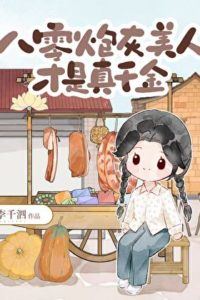
Jiang Jinwan, a successful farm owner from the twenty-first century, transmigrates into the body of a young woman with the same name in 1970s Hainan Island. The original owner was the heiress of a capitalist family that had been sent away for re-education. Her parents publicly severed ties with her to protect her, instructing her to travel a thousand miles to find her military fiancé, Zhao Haiyang, in a desperate attempt to secure her safety through marriage. Upon arriving at the port, Jiang Jinwan suffers from heatstroke and collapses. She is rescued by Huo Zeting, a stern and imposing regiment commander known for his intimidating appearance and a facial scar that makes him feared by locals.

While recovering, Jiang Jinwan discovers she has brought her vast farm from her previous life into a spatial dimension, activated by a jade pendant. This golden finger ensures she will never lack resources, regardless of the era. Huo Zeting, initially surprised by her lack of fear and her bright eyes, offers her a ride to the 132nd Division military district. During the journey, he finds himself inexplicably drawn to her, a feeling he quickly suppresses. Upon arrival, Jiang Jinwan confronts Zhao Haiyang, only to find him cozying up to Yang Qingling, the daughter of a deputy division commander. Zhao Haiyang had been using the Jiang family’s wealth for years while secretly planning to marry into a more powerful family for promotion.

The confrontation escalates when Zhao Haiyang attempts to dismiss Jiang Jinwan as a distant cousin and deny their engagement. Yang Qingling, threatened by Jiang Jinwan’s presence, joins in the humiliation. However, Jiang Jinwan remains composed. She presents a letter proving the engagement and exposes Zhao Haiyang’s infidelity. When Zhao Haiyang tries to have her arrested for her capitalist background, she reveals that her parents had already publicly severed ties with her, leaving her independent. Furthermore, she produces a detailed ledger showing that Zhao Haiyang and his family had extorted nearly ten thousand yuan and numerous valuables from her over the years.

Jiang Jinwan demands the full repayment of all debts and threatens to donate the recovered assets to the military’s scientific research department if they are not returned. The political commissar, impressed by her righteousness and the potential funding, supports her claim. Zhao Haiyang is forced to agree to repay the money within a week, facing ruin if he fails. With the engagement broken and her reputation cleared, Jiang Jinwan is left without a protector in the hostile military environment. Zhou Yunpeng, Huo Zeting’s subordinate and a matchmaker at heart, sees an opportunity to pair the cold commander with the beautiful widow-to-be.

Despite her initial hesitation, Jiang Jinwan agrees to marry Huo Zeting, recognizing that a military marriage offers the best protection and stability in this era. Huo Zeting, though initially reluctant and insecure about his scarred face, is won over by her genuine acceptance and compliments. Their courtship is swift, and they are married within a week. Huo Zeting’s wealthy and influential family in Beijing decides to travel to Hainan for the wedding, causing a stir in the military compound. Jiang Jinwan, adapting quickly to her new life, chooses to work at Yuxi Farm as a veterinarian, utilizing her extensive knowledge and certifications from her past life to help the local agricultural team.

At the farm, Jiang Jinwan encounters a crisis when the pigs fall ill. The local veterinarian, Yu, misdiagnoses the condition as swine fever and prepares to cull the herd. Jiang Jinwan steps in, correctly identifying the illness as feed poisoning from moldy potatoes. She successfully treats the pigs using her knowledge and the healing properties of the spiritual water from her dimension, saving the livestock and exposing the incompetence of Veterinarian Yu. This victory establishes her value within the military district and marks the beginning of her rise from a displaced heiress to a respected and capable member of the community, all while navigating her growing relationship with Huo Zeting.

Latest Release
DateGroupRelease
2026-08-11shanghai fantasy c110
2026-08-11shanghai fantasy c109
2026-08-11shanghai fantasy c108
2026-08-11shanghai fantasy c107
2026-08-11shanghai fantasy c106
2026-08-11shanghai fantasy c105
2026-08-11shanghai fantasy c104
2026-08-11shanghai fantasy c103
2026-08-11shanghai fantasy c102
2026-08-11shanghai fantasy c101
2026-08-11shanghai fantasy c100
2026-08-11shanghai fantasy c99

Community Reviews

Rating(4 / 5.0, 4votes)
5 stars
1(25%)
4 stars
2(50%)
3 stars
1(25%)
2 stars
0(0%)
1 stars
0(0%)

Popular reviews

... Read More
"It's all your fault, you lunatic! Eliminating rivals, sending us reports for no reason!" That line from Director Zhao had me literally screaming into my pillow. The raw, unhinged betrayal in his voice — these two were conspiring together and the SECOND they get caught, Zhao throws Yu Honglin under the bus so hard I thought he'd break his arm. And Yu Honglin's response? "You, Zhao, you took my little bribe fish, and now you turn on me? Die!" The fact that he calls it a "little bribe fish" like it's no big deal, and then immediately threatens murder — this is the most honest conversation these two have had in the entire story. They're both monsters and they know it. But the dialogue that really got me was Yang Qingling's exchange with her mother. Let me just quote this because it's perfect: "I'm a modern woman—freedom in marriage, freedom over my body. How is that shameless?!" SHE SAID THIS TO HER OWN MOTHER. In this time period. And then follows up with "tell Dad to get Haiyang released, or else his grandson..." The audacity is off the charts. She's weaponizing her own pregnancy like it's a nuclear option, and the narrator even notes that Yu Caixia was "unable to imagine the consequences if her husband heard this." Meanwhile, Jiang Jinwan's dialogue is so understated it's almost invisible — and that's what makes it powerful. When she says to Chen Aiping, "This was issued by the factory. Zeting isn't home, and I can't eat it alone—take half," she's basically lying through her teeth to give her neighbor gifts without making it a big deal. The subtext is screaming: I noticed you helped me, I appreciate you, here's something valuable. The author's dialogue for Old Tian is also fantastic — he's the voice of grounded, worried normalcy. "It hasn't rained for over a month" — simple, direct, and it carries so much weight because we understand what that means for people farming by hand in tropical heat. And Engineer Shao's reaction to the seawater desalination idea? "Back when I was in university, my professors mentioned that some countries abroad have been doing this." This is such a natural way to validate Jiang Jinwan's knowledge without making it feel like plot armor. It's earned through a credible character reaction.
... Read More
Okay so I need to talk about Yang Qingling because this girl is genuinely one of the most messed-up characters I've read in a while and I cannot stop thinking about her. The moment she walks out of detention and her FIRST thought is about Zhao Haiyang — not her own arrest, not her uncle's arrest, but "what about Haiyang?!" — I knew she was irredeemable. And then she drops the pregnancy bomb like it's some kind of weapon. "I've already given myself to him... there might even be his child inside me." She says it like a threat, like her own body is a bargaining chip against her mother's values. And the worst part? Yu Caixia actually considers using this against Jiang Jinwan. The mother-daughter dynamic here is so twisted — Yu Caixia is scheming, calculating, telling her daughter that Zhao Haiyang's family isn't a good match but then also enabling her to blackmail her way into marriage. She's teaching Yang Qingling that manipulation works. Then there's the beautiful contrast with Jiang Jinwan and Chen Aiping's relationship. Jiang Jinwan brings them watermelon and cured meat — actual genuine gratitude, not some calculated move. And Chen Aiping immediately resolves to "handle a few more troublesome people for Jiang Jinwan." That's what real friendship looks like in this story. Mutual care, not mutual exploitation. The scene where Director Zhao and Yu Honglin turn on each other before they even reach the interrogation room is also peak character revelation. Zhao yells "It's all your fault!" and Yu Honglin's response is basically "you took my money and now you betray me? DIE!" These two were partners in crime and the moment things go south, they're already eating each other alive. Zero loyalty. Zero dignity. What I find most interesting is how the author uses these failed relationships to highlight Jiang Jinwan's growth. She was betrayed by her fiancé, she was surrounded by people like the Zhao family who only saw her as a wallet, and now she's building real connections with people like the Tian family and Chen Aiping. The contrast is brutal and I love it.
... Read More
I've been thinking about the drought imagery in these chapters and honestly it's one of the most powerful symbolic elements in the entire novel. The drought isn't just a plot device — it's a mirror. While the antagonists are drying up morally (Zhao and Yu Honglin betraying each other, Yang Qingling reducing human relationships to transactions), the land itself is literally drying up. The irrigation channels have "not a drop of water," some even have cracks. The river is nearly dry. The reservoir is empty. And then you have Jiang Jinwan — the character who actually has resources, knowledge, and capability — stepping up to solve the problem. She's scanning for underground water, proposing well drilling, even thinking about desalination. She's the opposite of the drought: she's a source of life. The watermelon scene is also deeply symbolic when you think about it. Watermelon is almost entirely water — in a drought, it's one of the most precious things you can have. And Jiang Jinwan doesn't hoard it. She splits it, shares it, gives half to her neighbors. The watermelon becomes a symbol of what this community should be: sharing resources, caring for each other, not sitting on abundance while others suffer. Chen Aiping's husband says something that really stuck with me: "The watermelon grows well without rain, but the crops for the common people will have serious problems." This line captures the entire theme — some things can survive drought, but ordinary people? They're at the mercy of forces beyond their control. And that's where Jiang Jinwan's role becomes so important. She's not just a protagonist — she's a lifeline. The author also uses the heat as a recurring motif. "Their exposed lower backs were mottled and sunburned—a clear mark of long hours under the scorching sun." This isn't just description — it's a visual representation of the peasants' suffering, written on their bodies like a map of hardship. I keep coming back to the contrast between the political drought (corruption, betrayal, empty institutions) and the environmental drought (no rain, cracked earth, dying crops). Both are symptoms of the same problem: when people in power are selfish and disconnected from the people they're supposed to serve, everyone suffers.
... Read More
Let me just say this upfront: the stakes in these chapters are INSANE and I almost couldn't breathe while reading them. On one level, you have the immediate, visceral conflict — Yu Honglin and Director Zhao getting arrested, their conspiracy exposed, their mutual destruction played out in real time. Director Huang's line "Take them all away!" is so satisfying because after chapters of these people running around with power they never earned, they FINALLY face consequences. But then the stakes escalate immediately. Yang Qingling's pregnancy reveal hits like a truck. She's not just any antagonist — she's PREGNANT with the son of a family that's been trying to destroy Jiang Jinwan. And she's using it as leverage. The line "If I don't marry him, who else would I marry?!" is chilling because it reveals the entire trap: in this society, a woman who's lost her chastity has no options. Yang Qingling knows this and she's weaponizing it. Then the drought hits and suddenly we're talking about survival. Not personal survival — communal survival. "If the drought continued, soon there wouldn't just be trouble for the rice—people would struggle to get drinking water too." This is the kind of line that makes you put the book down and just stare at the wall because the implications are so vast. What I love about how the author handles stakes is that they NEVER let up. Just when you think the political conflict is resolved (Zhao and Yu Honglin are arrested!), the personal conflict explodes (Yang Qingling's pregnancy!). Just when you think the personal conflict is the main threat, the environmental conflict emerges (the drought!). It's like the author is constantly raising the bar and I was absolutely gasping. The suspense around the well-drilling is also masterfully handled. We know Jiang Jinwan has found suitable spots, but can she actually get the wells dug in time? The author doesn't give us easy answers — they let us sit with the uncertainty, and that uncertainty is where the real tension lives. And the final image — Zhou Yunpeng and Chen Aiping eating watermelon while worrying about the drought, their child climbing on them — this domestic scene against the backdrop of looming crisis is exactly what makes the stakes feel real. These aren't abstract problems. These are people's lives.
See all reviews

Characters

See all characters

Custom lists

See all custom Lists