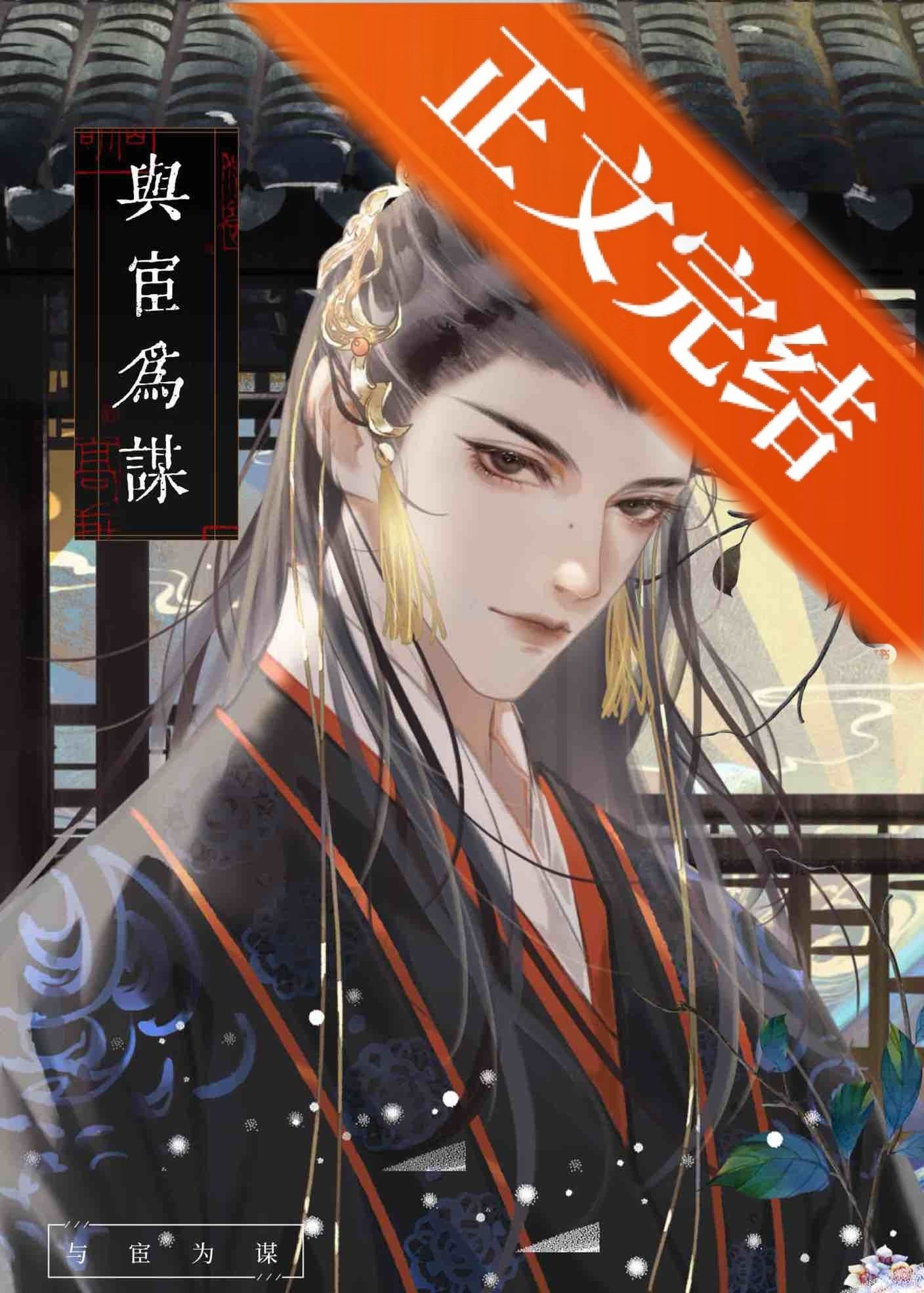
Scheming Emperor X Hunting Eunuch
Novel Info
  • Author:
  • 椰已
  • Status:Ongoing

Summary

... Read More
In the rain-swept capital of Anjing, Pei Yanci awakens in a bloody tavern after being brutally attacked. Before his death as the Emperor of the Great Tao Dynasty, he had spent five years tirelessly reforming a corrupt empire, only to die exhausted at the age of twenty-eight, foreseeing that his kingdom would collapse within seven years due to incompetent successors. Now reborn into the body of a lowly servant named Yanci, he finds himself in the Great Yu Dynasty, a unfamiliar world ruled by an Emperor obsessed with alchemy and overseen by the tyrannical Elu Bureau, a secret police force led by the eunuch Tang Xihui. The original host was a hereditary criminal slave with a brand on his neck, despised by his peers and exploited by those around him.Immediately after waking, Pei Yanci is betrayed by a servant named Wuli, who attempts to murder him to please the Elu Bureau agents hunting scholars in the area. Pei Yanci kills his attacker and frames the death as self-defense, escaping into the rainy night. He eventually returns to the Crown Prince's mansion, where he serves as a minor attendant. The political landscape is tense; the Crown Prince, Gu Jiuqing, lives in secluded poverty and suspicion, having been forced into the position after a bloody palace coup orchestrated by the late Imperial Consort Chen and her son. The Elu Bureau, led by the hateful Tang Xihui, maintains total control over the court, arresting anyone who criticizes the regime, including a celebrated young general named Jiang Yi, who is accused of colluding with disgruntled scholars.Within the mansion, Pei Yanci navigates a web of deceit among the servants. Fei Yuan, a rival for the position of tea house steward, had followed Pei Yanci to the tavern and was killed by the Elu Bureau, an event Wuli tried to blame on him. Pei Yanci cleverly turns the narrative, suggesting Fei Yuan was a spy, thereby gaining the favor of the Chief Steward Zhang Huairu. However, Zhang Huairu also tries to extort money from Pei Yanci, testing his loyalty and intelligence. Pei Yanci plays along with the subservient role expected of a servant with amnesia, securing a temporary reprieve and a small amount of silver, though he is denied the stewardship he had initially been promised.As he recovers, Pei Yanci observes the intricate power dynamics of the Crown Prince's household. He learns that the Crown Prince refuses to use palace eunuchs due to his deep enmity with the Elu Bureau, a hatred rooted in Tang Xihui's failed romantic obsession and subsequent political sabotage. Pei Yanci interacts with various key figures, including Wu Luo, a frail servant who exploits his kindness, and Wuli, whose false loyalty masks deeper treachery. He also meets Yue Ting, a storehouse steward with ambition that mirrors his own, hinting at potential alliances. The story establishes Pei Yanci's determination to survive in this new life, not as a submissive servant, but as a player in the dangerous political game, utilizing his imperial experience to navigate the threats posed by the Elu Bureau and the scheming factions within the Crown Prince's mansion.

Latest Release
DateGroupRelease
2026-10-01hiraeth translations c4
2026-10-01hiraeth translations c3
2026-10-01hiraeth translations c2
2026-10-01hiraeth translations c1

Community Reviews

Rating(0 / 5.0, 35votes)
5 stars
0(0%)
4 stars
0(0%)
3 stars
0(0%)
2 stars
0(0%)
1 stars
0(0%)

Popular reviews

... Read More
There's a symbol running through this entire batch that I can't stop thinking about, and it's the concept of invisible influence. Jiang Yi thinks the Crown Prince orchestrated his rescue. Pei Yanci lets him think that. Wuli and Pei Yanci did the actual legwork — buying medicine, begging the eunuch, driving through curfew — but Jiang Yi credits an absent prince. The Crown Prince's power is so effective that his presence is felt even when he's not in the room. That's the theme right there: real influence doesn't need to announce itself. And then there are the 'sunless cells' — the literal dark places where scholars are being tortured. Jiang Yi describes them as 'living a fate worse than death.' These men are invisible to the world, forgotten in underground cells, and Jiang Yi specifically mentions their backgrounds to try to pull them back into visibility. 'One is even the son of the Bingcao official from Jingzhao Prefecture.' He's using status as a weapon to make the powerful care about the powerless. Pei Yanci's speech in the study extends this symbolism. He positions himself as the one who sees the truth while others are blind. 'Some servants think highly of themselves, bullying those below while flattering those above.' This is the mansion as a microcosm of the entire political system — the same corruption, the same hidden agendas, the same people suffering in the dark while the powerful perform loyalty. The rain and shadows throughout reinforce this. Everything is partially hidden, partially visible, and the truth is always somewhere between the two.
... Read More
Okay so the rain has been falling for TEN DAYS and I immediately felt like I was drowning in this atmosphere. Cold, damp, miserable — and then BAM, a dead body, blood in puddles, a servant getting stabbed. No slow warmup, no gentle hello. You are thrown right into the chaos. And honestly? Perfect. The chapter structure is doing something really clever here. It starts with action — violent, confusing, messy — and then pulls back to give us the protagonist's POV and backstory dump. But watch what happens. He's an EMPEROR who just died and got reborn? Into a servant's body? That's a massive reveal, but it doesn't slow the momentum because the action keeps happening AROUND him. The servant tries to kill him AGAIN mid-thought. The Elu Bureau is still hunting people. Feiyuan is dead. The palanquin passes by like a ghost through the rain. Every time you think "okay, let me catch my breath," there's a new complication. A murder attempt. A political threat. A dead friend. A mysterious procession. The author isn't letting this story breathe and that makes it impossible to put down. The pacing also works because of what it WITHHOLDS. We get ZERO explanation for why the servant tried to kill him. Zero context about the Crown Prince or why scholars are being hunted. It's all just... happening. And my brain is running so fast trying to connect dots. "Who is Wuli? Why did he send Feiyuan? What does the Crown Prince have to do with any of this?" Every answered question births three new ones. And that ending?! Wuli saying he'll try to steal Feiyuan's body from a place surrounded by the Elu Bureau?? That's not a cliffhanger, that's a FULL-BLOODED SLASH at your neck. I need to know what happens next immediately. The only minor complaint — and this is tiny — is the backstory section where Pei Yanci reflects on his previous life as emperor. It's necessary, but if I had to nitpick, maybe it could've been woven in more gradually while the action was still happening. Still, that's like complaining the ocean isn't deep enough. This pacing is relentless and I want more. Is it just me or does every chapter feel like it's structured like a trap? You think you're safe, then the floor drops out.
... Read More
Let's talk about how this author paints worlds with words alone. First, the Crown Prince's study: "red rosewood furniture was filled with books and calligraphy paintings by predecessors, without a single gold, silver, or jade ornament." This isn't just decoration—it's character. The prince values intellect over wealth, austerity over opulence. Then the window: "peach blossom petals and fine raindrops" swirling into the room. Nature intruding on sterile power. Beautiful contrast. But the real showstopper? The coffin-like box. "Through the gaps between the boards, he could smell the scent of vegetable leaves." This detail is everything. It's mundane, earthy, alive—so different from the marble corridors and silk robes of the mansion. The author uses sensory juxtaposition to heighten dread. The vegetable smell means the carriage passes the manor's supply route daily. Pei Yanci calculates their location, their fate, while trapped in darkness. Later, the riverbank scene: "roaring sound of the river came rushing with the wild hunting wind, accompanied by the misty night rain." Sensory overload—sound, wind, rain, moonlight flickering through trees. The world feels perilous, ancient, indifferent to human suffering. This isn't backdrop; it's a character itself. Every setting mirrors the political climate: ornate but hollow on the surface, rotting beneath.
... Read More
Okay, let's talk about how this passage moves. You start with two guys getting thrown off an embankment into a river — full survival horror, drowning, rope-cutting, bubbles and panic. That's intense. Then, and this is where it gets weirdly brilliant, the author lets Pei Yanci's memories float through his head like a montage while he's suffocating. Beggar child fighting for slop water, executing crowds, a possessed woman, a lewd man — BAM, you're in his past life in the middle of him almost dying. Most authors would slow down here or cut away. This one dives deeper. Then he cuts the rope, resurfaces, saves Wuli, and suddenly — they're having a conversation about silver and travel passes. The tonal whiplash is real but it works because the emotional thread stays tight. Wuli crying about seeing his great-grandmother, then immediately kneeling to call Pei Yanci "Big Brother" — it's chaotic and human. And the return to the city, the carriage ride, building dread toward meeting Nine-Thousand-Years? That slow-burn anxiety at the end is perfect. Every sentence from "Are we really going to be okay?" to that final reveal that Tang Xizhui was waiting for Pei Yanci specifically — the tension just keeps climbing. It doesn't drag. It doesn't rush. It flows like that damn river.
... Read More
Okay so I gotta talk about the plot mechanics here because this section is DENSE with political maneuvering and honestly it's really well layered. We've got multiple threads converging: the Elu Bureau's stranglehold on court affairs, the Crown Prince's precarious position, the death of Fei Yuan, the arrest of Young General Jiang Yi, AND Pei Yanci's own scheming—all happening simultaneously and feeding off each other. The backstory dump about the former Crown Prince getting framed through fabricated treason charges by Nine-Thousand-Years Tang Xizhui was fascinating. But what I love is how the narrative doesn't just info-dump—it weaves it into Yue Ting's casual teahouse-storytelling vibe, which makes it feel organic rather than textbook. The most tense moment for me was when Pei Yanci connected the dots about Jiang Yi being arrested for 'forming factions with court officials.' He immediately figured out Elu Bureau was trying to pin the Crown Prince through him. Then his suggestion to Wuli—'bring more people tomorrow to carry corpses and dig graves'—that chilling casualness gave me chills. He's already three moves ahead while everyone else is still figuring out the board. Who IS the young general Jiang Yi? And what's his connection to the Crown Prince? I NEED to know.
... Read More
I need to talk about this ONE line for a second: 'The previous courtyard was full of peach blossoms, but the study was planted with bamboo and pine trees, which in the hazy rainy night were just clusters of black shadows.' This is peak atmospheric writing. The author doesn't need three paragraphs of description — one sentence does SO MUCH work. The peach blossom courtyard feels warm, pretty, almost deceptive. It's the front of the mansion, the face it shows the world. But the study? Bamboo and pine. These are trees that bend but don't break, that stay green through winter. The Crown Prince's inner sanctum isn't decorated for beauty — it's built for endurance. And then the rain turns them all into 'black shadows.' This is the mood of the entire batch wrapped into one image. Everything is dark, uncertain, barely visible. The curfew has just begun. Ward gates are closing. You're either inside or you're going to jail. The rain itself is doing so much heavy lifting too. It's not just weather — it's the thin, damp mist that Pei Yanci carries into the study on his clothes. The drum sounds marking the end of the You hour. The whole city is being washed in this gray, oppressive atmosphere. And within it, these two spaces — the peach blossom courtyard and the bamboo study — represent the two faces of the Crown Prince's mansion: the pleasant surface and the strategic depth beneath.
See all reviews

Custom lists

See all custom Lists